Mineral Wool Insulation Maintenance and Cleaning Playbook
Master mineral wool insulation maintenance with our cleaning playbook. Learn to inspect, dust, and remediate exposed acoustic panels and attic batts.
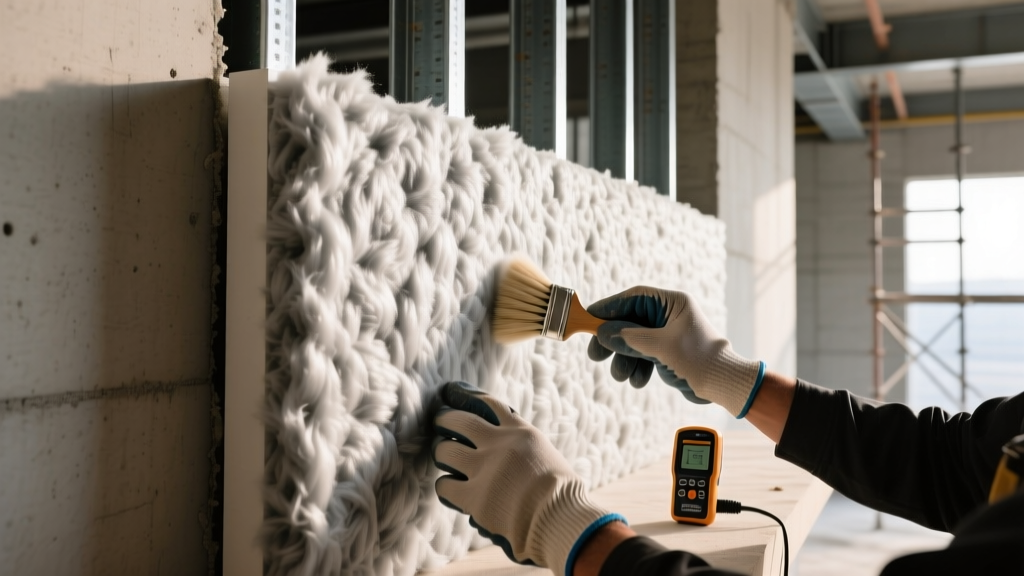
The Reality of Mineral Wool Maintenance
Mineral wool—encompassing both stone wool and slag wool—is an inorganic, vapor-permeable insulation prized for its exceptional fire resistance (with melting points exceeding 2,150°F) and acoustic dampening capabilities. Unlike closed-cell spray foam, which forms an impermeable monolithic barrier, mineral wool is fibrous. This structural difference dictates a unique maintenance paradigm: you do not "wash" mineral wool. Instead, maintenance focuses on preserving its structural loft, protecting its binder integrity, and managing the dust and particulate matter that accumulate within its fibrous matrix.
Whether you are managing exposed acoustic panels in a commercial recording studio, inspecting semi-exposed batts in a basement rim joist, or maintaining HVAC duct wraps, this playbook provides the exact protocols required to extend the lifespan and performance of your mineral wool installations.
Modern mineral wool products (such as Rockwool Comfortbatt or Thermafiber SAFB) are manufactured with hydrophobic sizing agents that repel liquid water. However, the physical entanglement of the fibers acts as a high-efficiency particulate air (HEPA) filter, trapping construction dust, drywall compound, and airborne allergens. Maintenance must address particulate loading without compressing the fibers, as compression directly degrades the material's R-value and Noise Reduction Coefficient (NRC).
Playbook 1: Exposed Acoustic Mineral Wool Panels
Exposed mineral wool panels, commonly used in home theaters, commercial offices, and recording studios, are highly susceptible to surface dust accumulation. Over time, a layer of dust fills the microscopic pores on the panel's surface, effectively sealing it and reducing its sound absorption efficiency by up to 15%.
Routine Dusting and Vacuuming Protocols
Never use compressed air or feather dusters on exposed mineral wool. These methods simply drive particulate matter deeper into the fiber matrix or tear the fragile surface fibers.
- Equipment Selection: Use a commercial-grade HEPA vacuum equipped with a soft-bristle upholstery attachment. The soft bristles gently agitate the surface fibers to release trapped dust without tearing the mineral wool.
- Suction Control: Set the vacuum to a medium-low suction setting. High suction can pull the loose surface fibers out of the binder matrix, causing permanent pitting and aesthetic degradation.
- Technique: Move the brush attachment in a single, unidirectional sweep (e.g., top to bottom). Do not scrub in circular motions.
Spot Cleaning Stains on Fabric-Wrapped vs. Raw Panels
Many acoustic mineral wool panels are wrapped in acoustically transparent fabrics (like Guilford of Maine textiles), while others are left raw or painted with specialized acoustic coatings.
| Panel Type | Approved Cleaning Agent | Application Method | Strict Prohibitions |
|---|---|---|---|
| Fabric-Wrapped | Mild, water-based upholstery foam cleaner | Apply foam to a microfiber cloth, blot gently. Allow to air dry completely. | No liquid saturation; no bleach; no rotary scrubbing. |
| Raw / Unfaced | None (Dry cleaning only) | HEPA vacuum only. If heavily stained, the panel must be replaced or professionally re-skinned. | Never apply liquid to raw mineral wool; it causes binder washout and structural collapse. |
| Acoustic Painted | Damp microfiber cloth with mild dish soap | Wring cloth until nearly dry. Wipe gently. Rinse with a clean, damp cloth. | Do not use abrasive sponges or solvent-based degreasers. |
Playbook 2: Attic, Crawlspace, and Basement Rim Joist Batts
Concealed and semi-exposed mineral wool batts, such as Rockwool Safe'n'Sound or Rockwool Comfortbatt, require a different maintenance approach. Because they are not subject to aesthetic scrutiny, maintenance here is strictly functional, focusing on thermal performance (R-value) and air-sealing integrity.
Bi-Annual Inspection Checklist
According to the U.S. Department of Energy, insulation performance degrades when gaps, compression, or moisture intrusion occur. Perform this inspection every six months, ideally during the seasonal transitions of spring and autumn.
- Loft and Compression Check: Mineral wool relies on trapped air within its 3D fiber matrix for its R-value. A standard 3.5-inch batt (designed for 2x4 walls) provides R-15. If the batt is compressed to 2 inches by stored items or fallen HVAC ducts, the R-value drops proportionally. Remove all physical loads from the insulation.
- Wire Support Integrity (Overhead Applications): In basement rim joists or cathedral ceilings, mineral wool is held in place by friction and wire supports. Check for sagging. If a batt has dropped more than 1 inch from the subfloor, reinstall friction-fit wire stays spaced every 12 inches.
- Pest Intrusion Assessment: While mineral wool is inorganic and does not provide a food source for rodents, its dense, warm matrix makes it an attractive nesting material. Look for tunneling, urine staining, or displaced fibers. If tunneling is present, the batt must be removed, as the compressed tunnels create permanent thermal bridges.
Mineral wool is non-combustible and often used around recessed lighting fixtures. However, if the fixtures are not rated "IC" (Insulation Contact), the heat generated by the bulbs can degrade the organic binders used in the mineral wool over time, causing the batt to crumble. Always verify that non-IC fixtures maintain a strict 3-inch clearance from the mineral wool, and install metal baffles to maintain this gap during future attic access.
Playbook 3: Moisture Intrusion and Mold Remediation
A common misconception is that mineral wool grows mold. Because it is manufactured from basalt rock or iron ore blast furnace slag, it contains zero organic nutrients for fungal growth. However, the Environmental Protection Agency (EPA) notes that mold will readily grow on the dust, drywall paper, and wood particulate matter trapped within the fibers of the insulation.
The Drying and Remediation Protocol
If a roof leak or plumbing failure wets your mineral wool insulation, follow these steps to determine if the material can be salvaged:
- Source Elimination: Stop the water intrusion immediately. Mineral wool will drain liquid water rapidly due to its hydrophobic sizing, but it will hold ambient moisture in the interstitial spaces.
- Active Drying: Deploy commercial dehumidifiers (capable of extracting at least 100 pints per day) and high-velocity air movers. Direct airflow parallel to the framing cavities to flush moisture out of the fiber matrix.
- Moisture Meter Testing: Use a pinless moisture meter on the adjacent wood framing. The wood must read below 15% moisture content before the cavity is closed up.
- Binder Integrity Test: Once dry, press firmly on the mineral wool. If it feels brittle, flakes excessively, or fails to spring back to its original 3.5-inch or 5.5-inch thickness, the phenol-formaldehyde or bio-based binder has suffered hydrolysis (chemical breakdown from prolonged water exposure). The batt must be discarded and replaced.
When to Replace vs. Repair: A Decision Matrix
Maintenance is only viable if the core structural integrity of the mineral wool remains intact. Use this matrix to make definitive repair-or-replace decisions during your inspections.
| Damage Type | Visual / Tactile Symptom | Action Required |
|---|---|---|
| Mechanical Compression | Batt is flattened but springs back when load is removed. | Repair: Remove the load and allow 24 hours for full loft recovery. |
| Chronic Compression | Batt remains flattened and feels dense/hard after load removal. | Replace: Fiber matrix is permanently deformed; R-value is lost. |
| Surface Dust Loading | Gray/brown film on exposed acoustic panels. | Repair: HEPA vacuum with soft brush attachment. |
| Rodent Nesting | Visible tunnels, urine stains, or displaced fibers. | Replace: Sanitize the cavity and install new batts; seal entry points. |
| Binder Washout | Material crumbles to dust when touched after a water event. | Replace: Material has suffered irreversible chemical degradation. |
Safety Protocols for Handling Degraded Mineral Wool
When maintenance escalates to remediation or replacement, handling degraded mineral wool requires strict adherence to safety protocols. While mineral wool fibers are not classified as human carcinogens, they are a known mechanical irritant to the skin, eyes, and respiratory tract. The North American Insulation Manufacturers Association (NAIMA) mandates specific personal protective equipment (PPE) for anyone disturbing the material.
- Respiratory Protection: Wear a NIOSH-approved N95 respirator at a minimum. If the mineral wool is heavily degraded, crumbling, or being removed in a confined, unventilated space (like a tight crawlspace), upgrade to a half-face elastomeric respirator with P100 particulate filters.
- Ocular Protection: Use tight-fitting, non-vented safety goggles. Standard safety glasses do not prevent fine airborne glass and stone fibers from circulating behind the lenses and scratching the cornea.
- Dermal Protection: Wear long sleeves, long pants, and nitrile gloves. To prevent fibers from embedding in your skin, apply a barrier cream to exposed areas (like the neck and wrists) before beginning work. After the job, wash work clothes separately in cold water to prevent fibers from transferring to other garments.
By adhering to these targeted maintenance and cleaning playbooks, facility managers, contractors, and homeowners can ensure that their mineral wool insulation continues to deliver peak thermal resistance, acoustic control, and passive fire protection for the lifespan of the structure.