Pink Insulation Cost Calculator: 2026 Pricing & Quantity Guide
Calculate exact pink insulation costs for 2026. Get precise quantity formulas, R-value pricing for Owens Corning batts, and waste factor tips.
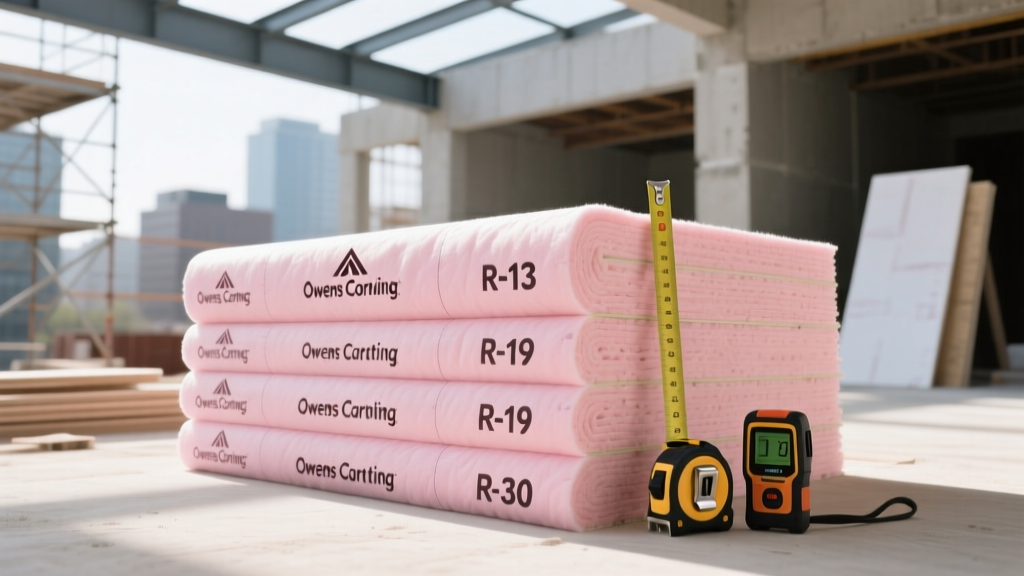
The Mathematics of Pink Fiberglass: Beyond Simple Square Footage
When contractors and DIYers refer to "pink insulation," they are specifically talking about Owens Corning’s iconic PINK Fiberglas EcoTouch line. While the material is ubiquitous in residential construction, accurately estimating the cost and quantity required for a project remains a common point of failure. Overestimating leads to wasted budget and difficult returns of bulky materials, while underestimating causes project delays and compromised thermal envelopes.
This guide provides a precise framework for calculating pink insulation quantities and projects realistic 2026 retail and contractor pricing. According to the U.S. Department of Energy, proper insulation installation is the most cost-effective way to reduce heating and cooling loads, but only if the correct R-value and volume are calculated without compression or gaps.
2026 Pricing Matrix: Owens Corning PINK EcoTouch Batts
Pricing for fiberglass insulation fluctuates based on petroleum-derived binder costs, freight surcharges, and regional demand. The table below reflects average Q1 2026 big-box retail pricing (e.g., Home Depot, Lowe’s) for standard 16-inch on-center (O.C.) framing. Prices are based on the widely available 15-inch width batts designed to friction-fit into standard stud and joist cavities.
| Product Line | R-Value | Thickness | Facing | Coverage / Bag | Avg 2026 Price / Bag | Cost per Sq. Ft. |
|---|---|---|---|---|---|---|
| EcoTouch R-13 | R-13 | 3.5" | Kraft | 88.36 sq ft | $58.50 | $0.66 |
| EcoTouch R-19 | R-19 | 6.25" | Kraft | 88.36 sq ft | $82.00 | $0.93 |
| EcoTouch R-30 | R-30 | 8.25" | Unfaced | 48.00 sq ft | $69.50 | $1.45 |
| EcoTouch R-38 | R-38 | 10.25" | Unfaced | 40.00 sq ft | $76.00 | $1.90 |
| EcoTouch R-49 | R-49 | 14.0" | Unfaced | 29.40 sq ft | $89.00 | $3.02 |
Kraft-faced batts (which include an integrated vapor retarder) typically cost $0.10 to $0.18 more per square foot than their unfaced counterparts. If your local building code allows for a separate polyethylene vapor barrier or if you are insulating a vented attic floor where no facing is required, switching to unfaced pink insulation will reduce your material budget by approximately 12%.
The Core Quantity Formula: Step-by-Step Calculation
To determine exactly how many bags of pink insulation you need, avoid relying solely on the total square footage of your home. Use this precise methodology to account for structural realities.
- Calculate Gross Area: Measure the length and width of the space (e.g., an attic floor or exterior wall). Multiply to get the gross square footage.
- Deduct Non-Insulated Penetrations: Subtract the area of HVAC platforms, chimney chases, recessed lighting housings (if non-IC rated), and stairwell openings. In a standard 1,500 sq ft attic, these penetrations typically account for 4% to 6% of the total area.
- Apply the Framing Factor (Walls Only): If calculating for walls, remember that studs, plates, and headers take up roughly 15% to 20% of the wall area. However, insulation is sold by the cavity coverage, not the total wall face. Use the net cavity area for your math.
- Divide by Bag Coverage: Take your net square footage and divide it by the coverage area listed on the specific Owens Corning bag (e.g., 88.36 sq ft for standard R-19).
- Add the Waste Factor: Multiply your final bag count by 1.10 (for simple, open joist bays) or 1.15 (for complex truss webs with extensive cross-bracing and electrical runs).
Real-World Calculation Example: 1,200 Sq Ft Attic Retrofit
Assume you are upgrading a 1,200 sq ft attic in Climate Zone 5 to R-49, as recommended by the ENERGY STAR Seal and Insulate program.
- Gross Area: 1,200 sq ft
- Less Penetrations (5%): -60 sq ft = 1,140 net sq ft
- Target Product: Owens Corning R-49 Unfaced (29.40 sq ft coverage per bag)
- Base Bags Needed: 1,140 / 29.40 = 38.77 bags
- Waste Factor (12% for truss webs): 38.77 x 1.12 = 43.4 bags
- Total Purchase: 44 bags
- Estimated Material Cost: 44 bags x $89.00 = $3,916.00
Critical Edge Cases: The Compression Penalty
One of the most frequent and costly mistakes in fiberglass estimation is ignoring cavity depth. Fiberglass insulates by trapping air within its glass matrix. When you compress the material, you eliminate the air pockets, severely degrading its thermal resistance.
If you attempt to save money by buying R-19 (6.25" thick) and forcing it into a standard 2x4 wall cavity (which is only 3.5" deep), the R-value will drop to approximately R-13. You will have paid the premium for R-19 ($0.93/sq ft) but only achieved the performance of R-13 ($0.66/sq ft). Always match the Owens Corning product thickness to your actual framing depth. For 2x6 walls (5.5" depth), use R-21 or carefully selected R-19 products specifically manufactured for 2x6 high-density applications.
Hidden Costs: Accessories, PPE, and Logistics
When building your final budget, the cost of the pink batts themselves is only part of the equation. Professional estimators include the following line items to prevent budget overruns:
- Insulation Supports (Baffles): For ceiling joists or floor cavities, you need wire supports to prevent gravity sag. Budget $0.15 per linear foot.
- Staples and Tape: Kraft-faced batts require 1/4" or 5/16" monel or copper staples to secure the flanges to the stud faces. Budget $12 per box (5,000 staples).
- Personal Protective Equipment (PPE): Fiberglass particulates require proper protection. A Tyvek disposable suit ($18), P100 half-mask respirator ($35), and heavy-duty contractor bags for offcuts ($25) are mandatory for safe DIY installation.
- Freight and Delivery: R-38 and R-49 batts are incredibly bulky. A pallet of R-49 can exceed 400 cubic feet. If you cannot transport the material in a truck or large trailer, expect a flatbed delivery fee ranging from $150 to $350 depending on your proximity to the distribution center.
Labor Rates vs. DIY: What is the True Installed Cost?
If you are hiring a licensed insulation contractor rather than installing the pink batts yourself, the pricing structure shifts from pure material costs to an installed square-foot rate. In 2026, the national average for professional fiberglass batt installation ranges from $1.40 to $2.80 per square foot, which includes the material, labor, prep work (like air sealing top plates with spray foam), and debris removal.
"The biggest value-add a professional brings to a pink insulation job isn’t just the speed of installation; it’s the prep work. We spend 20% of our time air-sealing bypasses around plumbing stacks and top plates with canned foam before a single pink batt goes in. Without that air barrier, the fiberglass performance drops by up to 30% due to convective wind washing." — Senior Building Envelope Consultant, BPI Certified
Frequently Asked Questions
Can I mix Owens Corning pink insulation with other fiberglass brands?
Yes. Fiberglass is chemically and thermally identical across major manufacturers (e.g., Knauf, Johns Manville). You can safely mix brands in the same cavity or attic, provided the thickness and R-values match. The pink dye used by Owens Corning is purely a branding agent and has zero impact on thermal performance or fire resistance.
How do I calculate quantities for cathedral ceilings?
Cathedral ceilings require calculating the actual roof pitch area, not the floor area below it. Use the roof pitch multiplier (e.g., a 6/12 pitch has a multiplier of roughly 1.12). Multiply your ceiling footprint by the pitch multiplier, deduct skylights, and add a 15% waste factor due to the difficult cutting angles required around ridge beams and rafters.
Does pink insulation lose R-value over time?
Unlike loose-fill cellulose or certain spray foams that can degrade or off-gas, fiberglass is dimensionally stable. Owens Corning PINK batts will maintain their stated R-value for the life of the building, provided they remain completely dry. If the material gets wet from a roof leak, the R-value drops to near zero until it is completely dried out, and it must be replaced if it becomes contaminated with mold or silt.