What Are Good Materials for Insulators? Complete Home Guide
Discover what are good materials for insulators in our complete guide. Compare R-values, costs, and best applications for fiberglass, spray foam, and more.
Defining Thermal Performance: Beyond the Basics
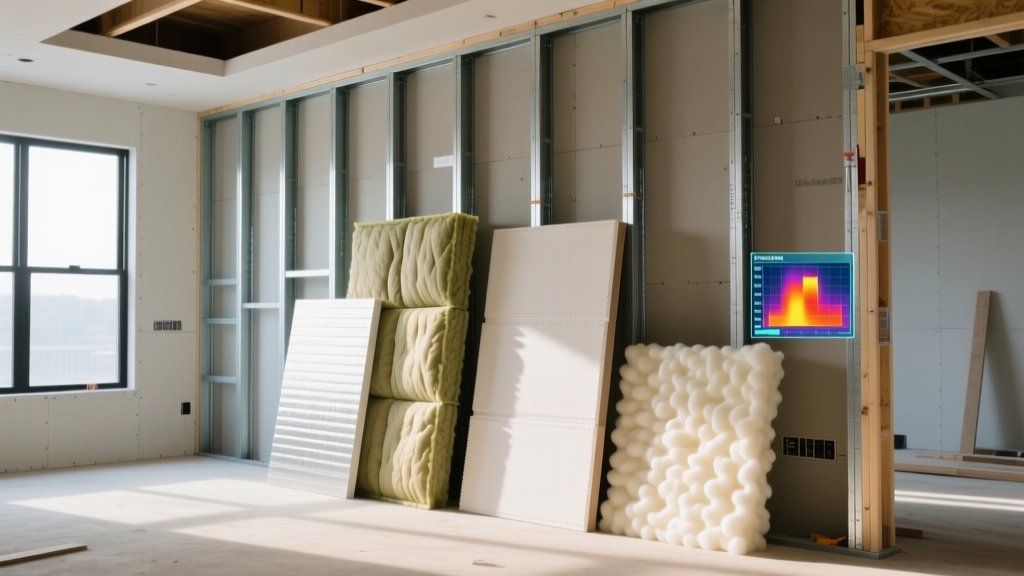
When builders and homeowners ask what are good materials for insulators, the answer extends far beyond simply picking the thickest batt available. True thermal performance relies on three intersecting metrics: thermal resistance (R-value), air permeability, and moisture vapor transmission. According to the U.S. Department of Energy, up to 40% of a home's energy loss is due to uncontrolled air leakage, meaning an insulator with a high R-value but poor air-sealing properties will severely underperform in real-world conditions.
In 2026, modern building codes (such as the IECC) increasingly mandate continuous exterior insulation to mitigate thermal bridging through wood or steel studs. Therefore, selecting the right material requires matching the product's physical characteristics to your specific climate zone, framing depth, and budget.
Core Insulation Materials: Performance & Cost Matrix
The following matrix breaks down the 2026 national average installed costs and performance metrics for the most common residential and commercial insulators.
| Material Type | R-Value per Inch | Avg. Installed Cost (per sq ft) | Air Sealing Capability | Vapor Permeability |
|---|---|---|---|---|
| Fiberglass Batts (Standard) | R-3.1 to R-3.4 | $1.80 - $2.50 | None (Requires separate barrier) | High (Vapor open) |
| Mineral Wool (Rock/Slag) | R-4.2 to R-4.3 | $2.75 - $4.00 | Low | High (Vapor open) |
| Open-Cell Spray Foam | R-3.5 to R-3.8 | $1.50 - $2.20 (per board foot) | Excellent | High (Vapor open) |
| Closed-Cell Spray Foam | R-6.0 to R-7.0 | $2.80 - $3.50 (per board foot) | Excellent | Low (Class II Vapor Retarder) |
| Rigid Polyisocyanurate | R-5.6 to R-6.5 | $1.20 - $1.80 (material only) | Excellent (when taped) | Low (Foil-faced is Class I) |
Deep Dive: Top Performers for Specific Applications
Mineral Wool: The Acoustic and Fire-Resistant Powerhouse
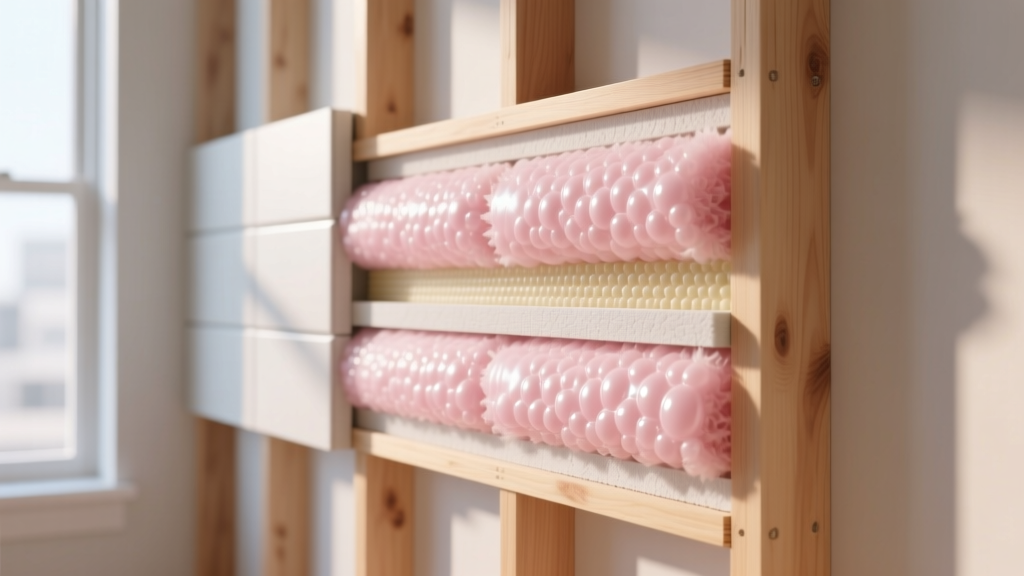
Mineral wool, specifically stone wool products like Rockwool Comfortbatt 80 or Owens Corning Thermafiber, is the premier choice for interior partition walls, fire-blocking, and exterior continuous insulation in high-moisture climates. Unlike fiberglass, mineral wool is inherently non-combustible, withstanding temperatures up to 2,150°F without melting. It also boasts a Noise Reduction Coefficient (NRC) of 1.05, making it vastly superior for soundproofing home theaters or multi-family dwelling units.
Pro Tip: Mineral wool is highly dense and friction-fits perfectly into standard 16-inch or 24-inch on-center stud cavities. It does not sag over time, eliminating the top-edge gaps that commonly plague fiberglass batts after a decade of settling.
Closed-Cell Spray Foam: Maximum R-Value and Structural Rigidity
For space-constrained assemblies like cathedral ceilings or shallow 2x4 exterior walls, closed-cell spray polyurethane foam (ccSPF) is unmatched. Products utilizing HFO (hydrofluoroolefin) blowing agents, such as Demilec Heatlok Soya HFO, offer an R-value of R-6.5 per inch while simultaneously acting as a Class II vapor retarder at just 1.5 inches of thickness. Furthermore, ccSPF adheres to the sheathing and framing, increasing the overall racking strength of the wall assembly by up to 300%.
However, the Environmental Protection Agency notes that homes sealed entirely with spray foam require meticulous mechanical ventilation (such as an ERV or HRV system) to comply with ASHRAE 62.2 indoor air quality standards, as the building envelope becomes virtually airtight.
High-Density Fiberglass: The Budget-Conscious Workhorse
Standard fiberglass remains the most cost-effective solution for vented attics and standard 2x6 exterior walls. To maximize performance, opt for high-density variants like Owens Corning EcoTouch R-21 for 2x6 cavities. The critical caveat with fiberglass is that it is entirely air-permeable. The North American Insulation Manufacturers Association (NAIMA) emphasizes that fiberglass must be paired with a rigorous air-sealing strategy, such as taping exterior sheathing seams with ZIP tape or utilizing the Airtight Drywall Approach (ADA) on the interior.
Climate-Specific Decision Framework
Selecting the right insulator requires aligning the material's vapor profile with your local IECC Climate Zone to prevent interstitial condensation (moisture trapping inside the wall cavity).
- Climate Zones 1-3 (Hot/Humid): Prioritize open-cell spray foam or standard fiberglass batts. Avoid interior polyethylene vapor barriers, which can trap exterior moisture driving inward from the humid air. Use a Class III vapor retarder (vapor-retarding paint) on the interior drywall.
- Climate Zones 4-5 (Mixed): Utilize a 'flash and batt' method. Apply 1.5 inches of closed-cell spray foam against the interior sheathing to seal the cavity and control dew point, then fill the remainder of the stud bay with cost-effective fiberglass or mineral wool.
- Climate Zones 6-8 (Cold): Closed-cell spray foam is highly recommended for its high R-value and vapor-retarding properties. Alternatively, use mineral wool batts paired with a continuous layer of exterior rigid polyisocyanurate (minimum R-5 to R-10) to keep the interior sheathing above the dew point during freezing winter months.
Critical Installation Gotchas & Edge Cases
Warning: The Compression Myth
Never compress a higher-rated batt into a smaller cavity. Forcing an R-19 fiberglass batt (designed for a 5.5-inch 2x6 cavity) into a 3.5-inch 2x4 cavity does not yield R-19. The compression destroys the trapped air pockets, dropping the effective R-value to approximately R-13 while increasing material costs. Always buy the batt sized specifically for your framing depth.
Thermal Bridging at Framing Members
Wood studs account for roughly 20% to 25% of a wall's surface area. Because wood has an R-value of only about R-1.25 per inch, heat will bypass your cavity insulation and escape through the studs. To solve this, building codes now frequently require continuous insulation (ci). Installing a 1-inch layer of rigid mineral wool (like Rockwool Comfortboard 80) or EPS foam over the exterior sheathing breaks the thermal bridge, boosting the whole-wall R-value by up to 20%.
Spray Foam Temperature Sensitivity
Closed-cell spray foam requires precise chemical mixing and ambient temperatures. If the substrate temperature drops below 60°F during application, the foam can experience 'shrinkage' or 'pull-away' from the studs, creating massive air leaks. Always verify that your installer is using heated hoses and monitoring substrate temperatures, especially during late fall or early spring construction phases.
Frequently Asked Questions
Can I mix different types of insulation in the same wall?
Yes, but you must manage the vapor profile. The 'flash and batt' method (closed-cell foam against the sheathing, fiberglass filling the rest) is highly effective. Never place a highly vapor-impermeable material (like foil-faced polyiso or closed-cell foam) on both the interior and exterior of a wall assembly, as this will trap moisture inside the cavity with no way to dry out.
Is mineral wool worth the extra cost over fiberglass?
For exterior walls in fire-prone areas (WUI zones) or for interior soundproofing, mineral wool's premium cost (roughly 40% more than fiberglass) is entirely justified by its fire resistance and acoustic dampening. For standard, budget-conscious attic floor insulation, high-density fiberglass or blown-in cellulose remains the more economical choice.
What is the best insulator for an existing finished wall?
For retrofitting walls without removing drywall, dense-pack cellulose or injection foam (like Icynene or specialized retrofit foams) are the only viable options. Installers drill 2-inch holes in the exterior siding or interior drywall, inject the material until the cavity reaches optimal density, and then patch the holes. Dense-pack cellulose provides excellent thermal resistance (R-3.5 per inch) and significantly reduces air infiltration in older, drafty homes.
Written by
Marcus ChenMarcus Chen is a licensed structural engineer (PE) and building materials analyst with over 12 years of experience across residential, commercial, and industrial construction. He holds a Master of Science in Civil Engineering from UC Berkeley and spent six years at Thornton Tomasetti before transitioning to independent consulting and technical writing. Marcus specializes in material selection for seismic-prone regions, concrete reinforcement strategies, and lifecycle cost analysis. His work has been cited by the American Concrete Institute (ACI) and the Structural Engineers Association of California (SEAOC). When he is not on a job site or at his desk, you will find him hiking the Sierra Nevada or restoring a 1920s craftsman bungalow in Oakland, CA.
More from Marcus Chen
View all
Construction Cost
How Much Did the Eiffel Tower Cost to Build?
How much did the Eiffel Tower cost to build in 1889? We adjust for inflation and compare its budget to modern skyscraper construction.
Aug 4, 2026

Fire Resistance
What Is a Fire Resistant Material? Testing & Certification Guide
Discover what is a fire resistant material through ASTM and UL testing. Learn how fire ratings, certifications, and assemblies work in construction.
Aug 4, 2026

Construction Cost
How Much Did the Burj Khalifa Cost to Build?
How much did the Burj Khalifa cost to build? We break down the $1.5B project and extract 5 money-saving strategies for your next build.
Jul 30, 2026