Pink Panther Insulation Guide: Owens Corning PINK Fiberglas Review
Discover the truth behind pink panther insulation. We review Owens Corning PINK Fiberglas, R-values, 2026 pricing, and installation tips.
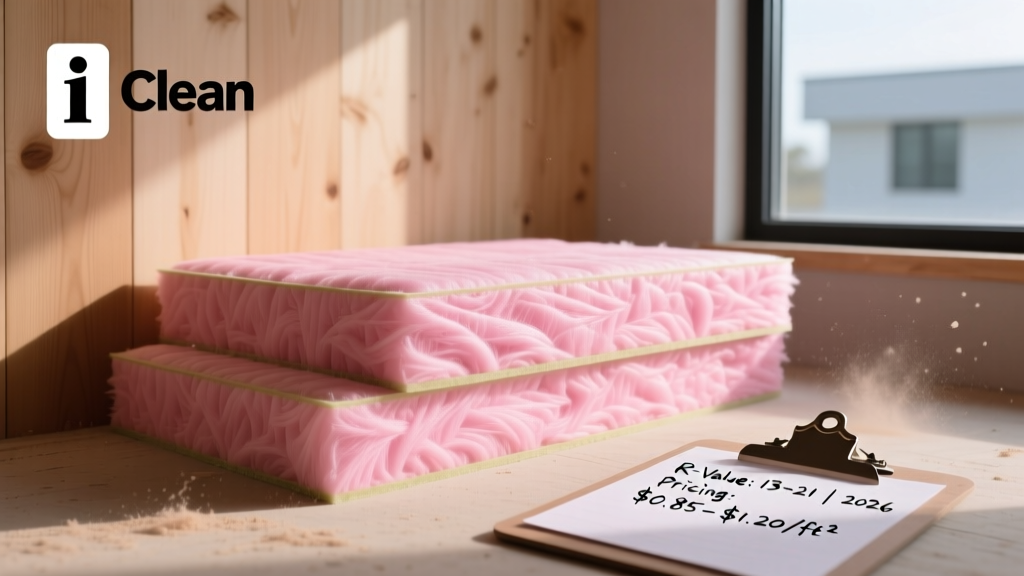
The "Pink Panther" Misconception vs. Owens Corning Reality
When homeowners and contractors search for "pink panther insulation," they are almost universally looking for Owens Corning’s iconic PINK Fiberglas. The confusion stems from decades of pop-culture crossover, the distinct magenta-hued coloring of the batts, and occasional regional marketing campaigns that leaned into cartoonish feline imagery. However, in the North American market, there is no official "Pink Panther" branded insulation product. The actual product line is Owens Corning PINK, a trademarked brand that has dominated the fiberglass insulation sector since the company first dyed their product pink in 1956 to distinguish it from competitors.
Understanding this distinction is critical for procurement and specification. Searching supplier inventories for "Pink Panther" will yield zero results, while searching for Owens Corning PINK Next Gen or EcoTouch will unlock the actual product data sheets you need. According to the U.S. Department of Energy, fiberglass remains the most common residential insulation material in the United States, and Owens Corning holds a massive market share in this space. This deep dive explores the actual technical specifications, 2026 pricing realities, and installation edge cases of the products consumers mistakenly call pink panther insulation.
Core Product Lines: What You Are Actually Buying
Owens Corning’s residential and light-commercial portfolio is divided into three primary categories. Each serves a distinct building science purpose, and selecting the wrong one is a common cause of thermal bridging and moisture entrapment.
1. Pink Next Gen Fiberglas Batts and Rolls
The flagship product line is the Pink Next Gen Fiberglas series. These are pre-cut batts or continuous rolls made from spun glass fibers bonded with an acrylic-based, formaldehyde-free binder. The "Next Gen" designation refers to the improved fiber matrix introduced in recent years, which allows the batts to recover faster after being compressed in packaging. A standard R-13 batt (3.5 inches thick) will expand to its full thickness within minutes of being opened, whereas older generations sometimes required manual fluffing to achieve their rated Federal Trade Commission mandated R-value.
- R-13 to R-15 (2x4 Walls): R-15 is a high-density option that provides superior thermal resistance in a standard 3.5-inch cavity.
- R-19 to R-21 (2x6 Walls): R-21 is the high-density variant for 5.5-inch cavities, crucial for meeting modern IECC energy codes in colder climate zones.
- R-30 to R-49 (Attics/Floors): Thicker batts designed for horizontal applications where cavity depth is unrestricted.
2. FOAMULAR NGX Extruded Polystyrene (XPS)
While not fiberglass, Owens Corning’s rigid pink foam boards are frequently included in the "pink insulation" search umbrella. FOAMULAR NGX (Next Generation Extruded) is a rigid XPS board with a closed-cell structure. It provides an R-value of 5.0 per inch and boasts a compressive strength of 250 psi. Crucially, the NGX line uses a proprietary blowing agent blend that reduces the Global Warming Potential (GWP) by 90% compared to legacy XPS products, making it compliant with strict 2026 environmental regulations in states like California and New York.
3. EcoTouch Blown-In Fiberglass
For retrofit applications and complex attic geometries where batts cannot fit, EcoTouch blown-in fiberglass is the go-to solution. Applied via pneumatic hose, it achieves an R-value of roughly R-3.0 per inch at a settled density of 2.25 lbs per cubic foot. It is highly effective at sealing around irregular obstructions like wiring, plumbing vents, and recessed lighting cans.
Quick Specs Summary: PINK Next Gen R-15 High Density
Thickness: 3.5 inches
Width: 15 inches (fits standard 16" o.c. framing)
Thermal Resistance: R-15
Fire Rating: Class A (ASTM E84)
Formaldehyde: None (NAF - No Added Formaldehyde)
Vapor Retarder Facing: Available unfaced, kraft-faced, or FSK-faced.
Thermal Performance and 2026 Cost Matrix
Pricing for insulation fluctuates based on petroleum costs (for binders and facings) and regional supply chain dynamics. Below is a realistic 2026 cost matrix for the most commonly specified Owens Corning PINK products. Prices reflect national averages for material only, excluding labor.
| Product Line | Nominal Thickness | R-Value | Approx. Cost / Sq Ft | Primary Application |
|---|---|---|---|---|
| PINK Next Gen R-13 | 3.5" | R-13 | $0.65 - $0.75 | Standard 2x4 Walls |
| PINK Next Gen R-15 HD | 3.5" | R-15 | $0.85 - $0.95 | High-Performance 2x4 Walls |
| PINK Next Gen R-21 HD | 5.5" | R-21 | $1.20 - $1.40 | Standard 2x6 Walls |
| FOAMULAR NGX 150 | 1.0" | R-5.0 | $1.10 - $1.30 | Continuous Exterior / Rim Joists |
| FOAMULAR NGX 250 | 2.0" | R-10.0 | $2.20 - $2.60 | Below-Grade / Under-Slab |
Critical Installation Edge Cases and Failure Modes
Even the highest-quality Owens Corning products will fail if installed improperly. Fiberglass relies on trapped pockets of still air to resist heat flow. When installers compromise those air pockets, the thermal performance plummets.
Failure Mode 1: Cavity Compression
The most frequent error occurs when installers attempt to stuff a thicker batt into a shallower cavity. For example, forcing an R-19 batt (designed for 6.25 inches) into a standard 3.5-inch 2x4 wall cavity does not yield R-19. The compression increases the material's density, which actually increases thermal conductivity. The compressed R-19 will perform at roughly R-11 to R-12, while costing significantly more than a properly fitted R-13 or R-15 batt. Always match the batt thickness to the framing depth.
Failure Mode 2: Vapor Retarder Misplacement
Kraft-faced PINK batts include an integrated vapor retarder. The fundamental rule of building science is that the vapor retarder must face the "warm-in-winter" side of the assembly. In northern climates (Zones 5-8), the kraft paper faces the interior drywall. In hot, humid southern climates (Zones 1-2), if a vapor retarder is used at all, it faces the exterior. Installing kraft-faced batts backward in a cold climate traps moisture inside the wall cavity, leading to mold growth and structural rot within three to five years.
Failure Mode 3: Skipping Air Sealing
Fiberglass is a thermal insulator, not an air barrier. If a wall or attic floor is not properly air-sealed with caulk, expanding foam, or a dedicated membrane before the pink batts are laid, convective heat loss will bypass the insulation entirely. Wind washing in attics can strip away the thermal boundary, rendering R-49 installations functionally equivalent to R-20.
Acoustic Performance: Beyond Just Thermal Resistance
While primarily marketed for thermal efficiency, unfaced PINK Fiberglas batts are highly effective acoustic dampeners. When installed in interior partition walls, the fibrous matrix absorbs mid-to-high frequency sound waves, significantly improving the Sound Transmission Class (STC) rating of the assembly.
A standard interior wall consisting of 1/2-inch drywall on both sides of 2x4 wood studs with no insulation typically achieves an STC of 33 to 35. By adding unfaced R-13 or R-15 PINK Fiberglas batts to the cavities, the STC rating jumps to 39 or 40. For context, an STC of 40 means that normal speech is not audible through the wall. For home theaters or bedrooms adjacent to noisy living spaces, combining unfaced fiberglass batts with resilient channels and double-layer drywall can push the STC rating above 55, achieving near-studio-level sound isolation.
Frequently Asked Questions
Is "Pink Panther" insulation safe for indoor air quality?
Yes. The actual product, Owens Corning PINK Next Gen Fiberglas, is certified GREENGUARD Gold. It contains no added formaldehyde and emits negligible levels of volatile organic compounds (VOCs), making it safe for use in schools, healthcare facilities, and sensitive residential environments.
Can I leave kraft-faced pink insulation exposed in my attic?
No. The kraft paper facing is flammable and must be covered by a 15-minute thermal barrier, such as 1/2-inch drywall, in living spaces. In unfinished attics, the facing must be stapled to the floor joists (facing the heated room below) and left exposed to the attic air, but it cannot be left exposed in a habitable room or near heat sources like recessed lighting.
Does pink fiberglass insulation lose its R-value over time?
Fiberglass itself does not degrade or lose its inherent R-value over time, provided it remains dry and uncompressed. However, if the batts are subjected to chronic moisture intrusion, the fibers can mat together, and the trapped air pockets are lost, permanently reducing the thermal resistance. Proper roof maintenance and air sealing are required to protect the insulation's lifespan.