R-Value and Performance of Natural Insulation Materials Compared
Compare the R-value, thermal performance, and moisture resistance of natural insulation materials like hemp, wool, and cellulose for modern builds.
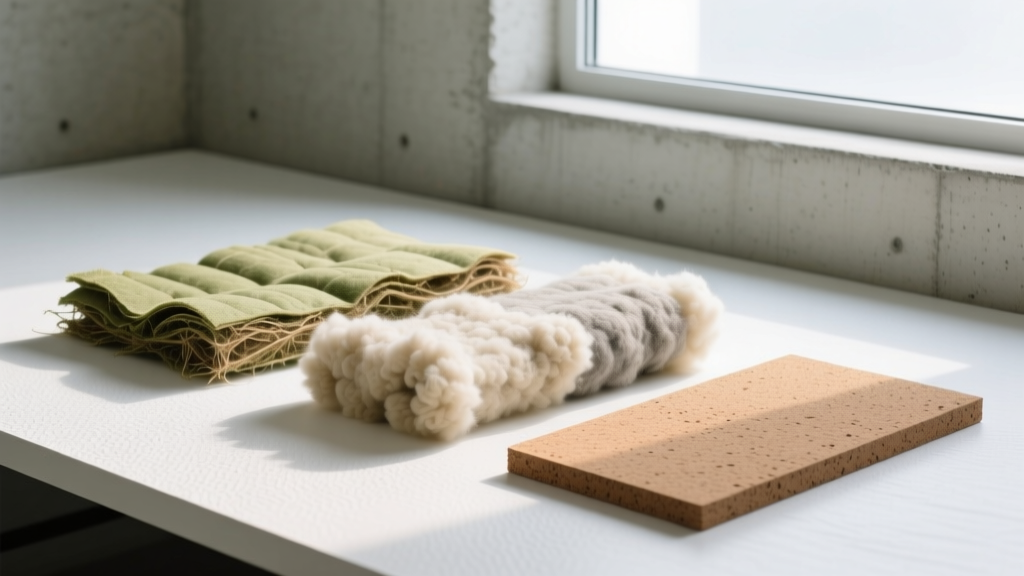
The Reality of R-Value in Bio-Based Assemblies
When architects and builders evaluate natural insulation materials, the conversation almost immediately defaults to nominal R-value. Under standard ASTM C518 steady-state testing, bio-based insulations typically yield between R-3.2 and R-4.0 per inch. Compared to closed-cell spray foam (R-6.5 per inch) or polyisocyanurate (R-6.0 per inch), natural options appear thermally inferior on paper. However, this metric fails to capture dynamic, real-world thermal performance.
According to the U.S. Department of Energy, steady-state R-value does not account for air infiltration, moisture accumulation, or thermal bridging. Natural insulation materials excel in these exact areas. Their higher density and fibrous structure create superior air-sealing characteristics, while their hygroscopic nature allows them to manage moisture without catastrophic thermal degradation—a common failure point for fiberglass batts, which can lose up to 30% of their R-value when exposed to minor dampness.
Performance Matrix: Natural Insulation Materials Compared
The following matrix breaks down the core performance metrics for the four most viable natural insulation materials on the market in 2026. Costs reflect installed estimates for achieving an R-13 wall assembly.
| Material | Nominal R-Value / Inch | Density (pcf) | Moisture Buffering | Est. Cost per sq ft (R-13) |
|---|---|---|---|---|
| Hemp Batt | R-3.5 to R-3.8 | 2.0 - 2.5 | High | $1.80 - $2.20 |
| Sheep's Wool | R-3.5 to R-3.8 | 1.2 - 1.5 | Very High | $2.80 - $3.50 |
| Dense-Pack Cellulose | R-3.6 to R-3.8 | 3.0 - 3.5 | Moderate | $1.20 - $1.60 |
| Expanded Cork Board | R-3.6 to R-4.0 | 6.0 - 7.5 | Low (Hydrophobic) | $3.50 - $4.50 |
Hemp Batt Insulation
Hemp insulation, popularized by brands like Hempitecture (HempWool), relies on the long, durable bast fibers of the hemp plant. With an R-value of roughly R-3.7 per inch, hemp batts are designed as direct friction-fit replacements for fiberglass in standard 16-inch or 24-inch on-center framing. The primary performance advantage of hemp is its rigidity; unlike fiberglass, hemp batts do not slump over time, ensuring the top plates of wall cavities remain fully insulated. Furthermore, hemp is naturally resistant to mold and pests due to its low lignin content and lack of nutritional value for insects.
Sheep's Wool Insulation
Sheep's wool offers a unique thermodynamic property: hygroscopic heat release. As wool fibers absorb ambient moisture from the air, they undergo a mild exothermic chemical reaction, actually generating trace amounts of heat. While this does not change the material's baseline R-3.6 rating, it significantly improves the effective thermal comfort of the building envelope during cold, damp weather. Brands like Havelock Wool treat their products with borate for fire and pest resistance, ensuring compliance with ASTM E84 Class A fire ratings.
Dense-Pack Cellulose
Manufactured from 80% to 85% recycled newsprint and treated with ammonium sulfate or borates, cellulose is the most cost-effective natural option. When installed via the dense-pack method (blown into closed cavities at 3.0 to 3.5 pounds per cubic foot), cellulose effectively eliminates convective air loops within the wall cavity. This air-sealing capability is critical; a wall assembly that stops air movement will drastically outperform a higher-R-value assembly that allows drafts.
Expanded Cork Board (ICB)
Insulation Cork Board (ICB) is manufactured by heating cork granules until they expand and release suberin, a natural resin that binds the granules together without synthetic adhesives. Cork is unique among natural insulations because it is hydrophobic and vapor-semi-impermeable. With an R-value pushing R-4.0 per inch, it is frequently used in exterior continuous insulation (ci) applications or below-grade foundation insulation where moisture exposure would destroy cellulose or wool.
Hygroscopic Buffering and Assembly Design
The most critical performance factor for natural insulation materials is moisture management. Because hemp, wool, and cellulose are highly vapor-permeable, they act as moisture buffers, absorbing excess indoor humidity in the winter and releasing it when conditions dry. However, this requires a specific assembly design.
Installing a Class I vapor retarder (like 6-mil polyethylene) on the interior warm side of a wall insulated with natural materials is a primary cause of assembly failure. If moisture enters the cavity from exterior bulk water leaks or extreme solar vapor drive, the interior plastic traps it. The natural insulation will absorb the moisture, exceed its buffering capacity, and rot the wooden studs. Always use a Class II or III variable-permeance vapor retarder (like certain smart membranes) that allows the assembly to dry inward during the cooling season.
For a deeper understanding of vapor dynamics in bio-based walls, building scientists at Building Science Corporation emphasize the necessity of "vapor-open" assemblies that prioritize drying potential over absolute vapor blocking.
Acoustic Dampening and Thermal Lag
Where natural insulation materials undeniably outperform rigid foams and lightweight fiberglass is in acoustic performance and thermal lag (decrement delay).
- Sound Transmission Class (STC): The high density and random fiber orientation of wood fiber boards and hemp batts trap sound waves exceptionally well. A standard 2x6 wall insulated with dense-pack cellulose or hemp can achieve an STC rating of 50 to 55, compared to STC 35 to 40 for the same wall with standard fiberglass.
- Decrement Delay: This is the time it takes for peak exterior heat to penetrate through the insulation to the interior. Heavy natural materials like wood fiber and cork have high specific heat capacities. They can delay heat transfer by 10 to 14 hours, meaning peak afternoon solar heat doesn't reach the interior living space until the middle of the night, when it can be easily flushed out with open windows.
"Evaluating insulation solely by its conductive R-value ignores the massive benefits of thermal mass and air-tightness inherent in dense, bio-based fibers. In mixed climates, the decrement delay of wood fiber drastically reduces peak cooling loads."
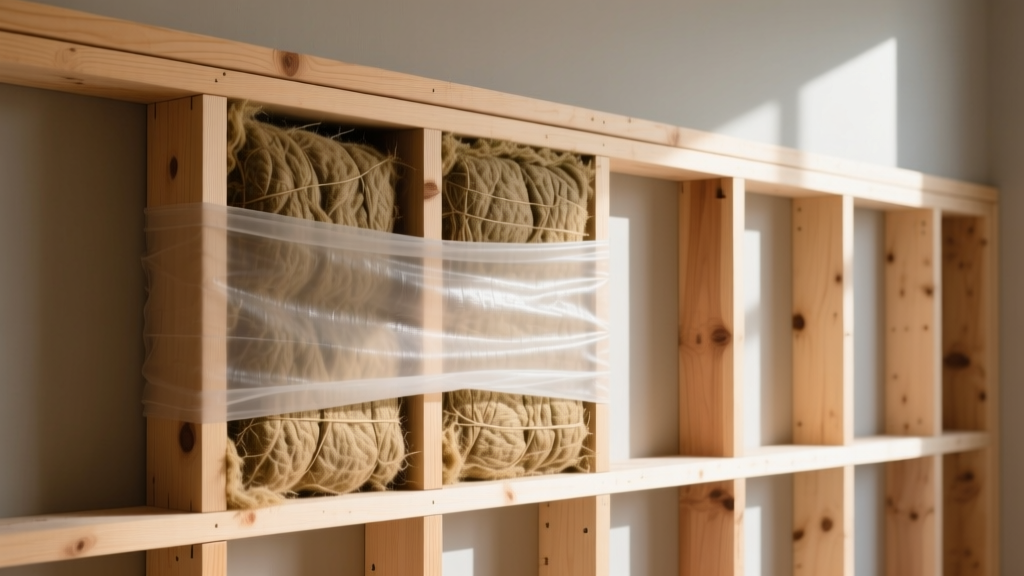
Decision Framework: Specifying Natural Insulation
Selecting the correct natural insulation material requires matching the material's specific hygrothermal properties to the building's climate zone and assembly type.
When to Specify Dense-Pack Cellulose
Choose cellulose for cost-conscious projects, retrofit applications (drill-and-fill), and enclosed cavity walls where high density is required to block air infiltration. It is the most forgiving regarding labor, provided the installer uses proper netting and achieves the target 3.5 pcf density.
When to Specify Hemp or Sheep's Wool
Specify hemp or wool for new-construction timber frame or stick-frame builds where the cavities are open, and the contractor wants a DIY-friendly, itch-free, friction-fit batt. Wool is specifically indicated for high-humidity environments (like marine climates or coastal builds) due to its superior moisture buffering and exothermic properties.
When to Specify Expanded Cork
Use expanded cork board for exterior continuous insulation (ci) layers, unvented roof assemblies, or below-grade applications. Its natural suberin content makes it rot-proof, and its rigidity provides a solid nailing base for exterior cladding, eliminating the need for additional furring strips in some rainscreen designs.
Final Performance Considerations
Transitioning to natural insulation materials requires a shift in building science philosophy. You are moving away from the "seal it in plastic" mentality of the 1990s toward breathable, dynamic assemblies. While the upfront material cost for hemp, wool, or cork is 20% to 60% higher than commodity fiberglass, the elimination of air leakage, the enhancement of acoustic privacy, and the drastic reduction in mold-risk yield a high-performance building envelope that protects both the structural integrity of the home and the health of its occupants.
Written by
Marcus ChenMarcus Chen is a licensed structural engineer (PE) and building materials analyst with over 12 years of experience across residential, commercial, and industrial construction. He holds a Master of Science in Civil Engineering from UC Berkeley and spent six years at Thornton Tomasetti before transitioning to independent consulting and technical writing. Marcus specializes in material selection for seismic-prone regions, concrete reinforcement strategies, and lifecycle cost analysis. His work has been cited by the American Concrete Institute (ACI) and the Structural Engineers Association of California (SEAOC). When he is not on a job site or at his desk, you will find him hiking the Sierra Nevada or restoring a 1920s craftsman bungalow in Oakland, CA.
More from Marcus Chen
View all
Construction Cost
How Much Did the Eiffel Tower Cost to Build?
How much did the Eiffel Tower cost to build in 1889? We adjust for inflation and compare its budget to modern skyscraper construction.
Aug 4, 2026

Fire Resistance
What Is a Fire Resistant Material? Testing & Certification Guide
Discover what is a fire resistant material through ASTM and UL testing. Learn how fire ratings, certifications, and assemblies work in construction.
Aug 4, 2026

Construction Cost
How Much Did the Burj Khalifa Cost to Build?
How much did the Burj Khalifa cost to build? We break down the $1.5B project and extract 5 money-saving strategies for your next build.
Jul 30, 2026