R38 Insulation Lifespan: Durability and Degradation Guide
Analyze the true lifespan of R38 insulation across fiberglass, cellulose, spray foam, and mineral wool. Discover degradation vectors and ROI data.
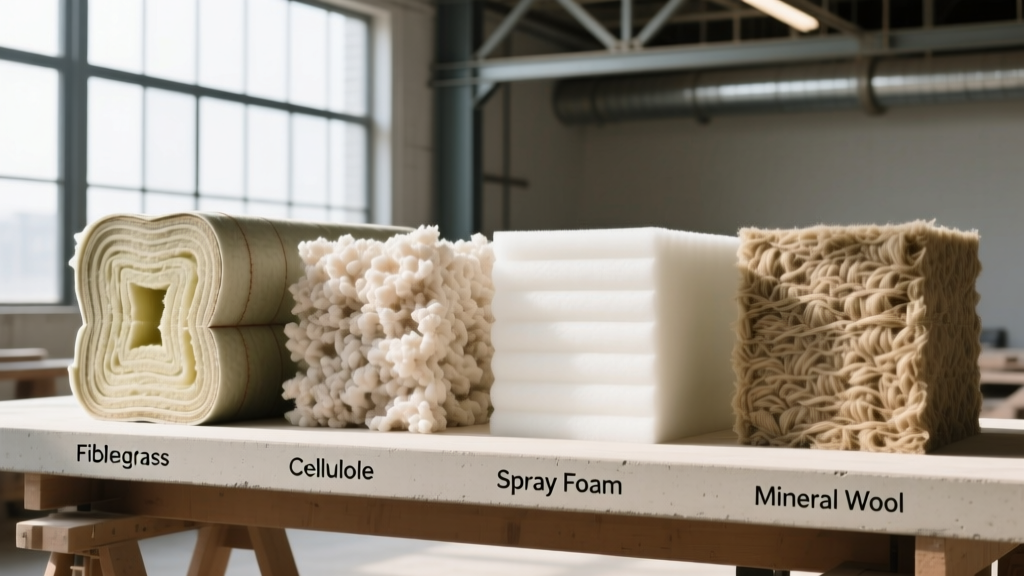
The Reality of R-38: A Performance Target, Not a Material
When building codes in IECC Climate Zones 3, 4, and 5 mandate attic floor thermal resistance, they specify R-38. However, R-38 is a thermal performance target, not a specific product. The durability, lifespan, and long-term degradation of your r38 insulation depend entirely on the physical material used to achieve that thermal resistance. A fiberglass batt, a layer of blown-in cellulose, and a spray foam application will all yield R-38 on day one, but their performance trajectories over a 30-year lifespan diverge drastically.
This analysis breaks down the material science behind achieving R-38, the specific vectors that cause thermal degradation, and the real-world lifespan you can expect from each material category. Understanding these failure modes is critical for avoiding the most common insulation mistake: assuming the R-value printed on the day of installation is the R-value you will have in year ten.
Material Matrix: Achieving R-38 and Expected Lifespans
The physical thickness required to reach R-38 varies by material density and cellular structure. Below is a comparative matrix of the primary materials used to achieve r38 insulation, detailing their required thickness, baseline lifespan, and primary failure mode.
| Insulation Material | Thickness for R-38 | Expected Lifespan | Primary Degradation Vector |
|---|---|---|---|
| Fiberglass Batts (e.g., Owens Corning ProPink) | 11.5 - 12.0 inches | 50 - 100 years | Physical compression, moisture retention |
| Blown-in Cellulose (e.g., Greenfiber) | 10.5 - 11.0 inches (settled) | 20 - 30 years | Volumetric settling, hygroscopic moisture absorption |
| Closed-Cell Spray Foam (e.g., Demilec Heatlok) | 5.5 - 6.0 inches | 80+ years | Improper mixing ratios, UV degradation if exposed |
| Mineral Wool Batts (e.g., Rockwool Comfortbatt) | 11.0 inches | 70 - 100 years | Air washing (if unsealed), binder degradation at >400°F |
Deep Dive: Material-Specific Degradation Vectors
Fiberglass Batts: The Compression Threat
Fiberglass achieves its R-value by trapping pockets of still air within its glass matrix. According to the North American Insulation Manufacturers Association (NAIMA), properly installed fiberglass batts do not chemically degrade over time. The glass fibers themselves will easily outlast the structure of the home. However, r38 insulation installed via fiberglass batts frequently fails due to physical compression.
If a homeowner uses the attic for storage and places plywood directly over the R-38 batts (which are typically 12 inches thick), the insulation is compressed to the depth of the floor joists (often 5.5 to 7.25 inches). Compressing a 12-inch R-38 batt down to 6 inches does not yield R-19; it destroys the air-trapping matrix, dropping the effective R-value to roughly R-11. To maintain the lifespan of fiberglass, it must remain completely uncompressed and free from attic traffic.
Blown-in Cellulose: The Settling and Moisture Trap
Cellulose insulation is highly effective for retrofitting attics, but it carries the highest risk of long-term R-value loss. Made from recycled paper treated with borate fire retardants, cellulose is inherently hygroscopic (moisture-absorbing) and subject to gravity-induced settling.
Furthermore, cellulose can hold up to 30% of its weight in moisture before feeling wet to the touch. In attics with poor ventilation or minor roof leaks, damp cellulose loses its thermal resistance, compacts under its own weight, and becomes a breeding ground for mold, effectively ending its functional lifespan.
Closed-Cell Spray Foam: The Permanent Seal
Closed-cell spray polyurethane foam (SPF) is the most durable method for achieving r38 insulation. At roughly R-6.5 per inch, it requires less than 6 inches of depth. The U.S. Department of Energy notes that SPF adheres directly to the substrate and expands to fill all voids, creating both a thermal and an air barrier.
Closed-cell foam does not settle, does not absorb water, and is impervious to compression. Its lifespan is effectively tied to the lifespan of the roof deck it is applied to. The only common failure mode occurs during installation: if the chemical resin and isocyanate are not mixed at the exact correct temperature and ratio by the contractor, the foam can remain tacky, off-gas indefinitely, or shrink away from the rafters, creating thermal bypasses.
Mineral Wool: The Hydrophobic Workhorse
Mineral wool (stone wool) batts, such as Rockwool Comfortbatt R-38, offer a premium alternative to fiberglass. Spun from basalt rock and slag, mineral wool is naturally hydrophobic—it repels liquid water while allowing water vapor to pass through. This eliminates the moisture degradation vector that plagues cellulose.
Mineral wool maintains its structural rigidity over decades, resisting the sagging and slumping seen in lower-density fiberglass batts. It will easily maintain its R-38 rating for 70+ years, provided it is protected from severe air washing (wind blowing directly through the insulation layer, which requires a proper air barrier beneath the attic floor).
Inspection Framework: Verifying Your R-38 Performance
Do not rely on the installation receipt to guarantee your current thermal performance. Use this three-step diagnostic framework to verify the health of your r38 insulation:
- Physical Depth Measurement: Use a rigid tape measure or a dedicated insulation depth gauge. Probe through the material to the attic floor in at least 10 different locations. For fiberglass, you need a consistent 12 inches. For cellulose, you need a consistent 10.5 inches of settled material. If you find low spots, the material has shifted or settled.
- Infrared Thermography: During winter months, when the temperature differential between the conditioned space and the attic is at least 20°F, scan the ceiling of the top floor with a FLIR thermal imaging camera. Dark blue or black spots indicate missing insulation, severe compression, or thermal bridging through the joists where the insulation has pulled away.
- Moisture Profiling: Use a pinless moisture meter (like a Protimeter) across the surface of cellulose or fiberglass. Any reading above 15% moisture content indicates active degradation, compromised R-value, and an imminent risk of structural rot in the underlying ceiling drywall or wood trusses.
Lifecycle Cost Analysis: ROI by Material
When evaluating the durability of r38 insulation, the initial cost per square foot is only half the equation. The true metric is the cost per year of guaranteed R-38 performance.
30-Year Cost Projection (per 1,000 sq. ft. attic)
- Fiberglass Batts: $1,200 initial. Requires a $600 top-up at year 15 due to minor settling and compression. 30-Year Cost: $1,800.
- Blown Cellulose: $1,400 initial. Requires a $900 complete vacuum and re-blow at year 20 due to severe settling and dust accumulation. 30-Year Cost: $2,300.
- Mineral Wool Batts: $1,900 initial. Zero maintenance required. 30-Year Cost: $1,900.
- Closed-Cell Spray Foam: $3,800 initial. Zero maintenance, adds structural rigidity to the roof deck. 30-Year Cost: $3,800.
While closed-cell spray foam commands a massive upfront premium, its zero-degradation profile makes it the only material that guarantees R-38 performance without future intervention. For budget-conscious builds, mineral wool provides the optimal intersection of moderate upfront cost and permanent durability, entirely bypassing the moisture and settling risks inherent to cellulose and standard fiberglass.