The Berkeley-to-Boston Forty-Brick Lost-Bag Blues: Freight Guide
Avoid the Berkeley-to-Boston forty-brick lost-bag blues by mastering LTL freight, custom crating, and insurance for rare reclaimed masonry shipments.

The Anatomy of a Specialty Brick Freight Disaster
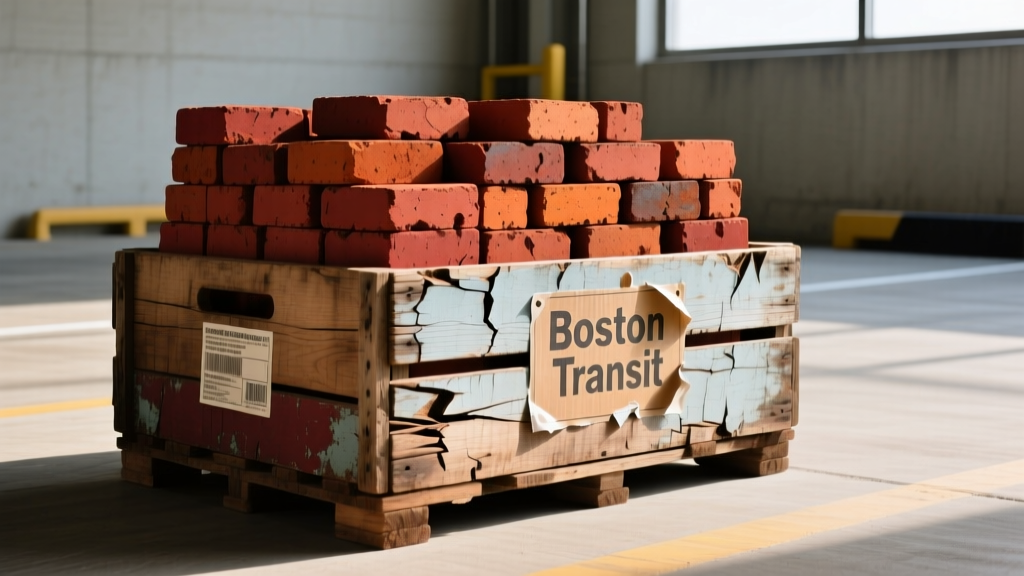
In the niche world of historic masonry restoration and custom architectural builds, contractors and preservationists share a very specific, painful war story. It is often referred to in industry circles as dealing: or the berkeley-to-boston forty-brick lost-bag blues. This phrase perfectly encapsulates the logistical nightmare of sourcing a small, irreplaceable batch of rare bricks from one coast and losing them in the Less Than Truckload (LTL) freight network before they reach the job site on the other.
Imagine you are restoring a 1920s brownstone in Boston. The facade requires exactly 40 reclaimed vitrified clinker bricks to patch a damaged section. You find a perfect match at an architectural salvage yard in Berkeley, California. You pay a premium for the bricks, arrange for a standard LTL pallet shipment, and track it to a sorting hub in Chicago. There, the tracking stops. The pallet is crushed by a forklift, or worse, the small shrink-wrapped stack is mistaken for debris and discarded. You are now left with a halted project, a $2,500 budget hole, and a carrier offering you $45 in liability compensation.
This guide breaks down exactly why this happens, how to engineer a freight-proof crate for small-batch masonry, and the precise steps to insure and track high-value, low-volume brick shipments in 2026.
Why Carriers Treat Reclaimed Brick Like 'Rubble'
The root cause of the forty-brick lost-bag blues lies in how national freight carriers classify and handle masonry. To a logistics algorithm, brick is brick. Carriers rely on the National Motor Freight Classification (NMFC) system to determine handling protocols, density, and liability.
Under standard LTL tariffs, used or reclaimed brick is frequently categorized under NMFC 32270 (Brick, NOI - Not Otherwise Indexed) or worse, classified as 'construction debris' or 'rubble.' The standard released value liability for these classes is often capped at $0.50 to $2.50 per pound. A pallet of 40 standard modular bricks weighs roughly 180 lbs. If lost, the carrier's maximum legal liability is between $90 and $450, regardless of the fact that those specific 40 historic bricks are irreplaceable and vital to a $50,000 facade restoration.
To combat this, you must override the carrier's default assumptions on the Bill of Lading (BOL). You cannot simply list 'Used Bricks' in the commodity description. You must specify 'Architectural Salvage: Historic Face Brick, Palletized and Crated.' Furthermore, you must declare a specific released value on the BOL that matches the replacement cost of the materials, which will increase your freight rate but legally binds the carrier to a higher liability threshold in the event of a claim.
Proper Documentation According to Industry Standards
The Brick Industry Association (BIA) Technical Notes 13 explicitly outlines that masonry units must be protected from weather, physical damage, and improper handling during transit. While the BIA focuses heavily on new manufacturing, the principles of shock absorption and moisture protection are doubly critical for brittle, century-old reclaimed bricks that lack the uniform compressive strength of modern extruded units.
Engineering the 40-Brick Crate: Beyond the Shrink-Wrap
Shipping 40 bricks on a standard 48x40 wooden pallet wrapped in plastic film is a guaranteed way to invite disaster. LTL hubs use automated sorting systems and heavy machinery; a small, low-profile pallet of bricks is easily run over by a pallet jack or buried under 2,000 lbs of automotive parts. For shipments under 100 bricks, you must build a custom enclosed crate.
| Component | Specification | Purpose |
|---|---|---|
| Base Pallet | Heavy-duty 48x40 block pallet (not stringer) | Allows 4-way forklift entry, preventing tilted drops. |
| Shock Layer | 2-inch XPS rigid foam board | Absorbs vertical drop shock and vibration. |
| Brick Wrapping | Individually wrapped in bubble wrap or foam sheets | Prevents edge spalling and face scratching. |
| Void Fill | Expanding polyurethane foam or heavy-duty air pillows | Eliminates lateral movement inside the crate. |
| Exterior Shell | 3/4-inch CDX plywood, screwed and strapped | Creates a physical barrier against crushing loads. |
Step-by-Step Crating Protocol
- Build the Collar: Construct a plywood box that leaves exactly 3 inches of clearance on all sides of the stacked bricks.
- Lay the Foundation: Place the 2-inch XPS foam on the pallet base. Do not use corrugated cardboard; it compresses under sustained LTL stacking loads.
- Interlock the Stack: Stack the 40 bricks in an interlocking bond pattern, separating each layer with a sheet of 1/4-inch foam. This prevents the bricks from grinding against one another during highway transit vibrations.
- Secure the Load: Use heavy-duty ratcheting cargo straps (minimum 1,500 lb break strength) to bind the brick stack directly to the pallet base before closing the plywood lid. This complies with the Federal Motor Carrier Safety Administration (FMCSA) cargo securement rules, ensuring the bricks do not become projectiles inside the crate if the truck brakes suddenly.
- Label Aggressively: Apply 'FRAGILE: ARCHITECTURAL SALVAGE' and 'DO NOT STACK' labels on all four sides and the top. Include a physical packing slip inside a waterproof pouch bolted to the exterior.
Navigating the 'Lost Bag' Freight Claim Process
If your shipment goes dark and the carrier officially declares the freight lost (usually after a 7-to-14-day internal trace investigation), you must immediately pivot from logistics to legal and financial recovery.
"The biggest mistake restoration contractors make is accepting the carrier's initial denial based on 'insufficient packaging.' If you crated the bricks according to BIA standards and documented the crate with timestamped photos before the carrier picked it up, you shift the burden of proof entirely onto the carrier's legal team."
The Third-Party Insurance Imperative
Because relying on carrier liability is a losing game for high-value salvage, purchasing third-party inland marine cargo insurance is non-negotiable. Companies like Shipsurance or UPS Capital offer point-of-sale freight insurance. For a $1,500 shipment of rare bricks, expect to pay roughly $35 to $50 in premiums. This policy bypasses the carrier's NMFC liability limits and pays out based on the actual declared invoice value of the bricks, plus the freight costs, usually within 30 days of a validated loss.
Emergency Sourcing: When the Bricks Are Truly Gone
Sometimes, no amount of insurance can replace the time lost when 40 specific historic bricks vanish. If the Berkeley salvage yard is tapped out, you must rely on advanced material science to fake the match.
- Spectrophotometric Analysis: Send a single sample brick (or a high-resolution macro photograph with a color calibration card) to a specialized brick tinting lab. Companies like Nawkaw use mineral-based silicate stains that penetrate the clay body rather than sitting on the surface like paint.
- Custom Extrusion Runs: Manufacturers like Belden Brick or Pine Hall Brick maintain vast libraries of historic clay blends. While they typically require minimum orders of 1,000+ units for custom runs, their 'specialty match' programs can sometimes accommodate small-batch architectural restorations by blending existing stock colors and applying custom sand-faced textures.
- The 'Harvest' Method: If the facade allows, harvest 40 matching bricks from a hidden area of the same building (such as the rear parapet or an interior masonry chimney breast) to complete the visible street-facing patch, and use the closest modern match you can find to fill the hidden void.
Summary: Preventing the Blues Before They Start
The berkeley-to-boston forty-brick lost-bag blues is entirely preventable. By refusing to ship rare masonry on open pallets, correctly declaring the commodity on the BOL, securing third-party inland marine insurance, and utilizing rigid plywood crating with XPS shock absorption, you transform a high-risk gamble into a predictable, insured logistical operation. In historic preservation, the materials are irreplaceable; your shipping strategy must be equally resilient.
Written by
Elena RodriguezElena Rodriguez is a civil engineer and technical writer specializing in concrete technology, masonry systems, and ASTM/ACI compliance. She earned her B.S. in Civil Engineering from Texas A&M University and spent a decade at a materials testing laboratory, performing over 2,000 concrete compressive strength tests and masonry prism evaluations. Elena is an ACI-certified Field Testing Technician (Grade I) and a member of ASTM Committee C12 on Natural Building Stone. She currently consults on forensic engineering cases involving concrete failures and moisture intrusion. Based in San Antonio, TX, Elena is a proud member of the Society of Women Engineers (SWE) and coaches her daughter's FIRST Robotics team.
More from Elena Rodriguez
View all
Walls & Panels
Cost Analysis: Light Gauge Steel Framing Advantages and Disadvantages
Evaluate light gauge steel framing advantages and disadvantages through a strict cost analysis lens, comparing material, labor, and lifecycle expenses.
Aug 4, 2026

Walls & Panels
Gypsum Board Types: Exact Specifications, Thickness & Dimensions
Compare standard, Type X, and moisture-resistant gypsum board types. Get exact specifications, thicknesses, dimensions, and ASTM standards for your project.
Aug 4, 2026

Fire Resistance
Best Fire-Resistant Outdoor Decking Materials: 2026 Buyer Guide
Discover the best fire-resistant outdoor decking materials for 2026. Compare Class A PVC, aluminum, and hardwood options for WUI compliance and safety.
Aug 4, 2026