AirStone Stone Veneer: The Complete Installation & Material Guide
Explore the complete guide to AirStone stone veneer. Compare interior vs exterior systems, analyze 2026 costs, and master substrate prep.

Material Engineering: What Exactly is AirStone?
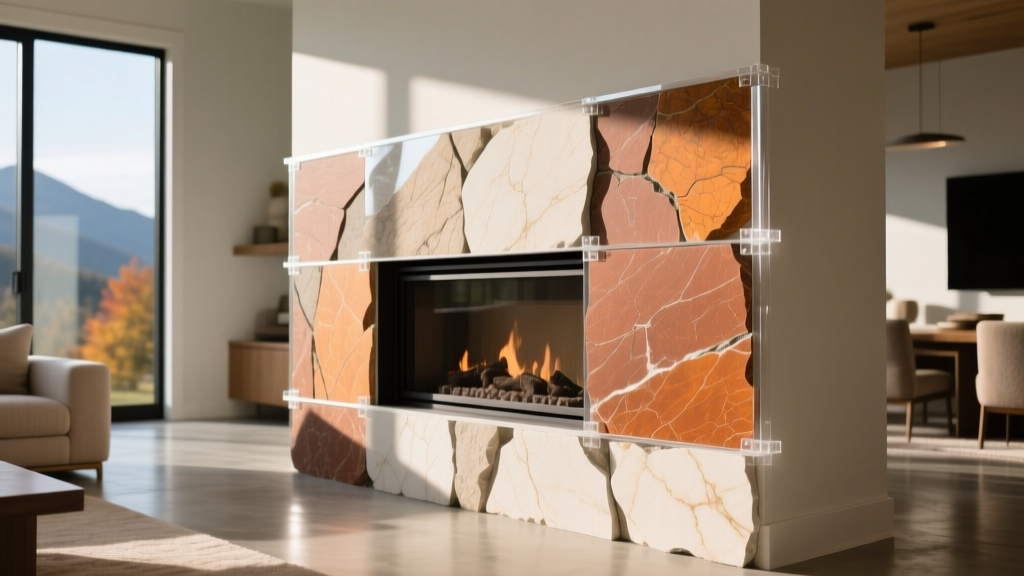
AirStone is a premium brand of manufactured stone veneer (MSV) engineered to replicate the texture, color variation, and physical profile of natural quarried stone. Unlike natural stone, which is cut and shaped from geological deposits, AirStone is cast in molds taken directly from real stone. The material composition consists of Portland cement, lightweight pumice aggregate, and iron oxide pigments. This specific formulation yields a product that weighs approximately 7.5 pounds per square foot—roughly half the weight of natural limestone or granite—eliminating the need for structural wall reinforcements or heavy-duty masonry ties in most residential applications.
System Selection: Interior vs. Exterior AirStone
AirStone manufacturers two distinct product lines. Selecting the wrong system is the most common cause of premature veneer failure. The interior system relies on a mortarless, adhesive-only application, while the exterior system requires traditional masonry protocols to manage hydrostatic pressure and weather exposure.
| Feature | AirStone Interior System | AirStone Exterior System |
|---|---|---|
| Primary Adhesive | Polyurethane construction adhesive (e.g., Loctite PL Premium 3x) | Type S Mortar or polymer-modified thinset |
| Substrate Requirements | Drywall, cement board, existing tile, painted wood | Cement board, masonry, or properly lathed wood framing |
| Moisture Management | Not required (dry environments only) | Weather-Resistive Barrier (WRB) and weep screeds mandatory |
| Weight Load | ~7.5 lbs / sq. ft. | ~8.0 lbs / sq. ft. (including mortar bed) |
| Joint Treatment | Tight-stack (dry fit) or non-sanded caulk | Type N or S mortar for grouted joints |
2026 Cost Analysis: Material and Labor Projections
Pricing for manufactured stone veneer has stabilized following the supply chain fluctuations of the early 2020s. For a standard 50-square-foot fireplace surround or accent wall, the material footprint is highly predictable. The data below reflects national averages for Q1 2026.
| Cost Category | Interior DIY (Per Sq. Ft.) | Exterior Pro (Per Sq. Ft.) |
|---|---|---|
| AirStone Material | $5.50 - $7.50 | $5.50 - $7.50 |
| Adhesive / Mortar | $1.20 - $1.80 | $1.50 - $2.50 |
| Substrate Prep (Lath/WRB) | $0.00 (if using existing drywall) | $2.00 - $3.50 |
| Professional Labor | N/A (DIY Focus) | $12.00 - $18.00 |
| Total Estimated Cost | $6.70 - $9.30 | $21.00 - $31.50 |
Substrate Preparation: The Foundation of Adhesion
The most frequent cause of AirStone delamination is inadequate substrate preparation. While the interior system can technically be applied directly to painted drywall, the drywall must be structurally sound, perfectly flat, and free of dust or grease. For high-moisture areas like bathroom accent walls or behind wood stoves, cement board (such as HardieBacker or Durock) is mandatory.
- Clean and Degrease: Wipe the substrate with a TSP (Trisodium Phosphate) solution to remove cooking oils, drywall dust, or wax residues. Rinse with clean water and allow to dry completely.
- Score Glossy Surfaces: If applying over existing ceramic tile or semi-gloss paint, scarify the surface using 60-grit sandpaper or a wire brush to create a mechanical tooth for the polyurethane adhesive.
- Verify Plumb and Level: AirStone relies on tight stacking. If your wall bows by more than 1/8-inch over a 4-foot span, the veneer will not seat properly, leaving visible gaps. Shim or skim-coat the substrate before installation.
Execution: Step-by-Step Installation Framework
Proper execution requires specific tooling. Do not attempt to cut AirStone with a standard wood blade or a masonry block splitter. The pumice aggregate requires a continuous rim diamond blade on a wet saw to prevent micro-fractures and edge chipping.
Phase 1: Dry Layout and Pattern Matching
Open 4 to 5 boxes of AirStone and mix them on the floor. Manufactured stone has inherent color batch variations. Blending the stones prevents distinct color blocking on your finished wall. Dry-fit the corner pieces first, as these dictate the running bond pattern for the field stones.
Phase 2: Adhesive Application
For the interior mortarless system, use a high-quality polyurethane construction adhesive. Apply a continuous 1/4-inch bead to the back of the stone, keeping the adhesive at least 1/2-inch away from the edges to prevent squeeze-out that can stain the porous cement face. For larger field stones, supplement the bead with a 1/2-inch S-notch trowel application to ensure 85% adhesive coverage.
Phase 3: Seating and Wiggle Technique
Press the stone firmly against the substrate and apply a slight lateral 'wiggle' motion. This collapses the adhesive ridges and pushes air pockets out. Maintain a 1/16-inch to 1/8-inch gap between tight-stacked stones to account for minor dimensional variances in the cast molds. Use a rubber mallet to tap the stones flush, never a steel hammer which will shatter the cementitious edges.
Troubleshooting Common Failure Modes
Even experienced DIYers encounter issues when working with MSV. Understanding the mechanics behind these failures allows for immediate correction.
- Adhesive Squeeze-Out Staining: If polyurethane adhesive bleeds onto the face of the stone, do not wipe it with a wet rag or solvent. This will drive the polymer deeper into the pores. Allow the adhesive to cure to a rubbery state (usually 24 hours), then carefully peel or slice it off with a utility knife.
- Efflorescence on Exterior Applications: White, powdery deposits on exterior AirStone indicate moisture is migrating through the wall assembly, dissolving soluble salts in the Portland cement, and depositing them on the surface as it evaporates. As detailed by the Building Science Corporation, managing this requires a ventilated rain screen gap and a properly integrated weather-resistive barrier behind the veneer, not just a surface sealer.
- Corner Piece Misalignment: AirStone corner pieces are designed to wrap 90 degrees seamlessly. If the substrate corner is not perfectly plumb, the return leg of the corner stone will gap. Shim the substrate behind the corner stud before applying the cement board or drywall to ensure a true 90-degree angle.
Sealing and Long-Term Maintenance
AirStone is inherently color-fast due to the iron oxide pigments integrated into the cement matrix. For interior applications, sealing is generally unnecessary and can actually trap moisture if the wall experiences a leak. If a sealer is desired for a kitchen backsplash to prevent grease absorption, use only a breathable, penetrating silane/siloxane masonry sealer. Avoid film-forming acrylic sealers, which will create an unnatural plastic sheen and trap moisture vapor inside the stone, eventually leading to spalling. For routine cleaning, a stiff bristle brush and a mild solution of water and dish detergent are sufficient; never use acid-based masonry cleaners, as they will etch the Portland cement binder and expose the lightweight pumice aggregate.
Written by
Priya KapoorPriya Kapoor is a real estate market analyst and construction economics researcher with expertise in housing affordability, development feasibility, and infrastructure investment. She holds a Master of Regional Planning from Cornell University and previously worked as a senior analyst at CBRE's Investment Properties group, where she modeled returns for $4B in mixed-use development pipelines. Priya now runs an independent research practice advising developers, municipalities, and REITs on construction cost forecasting and market timing. She publishes the quarterly "BuildMat Market Pulse" report tracking material price indices across 12 commodity categories. Based in Austin, TX, Priya serves on the board of Habitat for Humanity Austin and is a marathon runner.
More from Priya Kapoor
View all
Construction Cost
Cost to Build a 1600 Sq Ft Home in 2026: Full Breakdown
Accurate 2026 cost to build a 1600 sq ft home—material, labor, and regional pricing breakdowns included. Plan your budget with real-time estimates.
Aug 11, 2026

Wood & Lumber
Name the Types of Wood for Pressure Treatment and Preservation
Learn how to name the types of wood best suited for pressure treatment. Compare species treatability, chemical retention levels, and 2026 preservation costs.
Aug 4, 2026

Stone & Masonry
Stone Veneer Suppliers Lindenhurst: 2026 Cost Analysis
Analyze 2026 stone veneer costs in Lindenhurst, NY. Compare local supplier pricing, delivery fees, and Suffolk County installation labor rates.
Aug 4, 2026