Cheap Stacked Stone Veneer: 2026 Cost & Buyer Guide
Discover real 2026 costs for cheap stacked stone veneer. Compare manufactured vs. natural options, hidden installation risks, and expert sourcing tips.

The Reality of 'Cheap' Stacked Stone Veneer
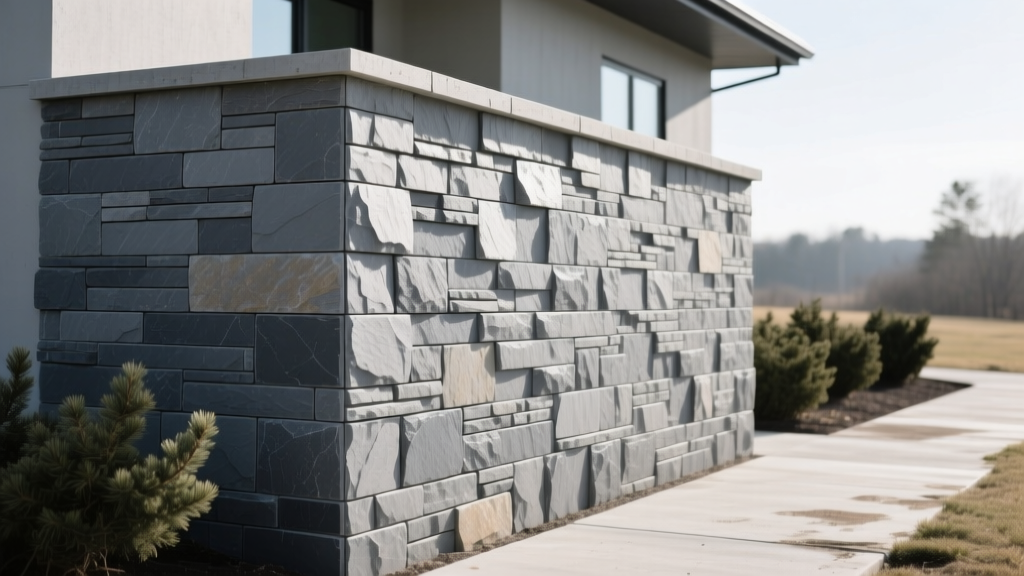
When contractors and homeowners search for cheap stacked stone veneer, they are typically navigating a market fractured into three distinct material categories: Manufactured Stone Veneer (MSV), Natural Thin Stone Veneer (NTSV), and High-Density Polyurethane (HDP) faux panels. Understanding the structural and aesthetic differences between these materials is the only way to secure a genuine bargain without inviting catastrophic moisture failure or premature UV degradation.
True budget-friendly stone veneer in 2026 is dominated by regional casters producing MSV. These products are engineered from Portland cement, lightweight aggregates, and iron oxide pigments. They mimic the depth and shadow lines of natural stacked ledge stone but weigh roughly 10 to 12 pounds per square foot—less than half the weight of full-bed natural stone. However, the pursuit of the lowest possible price per square foot often leads buyers toward ultra-thin, non-compliant imports or interior-grade polyurethane panels that fail rapidly when exposed to exterior thermal cycling.
2026 Cost Breakdown: What You Actually Pay
Pricing for stacked stone veneer has stabilized following the supply chain disruptions of the early 2020s, but regional shipping costs for heavy cementitious products remain a major factor. The table below outlines the current material and installed costs for budget-tier stacked stone options.
| Material Type | Avg. Material Cost (per sq. ft.) | Installed Cost (per sq. ft.) | Weight / Thickness |
|---|---|---|---|
| Budget MSV (Regional Caster) | $4.50 - $6.50 | $12.00 - $16.00 | 10-12 lbs / 1.5 - 2.5 in. |
| Premium MSV (National Brand) | $7.00 - $9.50 | $16.00 - $22.00 | 12-15 lbs / 2.0 - 3.0 in. |
| Natural Thin Veneer (Quartzite/Slate) | $8.50 - $12.00 | $18.00 - $26.00 | 13-15 lbs / 0.75 - 1.5 in. |
| Interlocking Polyurethane Panels | $8.00 - $11.00 | $11.00 - $15.00 | 1-2 lbs / 1.5 - 2.0 in. |
Note: Installed costs assume standard wood-frame construction with existing weather-resistive barriers (WRB). Demolition of existing siding or structural reinforcement will add $2.50 to $5.00 per square foot.
Hidden Costs and Failure Modes in Budget Installations
The most expensive mistake in budget stone veneer installation is treating the material as a purely cosmetic overlay rather than a cladding system that interacts with the building envelope. According to guidelines published by the National Veneer Masonry Association, adhered manufactured stone masonry veneer must be installed over a properly prepared substrate to prevent water intrusion and structural rot.
The Moisture and Weep Screed Mandate
Budget installations frequently skip the weep screed, opting to run the stone veneer directly into the soil or concrete slab. This violates ASTM C1063 and invites capillary action, drawing ground moisture directly into the stone and backing wall. A proper installation requires a corrosion-resistant weep screed flashed behind the WRB, maintaining a minimum 4-inch clearance above final grade (or 2 inches above paved surfaces). Skipping this $1.50 per linear foot component is the primary cause of efflorescence (white salt deposits) and bottom-course spalling in cheap stone installations.
The Mortar and Lath Trap
Contractors cutting corners on budget jobs often use 1.75 lb lath and Type N mortar. For exterior stacked stone veneer, you must specify 2.5 lb self-furring diamond mesh lath (ASTM C847) attached with corrosion-resistant fasteners every 6 inches. Furthermore, the mortar must be Type S, which offers higher tensile bond strength (minimum 1800 psi) than Type N, allowing it to withstand the thermal expansion and contraction cycles that cause cheaper mortars to crack and release the stone faces.
Material Showdown: Budget MSV vs. Natural Thin Veneer
Is it worth stretching the budget from a $5.00 regional MSV to a $9.00 natural thin stone? The decision hinges on your project's specific environmental and aesthetic requirements.
- Color Fastness: Natural stone (like real slate or quartzite) will never fade because the color is geological. Budget MSV relies on surface-applied iron oxide pigments that can degrade or chip, revealing the gray concrete core beneath.
- Profile Depth: Stacked stone relies on deep shadow lines for its visual impact. Budget MSV often features repetitive molds and shallower profiles (1.5 inches) compared to natural thin veneer, which can be cleft to varying depths, creating a more organic, randomized ledge appearance.
- Weight and Substrate: If you are applying stone to an interior drywall feature wall or a non-load-bearing partition, natural thin veneer (under 1 inch thick) or high-quality polyurethane panels are vastly superior, as they do not require the heavy cement backer board and metal lath substrate demanded by MSV.
Step-by-Step Framework for Sourcing Budget Veneer
Finding genuine deals on high-quality stacked stone requires bypassing big-box retail markups and targeting the wholesale supply chain.
- Target Regional Caster Overruns: MSV is heavy and expensive to ship. Identify local concrete and masonry supply yards within a 100-mile radius. Ask specifically for 'overstock', 'discontinued color blends', or 'pallet seconds' (stones with minor edge chipping that can be hidden during installation).
- Buy the 'Flats' and 'Corners' Separately: Amateurs buy pre-packaged boxes that include a fixed ratio of flats to corners. Calculate your exact linear footage of corners and square footage of flats. Buying bulk flats by the pallet and only the exact number of corner pieces needed can reduce your total material bill by 15% to 20%.
- Verify ASTM C1670 Compliance: Before purchasing any unbranded or liquidation MSV, demand the manufacturer's technical data sheet. Ensure the product meets ASTM C1670 (Standard Specification for Adhered Manufactured Stone Masonry Veneer), specifically checking for freeze-thaw durability testing if you live in a climate with seasonal freezing.
Expert Verdict: When to Save and When to Spend
Cheap stacked stone veneer is a highly viable option for interior accent walls, basement refinishing, and protected exterior applications (like covered porch pillars) where direct UV and driving rain are mitigated. For these projects, budget regional MSV or even interlocking polyurethane panels offer massive labor savings and acceptable aesthetics.
However, for full exterior facade cladding, exterior chimney chases, or retaining wall caps, the 'cheap' route is a false economy. The cost of scaffolding, demolition, and moisture remediation far exceeds the initial savings of buying substandard stone. For exterior applications, invest in a premium MSV with a 50-year warranty or a natural thin quartzite veneer, paired with an uncompromising installation protocol featuring 2.5 lb lath, Type S mortar, and properly flashed weep screeds.
Written by
James ThorntonJames Thornton is a construction industry veteran with 25 years of hands-on experience in wood framing, lumber grading, and residential building codes. He started as a framing carpenter in rural Oregon, earned his ICC Residential Building Inspector certification, and eventually became a senior plan reviewer for the City of Portland Bureau of Development Services. James holds a B.S. in Wood Science & Technology from Oregon State University and is a certified lumber grader through the West Coast Lumber Inspection Bureau (WCLIB). He has inspected over 3,000 residential construction sites and authored the city's internal guide on advanced framing techniques (2x6 at 24" O.C.). James lives in Bend, OR, where he builds custom timber-frame cabins and competes in lumberjack sports.
More from James Thornton
View all
Insulation
Best Home Insulation Materials: Complete 2026 Guide
Compare top home insulation materials for 2026. Find R-values, installed costs per square foot, and best uses for fiberglass, spray foam, and mineral wool.
Aug 4, 2026

Sustainable Building
Certify Your Green Building Material for LEED and WELL
Step-by-step guide to certifying a green building material for LEED v5 and WELL v2. Master EPDs, HPDs, and VOC limits for 2026 project specifications.
Aug 4, 2026

Stone & Masonry
Veneer Stacked Stone Panels: Interior Design & Style Showcase
Discover how veneer stacked stone panels transform interiors. Explore modern design profiles, material pairings, and technical installation specs.
Aug 4, 2026