Cost of Building Materials Made From Limestone: 2026 Guide
Comprehensive 2026 cost analysis of building materials made from limestone, including dimension stone, veneer, hidden structural expenses, and lifecycle ROI.

The True Cost of Building Materials Made From Limestone in 2026
When evaluating building materials made from limestone, architects, estimators, and homeowners frequently make the mistake of budgeting solely for the raw stone. However, the true project cost encompasses quarry yield grades, structural load reinforcements, specialized masonry labor, and long-term weatherproofing. As of 2026, supply chain stabilization has normalized freight rates, but the extraction and fabrication costs for high-grade calcium carbonate stone have increased by 4.2% year-over-year due to stricter environmental compliance at major quarries in Indiana, Texas, and Kansas.
Quick 2026 Baseline Cost Summary
- Natural Thin Veneer (NTV): $21 – $32 per sq. ft. (installed)
- Full-Dimension Ashlar Stone: $55 – $95 per sq. ft. (installed)
- Reconstituted (Cast) Limestone: $33 – $50 per sq. ft. (installed)
- Crushed Limestone Aggregate (Base): $38 – $60 per ton (delivered within 50 miles)
Breakdown by Limestone Product Type
Limestone is processed into several distinct building products, each with a vastly different pricing structure. The United States Geological Survey (USGS) tracks the macro-level extraction of these materials, noting that dimension stone represents a high-value, low-volume segment compared to the massive tonnage of crushed aggregate used in road base and concrete production.
| Material Category | Material Cost (per sq. ft.) | Installation Labor | Primary Use Case |
|---|---|---|---|
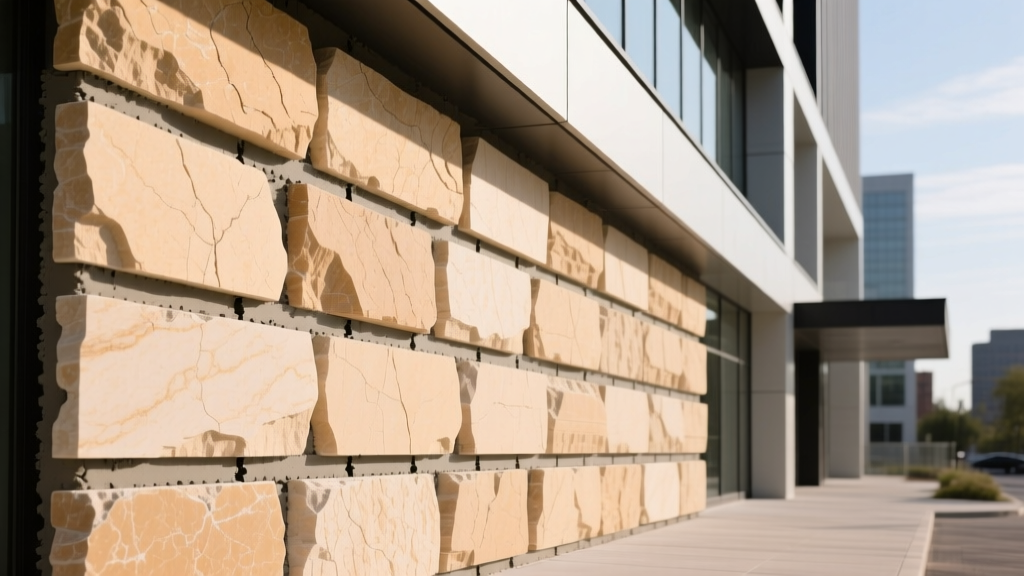
| Natural Thin Veneer (1"-1.5" thick) | $9.00 – $14.00 | $12.00 – $18.00 | Residential facades, interior feature walls, retrofits |
| Full-Dimension Ashlar (3.5"+ thick) | $25.00 – $45.00 | $30.00 – $50.00 | Commercial masonry, load-bearing walls, high-end estates |
| Cast / Reconstituted Limestone | $15.00 – $25.00 | $18.00 – $25.00 | Intricate architectural detailing, window surrounds, columns |
| Limestone Pavers (2" thick) | $11.00 – $18.00 | $8.00 – $14.00 | Patios, pool coping, pedestrian walkways |
Understanding Quarry Grades and Yield Waste
The price of natural limestone is heavily dictated by its visual grade. According to the Indiana Limestone Institute of America (ILIA), dimension stone is categorized into three primary grades, which directly impact your material budget:
- Select Grade: Uniform color, tight grain, minimal fossil inclusions. Because quarries must discard up to 40% of extracted blocks to meet Select specifications, this grade commands a 25% to 35% premium over standard options.
- Standard Grade: Moderate color variation and visible fossil patterns. This is the most cost-effective choice for large commercial facades, offering natural character without the premium yield waste.
- Rustic Grade: Heavy fossil content, wide color ranges, and prominent calcite streaks. While the raw material is cheaper, the labor cost to install it increases by roughly 10% because masons must spend more time blending and fitting irregular pieces.
Hidden Costs and Failure Modes in Limestone Construction
Budget overruns on limestone projects rarely stem from the stone itself; they originate from ignored structural and chemical requirements. Limestone is a porous, calcium-based sedimentary rock. Treating it like granite or brick will lead to catastrophic failure modes.
⚠️ Critical Warning: Acid Washing and Efflorescence
Never use muriatic acid or standard masonry cleaners to remove mortar smears from limestone. The acid reacts with the calcium carbonate, permanently etching the surface and causing severe spalling. Budget an additional $1.50 to $2.50 per sq. ft. for specialized alkaline-based cleaners and micro-abrasive techniques for post-installation cleanup.
Structural Load and Lintel Requirements
Full-dimension limestone weighs approximately 165 pounds per cubic foot. A standard 4-inch thick ashlar wall exerts a dead load of roughly 55 pounds per square foot. This necessitates continuous steel angle iron supports (shelf angles) anchored to the structural framing every 12 feet vertically. Budget $8.00 to $12.00 per linear foot for stainless steel or hot-dipped galvanized shelf angles. Using standard painted steel will result in rust jacking, where expanding rust cracks the limestone from the inside out.
Mortar Compatibility and Expansion Joints
Limestone requires a mortar that is softer and more permeable than the stone itself to prevent moisture entrapment and freeze-thaw spalling. Type N or Type O mortar mixes are mandatory. Furthermore, thermal expansion requires 3/16-inch expansion joints every 20 linear feet. Failing to include these joints will result in diagonal step-cracking across the facade, requiring complete teardown and reconstruction.
Regional Pricing Variations and Freight Impacts
Because of its extreme density, freight is the most volatile variable in limestone pricing. The Natural Stone Institute emphasizes that local sourcing is critical for budget management. A standard pallet of natural thin veneer weighs approximately 2,000 pounds and covers about 150 square feet.
- Within 300 miles of major quarries (e.g., Bloomington, IN; Austin, TX): Freight adds roughly $1.00 to $2.00 per sq. ft. via standard LTL (Less Than Truckload) shipping.
- Cross-country (e.g., Indiana quarry to Seattle, WA): Freight surcharges can add $4.50 to $7.00 per sq. ft., effectively increasing the total project cost by 30% to 40%.
Procurement Strategy: For projects outside the primary quarry radius, specify reconstituted (cast) limestone. Cast limestone is manufactured regionally using crushed limestone aggregate mixed with Portland cement, eliminating cross-country freight costs while mimicking the aesthetic of natural stone.
Lifecycle Cost Analysis: Limestone vs. Alternatives
While the upfront capital expenditure for building materials made from limestone is higher than synthetic alternatives, the 50-year lifecycle cost tells a different story. Limestone requires virtually zero maintenance beyond occasional water washing, whereas synthetic stucco and brick require tuckpointing, sealing, and eventual replacement.
| Material | Initial Installed Cost (per sq. ft.) | 50-Year Maintenance | Expected Lifespan | Total 50-Yr Cost |
|---|---|---|---|---|
| Full-Dimension Limestone | $75.00 | $2.00 | 100+ Years | $77.00 |
| Clay Brick Masonry | $45.00 | $18.00 (Tuckpointing) | 75 - 100 Years | $63.00 |
| EIFS (Synthetic Stucco) | $22.00 | $35.00 (Repair/Replace) | 25 - 30 Years | $57.00 |
Actionable Procurement Strategies for 2026
To optimize your budget when specifying limestone, implement the following procurement frameworks:
- Standardize Thickness: Specify 2-inch bed depth for veneers instead of custom 3-inch cuts. Standardizing to quarry-run thicknesses reduces fabrication time and lowers material costs by up to 15%.
- Utilize Random Ashlar Patterns: Instead of specifying uniform, repeating block sizes (which require precise cutting and high waste), specify a Random Ashlar pattern. This allows the mason to use off-cuts and varied block sizes, reducing quarry yield waste and lowering the per-square-foot material cost.
- Pre-Blend at the Quarry: Order your stone with a "pre-blend" instruction. The quarry will mix pallets from different blocks before shipping. This prevents the mason from spending expensive on-site labor hours sorting and blending stones to avoid color banding on the facade.
- Specify Siloxane Sealers: If sealing is required for splash zones or high-pollution urban environments, budget for penetrating siloxane sealers ($1.20/sq. ft.) rather than film-forming acrylics. Siloxane allows the stone to breathe, preventing trapped moisture from causing sub-surface spalling during freeze-thaw cycles.
By understanding the intersection of geology, structural engineering, and logistics, estimators can accurately forecast the true cost of limestone construction, avoiding the margin-eroding surprises that plague poorly planned masonry projects.
Written by
Sarah WhitfieldSarah Whitfield is a chartered quantity surveyor (MRICS) and construction cost analyst with 15 years of experience in material pricing, procurement strategy, and project budgeting. She earned her degree in Construction Management from the University of Reading (UK) and has worked on projects ranging from $2M custom homes to $180M mixed-use developments across North America and Europe. Sarah currently leads cost estimating for BuildMat Insight, maintaining a proprietary database of 4,000+ material price points updated quarterly. She is a frequent contributor to RSMeans cost data panels and has presented at the International Cost Engineering Council (ICEC) congress. Based in Denver, CO, Sarah is an avid trail runner and volunteer mentor for Women in Construction.
More from Sarah Whitfield
View all
Wood & Lumber
What Are the Different Types of Wood? A Builder's Guide
Compare structural softwoods, finish hardwoods, and engineered lumber. Analyze Janka ratings, MOE values, and 2026 pricing for construction.
Aug 4, 2026

Walls & Panels
Steel Framing vs Wood Framing: Corrosion and Moisture Defense
Compare steel framing vs wood framing for moisture resistance. Learn about galvanized coatings, condensation risks, and corrosion protection strategies.
Jul 21, 2026

Stone & Masonry
How to Cut Stone Veneer: Wet Saw vs Grinder Comparison
Compare the best tools for cutting stone veneer. We review wet saws, angle grinders, and chop saws to help you achieve clean, chip-free cuts.
Jul 21, 2026