2026 Stone Veneer House Exterior Cost Analysis & ROI Guide
Discover the true 2026 cost of a stone veneer house exterior. Breakdown of material, labor, hidden fees, and ROI for manufactured vs. natural stone.

The True Cost of a Stone Veneer House Exterior in 2026
Upgrading to a stone veneer house exterior fundamentally alters a property's architectural profile, thermal mass, and market valuation. However, budgeting for this project requires moving beyond basic square-footage estimates. In 2026, the national average cost to install manufactured stone veneer on a full 2,000-square-foot exterior ranges from $38,000 to $62,000, while natural stone veneer pushes that envelope to $75,000 or more. The final invoice is dictated by substrate preparation, regional masonry labor rates, and the geometric complexity of the facade.
Quick Cost Summary (2,000 Sq. Ft. Exterior)
- Manufactured Stone Veneer (Full Wrap): $38,000 – $62,000
- Natural Stone Veneer (Full Wrap): $75,000 – $110,000
- Manufactured Wainscoting (Bottom 3 Feet Only): $14,000 – $22,000
- Average ROI at Resale: 92% – 96% (Manufactured)
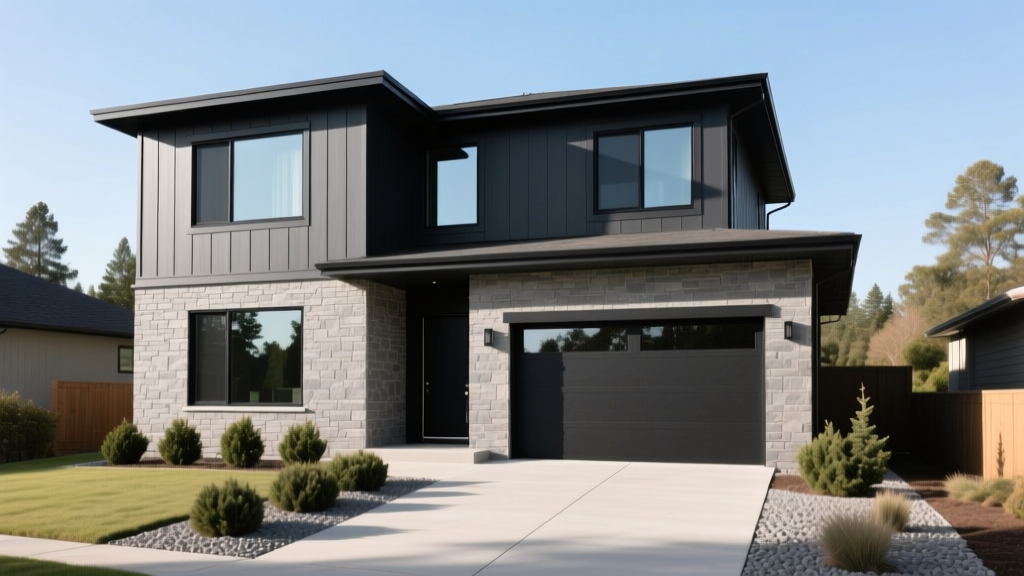
Material Breakdown: Manufactured vs. Natural Stone Veneer
The choice between manufactured (architectural) and natural stone veneer dictates the baseline material budget and structural requirements. Manufactured stone, produced by brands like Boral Cultured Stone and Eldorado Stone, utilizes portland cement, lightweight aggregates, and iron oxide pigments to replicate natural textures. It weighs between 8 to 12 pounds per square foot, allowing it to be installed on standard wood-framed walls without additional structural footings.
Natural stone veneer, cut from quarried limestone, slate, or fieldstone, weighs 15 to 25 pounds per square foot. While modern 'thin' natural veneers are lighter than traditional full-bed stone, they still require rigorous structural evaluation. Furthermore, natural stone demands higher skill levels to layout and blend color variations organically, directly inflating labor costs.
| Material Type | Material Cost (Per Sq. Ft.) | Weight (Per Sq. Ft.) | Structural Footing Required? | Best Application |
|---|---|---|---|---|
| Manufactured Veneer (Standard) | $7.50 – $13.00 | 8 – 12 lbs | No | Full exterior wraps, gables |
| Manufactured Veneer (Premium) | $13.50 – $18.00 | 10 – 14 lbs | No | High-end custom builds |
| Natural Thin Veneer | $16.00 – $28.00 | 12 – 18 lbs | Rarely | Accent columns, wainscoting |
| Natural Full-Bed Stone | $35.00 – $55.00+ | 35 – 50 lbs | Yes (Mandatory) | Historical restorations |
Labor and Installation: Where the Budget Expands
Labor accounts for 50% to 65% of the total project cost. Masonry contractors typically charge between $12.00 and $22.00 per square foot for installation, but this rate is highly sensitive to the wall's preparation requirements and the stone profile chosen. For instance, a dry-stack profile (like Eldorado Stone's RoughCut) requires meticulous leveling and tight joints, taking up to 30% longer to install than a mortar-jointed fieldstone profile.
Substrate Preparation and Code Compliance
You cannot adhere stone veneer directly to painted drywall, plywood, or existing vinyl siding. Proper installation mandates stripping the exterior down to the sheathing. According to the Eldorado Stone installation guidelines and International Residential Code (IRC) standards, the substrate must receive a weather-resistive barrier (WRB), followed by a self-furring, corrosion-resistant metal lath (minimum 2.5 lbs per square yard) attached with galvanized nails or staples into the wall studs. Over this lath, masons apply a 1/2-inch scratch coat of Type S mortar. Skipping or rushing the scratch coat cure time (which requires 24 to 48 hours) is the primary cause of future delamination and veneer failure.
Regional Labor Rate Variations
Masonry is a localized trade. In high-cost-of-living metropolitan areas (e.g., Boston, San Francisco, Seattle), expect union or highly skilled prevailing rates to push labor costs to $25+ per square foot. In the Southeast and Midwest, where masonry trades are more abundant and non-union labor is prevalent, rates stabilize closer to $10.00 – $14.00 per square foot.
Hidden Costs and Edge Cases
Homeowners frequently experience budget shock due to line items omitted from initial contractor quotes. When soliciting bids for a stone veneer house exterior, ensure these specific variables are explicitly addressed:
- Corner Pieces: Stone veneer corners are not created by simply cutting flat stones at a 90-degree angle. They require specialized L-shaped corner units to maintain the illusion of structural depth. Corners are sold by the linear foot ($12 to $25 per LF) and can consume up to 20% of your total material budget on homes with numerous architectural bumps and window returns.
- Scaffolding and Lifts: For two-story homes or steep gable ends, erecting scaffolding adds $1,500 to $4,000 to the project. If the site lacks space for scaffolding, boom lifts may be required, increasing daily rental fees.
- Flashing and Weep Screeds: Proper moisture management requires installing a weep screed at the base of the wall (minimum 4 inches above grade or 2 inches above paving) and kick-out flashing where rooflines intersect the stone walls. Improper flashing is the leading cause of water intrusion behind the veneer.
- Demo and Haul-Away: Removing existing brick, stucco, or heavy timber siding before installing the new WRB and lath adds $2.00 to $4.50 per square foot in demolition and dumpster fees.
- Mortarless Systems: Systems like ClipStone or StoneFly allow for mechanical fastening without mortar. While material costs are 25% higher, they eliminate the need for a mason, allowing skilled carpenters to install the veneer, potentially saving money on specialized labor.
ROI and Resale Value: Is It Worth the Investment?
From a purely financial perspective, a stone veneer house exterior consistently ranks among the top exterior remodeling projects for cost recoup. Data historically tracked by Architectural Digest and Remodeling Magazine's Cost vs. Value reports indicates that manufactured stone veneer retains approximately 92% to 96% of its installed cost upon resale, significantly outperforming vinyl siding replacement or wood deck additions.
'Appraisers and real estate agents categorize stone veneer as a premium exterior finish. It elevates the perceived quality of the entire build, often allowing sellers to push the property into a higher comparable bracket, provided the stone profile and color palette align with regional architectural norms.'
However, ROI diminishes if the stone application is visually disjointed. Wrapping an entire house in heavy, dark fieldstone in a neighborhood dominated by light-colored coastal or craftsman homes can result in an over-improvement penalty. The highest ROI is achieved when stone is used as an accent material—pairing warm limestone profiles with dark fiber-cement siding (like JamesHardie) and black architectural windows.
Pro Tips for Budget Optimization
The 'Wainscoting Only' Strategy
If a full exterior wrap exceeds your capital allocation, restrict the stone veneer to the bottom 36 to 48 inches of the exterior walls (wainscoting), as well as the front-facing gables and entryway columns. This technique grounds the house visually, provides the protective benefits of masonry against lawnmower debris and splashback, and reduces total square footage by 60%, keeping the project comfortably under $20,000 for most standard floor plans.
Limit the Color Palette
Custom color blends from manufacturers carry a 15% to 20% premium and extended lead times. Selecting a standard, high-volume colorway (such as a neutral buff, weathered gray, or autumn blend) ensures immediate availability from local masonry supply yards and allows contractors to work faster without pausing to sort and blend custom hues on-site.
Final Decision Framework
Use this matrix to determine the optimal execution strategy for your specific property and budget constraints:
Choose Manufactured Veneer If:
- Your budget is capped at $45,000 for a full wrap.
- Your existing foundation cannot support the dead load of natural stone.
- You require a highly specific, uniform color blend to match existing hardscaping.
- You want the highest verified ROI at resale.
Choose Natural Thin Veneer If:
- You are building a custom, high-end luxury home where authenticity is paramount.
- Local zoning or HOA architectural review boards mandate natural materials.
- You prefer the unique, unrepeatable mineral veining found only in quarried stone.
- Budget is flexible and exceeds $75,000.
Securing a durable, high-impact stone veneer house exterior requires treating the project as a comprehensive building envelope upgrade, not merely a cosmetic facelift. By prioritizing substrate integrity, accounting for linear corner footage, and selecting profiles that complement the home's existing massing, you ensure the investment yields both immediate curb appeal and long-term structural resilience.
Written by
Sarah WhitfieldSarah Whitfield is a chartered quantity surveyor (MRICS) and construction cost analyst with 15 years of experience in material pricing, procurement strategy, and project budgeting. She earned her degree in Construction Management from the University of Reading (UK) and has worked on projects ranging from $2M custom homes to $180M mixed-use developments across North America and Europe. Sarah currently leads cost estimating for BuildMat Insight, maintaining a proprietary database of 4,000+ material price points updated quarterly. She is a frequent contributor to RSMeans cost data panels and has presented at the International Cost Engineering Council (ICEC) congress. Based in Denver, CO, Sarah is an avid trail runner and volunteer mentor for Women in Construction.
More from Sarah Whitfield
View all
Wood & Lumber
What Are the Different Types of Wood? A Builder's Guide
Compare structural softwoods, finish hardwoods, and engineered lumber. Analyze Janka ratings, MOE values, and 2026 pricing for construction.
Aug 4, 2026

Walls & Panels
Steel Framing vs Wood Framing: Corrosion and Moisture Defense
Compare steel framing vs wood framing for moisture resistance. Learn about galvanized coatings, condensation risks, and corrosion protection strategies.
Jul 21, 2026

Stone & Masonry
How to Cut Stone Veneer: Wet Saw vs Grinder Comparison
Compare the best tools for cutting stone veneer. We review wet saws, angle grinders, and chop saws to help you achieve clean, chip-free cuts.
Jul 21, 2026