Limestone Veneer Stone vs. Manufactured Veneer: 2026 Comparison
Compare limestone veneer stone to manufactured alternatives. Analyze 2026 costs, weight, installation, and durability to choose the right exterior cladding.

The Core Debate: Natural Limestone Veneer Stone vs. Manufactured Alternatives
Specifying exterior or interior cladding requires balancing aesthetic authenticity, structural limitations, and lifecycle costs. In 2026, the market for stone cladding is sharply divided between natural limestone veneer stone and high-density manufactured stone veneer (MSV). While MSV technology has advanced significantly with improved polyurethane molding and integral pigment stabilization, natural limestone retains unique geological characteristics that synthetic products cannot replicate. This comparison review dissects the technical specifications, installation realities, and long-term performance metrics of both materials to help architects, contractors, and homeowners make an evidence-based decision.
Material Composition and Authenticity
Natural Limestone Veneer
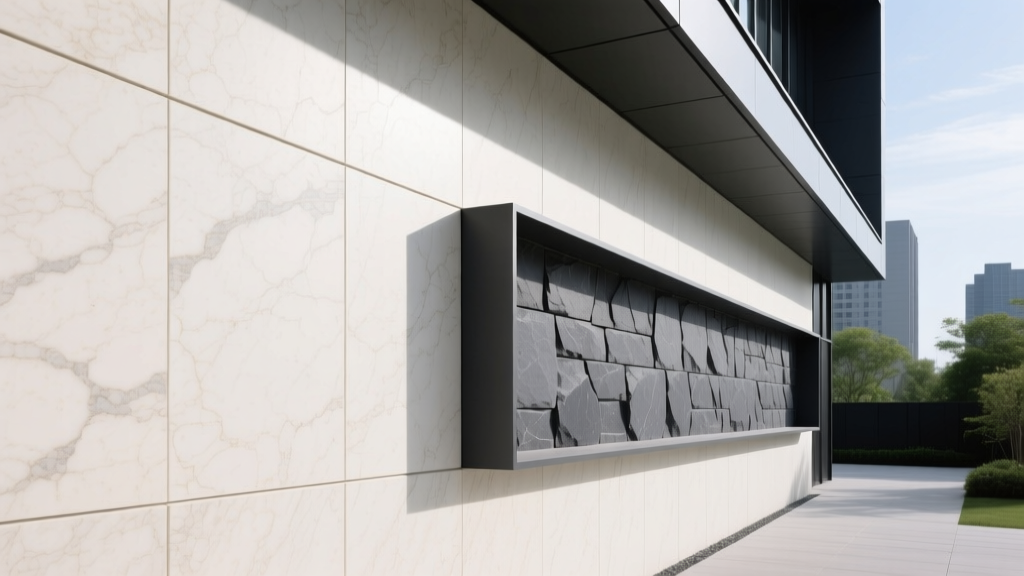
Limestone is a sedimentary rock composed primarily of calcium carbonate. For veneer applications, quarried blocks are sliced using diamond-tipped gang saws into panels typically ranging from 0.75 to 1.5 inches thick. Because it is a natural product, every batch features unique fossil inclusions, color banding, and textural variations. According to the Natural Stone Institute, limestone is classified by density and absorption rates, which directly dictate its suitability for exterior applications in freeze-thaw climates.
Manufactured Stone Veneer (MSV)
MSV is an engineered product cast from a mixture of Portland cement, lightweight aggregates (like pumice or expanded shale), and iron oxide pigments. The mixture is poured into polyurethane molds taken from real stone to capture authentic surface textures. While premium MSV lines offer striking visual accuracy, the cross-section reveals a homogeneous concrete core lacking the geological depth and translucency of natural limestone.
2026 Cost Breakdown: Material, Labor, and Lifecycle
Pricing for stone cladding extends far beyond the raw material cost per square foot. The following matrix outlines the fully loaded installation costs for a standard 1,000-square-foot exterior facade project in 2026.
| Cost Category | Natural Limestone Veneer | Manufactured Stone Veneer (MSV) |
|---|---|---|
| Material Cost (per sq. ft.) | $14.00 - $22.00 | $7.50 - $12.00 |
| Waste Factor | 10% - 15% (cutting breakage) | 5% - 8% |
| Labor & Masonry Prep | $18.00 - $26.00 | $14.00 - $20.00 |
| Structural Support (Lintels/Ties) | $4.50 - $7.00 | $2.00 - $4.00 |
| Total Installed Cost (per sq. ft.) | $36.50 - $55.00 | $23.50 - $36.00 |
Weight, Structural Load, and Installation Realities
The physical mass of the cladding dictates the necessary structural preparations. Natural limestone veneer stone is dense, weighing between 12 and 16 pounds per square foot. In contrast, the lightweight aggregates used in MSV reduce its weight to 9 to 12 pounds per square foot.
Installation Protocols
Both materials require a weather-resistant barrier (WRB) and a metal lath base over wood or steel framing. However, the installation nuances differ significantly:
- Mortar Selection: Limestone requires a Type N or Type S mortar (per ASTM C270) with low compressive strength to prevent spalling. MSV can tolerate standard Type S mortar, but polymer-modified thin-set adhesives are increasingly used for interior MSV applications to speed up installation.
- Support Ledges: Because of its higher density, limestone veneer exceeding 30 feet in height requires intermediate structural shelf angles and weep holes to transfer the dead load to the building frame. MSV can often be installed continuously up to 40 feet without intermediate steel supports, provided the substrate is properly reinforced.
- Cutting and Profiling: Shaping limestone requires wet masonry saws with diamond blades, generating significant slurry waste. MSV can be scored and snapped with a carbide-tipped hatchet or cut with a dry masonry blade, allowing for faster corner detailing and profile adjustments.
Durability, Weathering, and Failure Modes
Understanding how each material degrades over a 30-to-50-year lifecycle is critical for exterior specifications.
Limestone Vulnerabilities
The primary enemy of limestone is acidic moisture. Calcium carbonate reacts with sulfuric and nitric acids present in urban acid rain, forming a gypsum crust that can trap moisture and cause surface spalling. Furthermore, in freeze-thaw climates, specifying the wrong grade of limestone is a catastrophic error. You must specify Class I limestone (absorption rate of 3% or less per ASTM C568) for exterior veneers. Class II or III limestone will absorb water, freeze, and delaminate within a few harsh winters.
MSV Vulnerabilities
Manufactured stone suffers from two primary failure modes: efflorescence and pigment degradation. Efflorescence occurs when water-soluble salts from the Portland cement matrix migrate to the surface, leaving a white, powdery residue. While MSV manufacturers have introduced efflorescence-control admixtures in 2026, improper curing or lack of a drainage plane still triggers this issue. Additionally, lower-tier MSV relies on surface-applied pigments that UV-degrade and wash away over 10 to 15 years. Always specify MSV with integral iron oxide pigments that are mixed throughout the concrete slurry.
Decision Framework: Which Should You Specify?
Use the following conditional logic to determine the optimal material for your specific project parameters:
Specify Natural Limestone Veneer Stone When:
- Historical Authenticity is Required: Restoration projects or high-end traditional architecture demand the genuine fossil records and light-refracting properties of natural stone.
- Budget Allows for Premium Cladding: The project has a cladding budget exceeding $40 per square foot installed.
- Thermal Mass is a Priority: You are designing a passive solar structure and need the high thermal mass of dense natural stone to absorb and slowly release heat.
Specify Manufactured Stone Veneer When:
- Weight Restrictions Apply: You are retrofitting an older structure, building a wood-framed chimney chase, or working on an upper-story elevation where reducing dead load is critical.
- Tight Timelines and Budgets: The project requires immediate material availability and a fully loaded installation cost under $30 per square foot.
- Complex Curvilinear Walls: MSV can be more easily scored and bent around tight radii compared to rigid limestone panels.
Expert Verdict and Sourcing Tips
The choice between limestone veneer stone and manufactured alternatives is not merely a question of natural versus synthetic; it is a calculation of structural capacity, environmental exposure, and financial allocation. Natural limestone offers unparalleled permanence and geological beauty, provided it is correctly graded for the local climate and supported by adequate structural steel. MSV offers a highly convincing, lightweight, and cost-effective alternative, but demands strict adherence to drainage plane detailing to prevent moisture-related degradation.
'The biggest mistake contractors make with MSV is treating it like a waterproof barrier. It is a cladding system. If the weather-resistant barrier and weep screeds fail, the cementitious veneer will wick moisture and destroy the substrate.' — Senior Masonry Foreman, featured in Masonry Magazine.
For sourcing natural limestone, request a petrographic analysis report from the quarry to verify the absorption rate and density class. For MSV, demand a sample panel and perform a scratch test on the unexposed back; if the color does not penetrate at least 1/4 inch into the aggregate core, reject the batch due to high UV-fading risk.
Written by
Sarah WhitfieldSarah Whitfield is a chartered quantity surveyor (MRICS) and construction cost analyst with 15 years of experience in material pricing, procurement strategy, and project budgeting. She earned her degree in Construction Management from the University of Reading (UK) and has worked on projects ranging from $2M custom homes to $180M mixed-use developments across North America and Europe. Sarah currently leads cost estimating for BuildMat Insight, maintaining a proprietary database of 4,000+ material price points updated quarterly. She is a frequent contributor to RSMeans cost data panels and has presented at the International Cost Engineering Council (ICEC) congress. Based in Denver, CO, Sarah is an avid trail runner and volunteer mentor for Women in Construction.
More from Sarah Whitfield
View all
Wood & Lumber
What Are the Different Types of Wood? A Builder's Guide
Compare structural softwoods, finish hardwoods, and engineered lumber. Analyze Janka ratings, MOE values, and 2026 pricing for construction.
Aug 4, 2026

Walls & Panels
Steel Framing vs Wood Framing: Corrosion and Moisture Defense
Compare steel framing vs wood framing for moisture resistance. Learn about galvanized coatings, condensation risks, and corrosion protection strategies.
Jul 21, 2026

Stone & Masonry
How to Cut Stone Veneer: Wet Saw vs Grinder Comparison
Compare the best tools for cutting stone veneer. We review wet saws, angle grinders, and chop saws to help you achieve clean, chip-free cuts.
Jul 21, 2026