Expert Maintenance Guide for Stacked Stone Veneer Fireplaces
Learn expert techniques to clean, seal, and maintain stacked stone veneer fireplaces, including soot removal and sealer selection.
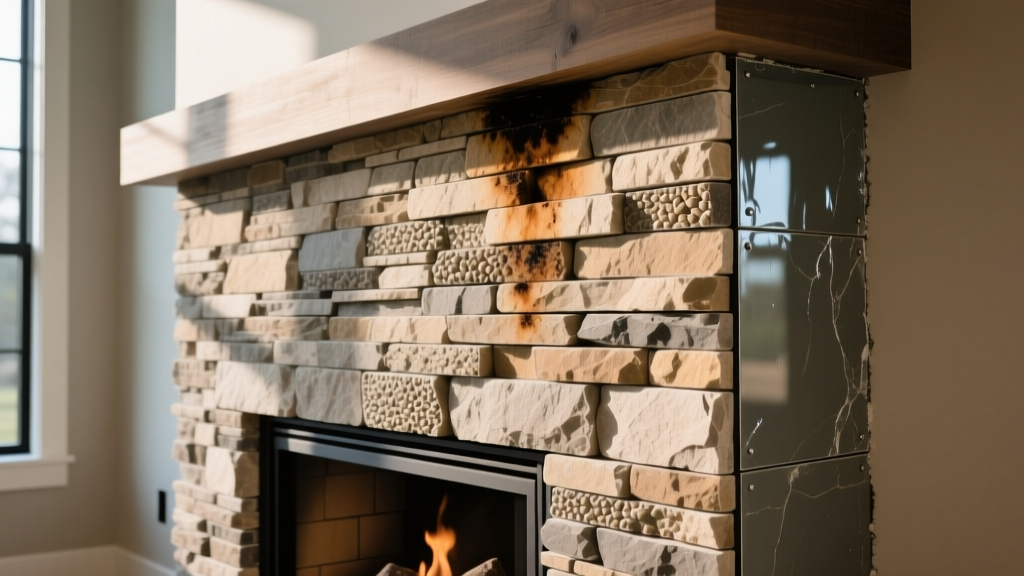
Routine Dusting: The First Line of Defense
Stacked stone veneer—whether natural quartzite or manufactured concrete—is characterized by deep shadow lines, uneven clefts, and dry-stacked profiles that lack traditional mortar joints. While visually striking, these crevices act as magnets for household dust, pet dander, and airborne ash. Neglecting routine dusting allows particulate matter to embed into the stone's pores, requiring aggressive deep cleaning later.
The Proper Tool Stack
Never use a standard upright vacuum with a hard plastic wand; the rigid plastic will scrape the face of manufactured stone, permanently removing its painted patina, and can chip the edges of natural slate.
- HEPA-Filtered Canister Vacuum: Use a vacuum equipped with a soft horsehair or lambswool brush attachment. The HEPA filter ensures fine ash and dust are trapped rather than recirculated into the room.
- Electrostatic Dusters: For quick weekly maintenance, an extendable electrostatic duster (like a Swiffer 360) effectively pulls dust from deep crevices without pushing it further into the stone profile.
- Soft-Bristle Nylon Brush: Use a dry, soft-bristle brush to dislodge stubborn cobwebs or dust bunnies trapped in the deepest recesses before vacuuming.
Deep Cleaning: Soot, Ash, and Smoke Residue
Wood-burning fireplaces generate creosote, soot, and fine ash that inevitably migrate onto the surrounding veneer. Gas fireplaces produce less soot but can still accumulate a greasy film from ambient cooking oils or household aerosols. The cleaning protocol depends entirely on whether your veneer is natural stone or manufactured (concrete) stone.
The Alkaline Cleaning Protocol for Heavy Soot
For severe soot buildup, water and dish soap are insufficient. You need an alkaline-based cleaner designed to saponify the oily residue in wood smoke.
- Pre-Wet the Stone: Lightly mist the veneer with clean water. This prevents the cleaning solution from absorbing too deeply into the stone's unsealed pores.
- Apply Specialist Cleaner: Use a dedicated alkaline cleaner, such as Miracle Sealants Heavy Duty Cleaner or a diluted solution of PROSOCO SureKlean. Apply with a pump sprayer.
- Dwell Time: Allow the solution to dwell for 3 to 5 minutes. Do not let it dry on the surface.
- Agitate: Scrub the surface using a stiff nylon-bristle brush (never wire). Work in small 3x3 foot sections, paying extra attention to the upward-facing ledges where soot settles.
- Extract and Rinse: Wipe away the dirty solution with thick microfiber towels. Rinse the area with a damp sponge and clean water, changing the rinse water frequently.
Sealing Strategies for Heat-Exposed Stone
A common debate in masonry maintenance is whether fireplace veneers require sealing. The answer is generally yes, to prevent soot penetration and efflorescence, but the type of sealer is non-negotiable due to the high heat environment.
Why Topical Sealers Fail on Fireplaces
Acrylic or polyurethane topical sealers create a plastic-like film on the stone's surface. When exposed to the radiant heat of a fireplace, these films will yellow, blister, and eventually peel. Furthermore, when heated, some topical sealers can off-gas volatile organic compounds (VOCs) into your living space.
The Penetrating Siloxane Solution
You must use a penetrating impregnator, specifically a siloxane or silane-based sealer. These chemicals react with the silica in the stone to create a hydrophobic barrier below the surface, leaving no film to blister and altering neither the color nor the texture of the stone. Apply two thin coats using a low-pressure sprayer, ensuring the stone is 100% bone-dry (wait at least 48 hours after deep cleaning) before application.
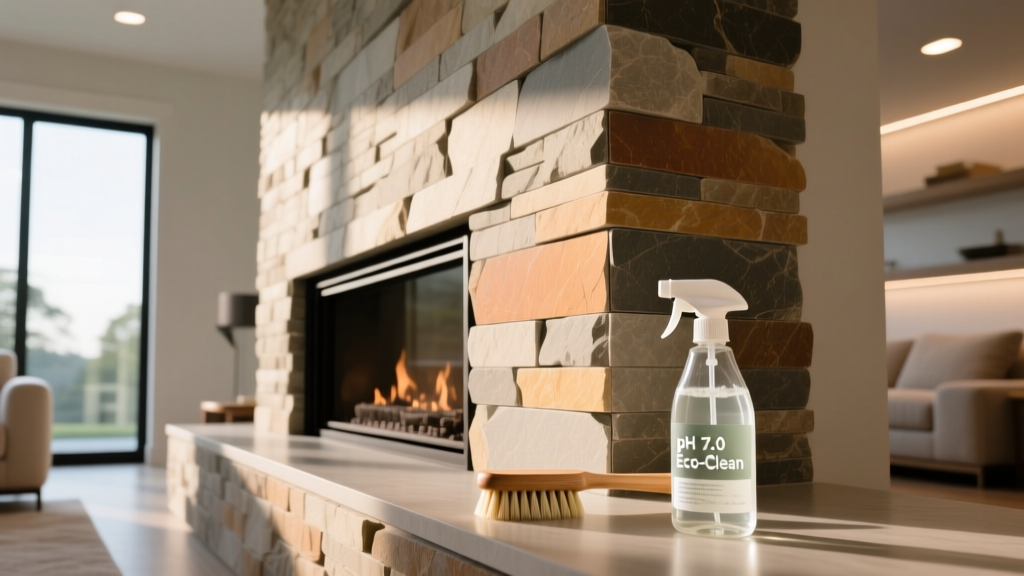
Troubleshooting Common Fireplace Veneer Failures
Even with meticulous care, stacked stone veneers can develop structural or cosmetic issues due to the extreme thermal cycling (rapid heating and cooling) inherent to fireplace surrounds. Below is a diagnostic matrix for the most frequent failures.
| Symptom | Root Cause | Corrective Action |
|---|---|---|
| Efflorescence (White, powdery crust on stone or mortar) | Moisture migrating through the substrate brings soluble salts to the surface, which crystallize upon evaporation. Detailed in the NCMA TEK 14-2B guidelines. | Do not use water, which drives salts back into the stone. Dry-brush the residue vigorously. Apply a specialized, non-acidic efflorescence remover, then seal the stone to block future moisture migration. |
| Thermal Popping (Individual stones detaching or loosening) | Rapid thermal expansion and contraction breaks the bond of the original masonry adhesive or mortar scratch coat. | Clean the back of the loose stone and the substrate. Re-adhere using a high-temperature, polyurethane-based construction adhesive (e.g., Loctite PL Premium). Clamp for 24 hours. |
| Mortar Joint Cracking (Hairline fractures in grouted profiles) | Substrate deflection or thermal stress exceeding the tensile strength of the Type N or Type S mortar. | Rake out the cracked mortar to a depth of 1/4 inch. Repoint using a flexible, sanded acrylic caulk tinted to match the existing mortar color, allowing for future thermal movement. |
| Greasy Halos (Dark, spreading stains near the hearth) | Absorption of spilled oils, pet sebum, or wood resins from stacked firewood resting directly against the veneer. | Apply a solvent-based stone poultice (like acetone mixed with diatomaceous earth) over the stain. Cover with plastic wrap for 24 hours to draw the oil out of the pores. |
The Maintenance Blacklist: What Never to Do
To preserve the structural integrity and aesthetic finish of your stacked stone veneer fireplace, strictly avoid the following practices:
🚫 The "Never Do This" Checklist:
- Never use wire brushes or steel wool: These will leave microscopic iron particles embedded in the stone's pores, which will oxidize and cause permanent rust stains within weeks.
- Never use a pressure washer: Even on the lowest setting, pressurized water will erode the soft mortar joints, force moisture behind the vapor barrier, and potentially delaminate the veneer from the scratch coat.
- Never burn chemically treated wood: Burning pressure-treated lumber, painted wood, or manufactured logs with chemical accelerants releases corrosive gases that will chemically etch the stone surface and degrade the mortar polymers.
- Never use bleach (Sodium Hypochlorite):strong> Bleach does not remove soot; it merely lightens it while leaving behind a heavy salt residue that accelerates efflorescence and breaks down masonry binders.
By adhering to a strict routine of HEPA vacuuming, utilizing pH-appropriate alkaline cleaners for soot, and protecting the substrate with a breathable siloxane impregnator, your stacked stone veneer fireplace will maintain its architectural depth and structural integrity for decades.
Written by
Elena RodriguezElena Rodriguez is a civil engineer and technical writer specializing in concrete technology, masonry systems, and ASTM/ACI compliance. She earned her B.S. in Civil Engineering from Texas A&M University and spent a decade at a materials testing laboratory, performing over 2,000 concrete compressive strength tests and masonry prism evaluations. Elena is an ACI-certified Field Testing Technician (Grade I) and a member of ASTM Committee C12 on Natural Building Stone. She currently consults on forensic engineering cases involving concrete failures and moisture intrusion. Based in San Antonio, TX, Elena is a proud member of the Society of Women Engineers (SWE) and coaches her daughter's FIRST Robotics team.
More from Elena Rodriguez
View all
Walls & Panels
Cost Analysis: Light Gauge Steel Framing Advantages and Disadvantages
Evaluate light gauge steel framing advantages and disadvantages through a strict cost analysis lens, comparing material, labor, and lifecycle expenses.
Aug 4, 2026

Walls & Panels
Gypsum Board Types: Exact Specifications, Thickness & Dimensions
Compare standard, Type X, and moisture-resistant gypsum board types. Get exact specifications, thicknesses, dimensions, and ASTM standards for your project.
Aug 4, 2026

Fire Resistance
Best Fire-Resistant Outdoor Decking Materials: 2026 Buyer Guide
Discover the best fire-resistant outdoor decking materials for 2026. Compare Class A PVC, aluminum, and hardwood options for WUI compliance and safety.
Aug 4, 2026