Choosing the Right Natural Stone Veneer Supplier for 2026 Designs
Discover how to select a natural stone veneer supplier that aligns with 2026 design trends, technical tolerances, and architectural sourcing requirements.
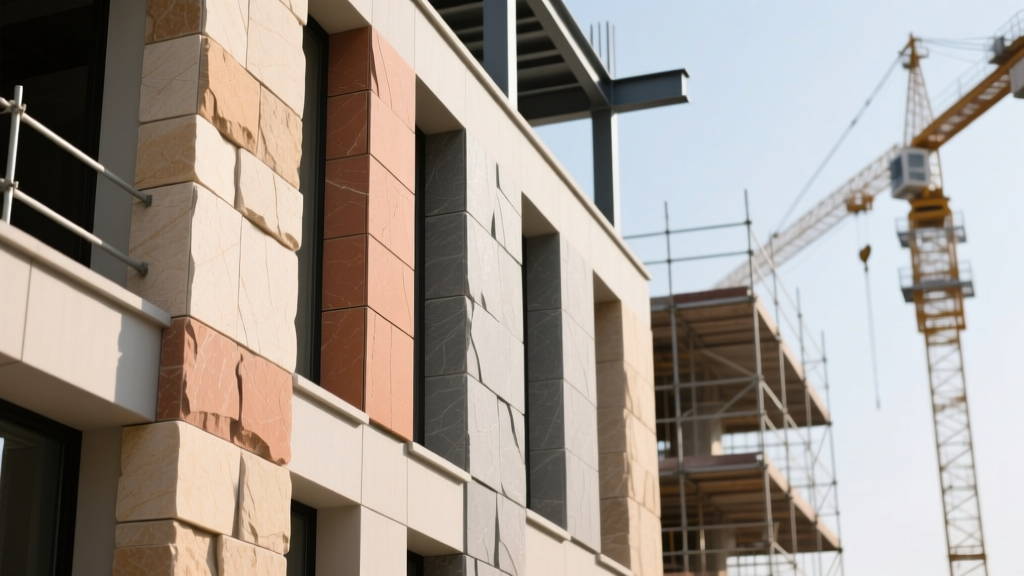
The Hidden Design Variable: Why Your Supplier Dictates the Finish
In high-end architectural projects, the specification sheet only tells half the story. An architect can specify a 'silver-toned drystack limestone,' but the final aesthetic execution hinges entirely on the capabilities of the chosen natural stone veneer supplier. As biophilic design and hyper-textural brutalism dominate 2026 architectural trends, the margin for error in stone selection has vanished. Suppliers are no longer just logistics hubs; they are the gatekeepers of quarry blocks, CNC calibration, and hand-splitting artisanship.
Selecting a partner requires looking past basic square-footage pricing. You must evaluate their quarry relationships, their understanding of ASTM dimensional tolerances, and their ability to provide accurate range boards. According to the Natural Stone Institute's technical guidelines, natural stone is inherently variable, making the supplier's quality control protocols the primary defense against aesthetic failure on the facade.
2026 Aesthetic Trends Driven by Top-Tier Suppliers
The most sought-after natural stone veneer suppliers are currently shaping the market by offering specialized cuts and finishes that cater to emerging design movements. If your supplier cannot source or fabricate the following profiles, they are likely operating on outdated 2020-era inventory models.
1. Ultra-Thin Drystack Profiles (1/2' to 3/4')
Modern transitional and contemporary designs demand tight, shadowless joints. Top suppliers are now utilizing multi-wire diamond saws to slice dense granites and slates down to a 1/2-inch thickness while maintaining the natural cleft face. This reduces the veneer weight to under 6 lbs per square foot, allowing for direct adhesion to specialized exterior rated backer boards without requiring heavy steel angle-iron shelf supports at every floor line.
2. Brutalist Hand-Cleft and 'Broken' Faces
Moving away from the perfectly smooth, honed surfaces of the past decade, 2026 designs heavily feature aggressive, undulating stone faces. Premium suppliers employ master splitters who use traditional carbide wedges to hand-cleft thick sandstone and quartzite blocks. This yields a highly variable projection depth (often 2 to 4 inches) that creates dramatic shadow lines under architectural wash lighting.
3. Biophilic 'Moss-Ready' Porosity
For landscape architecture and exterior feature walls, designers are specifying stones that encourage biological growth. Suppliers sourcing highly porous, calcium-rich tufa or specific unsealed limestone varieties (like Texas Cream Limestone) are seeing massive demand. These stones naturally wick moisture and provide a micro-habitat for mosses and lichens, blending the built environment into the surrounding ecology.
Supplier Evaluation Matrix: Sourcing Tiers
Not all natural stone veneer suppliers operate on the same tier. Understanding where a supplier sits in the supply chain will dictate your design flexibility, lead times, and ultimate cost structure.
| Supplier Tier | Design Customization | Typical Lead Time | Price Range (per sq ft) | Best Application |
|---|---|---|---|---|
| Boutique Quarry-Direct | Maximum (Custom CNC, hand-select blocks) | 12 - 18 Weeks | $35 - $85+ | Flagship commercial, luxury residential |
| National Aggregator | Low (Pre-packaged mesh-backed panels) | 3 - 6 Weeks | $12 - $24 | Tract housing, standard commercial wraps |
| Regional Stone Yard | Medium (Local stone, basic cutting) | 4 - 8 Weeks | $18 - $40 | Regional vernacular architecture, landscaping |
Technical Tolerances That Ruin High-End Designs
A beautiful stone sample is useless if the bulk shipment fails dimensional and structural tolerances. When vetting a natural stone veneer supplier, you must demand documentation on the following metrics to prevent catastrophic installation failures.
Thickness Variance and the 'Wavy Wall' Effect
For drystack veneer applications, the thickness tolerance must be strictly controlled. Per industry standards documented in Stone World, premium drystack veneers should hold a thickness tolerance of ±1/8 inch. If a supplier provides loose veneer with a ±1/4 inch variance, the mason will be forced to use excessive mortar shimming behind the stone, which inevitably bleeds into the joints and destroys the intended dry-stacked illusion.
The Mesh-Backing Trap in Exterior Climates
Warning for Exterior Applications: Many mid-tier suppliers back their natural stone veneer with fiberglass mesh to speed up installation. While acceptable for interior fireplaces, mesh-backed natural stone is highly problematic in exterior freeze-thaw climates. The mesh creates a cleavage plane between the stone and the mortar scratch coat. If moisture penetrates the joint and freezes, the expansion can delaminate the stone from the mesh. Always specify 'loose' or 'un-meshed' natural stone for exterior cladding to ensure a direct mechanical and chemical bond with the Portland cement mortar.
Absorption Rates and Efflorescence
Specify stones based on their ASTM C97 absorption rates. High-density stones like granite and slate typically exhibit absorption rates below 0.4%, making them ideal for harsh weather. However, porous sandstones and limestones can exceed 6% absorption. If your supplier cannot provide the absorption data for their specific quarry block, you risk severe efflorescence (white salt deposits) blooming on the stone face within the first year of installation as soluble salts are drawn to the surface by evaporating moisture.
Cost Analysis: 2026 Natural Stone Veneer Pricing
Pricing for natural stone veneer has stabilized in 2026 following the freight and quarry labor shortages of previous years. However, the gap between standard fieldstone and precision-cut architectural stone continues to widen. Below is a current market breakdown for material costs (excluding shipping and installation labor).
| Stone Type & Profile | Supplier Tier | Material Cost (per sq ft) | Waste Factor to Order |
|---|---|---|---|
| Loose Fieldstone (Uncut, irregular) | Regional Yard | $8.00 - $14.00 | 15% |
| Mesh-Backed Limestone Panels | National Aggregator | $14.00 - $22.00 | 10% |
| Sawn-Cut Granite Drystack (3/4' thick) | National / Boutique | $25.00 - $45.00 | 5% |
| Custom Hand-Cleft Sandstone (2-4' projection) | Boutique Quarry-Direct | $40.00 - $75.00+ | 10% |
The 'Range Board' Requirement: Vetting Your Shortlist
Never approve a natural stone veneer order based on a single 6x6 inch sample. Natural stone is a geological product, and color banding, iron inclusions, and fossilization patterns vary wildly even within the same quarry vein.
When you narrow your natural stone veneer supplier shortlist to two or three candidates, issue the following formal request:
- The 4x4 Range Board: Require the supplier to build and photograph a 16-square-foot mockup board that explicitly includes the lightest, darkest, and most heavily veined pieces currently in their inventory for that specific stone line.
- Quarry Block Origin: Ask if the stone is cut from primary quarry blocks or processed from quarry remnants/rubble. Primary block stone offers vastly superior structural integrity and consistent grain direction.
- Sealing Protocol: Request their specific data sheet on whether the stone requires a breathable, siloxane-based penetrating sealer (for exterior porous stones) or if it should be left untreated to develop a natural patina.

Sustainability and LEED Sourcing
For commercial projects pursuing LEED v4.1 certification, the geographic origin of your stone matters. The Natural Stone Institute's sustainability frameworks highlight that natural stone has a remarkably low embodied carbon footprint compared to manufactured concrete veneers, provided it is sourced responsibly. To maximize points under the 'Sourcing of Raw Materials' credit, prioritize regional suppliers located within a 500-mile radius of the project site. Boutique quarry-direct suppliers are usually the most transparent in providing the exact GPS coordinates of the extraction site, which is mandatory documentation for modern green building audits.
Ultimately, the right natural stone veneer supplier acts as a technical consultant rather than a mere vendor. By demanding strict thickness tolerances, rejecting exterior mesh-backing, and requiring comprehensive range boards, you ensure the architectural vision survives the transition from the drafting table to the mason's trowel.
Written by
Marcus ChenMarcus Chen is a licensed structural engineer (PE) and building materials analyst with over 12 years of experience across residential, commercial, and industrial construction. He holds a Master of Science in Civil Engineering from UC Berkeley and spent six years at Thornton Tomasetti before transitioning to independent consulting and technical writing. Marcus specializes in material selection for seismic-prone regions, concrete reinforcement strategies, and lifecycle cost analysis. His work has been cited by the American Concrete Institute (ACI) and the Structural Engineers Association of California (SEAOC). When he is not on a job site or at his desk, you will find him hiking the Sierra Nevada or restoring a 1920s craftsman bungalow in Oakland, CA.
More from Marcus Chen
View all
Construction Cost
How Much Did the Eiffel Tower Cost to Build?
How much did the Eiffel Tower cost to build in 1889? We adjust for inflation and compare its budget to modern skyscraper construction.
Aug 4, 2026

Fire Resistance
What Is a Fire Resistant Material? Testing & Certification Guide
Discover what is a fire resistant material through ASTM and UL testing. Learn how fire ratings, certifications, and assemblies work in construction.
Aug 4, 2026

Construction Cost
How Much Did the Burj Khalifa Cost to Build?
How much did the Burj Khalifa cost to build? We break down the $1.5B project and extract 5 money-saving strategies for your next build.
Jul 30, 2026