Stone Vener Maintenance: How to Clean and Protect Stone Veneer
Discover expert stone vener maintenance tips. Learn how to safely clean, seal, and protect natural and manufactured stone veneer from efflorescence and damage.
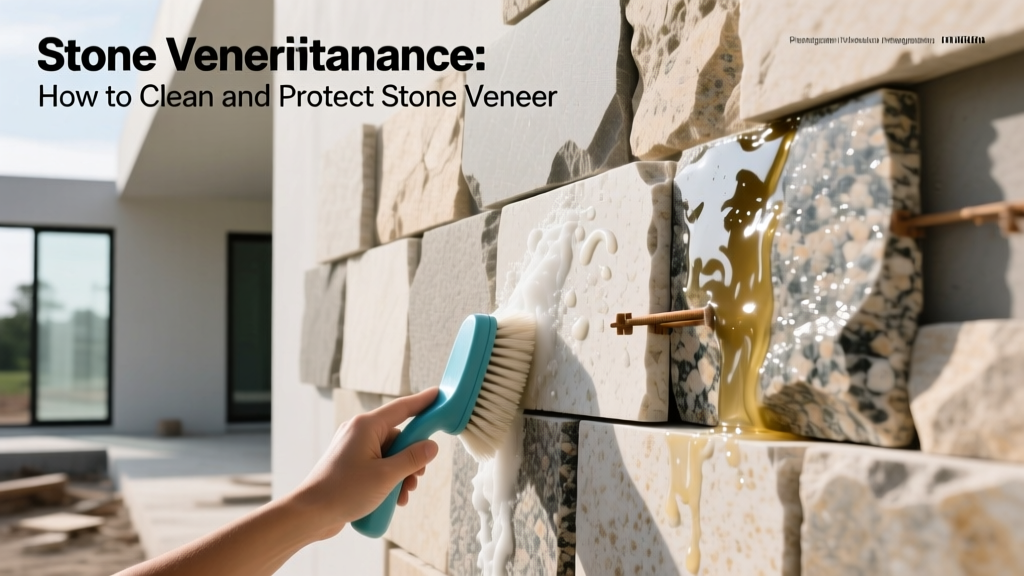
The Hidden Risks of Improper Stone Veneer Care
While frequently searched online as stone vener, proper stone veneer maintenance requires precise chemical knowledge and an understanding of masonry porosity. Whether your installation is natural stone (like limestone, slate, or fieldstone) or manufactured stone veneer (MSV), treating the surface with the wrong cleaning agents can cause irreversible damage. The most common failure modes in masonry maintenance include surface spalling, color fading, and accelerated efflorescence—all of which stem from using high-pressure washing or acidic cleaners on vulnerable substrates.
Manufactured stone veneer is fundamentally a Portland cement-based product cast in molds. Because it is cementitious, it is highly alkaline and extremely sensitive to acidic compounds. Natural stone varies wildly in its chemical makeup; calcareous stones (marble, limestone, travertine) will etch and dissolve when exposed to acids, while siliceous stones (granite, quartzite, slate) are more resilient but still vulnerable to mortar degradation. This guide provides a definitive, material-specific framework for cleaning, troubleshooting, and sealing your stone veneer installations.
Identifying Your Stone Substrate
Before applying any water or chemical agent, you must definitively identify the stone type. Guessing leads to catastrophic etching.
- Manufactured Stone Veneer (MSV): Made from Portland cement, lightweight aggregates, and iron oxide pigments. It has a compressive strength of roughly 2,000 to 3,000 psi but a highly porous surface profile.
- Calcareous Natural Stone: Contains calcium carbonate. Reacts violently with acids (vinegar, muriatic acid, citrus cleaners). Includes limestone, marble, and travertine.
- Siliceous Natural Stone: Composed primarily of silica. More resistant to mild acids but the surrounding mortar joints are not. Includes granite, slate, and sandstone.
Never use muriatic acid, phosphoric acid, or unbuffered vinegar on manufactured stone veneer or calcareous natural stone. According to the Masonry Veneer Manufacturers Association (MVMA), acid-based cleaners strip the iron oxide pigments from MSV, resulting in permanent, chalky white discoloration and structural degradation of the cement matrix.
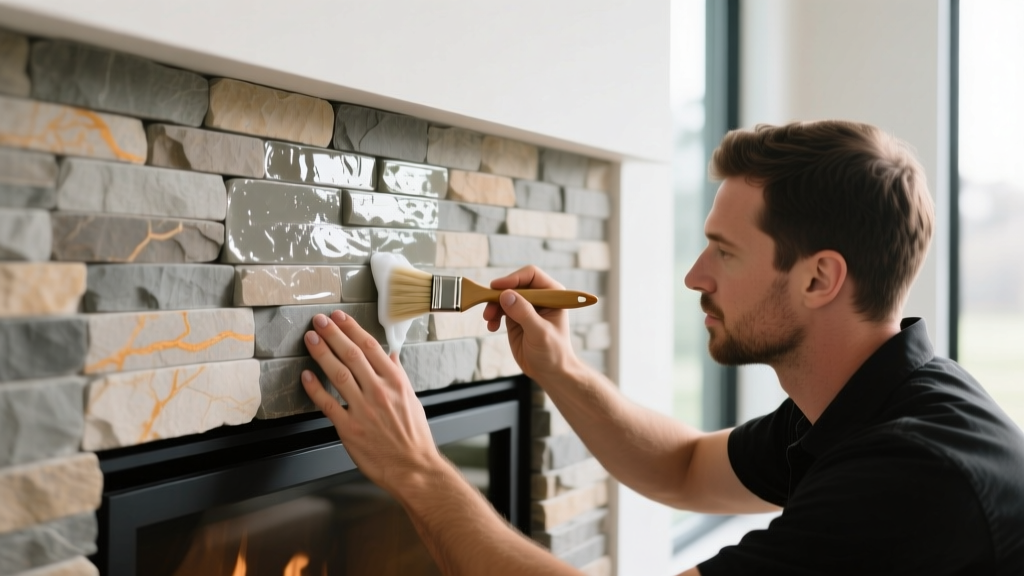
Cleaning Agent Selection Matrix
Selecting the correct chemical formulation is the most critical step in stone veneer care. Below is a decision matrix for common cleaning scenarios based on substrate type.
| Contaminant | Manufactured Stone (MSV) | Calcareous Natural Stone | Siliceous Natural Stone |
|---|---|---|---|
| General Dirt & Dust | pH-neutral cleaner (e.g., PROSOCO DailyKlean) | pH-neutral stone soap | pH-neutral cleaner or mild dish soap |
| Efflorescence | Dry brushing; non-acidic efflorescence remover | Dry brushing; specialized alkaline poultice | Dry brushing; diluted sulfamic acid (mortar joints only) |
| Biological Growth (Algae) | Bio-enzymatic cleaner or oxygen bleach | Oxygen bleach (never chlorine bleach) | Oxygen bleach or specialized masonry biocide |
| Mortar Haze / Smears | Non-acidic mortar haze remover | Mechanical scraping (wooden or plastic tools only) | Buffered hydroxyacetic acid formulations |
Step-by-Step Deep Cleaning Protocol
When routine dusting is insufficient, follow this standardized deep-cleaning protocol. Industry leaders like PROSOCO emphasize the importance of pre-wetting and controlled dwell times to prevent chemical absorption into the stone matrix.
- Pre-Wet the Substrate: Using a garden hose or a low-pressure pump sprayer, thoroughly saturate the stone veneer and mortar joints with clean water. Why? Dry masonry acts like a sponge. Pre-wetting fills the capillary voids with clean water, preventing the cleaning solution from being absorbed deeply into the stone where it can leave salt deposits.
- Apply the Cleaning Solution: Mix your chosen pH-neutral cleaner according to the manufacturer's dilution ratio (typically 1 part cleaner to 10 parts water for general soil). Apply using a low-pressure pump sprayer, working from the bottom of the wall upward to prevent streaking.
- Agitate Gently: Use a soft-bristle nylon or Tampico fiber brush. Scrub in a circular motion. Never use wire brushes, steel wool, or abrasive scouring pads, as these will leave behind metallic particles that will rust and stain the stone over time.
- Monitor Dwell Time: Allow the solution to dwell for 3 to 5 minutes. Do not let the cleaner dry on the surface. If it begins to dry, mist it lightly with water.
- Rinse Thoroughly: Rinse from the top down using a garden hose. If using a pressure washer, restrict the pressure to a maximum of 400 PSI, use a 40-degree wide fan tip, and keep the nozzle at least 12 inches from the surface. High-pressure streams will blast the aggregate and pigments out of manufactured stone.
Troubleshooting Common Stone Veneer Issues
1. Efflorescence (White Powdery Residue)
Efflorescence occurs when water-soluble salts migrate to the surface of the masonry and crystallize upon evaporation. It is a cosmetic issue, not a structural one, but it indicates moisture movement behind or within the wall.
- The Fix: Do not apply water immediately, as water dissolves the salts and drives them back into the pores. First, use a stiff, dry nylon brush to scrub the crystals off. Vacuum the dust. If the residue persists, apply a specialized non-acidic efflorescence remover formulated for cementitious products. Address the root cause by checking for missing weep holes, clogged drainage planes, or roof runoff hitting the wall directly.
2. Biological Growth (Mold, Mildew, and Algae)
North-facing walls and heavily shaded areas are prone to biological growth. As of 2026, advanced bio-enzymatic cleaners and oxygen-based bleaches have largely replaced harsh chlorine bleaches and toxic biocides.
- The Fix: Mix an oxygen bleach powder (sodium percarbonate) with warm water. Apply to the affected area and allow it to dwell for 10 to 15 minutes. The oxygen bubbles will lift the biological matter out of the pores without damaging the stone pigments or harming surrounding landscaping. Rinse thoroughly.
3. Hard Water Stains and Mineral Deposits
Sprinkler systems hitting stone veneer walls frequently leave behind stubborn calcium and magnesium deposits.
- The Fix: For siliceous stone, a mild, buffered acidic cleaner can dissolve the minerals. For MSV and calcareous stone, use a specialized alkaline hard water stain remover or a poultice made from diatomaceous earth and a non-acidic chelating agent. Apply the poultice, cover with plastic wrap, and let it draw the minerals out over 24 hours.
Sealing and Protection: A Decision Framework
A common misconception is that all stone veneer must be sealed. In reality, applying the wrong sealer can trap moisture inside the wall cavity, leading to freeze-thaw spalling and hidden mold growth. Use the following framework to determine if sealing is appropriate for your project.
- The stone is in a high-splash zone (e.g., behind a sink, near a driveway where de-icing salts are used).
- The installation is in a region with severe freeze-thaw cycles and the stone is highly porous.
- You want to protect against graffiti or organic staining from nearby foliage.
- The wall is a newly constructed exterior veneer that has not fully cured (wait at least 28 days, preferably longer, for Portland cement to off-gas moisture).
- The wall has a history of trapped moisture or lacks a proper weather-resistive barrier (WRB) and weep system.
- You are considering a film-forming acrylic or polyurethane sealer. These create a plastic-like shell that traps vapor and alters the natural matte texture of the stone.
If you decide to seal, always select a breathable, penetrating silane/siloxane water repellent. These sealers line the capillary pores without blocking them, allowing water vapor to escape while preventing liquid water from entering. Apply two coats using a low-pressure sprayer, ensuring the first coat is absorbed before applying the second. Wipe away any excess sealer that pools on the surface before it dries to avoid glossy, uneven patches.
Seasonal Maintenance Checklist
Consistent, low-impact maintenance prevents the need for aggressive restoration work. Incorporate these tasks into your annual property maintenance schedule:
- Spring: Inspect mortar joints for hairline cracks caused by winter freeze-thaw cycles. Repoint using a Type N or Type S mortar mix that matches the existing color and profile. Clean off winter dirt splatter with a pH-neutral wash.
- Summer: Trim back landscaping, ivy, and tree branches. Vegetation holds moisture against the stone veneer, accelerating biological growth and mortar degradation. Ensure sprinkler heads are adjusted away from the masonry.
- Fall: Clear gutters and downspouts above the stone veneer. Overflowing water during autumn rains is a primary driver of efflorescence and water intrusion behind the veneer system.
- Winter: Never use metal shovels or ice melters containing sodium chloride or calcium chloride near stone veneer installations. These salts will rapidly degrade the mortar joints and cause the stone face to spall. Use sand or a calcium magnesium acetate (CMA) based ice melt if traction is required near the base of the wall.
Written by
Marcus ChenMarcus Chen is a licensed structural engineer (PE) and building materials analyst with over 12 years of experience across residential, commercial, and industrial construction. He holds a Master of Science in Civil Engineering from UC Berkeley and spent six years at Thornton Tomasetti before transitioning to independent consulting and technical writing. Marcus specializes in material selection for seismic-prone regions, concrete reinforcement strategies, and lifecycle cost analysis. His work has been cited by the American Concrete Institute (ACI) and the Structural Engineers Association of California (SEAOC). When he is not on a job site or at his desk, you will find him hiking the Sierra Nevada or restoring a 1920s craftsman bungalow in Oakland, CA.
More from Marcus Chen
View all
Construction Cost
How Much Did the Eiffel Tower Cost to Build?
How much did the Eiffel Tower cost to build in 1889? We adjust for inflation and compare its budget to modern skyscraper construction.
Aug 4, 2026

Fire Resistance
What Is a Fire Resistant Material? Testing & Certification Guide
Discover what is a fire resistant material through ASTM and UL testing. Learn how fire ratings, certifications, and assemblies work in construction.
Aug 4, 2026

Construction Cost
How Much Did the Burj Khalifa Cost to Build?
How much did the Burj Khalifa cost to build? We break down the $1.5B project and extract 5 money-saving strategies for your next build.
Jul 30, 2026