Stone Craft Veneer Guide: Profiles, Costs, and Installation Tips
Complete guide to stone craft veneer: compare profiles, analyze installation costs, and learn expert application tips for modern interior and exterior designs.

What Defines Premium Stone Craft Veneer?
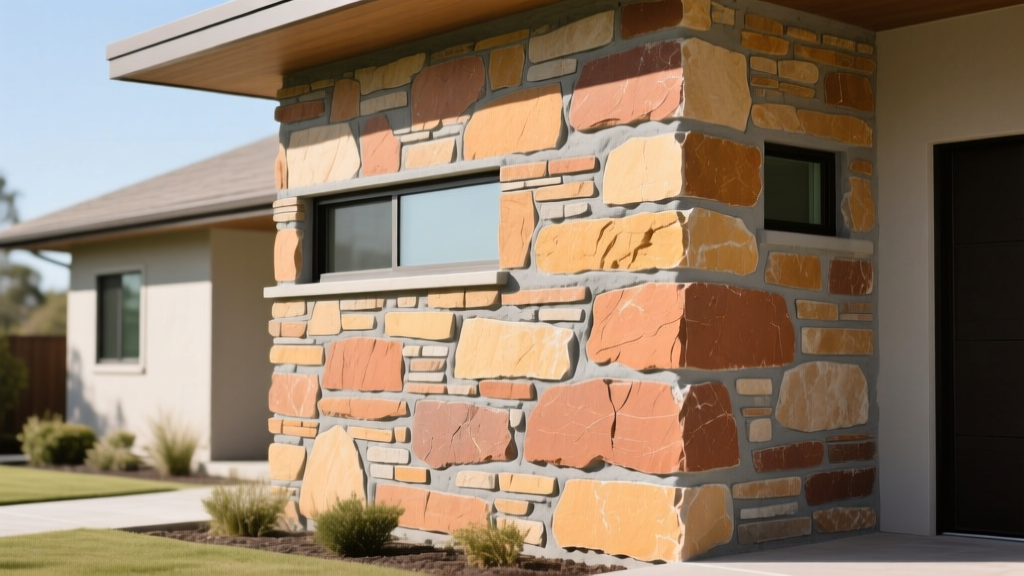
Stone craft veneer represents the intersection of architectural aesthetics and engineered performance. Unlike natural quarried stone, premium manufactured stone craft veneer is cast from precise molds taken from real stone profiles. The material matrix typically consists of Portland cement, lightweight aggregates like expanded shale or pumice, and high-grade iron oxide pigments. This composition yields a product that replicates the exact texture and color variations of natural stone while weighing roughly 75% less.
To be classified as premium architectural veneer, the material must comply with ASTM C1670 (Standard Specification for Manufactured Stone Veneer), which mandates strict testing for freeze-thaw durability, compressive strength, and water absorption. High-end stone craft veneer achieves a compressive strength exceeding 2,000 psi and water absorption rates below 22%, ensuring longevity in harsh exterior climates.
Top Architectural Profiles and Applications
Selecting the correct profile dictates both the visual rhythm of the facade and the specific installation technique required. Below is a breakdown of the three most specified stone craft veneer profiles in contemporary construction.
| Profile Type | Average Thickness | Weight (lbs/sq ft) | Best Application |
|---|---|---|---|
| Ledge / Stacked | 1.0" - 2.5" | 9.5 - 11.0 | Modern exteriors, interior fireplaces, dry-stack aesthetic |
| Fieldstone / River Rock | 2.0" - 5.0" | 12.0 - 14.5 | Traditional facades, chimneys, rustic accent walls |
| Ashlar / Cut Stone | 1.5" - 3.0" | 10.0 - 12.5 | Formal wainscoting, commercial lobbies, clean sightlines |
Profile Selection Framework
When specifying stone craft veneer for large-scale exterior applications, horizontal profiles like Ashlar or Ledge reduce visual fatigue across broad wall spans. Conversely, highly textured Fieldstone is best restricted to accent areas (such as columns or water table transitions) to prevent the facade from appearing overly chaotic. For interior applications, Ledge profiles with a tight 1/8-inch joint are currently dominating modern transitional designs, offering a clean shadow line without the bulk of traditional grout joints.
2026 Cost Breakdown: Materials and Labor
Budgeting for stone craft veneer requires looking beyond the per-piece material cost. A comprehensive project budget must account for the entire wall assembly, including weatherization and structural preparation.
- Veneer Material: $6.50 – $11.00 per sq. ft.
- Scratch Coat & Mortar (Type S): $1.20 – $1.80 per sq. ft.
- Wire Lath & Fasteners: $0.80 – $1.50 per sq. ft.
- Weather Resistive Barrier (WRB): $0.40 – $0.90 per sq. ft.
- Professional Masonry Labor: $16.00 – $28.00 per sq. ft.
- Total Installed Cost: $24.90 – $43.20 per sq. ft.
Regional labor variances heavily impact the final tally. In high-cost metropolitan markets, specialized masons capable of executing tight-tolerance dry-stack ledge installations frequently charge upward of $35 per square foot for labor alone. According to industry data tracked by the National Association of Home Builders, exterior stone veneer consistently yields a 90-95% return on investment at resale, outperforming many other facade upgrades.
Critical Installation Specifications
The most common cause of stone craft veneer failure is not the material itself, but improper moisture management and incorrect mortar selection. Adhering to strict assembly protocols is non-negotiable for exterior applications.
Moisture Management and Lath
Exterior installations require a dual-layer moisture defense. The primary layer is a weather-resistive barrier (WRB) such as Grade D building paper or a high-performance fluid-applied membrane. The secondary layer is a corrosion-resistant wire lath. Guidelines from the Brick Industry Association recommend a minimum 2.5 lb self-furring galvanized wire lath for standard wood-frame construction, upgraded to 3.4 lb lath in high-wind or seismic zones. The self-furring dimples are critical; they ensure the scratch coat fully encapsulates the wire, preventing rust-jacking that can blow the veneer off the wall.
Never terminate stone craft veneer directly into the ground or a flat concrete slab without a code-compliant weep screed. A minimum 3/8-inch gap must be maintained between the bottom of the veneer and the flashing to allow trapped moisture to escape. Failure to install a weep screed will result in hydrostatic pressure buildup, leading to efflorescence and eventual spalling of the veneer faces.
Mortar Selection: Type S vs. Type N
Mortar must be matched to the environmental exposure and the substrate. Type S Mortar (minimum 1,800 psi compressive strength) is mandatory for all exterior applications and below-grade transitions. Its high Portland cement content provides superior flexural bond strength, allowing the assembly to withstand thermal expansion and wind-driven rain. Type N Mortar (minimum 750 psi) is strictly reserved for interior, climate-controlled applications where high-strength bonding is unnecessary and a softer, more workable joint is preferred for aesthetic tooling.
Stone Craft Veneer vs. Natural Stone: The Structural Advantage
The primary engineering advantage of stone craft veneer over full-bed natural stone is the elimination of the masonry ledge requirement. Full-bed natural stone weighs between 35 and 50 lbs per square foot, requiring a continuous concrete or steel shelf angle at the foundation to support the dead load.
Stone craft veneer, averaging 10 to 15 lbs per square foot, is classified as an adhered veneer. It transfers its load directly to the structural backing (OSB, plywood, or CMU) via the mortar bond and wire lath. This allows architects to specify heavy stone aesthetics on upper-story cantilevers, interior partition walls, and retrofits where foundation reinforcement would be cost-prohibitive.
Maintenance and Efflorescence Prevention
While stone craft veneer requires minimal ongoing maintenance, it is susceptible to efflorescence—a white, powdery deposit of water-soluble salts that migrates to the surface. Efflorescence is not a structural defect, but it severely impacts aesthetics.
To mitigate efflorescence, avoid acid-based cleaners during the initial wash-down phase. Acid reacts with the Portland cement matrix, accelerating salt migration. Instead, use a stiff bristle brush and a neutral pH masonry cleaner. For exterior walls in high-humidity climates, applying a breathable, silane-siloxane penetrating sealer 28 days after installation will repel liquid water while allowing water vapor to escape, effectively halting the capillary action that transports salts to the surface. Proper flashing and gutter management, as emphasized by environmental building guidelines, remain the most effective long-term defense against moisture-related degradation.
Written by
Sarah WhitfieldSarah Whitfield is a chartered quantity surveyor (MRICS) and construction cost analyst with 15 years of experience in material pricing, procurement strategy, and project budgeting. She earned her degree in Construction Management from the University of Reading (UK) and has worked on projects ranging from $2M custom homes to $180M mixed-use developments across North America and Europe. Sarah currently leads cost estimating for BuildMat Insight, maintaining a proprietary database of 4,000+ material price points updated quarterly. She is a frequent contributor to RSMeans cost data panels and has presented at the International Cost Engineering Council (ICEC) congress. Based in Denver, CO, Sarah is an avid trail runner and volunteer mentor for Women in Construction.
More from Sarah Whitfield
View all
Wood & Lumber
What Are the Different Types of Wood? A Builder's Guide
Compare structural softwoods, finish hardwoods, and engineered lumber. Analyze Janka ratings, MOE values, and 2026 pricing for construction.
Aug 4, 2026

Walls & Panels
Steel Framing vs Wood Framing: Corrosion and Moisture Defense
Compare steel framing vs wood framing for moisture resistance. Learn about galvanized coatings, condensation risks, and corrosion protection strategies.
Jul 21, 2026

Stone & Masonry
How to Cut Stone Veneer: Wet Saw vs Grinder Comparison
Compare the best tools for cutting stone veneer. We review wet saws, angle grinders, and chop saws to help you achieve clean, chip-free cuts.
Jul 21, 2026