Stone Veneer Fire Pit Designs: 2026 Styles & Costs
Explore top 2026 stone veneer fire pit designs, from modern linear to rustic stacked styles. Includes material costs, clearance specs, and build tips.

The Architecture of Outdoor Heating: Why Stone Veneer?
Building a fire pit with solid natural stone requires a massive concrete footing, heavy equipment, and specialized masonry skills to manage the sheer weight of the rock. Stone veneer completely rewrites this structural equation. By utilizing a lightweight concrete masonry unit (CMU) or cement-board core, builders can achieve the exact aesthetic of full-bed natural stone at a fraction of the weight and cost. According to the Masonry Veneer Manufacturers Association (MVMA), modern manufactured veneer weighs between 7 and 12 pounds per square foot, compared to 35 to 50 pounds for full-bed natural stone. This weight reduction allows for greater design flexibility, including elevated fire features and cantilevered seating walls that would otherwise require extensive structural engineering.
However, a stone veneer fire pit is not merely a decorative garden feature; it is a high-heat thermal appliance. The substrate, mortar selection, and thermal breaks must be engineered to withstand rapid temperature fluctuations without delaminating or spalling. This guide breaks down the leading design profiles for 2026, the structural engineering required for longevity, and the exact material costs you should budget.
2026 Design Showcase: Top Stone Veneer Fire Pit Styles
Current landscape architecture trends heavily favor fire pits that serve as dual-purpose anchors—providing radiant heat while functioning as structural coffee tables or spatial dividers. Here are the three dominant stone veneer profiles defining outdoor spaces this year.
The Modern Linear Trough
Linear fire pits dominate contemporary landscape designs, typically ranging from 48 to 72 inches in length and standing 18 inches high. This low-profile design encourages conversation across the flame rather than blocking sightlines.
- Veneer Profile: Eldorado Stone’s Cut Coarse Stone or Boral’s LedgeStone. These horizontal, dry-stacked profiles emphasize the linear geometry of the pit.
- Cap Material: 2-inch thick thermal-finished bluestone or a custom-fabricated Corten steel cap with a 3-inch overhang to protect the veneer from ash and water runoff.
- Burner System: 36-inch stainless steel linear drop-in gas burner (H-burner or ribbon burner) rated for 65,000 BTUs, concealed beneath black volcanic lava rock.
The Rustic Stacked Cylinder
The classic circular fire pit remains the most popular wood-burning configuration. A 48-inch outside diameter with a 24-inch height provides ample room for standard 18-inch cordwood while keeping the flame at a safe distance from seated guests.
- Veneer Profile: Cultured Stone’s Country Ledgestone or natural Oklahoma flagstone veneer. The irregular, jagged edges create deep shadow lines that mimic hand-laid rustic masonry.
- Cap Material: No traditional cap. Instead, the veneer is finished with a mortar wash or a flush natural stone coping that slopes inward slightly toward the fire ring to shed water.
- Burner System: 36-inch diameter, 1/4-inch thick carbon steel fire ring insert with a 12-inch ash grate and integrated log hoop.
The Transitional Square Hearth
Bridging the gap between modern and traditional, the square or rectangular hearth (typically 42x42 inches) offers wide, flat coping edges that serve as impromptu drink rests.
- Veneer Profile: Dressed Fieldstone or River Rock veneer profiles, which offer rounded, organic shapes that soften the rigid 90-degree corners of the CMU core.
- Cap Material: 4-inch thick limestone or cast concrete coping with a bullnose edge.
- Burner System: 24-inch square gas burner pan with a ceramic fiber log set, or a heavy-duty cast-iron wood-burning grate.
Never apply stone veneer directly to the interior of a fire pit or allow flames to lick the veneer surface. Direct exposure to 1,200°F+ temperatures will cause the moisture inside the manufactured stone to expand rapidly, resulting in explosive spalling and mortar failure. A heavy-gauge steel fire ring insert (minimum 3/16-inch thick) is mandatory for wood-burning pits to create a thermal break between the flame and the masonry core.
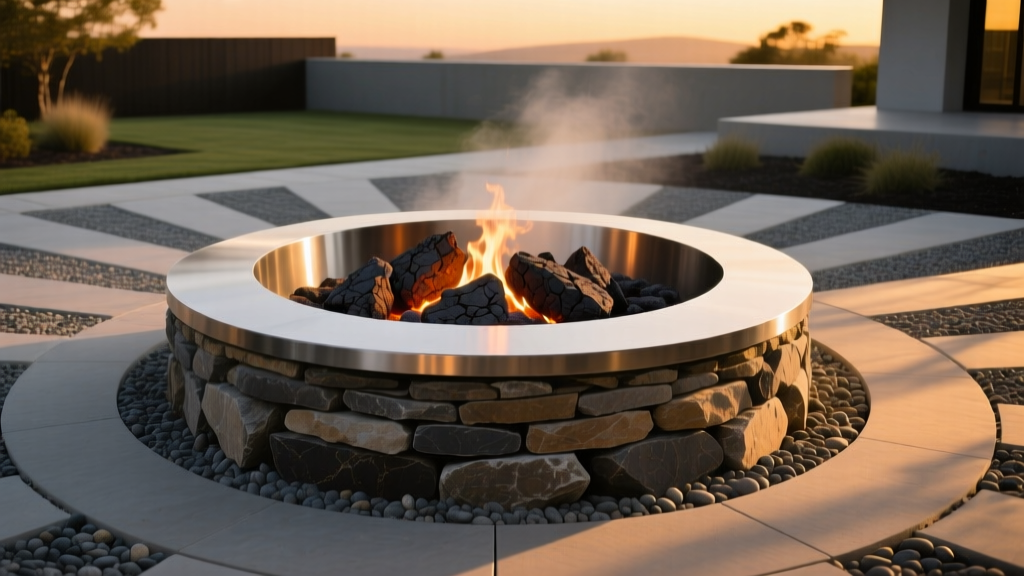
Material Selection Matrix: Natural vs. Manufactured Veneer
Choosing the right stone material dictates both the installation timeline and the long-term weathering characteristics of the fire pit. While polyurethane faux stone exists, it is strictly prohibited for fire pit applications due to its low melting point and off-gassing risks when exposed to high radiant heat.
| Feature | Manufactured Stone Veneer (MSV) | Natural Stone Veneer |
|---|---|---|
| Weight | 7 - 12 lbs / sq. ft. | 15 - 25 lbs / sq. ft. |
| Thickness | 1 to 2.5 inches | 2 to 4 inches |
| Color Consistency | High (batch-dyed oxides) | Variable (natural mineral deposits) |
| Cutting & Fitting | Easy (nippers or standard masonry blade) | Difficult (requires wet saw, diamond blade) |
| Freeze-Thaw Durability | Excellent (ASTM C666 tested) | Varies by stone type (slate is poor, granite is high) |
Engineering the Build: Substrates, Lath, and Mortar Specs
The Hearth, Patio & Barbecue Association (HPBA) emphasizes that outdoor masonry features must be built to withstand severe environmental cycling. A stone veneer fire pit built on a compromised substrate will delaminate within two freeze-thaw seasons. Follow this exact structural sequence for the exterior shell:
- The Footing: Pour a 6-inch thick, steel-rebar-reinforced concrete pad extending 12 inches beyond the fire pit's outer dimensions. This prevents frost heave from cracking the CMU core.
- The Core: Stack 8-inch hollow CMU blocks using Type S mortar. For circular pits, use wedge-shaped blocks or score standard blocks to approximate the curve. Fill the CMU cells with gravel or concrete for added mass and thermal retention.
- Weather-Resistant Barrier (WRB): Wrap the exterior of the CMU core with two layers of Grade D asphalt-impregnated felt paper or a fluid-applied membrane. This prevents moisture from the masonry core from migrating into the veneer mortar.
- Metal Lath: Staple 2.5 lb self-furring galvanized diamond mesh metal lath to the CMU core using masonry nails or concrete screws every 6 inches. The self-furring dimples ensure the mortar can wrap completely behind the lath.
- The Scratch Coat: Apply a 1/2-inch layer of polymer-modified mortar over the lath. Score the surface horizontally with a rake to create a mechanical key for the final stone application. Cure for 24 to 48 hours.
- Veneer Application: Apply the stone using a polymer-modified veneer stone mortar (MVM). Do not use standard Type N mortar. MVM contains latex additives that provide higher flexural strength, allowing the mortar to expand and contract with the stone during heating cycles without cracking.
"The most common failure point in outdoor veneer masonry is the use of standard brick mortar. Fire pits experience localized thermal expansion that rigid Type N mortar cannot accommodate, leading to micro-fractures and eventual stone pop-offs. Polymer-modified mortars are non-negotiable for heat-adjacent applications."
2026 Cost Breakdown: Budgeting Your Fire Pit
Pricing for stone veneer fire pits varies significantly based on the fuel type (gas vs. wood), the stone profile selected, and regional masonry labor rates. The following table outlines the expected costs for a standard 48-inch circular or 48-inch linear fire pit in 2026.
| Component | Material Cost Range | Professional Labor Cost |
|---|---|---|
| Concrete Footing & CMU Core | $150 - $300 | $400 - $800 |
| Manufactured Stone Veneer | $350 - $700 (approx. 40 sq ft) | $600 - $1,200 |
| Natural Stone Veneer | $600 - $1,100 | $800 - $1,500 |
| Steel Fire Ring / Gas Burner | $150 (Wood) / $650 (Gas) | $200 - $500 (Gas line trenching) |
| Mortar, Lath, WRB & Consumables | $120 - $200 | Included in masonry rate |
| Total Estimated Project Cost | $770 - $2,300 (DIY Materials) | $2,800 - $5,500 (Pro Installed) |
Code Compliance and Safety Clearances
Before breaking ground, consult your local municipal building department and review guidelines from the National Fire Protection Association (NFPA). While local ordinances supersede general guidelines, standard safety clearances for residential stone veneer fire pits include:
- Overhead Clearance: Minimum of 21 feet from any combustible overhead structures, including tree canopies, pergolas, and roof eaves.
- Property Lines: Typically 10 to 15 feet from property lines to prevent nuisance smoke complaints and radiant heat transfer to neighboring structures.
- Combustible Surfaces: The fire pit must be placed on a non-combustible base (concrete, pavers, or compacted gravel extending 3 feet beyond the pit). It must remain at least 18 inches away from wooden decks, vinyl siding, or combustible fencing.
- Gas Line Regulations: If installing a linear gas trough, a licensed plumber or gas fitter must run the rigid black iron or CSST (Corrugated Stainless Steel Tubing) supply line. An emergency shut-off valve must be located within 6 feet of the appliance but outside the immediate heat zone.
Maintenance and Weatherproofing
Stone veneer is highly durable, but the mortar joints remain porous. To protect the fire pit from efflorescence (white mineral deposits) and freeze-thaw spalling, apply a breathable, silane-siloxane penetrating masonry sealer 30 days after the mortar has fully cured. Do not use film-forming acrylic sealers, as they will trap moisture inside the masonry and blister under the heat of the fire. Reapply the penetrating sealer every three to five years, and always use a fitted, breathable vinyl cover during the winter months to prevent snowmelt from pooling inside the fire ring and freezing against the steel insert.
Written by
David NakamuraDavid Nakamura is a licensed architect (AIA) and construction technology writer focused on sustainable building methods, mass timber engineering, and high-performance building envelopes. He holds a Master of Architecture from the University of Washington and is a certified Passive House Consultant (CPHC). David spent eight years at the Seattle firm Mithun, where he led the design of three LEED Platinum projects, before founding his own practice specializing in net-zero residential design. He serves on the editorial advisory board of GreenBuilder Magazine and has authored peer-reviewed papers on cross-laminated timber (CLT) connections for the Journal of Structural Engineering. In his spare time, David teaches woodworking at Pratt Fine Arts Center and kayaks the Puget Sound.
More from David Nakamura
View all
Construction Cost
Labor Cost to Build a Deck Per Sq Ft: 2026 Installation Guide
Discover the exact labor cost to build a deck per sq ft in 2026. This installation guide breaks down contractor rates, complexity factors, and hidden fees.
Aug 4, 2026

Construction Cost
How Much Does It Cost to Build a 3 Bedroom House? Financing Guide
Learn exactly how much it costs to build a 3 bedroom house and explore 2026 financing options, construction loan types, and budget frameworks for your build.
Aug 4, 2026

Construction Cost
Cost to Build a Tennis Court: 2026 Guide
How much does it cost to build a tennis court in 2026? Breakdowns for asphalt, concrete, and synthetic surfaces plus fencing and lighting.
Jul 30, 2026