Stone Veneer Kansas City: Natural vs. Manufactured Review
Compare natural and manufactured stone veneer for Kansas City homes. Discover 2026 costs, freeze-thaw durability, and best brands for KC climates.

The Kansas City Climate Challenge: Freeze-Thaw and Expansive Clay
Selecting exterior cladding in the Greater Kansas City area requires navigating a hostile microclimate. The region experiences over 50 freeze-thaw cycles annually, combined with high summer humidity and expansive clay soils (particularly the Kansas City formation). These factors dictate strict requirements for masonry and stone veneer installations. Heavy natural stone requires independent, reinforced footings to prevent cracking when the clay soil shifts during seasonal moisture fluctuations. Conversely, manufactured stone veneer (MSV) adheres directly to the framed wall assembly, moving dynamically with the structure and bypassing soil settlement issues entirely.
According to the Building Science Corporation, managing bulk water and vapor drive is critical in mixed-humid climates like Missouri and Kansas. Any stone veneer system installed without a proper drained and vented air cavity risks trapped moisture, leading to catastrophic spalling when winter temperatures drop below freezing.
Natural Stone vs. Manufactured Stone Veneer (MSV) Matrix
When evaluating stone veneer Kansas City contractors and suppliers offer, the market is split between regional natural stone (primarily Silverdale and Cottonwood limestone) and national manufactured brands. Below is a 2026 market comparison for the KC metro area.
| Feature | Natural Limestone (Regional) | Manufactured Stone Veneer (MSV) |
|---|---|---|
| Weight per Sq. Ft. | 40 - 55 lbs | 10 - 15 lbs |
| Structural Footing | Mandatory (Reinforced concrete) | Not required (Adheres to wall) |
| 2026 KC Installed Cost | $34 - $48 / sq. ft. | $19 - $28 / sq. ft. |
| Freeze-Thaw Durability | High (if properly sealed/quarried) | High (ASTM C1670 compliant) |
| Expansive Soil Risk | High (Footing settlement cracks) | Low (Moves with framed wall) |
| Color Consistency | Variable (Natural veining) | High (Batch-controlled) |
Top Manufactured Stone Brands for KC Architecture
Kansas City neighborhoods feature distinct architectural styles that dictate the ideal stone profile. Based on local distributor availability and contractor familiarity, three brands dominate the 2026 KC market:
1. Cultured Stone (Cobblefield & Dressed Fieldstone)
Ideal for the Craftsman bungalows and Tudor revivals prevalent in Brookside, Waldo, and Mission Hills. Cobblefield provides a rounded, river-rock aesthetic that mimics traditional Midwest fieldstone. The interlocking shapes create deep shadow lines, which perform exceptionally well under the harsh, direct midday sun, hiding minor mortar imperfections.
2. Eldorado Stone (Rustic Ledge & Fieldledge)
The go-to profile for modern farmhouses and transitional builds in Prairie Village, Leawood, and Overland Park. Rustic Ledge offers a dry-stacked appearance that requires a tight, mortarless-looking joint. Installers must use a Type N mortar tinted to match the stone dust to prevent visible joint lines, a technique that requires skilled masons.
3. Coronado Stone (Classic Brick & Thin Veneer)
For heritage restorations in older KC districts, Coronado's thin brick and manufactured limestone cuts provide the exact dimensional tolerances needed to match existing 1920s masonry without overloading the original, often degraded, foundation ledges.
Critical Installation Pitfalls in the Midwest
The Manufactured Stone Veneer Institute (MSVI) outlines strict installation protocols, yet local code enforcement in some KC suburbs can be lax regarding moisture management behind veneers. Avoid these common regional failures:
- Using Type S Mortar on MSV: Type S mortar has high compressive strength but low flexibility. In KC's extreme temperature swings (-10°F to 105°F), the rigid mortar will not flex with the wood framing, leading to hairline cracking and water intrusion. Always specify Type N mortar for MSV and soft natural stones.
- Omitting the Air Gap and Weep Holes: Many local contractors apply a scratch coat directly over Tyvek housewrap and install the stone flush. This violates the drained cavity requirement. A proper assembly requires a weather-resistive barrier (WRB), a corrosion-resistant lath, and a 1-to-2-inch air space at the base with weep holes to allow trapped Kansas summer humidity to escape.
- Acid Washing Manufactured Stone: To clean mortar smears, inexperienced masons use muriatic acid. This strips the iron-oxide pigments from the MSV surface, leaving permanent, bleached blotches that stand out glaringly against the natural hues.
Kansas City's humid summers can draw soluble salts from Portland cement-based mortars to the surface of the stone, creating a white, powdery residue known as efflorescence. While structurally harmless, it ruins the aesthetic. To prevent this, ensure your contractor uses a low-alkali Portland cement and applies a breathable, silane-based penetrating sealer (not a film-forming acrylic, which will trap moisture and cause spalling in winter).
Natural Stone Sourcing: The Silverdale Advantage
If your project demands authentic natural stone, look to the Silverdale limestone quarries located just south of the KC metro. Silverdale stone is a dense, durable dolomitic limestone that has been used in Kansas and Missouri civic buildings for over a century. Because it is sourced locally (under 100 miles from most KC job sites), freight costs are minimal compared to importing limestone from Indiana or Texas. However, natural stone veneer must be cut to a maximum thickness of 1.5 inches to keep the weight under 45 lbs per square foot, allowing it to be supported by standard masonry ledges without requiring massive structural reinforcements.
Frequently Asked Questions
Can I install stone veneer over my existing brick home in KC?
Yes, but not directly. Existing brick is not a suitable substrate for adhering MSV due to potential bond failure and trapped moisture. You must install pressure-treated furring strips anchored into the structural studs behind the brick, attach a new WRB and metal lath to the furring strips, and then apply the stone veneer. This maintains the necessary drainage plane.
Do HOAs in Johnson County and Lee's Summit allow manufactured stone?
Most modern HOAs in Overland Park, Olathe, and Lee's Summit have updated their architectural guidelines to accept high-quality MSV (specifically brands like Cultured Stone and Eldorado) because the visual difference from natural stone is negligible once installed. However, you must submit the specific manufacturer, color palette, and profile for architectural review committee (ARC) approval before purchasing materials.
How does the cost of stone veneer compare to James Hardie fiber cement in KC?
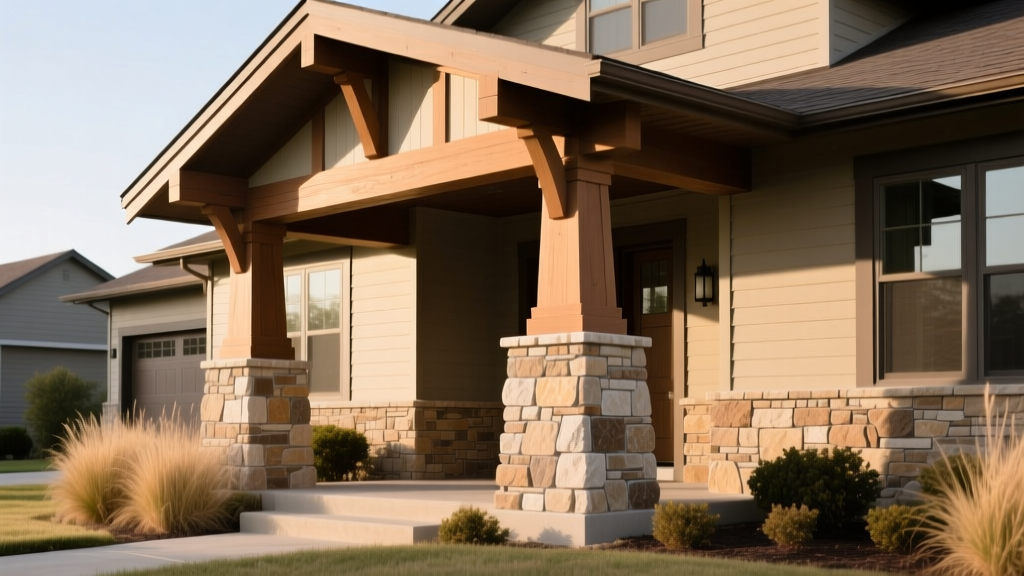
As of 2026, premium James Hardie fiber cement siding (including installation and trim) averages $12 to $16 per square foot in the KC market. Stone veneer is roughly 40% to 60% more expensive. Most KC homeowners use stone veneer as an accent material on wainscots, porch pillars, and entryways, pairing it with fiber cement or engineered wood on the upper elevations to balance the budget.
Written by
David NakamuraDavid Nakamura is a licensed architect (AIA) and construction technology writer focused on sustainable building methods, mass timber engineering, and high-performance building envelopes. He holds a Master of Architecture from the University of Washington and is a certified Passive House Consultant (CPHC). David spent eight years at the Seattle firm Mithun, where he led the design of three LEED Platinum projects, before founding his own practice specializing in net-zero residential design. He serves on the editorial advisory board of GreenBuilder Magazine and has authored peer-reviewed papers on cross-laminated timber (CLT) connections for the Journal of Structural Engineering. In his spare time, David teaches woodworking at Pratt Fine Arts Center and kayaks the Puget Sound.
More from David Nakamura
View all
Construction Cost
Labor Cost to Build a Deck Per Sq Ft: 2026 Installation Guide
Discover the exact labor cost to build a deck per sq ft in 2026. This installation guide breaks down contractor rates, complexity factors, and hidden fees.
Aug 4, 2026

Construction Cost
How Much Does It Cost to Build a 3 Bedroom House? Financing Guide
Learn exactly how much it costs to build a 3 bedroom house and explore 2026 financing options, construction loan types, and budget frameworks for your build.
Aug 4, 2026

Construction Cost
Cost to Build a Tennis Court: 2026 Guide
How much does it cost to build a tennis court in 2026? Breakdowns for asphalt, concrete, and synthetic surfaces plus fencing and lighting.
Jul 30, 2026