Stone Veneer Outside Wall: 2026 Buyer's Selection Guide
Compare manufactured vs. natural stone veneer outside wall options. Get 2026 pricing, moisture management tips, and top brand recommendations.

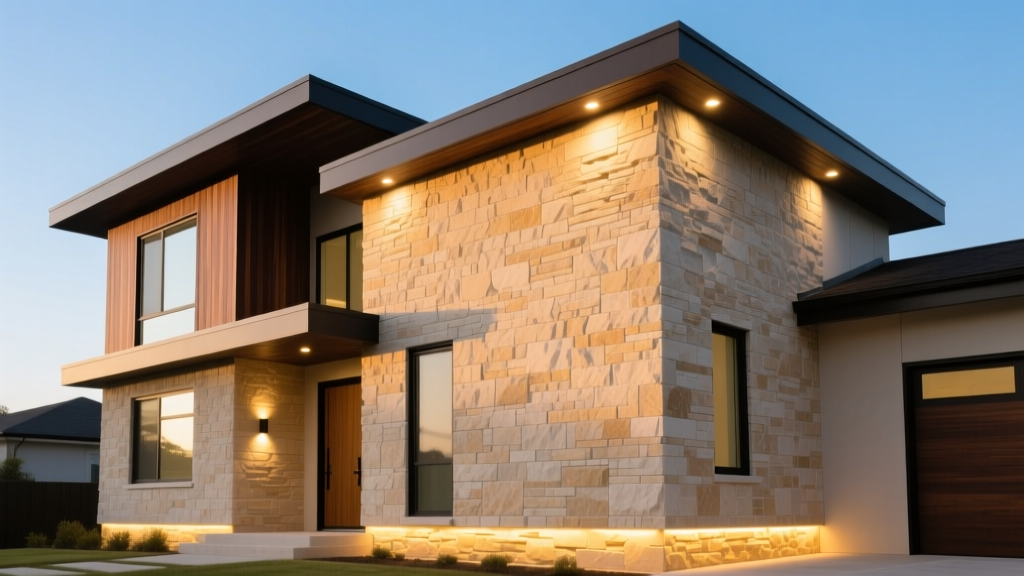
Selecting the right stone veneer outside wall system is one of the highest-impact decisions you can make for your property's curb appeal and structural longevity. In 2026, the market is split between advanced manufactured stone veneer (MSV) and premium natural stone veneer (NSV). While both deliver stunning aesthetics, their structural loads, moisture management requirements, and installation protocols differ drastically. This guide cuts through marketing jargon to provide exact specifications, 2026 cost data, and critical failure-mode prevention strategies for exterior applications.
The Core Decision: Manufactured vs. Natural Stone Veneer
The fundamental choice for any stone veneer outside wall project comes down to weight, budget, and aesthetic preference. Manufactured stone is cast from Portland cement, lightweight aggregates, and iron oxide pigments in molds taken from real stone. Natural stone is quarried, sliced to a uniform 0.75-inch to 1.5-inch thickness, and palletized.
Aesthetic and Durability Trade-offs
Modern MSV has largely solved the 'repeating pattern' issue of the early 2010s. Brands now use hundreds of unique molds. However, natural stone offers inherent color variation and geological texture that cannot be perfectly replicated. From a durability standpoint, high-quality natural stone (like granite or dense limestone) is virtually impervious to UV fading, whereas lower-tier manufactured stones can experience slight pigment degradation after 15-20 years of direct, unshaded UV exposure.
2026 Cost Breakdown: Material and Installation
Pricing for exterior stone applications has stabilized in 2026 following the supply chain fluctuations of previous years. Labor remains the most significant variable, heavily dependent on the complexity of the wall geometry (e.g., corners, window returns, and arches).
| Material Type | Material Cost (per sq. ft.) | Labor Cost (per sq. ft.) | Total Installed Range |
|---|---|---|---|
| Manufactured (Standard) | $6.50 - $9.00 | $14.00 - $22.00 | $20.50 - $31.00 |
| Manufactured (Premium/Architectural) | $9.50 - $14.00 | $16.00 - $25.00 | $25.50 - $39.00 |
| Natural (Limestone/Sandstone) | $14.00 - $22.00 | $18.00 - $28.00 | $32.00 - $50.00 |
| Natural (Granite/Quartzite) | $24.00 - $38.00 | $22.00 - $35.00 | $46.00 - $73.00 |
Note: Corner pieces are typically sold by the linear foot, not the square foot, and cost roughly 1.5x to 2x the price of flat fieldstone per linear foot.
Critical Moisture Management: The Weep Screed Mandate
The number one cause of stone veneer outside wall failure is water intrusion leading to wood rot and mold behind the cladding. According to the International Residential Code (IRC Section R703.7), exterior veneer installations must incorporate a weather-resistive barrier (WRB), a corrosion-resistant weep screed, and flashing.
'Installing stone veneer directly over bare plywood or Tyvek without a drainage mat and a weep screed at the foundation line is a guaranteed pathway to structural decay. Water will wick up through the mortar via capillary action if the bottom edge is buried in soil or mulch.'
The Proper Exterior Wall Assembly (Bottom to Top)
- Sheathing: OSB or plywood wall sheathing.
- Primary WRB: Fluid-applied membrane (e.g., Henry Blue Skin) or high-grade housewrap.
- Drainage Mat: A 3/16-inch dimpled drainage mat to create an air gap for water to flow down to the weep screed.
- Wire Lath: 2.5 lb self-furring galvanized metal lath, fastened directly into the wall studs (not just the sheathing) every 6 inches.
- Scratch Coat: A 1/2-inch layer of Type S mortar, scored horizontally to provide a mechanical key for the veneer mortar.
- Stone Veneer: Applied using a polymer-modified veneer mortar (never use standard brick mortar, which lacks the necessary adhesion and flexibility).
Top Brand Profiles for Exterior Applications
When specifying a stone veneer outside wall system, sticking to established manufacturers ensures you have access to matched mortars, touch-up kits, and documented ASTM testing.
- Cultured Stone (Boral): The industry pioneer. Their 'Canyon Ridge' and 'Dressed Fieldstone' profiles are top sellers for exterior use. They offer a 50-year limited warranty, provided the installation strictly follows TMS 602 specifications.
- Eldorado Stone: Known for highly realistic color blending and deep shadow lines. Their 'Alpine Rock' and 'Ridgefield' profiles are exceptionally popular in mountain and craftsman-style homes. They provide excellent technical support for complex exterior detailing.
- Coronado Stone Products: Offers a wide range of architectural profiles, including specialized thin-brick and split-face options that bridge the gap between traditional masonry and veneer.
- Real Stone Veneer (Natural): For natural thin veneer, sourcing from regional quarries reduces freight costs. Look for suppliers certified by the Natural Stone Institute to ensure the stone has been tested for absorption and flexural strength.
Climate-Specific Selection Matrix
Not all stone performs equally in every environment. Use this matrix to guide your material selection based on your regional climate.
| Climate Zone | Primary Threat | Recommended Material & Protocol |
|---|---|---|
| Freeze-Thaw (Northeast/Midwest) | Spalling, cracking, efflorescence | High-density manufactured stone or granite NSV. Must use air-entrained mortar and apply a breathable siloxane sealer post-installation. |
| Coastal / Marine | Salt spray corrosion, wind-driven rain | Stainless steel lath and fasteners (galvanized will rust). Dense limestone or manufactured stone with integral water repellents. |
| Arid / High UV (Southwest) | UV pigment fading, thermal expansion | Natural sandstone or quartzite. If using MSV, select lighter earth tones to minimize thermal heat gain and UV visibility. |
Common Installation Mistakes to Avoid
Using Type S Mortar for Adhesion
Type S mortar is designed for structural bricklaying and load-bearing. It is too rigid and lacks the polymer additives needed to grip the back of a veneer stone. Always use a specialized Veneer Stone Mortar (like ProSpec or Sakrete Veneer) which contains polymers for superior bond strength and flexibility.
Skipping the Scratch Coat
Applying stone directly to the metal lath with a single thick layer of mortar leads to sagging and bond failure. The scratch coat must be applied, scored, and allowed to cure for 24-48 hours before the stone is set. This two-coat system is non-negotiable for exterior walls.
Frequently Asked Questions
Can I install stone veneer over existing brick or siding?
You should never install stone veneer directly over vinyl, wood, or fiber-cement siding; the siding must be removed down to the sheathing. However, you can
Manufactured stone veneer is typically manufactured with integral water repellents and does not strictly require sealing. However, in harsh freeze-thaw climates, applying a breathable, penetrating silane/siloxane sealer (never a film-forming acrylic, which traps moisture) every 5 to 7 years will drastically reduce efflorescence and spalling. Efflorescence (the white, powdery salt deposit) is common in the first year as moisture escapes the curing mortar. Do not use muriatic acid, as it can etch the cement and alter the iron oxide pigments. Use a specialized efflorescence cleaner and a stiff nylon brush. Ensure your roof gutters and grading are directing water away from the wall to prevent recurring saturation.Does exterior stone veneer require sealing?
How do I clean efflorescence off my exterior stone wall?
Written by
Elena RodriguezElena Rodriguez is a civil engineer and technical writer specializing in concrete technology, masonry systems, and ASTM/ACI compliance. She earned her B.S. in Civil Engineering from Texas A&M University and spent a decade at a materials testing laboratory, performing over 2,000 concrete compressive strength tests and masonry prism evaluations. Elena is an ACI-certified Field Testing Technician (Grade I) and a member of ASTM Committee C12 on Natural Building Stone. She currently consults on forensic engineering cases involving concrete failures and moisture intrusion. Based in San Antonio, TX, Elena is a proud member of the Society of Women Engineers (SWE) and coaches her daughter's FIRST Robotics team.
More from Elena Rodriguez
View all
Walls & Panels
Cost Analysis: Light Gauge Steel Framing Advantages and Disadvantages
Evaluate light gauge steel framing advantages and disadvantages through a strict cost analysis lens, comparing material, labor, and lifecycle expenses.
Aug 4, 2026

Walls & Panels
Gypsum Board Types: Exact Specifications, Thickness & Dimensions
Compare standard, Type X, and moisture-resistant gypsum board types. Get exact specifications, thicknesses, dimensions, and ASTM standards for your project.
Aug 4, 2026

Fire Resistance
Best Fire-Resistant Outdoor Decking Materials: 2026 Buyer Guide
Discover the best fire-resistant outdoor decking materials for 2026. Compare Class A PVC, aluminum, and hardwood options for WUI compliance and safety.
Aug 4, 2026