Thin Stacked Stone Veneer Fireplace Cost Analysis & Budget Guide
Analyze the true cost of a thin stacked stone veneer fireplace. Get current pricing for materials, labor, and hidden expenses to budget your project.

The True Cost of a Thin Stacked Stone Veneer Fireplace
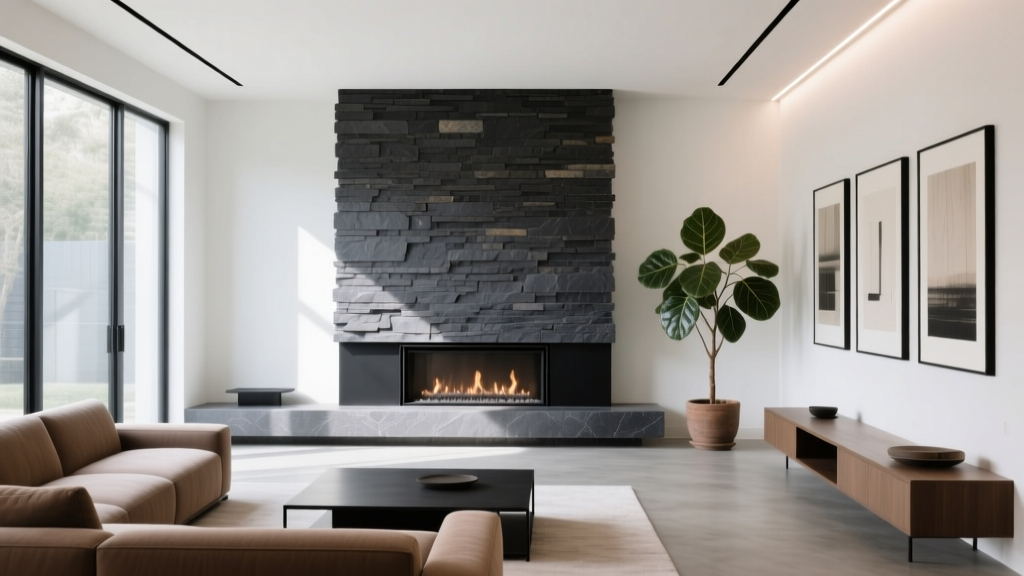
Upgrading a fireplace with thin stacked stone veneer transforms a standard architectural feature into a high-end focal point. Unlike full-bed natural stone, which weighs up to 40 pounds per square foot and requires an engineered concrete footing, thin veneer (typically 1 to 1.5 inches thick) weighs between 10 and 15 pounds per square foot. This weight reduction eliminates the need for structural footing reinforcement, saving homeowners $1,500 to $3,000 in foundational prep work.
For a standard 40-square-foot fireplace surround, expect to pay between $1,200 and $3,400 fully installed. A dramatic floor-to-ceiling application (80 to 120 square feet) ranges from $3,000 to $8,500. The final price depends heavily on whether you choose manufactured stone veneer (MSV) or natural thin veneer (NTV), the complexity of the corner profiles, and local masonry labor rates.
Material Pricing Matrix: Manufactured vs. Natural Stone
The material you select dictates the baseline of your budget. Manufactured stone is cast from Portland cement, lightweight aggregates, and iron oxide pigments, offering consistent thickness and integrated corner pieces. Natural thin veneer is sliced from quarried stone, offering unique geological variations but requiring more skilled labor to fit uneven edges.
| Material Type | Popular Brands / Sources | Average Cost (Per Sq. Ft.) | Corner Pieces (Per Linear Ft.) |
|---|---|---|---|
| Manufactured Stacked Ledge | Eldorado Stone, Cultured Stone | $7.50 - $10.50 | $9.00 - $13.00 |
| Manufactured Fieldstone | Coronado Stone, Dutch Quality | $6.50 - $9.00 | $8.00 - $11.00 |
| Natural Thin Limestone | Quarry Direct, Local Stone Yards | $12.00 - $16.00 | $14.00 - $20.00 |
| Natural Thin Slate | Real Stone Thin Veneer | $15.00 - $22.00 | $18.00 - $26.00 |
Substrate Preparation and Hidden Material Costs
Novice budgeters often calculate only the visible stone, ignoring the critical substrate and bonding materials. Thin stacked stone veneer cannot be applied directly to drywall or painted surfaces. The installation requires a rigid, non-combustible, and moisture-resistant base.
- Cement Backer Board: 1/2-inch Durock or HardieBacker is mandatory for interior fireplace surrounds. Budget $15 to $22 per 3x5 sheet.
- Metal Lath: 2.5 lb diamond mesh galvanized lath provides the mechanical key for the scratch coat. Costs approximately $18 to $25 per 25-square-foot roll.
- Scratch Coat Mortar: A 1/2-inch layer of Type S mortar is troweled over the lath and scored horizontally. Type S is specified by Eldorado Stone installation guidelines due to its high flexural bond strength, preventing the heavy stone from delaminating over time. Budget $12 to $16 per 80-lb bag.
- Polymeric Sand or Grout: While stacked ledge stone is typically installed with a dry-stacked (tight-fit) appearance, the gaps between irregular stones must be filled from behind with mortar to prevent air infiltration and structural shifting.
The NFPA 211 Clearance Factor
Labor Rates and Professional Installation Expenses
Professional masonry labor for interior thin veneer installation averages $8.00 to $15.00 per square foot. The wide variance depends on regional labor markets and the complexity of the profile. Stacked ledge stone, which features uniform horizontal lines, installs faster than random fieldstone, which requires the mason to constantly dry-fit pieces to balance colors and shapes.
For a 50-square-foot surround, professional labor will add $400 to $750 to your project. However, this includes the meticulous prep work—hanging the lath, applying the scratch coat, waiting 24 to 48 hours for the cure, and executing the final stone setting. A critical advantage of hiring a certified mason is their ability to manage mortar squeeze-out. In dry-stacked ledgestone profiles, visible mortar joints ruin the aesthetic; professionals use specialized pointing tools and stiff-bristle brushes to keep the face clean during installation.
DIY Mortarless Systems vs. Traditional Mortared Veneer
For budget-conscious homeowners, mortarless interlocking stone systems have gained traction. Brands like ClipStone or AirStone offer thin veneer panels that adhere directly to approved substrates using high-strength construction adhesives (like polyurethane-based masonry glues) or interlocking mechanical tracks.
| Feature | Traditional Mortared Veneer | Mortarless Interlocking Panels |
|---|---|---|
| Material Cost (Per Sq. Ft.) | $7.00 - $15.00 | $11.00 - $18.00 |
| Labor Cost | $8.00 - $15.00 (Pro required) | $0.00 (DIY Friendly) |
| Installation Time (50 sq ft) | 3 to 4 days (including cure times) | 6 to 10 hours |
| Longevity & Resale Value | 50+ years; indistinguishable from full stone | 15-20 years; visible seams upon close inspection |
| Heat Tolerance | Withstands direct high-heat exposure | Adhesives may degrade near direct firebox heat |
Expert Verdict: Mortarless systems are viable for decorative gas-log fireplaces or accent walls where heat exposure is minimal. For wood-burning fireplaces or high-use primary hearths, traditional Type S mortared installation remains the only structurally sound and code-compliant choice.
Calculating Square Footage and the Waste Factor
Miscalculating material quantities is the most common cause of budget overruns in stone veneer projects. Veneer is sold by the square foot for flat surfaces and by the linear foot for corners. Follow this framework to order accurately:
- Measure the Total Area: Calculate the height and width of the entire fireplace facade. (e.g., 10 feet high x 8 feet wide = 80 sq. ft.).
- Subtract Openings: Deduct the exact dimensions of the firebox opening and any built-in shelving or mantel cutouts. (e.g., 3 ft x 2.5 ft firebox = 7.5 sq. ft. Total flat area = 72.5 sq. ft.).
- Calculate Linear Corners: Measure the vertical outside edges that require corner pieces. If the facade wraps around two protruding pillars, measure the height of both pillars to get your linear corner footage.
- Apply the Waste Factor: Add 10% to your flat square footage for standard cuts. If your design involves intricate diagonal cuts, arches, or fitting around irregular stone mantels, increase the waste factor to 15%. Natural stone requires a higher waste factor than manufactured stone due to irregular breakage during cutting.
By separating your flat and corner measurements and applying the correct waste multiplier, you prevent the costly delays of back-ordering specific dye-lot batches of manufactured stone, which can take 4 to 6 weeks to arrive from the manufacturer.
Frequently Asked Questions
Does thin stone veneer require a brick ledge?
No. Because thin veneer weighs less than 15 lbs per square foot, it is considered an adhered veneer rather than an anchored veneer. It relies on the shear strength of the Portland cement mortar bond to the metal lath and substrate, meaning it can be applied directly to properly prepared wall studs without a foundational brick ledge or concrete footing.
Can I install thin stacked stone over an existing brick fireplace?
Yes, existing brick provides an excellent substrate, provided it is unpainted and structurally sound. If the brick is painted or sealed, you must sandblast it or mechanically attach metal lath over the brick using masonry tapcon screws to ensure the scratch coat has a mechanical grip. For detailed substrate preparation standards, refer to the Angi masonry cost and prep guidelines.
How do I clean mortar haze off stacked stone?
Never use muriatic acid on manufactured stone veneer; it will strip the iron oxide pigments and permanently bleach the surface. Instead, use a soft-bristle brush and a specialized masonry cleaner or a mild solution of white vinegar and water while the mortar is still semi-fresh. For natural stone, consult the quarry's specific sealing and cleaning requirements, as porous stones like limestone can absorb acidic cleaners.
Written by
Priya KapoorPriya Kapoor is a real estate market analyst and construction economics researcher with expertise in housing affordability, development feasibility, and infrastructure investment. She holds a Master of Regional Planning from Cornell University and previously worked as a senior analyst at CBRE's Investment Properties group, where she modeled returns for $4B in mixed-use development pipelines. Priya now runs an independent research practice advising developers, municipalities, and REITs on construction cost forecasting and market timing. She publishes the quarterly "BuildMat Market Pulse" report tracking material price indices across 12 commodity categories. Based in Austin, TX, Priya serves on the board of Habitat for Humanity Austin and is a marathon runner.
More from Priya Kapoor
View all
Construction Cost
Cost to Build a 1600 Sq Ft Home in 2026: Full Breakdown
Accurate 2026 cost to build a 1600 sq ft home—material, labor, and regional pricing breakdowns included. Plan your budget with real-time estimates.
Aug 11, 2026

Wood & Lumber
Name the Types of Wood for Pressure Treatment and Preservation
Learn how to name the types of wood best suited for pressure treatment. Compare species treatability, chemical retention levels, and 2026 preservation costs.
Aug 4, 2026

Stone & Masonry
Stone Veneer Suppliers Lindenhurst: 2026 Cost Analysis
Analyze 2026 stone veneer costs in Lindenhurst, NY. Compare local supplier pricing, delivery fees, and Suffolk County installation labor rates.
Aug 4, 2026