Veneer Cultured Stone Guide: Costs, Styles, and Installation Tips
Explore our complete guide to veneer cultured stone. Compare 2026 costs, analyze installation requirements, and review top architectural profiles.

What is Veneer Cultured Stone?
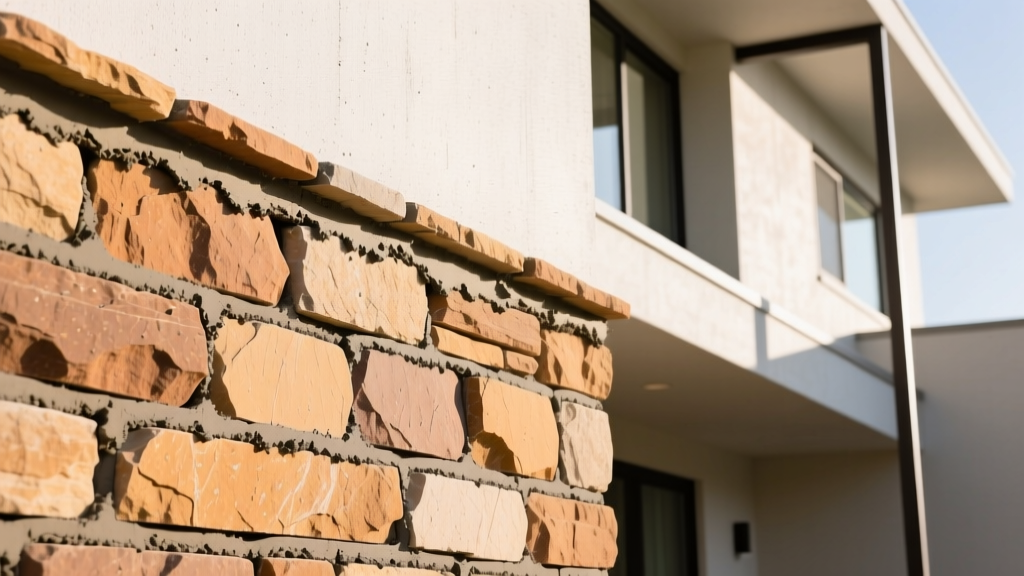
Veneer cultured stone is a manufactured masonry product engineered to replicate the texture, color, and dimensional variance of natural quarried stone. Unlike solid structural masonry, it is an adhered veneer system designed purely for cladding. The material is cast in polyurethane molds taken directly from natural stone, utilizing a precise blend of Portland cement, lightweight aggregates (such as pumice or expanded shale), and iron oxide pigments.
The primary engineering advantage of specifying veneer cultured stone over natural stone is weight reduction. While natural limestone or granite veneers can weigh 25 to 40 pounds per square foot (psf), cultured alternatives typically weigh between 10 and 12 psf. This drastic reduction eliminates the need for structural wall ties, heavy footing reinforcements, or additional load-bearing headers in residential and light-commercial framing.
Quick Material Specifications
- Average Weight: 10.5 lbs per sq. ft.
- Thickness: 1.0 to 2.5 inches (varies by profile)
- Compressive Strength: 2,000 to 2,800 psi (per ASTM C1670)
- Water Absorption: < 22% by weight
- Freeze-Thaw Durability: Passes 50 cycles with < 1% weight loss
Material Comparison: Cultured vs. Natural vs. Faux
When evaluating exterior or interior cladding, architects and builders must weigh the performance characteristics of manufactured stone against natural stone and high-density polyurethane faux panels. The table below outlines the critical differences for 2026 construction standards.
| Feature | Veneer Cultured Stone | Natural Stone Veneer | Faux Polyurethane Panels |
|---|---|---|---|
| Material Cost | $6.00 – $14.00 / sq ft | $12.00 – $35.00 / sq ft | $8.00 – $12.00 / sq ft |
| Installation Labor | $8.00 – $15.00 / sq ft | $15.00 – $30.00 / sq ft | $3.00 – $6.00 / sq ft |
| Weight (psf) | 10 – 12 lbs | 25 – 40 lbs | 1 – 2 lbs |
| Fire Rating | Class A (Non-combustible) | Class A (Non-combustible) | Class C (Varies by core) |
| Aesthetic Authenticity | High (Requires close inspection) | Absolute | Moderate (Repeating patterns) |
Architectural Profiles and Brand Applications
Top manufacturers like Westlake Royal Stone Solutions and Eldorado Stone categorize their veneer cultured stone lines by profile. Selecting the correct profile dictates the mortar joint technique and overall architectural style.
- Ledgestone / Stackstone: Linear, rectangular pieces designed for tight, mortarless stacked joints. Ideal for modern, contemporary facades and interior fireplace surrounds. Requires a perfectly level scratch coat.
- Fieldstone: Rounded, irregular shapes that mimic river rock or glacial till. Installed with wide, visible mortar joints (typically 1/2 to 3/4 inch). Best suited for rustic, craftsman, or traditional exterior wainscoting.
- Ashlar / Cut Stone: Rectangular blocks with chiseled or smooth faces, mimicking quarried limestone or granite. Can be installed with standard raked joints or flush joints for a formal, estate-style elevation.
- Coral / Cobblestone: Highly textured, deeply shadowed profiles that replicate hand-chiseled or weathered stone. Excellent for creating high-contrast accent walls where dramatic shadow lines are desired.
2026 Cost Breakdown: Material and Labor
Budgeting for veneer cultured stone requires factoring in the hidden costs of substrate preparation. The cladding itself is only one component of the total wall assembly cost.
Total Installed Cost Matrix (Per Square Foot)
Economy Tier (Basic Fieldstone, Standard Mortar): $14.00 – $18.00 / sq ft
Mid-Range Tier (Ledgestone, Premium Pigments): $19.00 – $24.00 / sq ft
Premium Tier (Complex Ashlar Blends, Custom Washes): $25.00 – $32.00 / sq ft
Note: Add $2.50 – $4.00 per sq ft if the substrate requires new weather-resistive barriers (WRB), weep screeds, and metal lath installation.
Critical Installation Requirements and Failure Modes
Adhered masonry veneers are highly susceptible to moisture-related failures if the drainage plane is compromised. The National Concrete Masonry Association (NCMA) and ASTM C1670 standards mandate strict adherence to weather-resistive assembly protocols.
The 4-Step Adhered Assembly
- Weather-Resistive Barrier (WRB): Apply two layers of Grade D asphalt-impregnated felt or a code-approved housewrap (e.g., Tyvek CommercialWrap) over the structural sheathing.
- Corrosion-Resistant Lath: Install minimum 2.5 lb self-furring galvanized steel lath. Fasten with corrosion-resistant nails or staples penetrating the wall studs by a minimum of 1 inch. Overlap horizontal seams by 1 inch and vertical seams by 2 inches.
- Scratch Coat: Apply a 1/2-inch thick scratch coat of Type S masonry mortar. Scarify the surface horizontally with a raking tool to provide a mechanical key. Cure for a minimum of 48 hours while keeping the mortar damp.
- Setting Bed and Placement: Apply a 1/2-inch setting bed of Type S mortar to the wall and butter the back of each cultured stone piece. Press firmly to achieve 80-90% mortar coverage behind the veneer.
⚠️ Warning: Common Failure Modes
Efflorescence: White, powdery salt deposits occur when moisture migrates through the cementitious stone and evaporates on the surface. This is almost always caused by missing weep screeds at the base of the wall or using a mortar mix with high soluble salt content.
Delamination: Stones falling off the wall are typically the result of failing to butter the back of the stone (creating air pockets) or applying the setting bed to a dry, dusty scratch coat that wasn't properly dampened before installation.
Maintenance and Longevity
Veneer cultured stone is virtually maintenance-free but is not impervious to environmental staining. Because the material is porous cement, it can absorb oils, dirt, and organic growth.
- Cleaning: Use a soft-bristle brush and a mild detergent solution. Never use muriatic acid or high-pressure power washers (keep pressure below 600 PSI), as these will strip the iron oxide pigment layer and expose the raw gray concrete aggregate beneath.
- Sealing: In high-moisture environments or areas subjected to de-icing salts, apply a breathable, siloxane-based masonry sealer every 5 to 7 years. Avoid film-forming acrylic sealers, which trap moisture inside the stone and cause spalling during freeze-thaw cycles.
- Landscaping Clearance: Maintain a minimum 4-inch clearance between the bottom of the stone veneer and the finished soil grade to prevent capillary action and soil-borne moisture wicking.
Expert Verdict: When to Specify Cultured Veneer
Specify veneer cultured stone when the project demands the aesthetic weight and fire-resistance of natural masonry, but the structural framing cannot support the dead load of quarried stone. It is the optimal choice for second-story exterior accents, interior feature walls without reinforced floor joists, and large-scale commercial facades where material and labor budgets are strictly capped. For ground-level retaining walls or heavy-impact zones where extreme abrasion resistance is required, natural stone remains the superior engineering choice.
Written by
David NakamuraDavid Nakamura is a licensed architect (AIA) and construction technology writer focused on sustainable building methods, mass timber engineering, and high-performance building envelopes. He holds a Master of Architecture from the University of Washington and is a certified Passive House Consultant (CPHC). David spent eight years at the Seattle firm Mithun, where he led the design of three LEED Platinum projects, before founding his own practice specializing in net-zero residential design. He serves on the editorial advisory board of GreenBuilder Magazine and has authored peer-reviewed papers on cross-laminated timber (CLT) connections for the Journal of Structural Engineering. In his spare time, David teaches woodworking at Pratt Fine Arts Center and kayaks the Puget Sound.
More from David Nakamura
View all
Construction Cost
Labor Cost to Build a Deck Per Sq Ft: 2026 Installation Guide
Discover the exact labor cost to build a deck per sq ft in 2026. This installation guide breaks down contractor rates, complexity factors, and hidden fees.
Aug 4, 2026

Construction Cost
How Much Does It Cost to Build a 3 Bedroom House? Financing Guide
Learn exactly how much it costs to build a 3 bedroom house and explore 2026 financing options, construction loan types, and budget frameworks for your build.
Aug 4, 2026

Construction Cost
Cost to Build a Tennis Court: 2026 Guide
How much does it cost to build a tennis court in 2026? Breakdowns for asphalt, concrete, and synthetic surfaces plus fencing and lighting.
Jul 30, 2026