Certifying Green Building Construction Materials: 2026 Guide
Navigate the 2026 certification landscape for green building construction materials. Master EPDs, HPDs, and C2C standards for LEED and WELL.

Key Takeaways
- LEED compliant materials require verified Environmental Product Declarations (EPDs) and Health Product Declarations (HPDs) to earn credit points.
- Partnering with a specialized LEED certified building products wholesaler automates documentation mapping for LEED v5 and WELL v2 standards.
- Regional material sourcing within a 250-mile radius remains a critical strategy for maximizing Materials and Resources (MR) credits in 2026.
Sourcing LEED compliant materials requires partnering with a LEED certified building products wholesaler that provides verified Environmental Product Declarations (EPDs) and Health Product Declarations (HPDs). For architects, general contractors, and procurement managers aiming for Leadership in Energy and Environmental Design (LEED) or WELL certification, the direct path to compliance is selecting a wholesale distributor with an integrated digital documentation portal. This ensures every product automatically maps to specific LEED v5 and WELL v2 credits without manual auditing delays.
This guide is explicitly designed for commercial architects, sustainability directors, and procurement managers overseeing large-scale green building projects. Navigating the complexities of material transparency demands precise data and reliable supply chains.
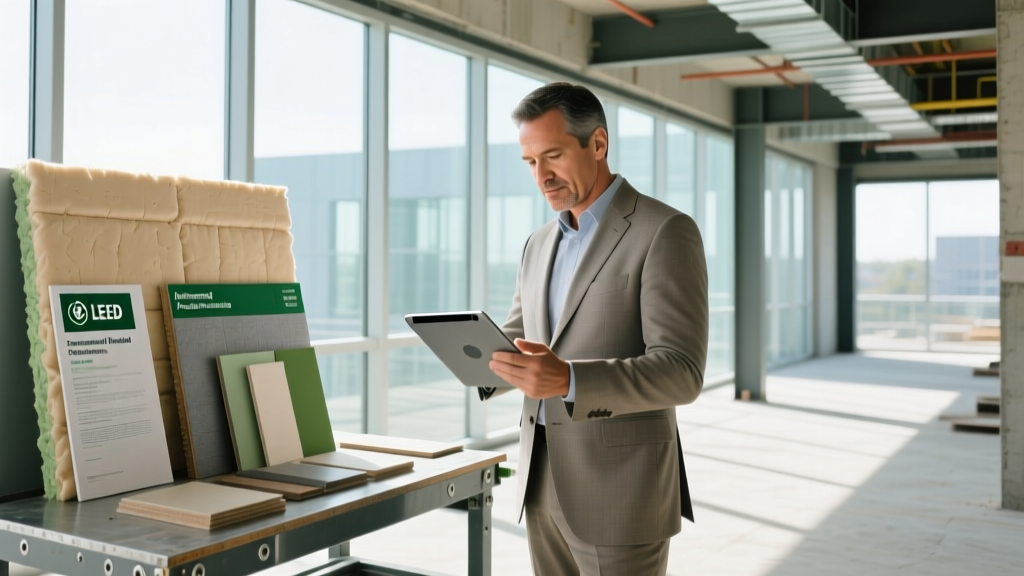
Understanding LEED and WELL Material Compliance
The U.S. Green Building Council awards up to 27 maximum points in the Materials and Resources (MR) category for projects utilizing verified sustainable products. Achieving these points requires rigorous documentation proving the lifecycle environmental impact of every structural and finish material. The 2026 updates to LEED v5 drafts now mandate a 15% reduction in embodied carbon for baseline material compliance.
Defining LEED Compliant Materials
Environmental Product Declaration (EPD): An independently verified and registered document that communicates transparent and comparable information about the life-cycle environmental impact of products. It provides quantitative data on carbon footprint, resource depletion, and water usage for building materials.
Materials must meet specific thresholds to qualify as LEED compliant. For example, acoustic ceiling tiles and flooring must contain at least 40% post-consumer recycled content to contribute toward the Building Product Disclosure and Optimization credit. Sourcing these specific products requires direct access to manufacturer testing data.
WELL Building Standard Material Requirements
While LEED focuses heavily on environmental impact, the International WELL Building Institute prioritizes human health and occupant well-being. Material toxicity limits under the WELL standard strictly cap volatile organic compound (VOC) emissions at 100 micrograms per gram for interior adhesives and sealants. Procurement teams must cross-reference LEED environmental data with WELL toxicity limits to achieve dual certification.
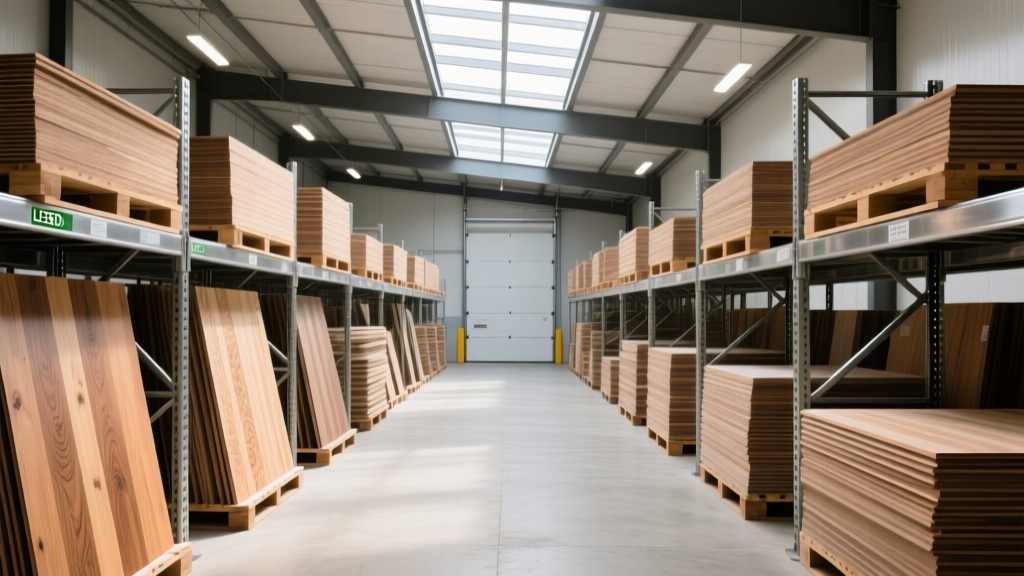
Sourcing from a LEED Certified Building Products Wholesaler
A standard distributor simply moves inventory, whereas a specialized LEED certified building products wholesaler acts as a compliance partner. These wholesalers maintain active subscriptions to the Health Product Declaration Collaborative database, ensuring their catalog reflects real-time chemical inventory disclosures. This proactive verification eliminates the risk of specifying a product that later fails a LEED audit.
Verification and Documentation Portals
Top-tier wholesalers provide cloud-based portals that generate automated LEED scorecards based on your project's bill of materials. When a contractor orders low-emitting paint, the portal instantly attaches the corresponding Green Seal certification to the project file. This digital chain of custody reduces administrative overhead by an average of 120 hours per commercial project.
2026 Supply Chain and Embodied Carbon Metrics
Regional sourcing remains a cornerstone of green building logistics. Procuring materials extracted and manufactured within a 250 miles radius of the project site significantly lowers transportation-related carbon emissions. Specialized wholesalers utilize geo-fenced inventory networks to guarantee regional compliance for local extraction credits.
Material Procurement Decision Framework
Use the following comparison matrix to evaluate potential supply partners for your next sustainable development project.
| Evaluation Metric | Standard Distributor | LEED Specialized Wholesaler |
|---|---|---|
| EPD Availability | Manual request required; 2-3 week delay | Instant API integration and portal download |
| VOC Tracking | Relies on manufacturer label claims | Third-party verified Green Seal and SCS certifications |
| Regional Sourcing | National shipping hubs; high transport carbon | Geo-fenced inventory within 250 miles radius |
| Credit Mapping | None; manual LEED scorecard entry | Automated LEED v5 and WELL v2 credit alignment |
Frequently Asked Questions
How do I verify LEED material compliance before purchasing?
Verify compliance by requesting the product's current Environmental Product Declaration (EPD) and checking the manufacturer's chemical inventory against the Health Product Declaration Collaborative registry. A qualified wholesaler will provide these documents upfront via a digital portal, ensuring the product aligns with the specific Materials and Resources credits targeted in your project's LEED scorecard.
What are the new LEED v5 material credit requirements for 2026?
The LEED v5 framework places a significantly heavier emphasis on embodied carbon reduction and circular economy principles. Projects must now demonstrate a 15% reduction in embodied carbon across structural and enclosure materials compared to a baseline building. Additionally, there are enhanced credits for materials that utilize bio-based, rapidly renewable resources and verified closed-loop recycling processes.
What are the WELL building standard material toxicity limits?
The International WELL Building Institute enforces strict limits on off-gassing to protect occupant respiratory health. Interior paints, adhesives, and sealants must emit less than 100 micrograms per gram of total volatile organic compounds. Furthermore, flooring and ceiling materials must undergo rigorous third-party testing to ensure they do not release hazardous particulate matter into the indoor air quality zone.
Strategic Next Steps
Securing LEED compliant materials hinges entirely on the transparency and technological capabilities of your supply chain partner. Relying on standard distributors introduces severe documentation bottlenecks that can delay project certification and increase administrative costs. By transitioning to a dedicated LEED certified building products wholesaler, procurement teams safeguard their credit points and streamline the path to dual LEED and WELL certification.
Your immediate next step: Conduct a comprehensive audit of your current material suppliers. Cross-reference their top 20 most frequently specified products against the Health Product Declaration Collaborative database to identify critical transparency gaps before finalizing your 2026 procurement contracts.
Written by
David NakamuraDavid Nakamura is a licensed architect (AIA) and construction technology writer focused on sustainable building methods, mass timber engineering, and high-performance building envelopes. He holds a Master of Architecture from the University of Washington and is a certified Passive House Consultant (CPHC). David spent eight years at the Seattle firm Mithun, where he led the design of three LEED Platinum projects, before founding his own practice specializing in net-zero residential design. He serves on the editorial advisory board of GreenBuilder Magazine and has authored peer-reviewed papers on cross-laminated timber (CLT) connections for the Journal of Structural Engineering. In his spare time, David teaches woodworking at Pratt Fine Arts Center and kayaks the Puget Sound.
More from David Nakamura
View all
Construction Cost
Labor Cost to Build a Deck Per Sq Ft: 2026 Installation Guide
Discover the exact labor cost to build a deck per sq ft in 2026. This installation guide breaks down contractor rates, complexity factors, and hidden fees.
Aug 4, 2026

Construction Cost
How Much Does It Cost to Build a 3 Bedroom House? Financing Guide
Learn exactly how much it costs to build a 3 bedroom house and explore 2026 financing options, construction loan types, and budget frameworks for your build.
Aug 4, 2026

Construction Cost
Cost to Build a Tennis Court: 2026 Guide
How much does it cost to build a tennis court in 2026? Breakdowns for asphalt, concrete, and synthetic surfaces plus fencing and lighting.
Jul 30, 2026