How Much Does It Cost to Build an Ecommerce Site for Sustainable Building Materials?
Discover how much it costs to build an ecommerce site for sustainable building materials, including platform fees, green hosting, and freight integrations.
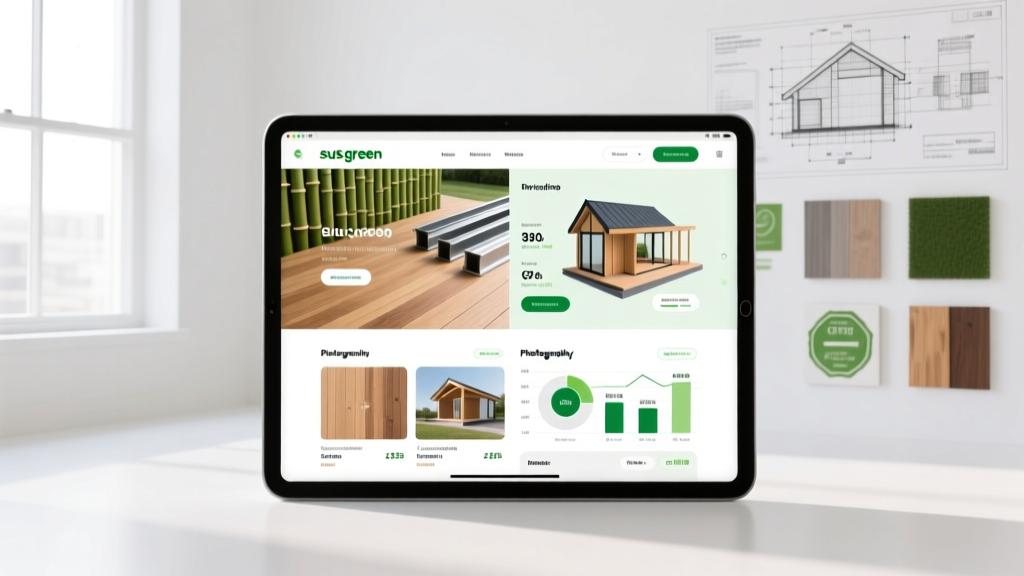
The True Cost of Launching a Green Building Materials Storefront
Selling eco-friendly construction supplies—such as mass timber, hempcrete blocks, recycled steel framing, and low-VOC finishes—requires a fundamentally different digital infrastructure than standard retail. When suppliers and distributors ask how much does it cost to build an ecommerce site tailored for sustainable building materials, the answer extends far beyond basic shopping cart software. You are not just selling products; you are managing complex LTL (Less Than Truckload) freight, hosting Environmental Product Declarations (EPDs), and calculating carbon offsets at checkout.
For a specialized B2B/B2C sustainable materials storefront, year-one costs typically range from $24,500 to $92,000+. This accounts for enterprise-grade platform licensing, specialized freight API integrations, LEED compliance document hosting, and carbon-neutral server infrastructure. Below is the complete green guide to budgeting, building, and scaling an ecommerce presence in the sustainable construction sector.
Platform Breakdown: SaaS vs. Open-Source vs. Headless
The foundation of your digital storefront dictates your ongoing maintenance costs and your ability to scale complex B2B pricing tiers (e.g., contractor volume discounts for reclaimed insulation). Here is how the top enterprise architectures compare for heavy building materials.
| Architecture | Best For | Upfront Build Cost | Monthly SaaS/Hosting | Carbon Footprint Control |
|---|---|---|---|---|
| Shopify Plus | D2C eco-finishes & smart home tech | $15,000 - $35,000 | $2,300+ | Medium (Shopify manages server routing) |
| BigCommerce B2B | Wholesale timber & bulk insulation | $18,000 - $45,000 | $1,000 - $1,500 | Medium (Cloud-hosted, limited server choice) |
| Headless (WooCommerce/Magento) | Custom 3D material visualizers & complex ERP | $35,000 - $85,000+ | $300 - $800 (Hosting only) | High (You select 100% renewable green hosts) |
While SaaS platforms like Shopify Plus offer rapid deployment and robust security, they limit your ability to choose your exact server environment. For brands where digital sustainability is a core marketing pillar, a headless WooCommerce or Adobe Commerce build hosted on a dedicated renewable-energy server provides total transparency over your digital carbon footprint.
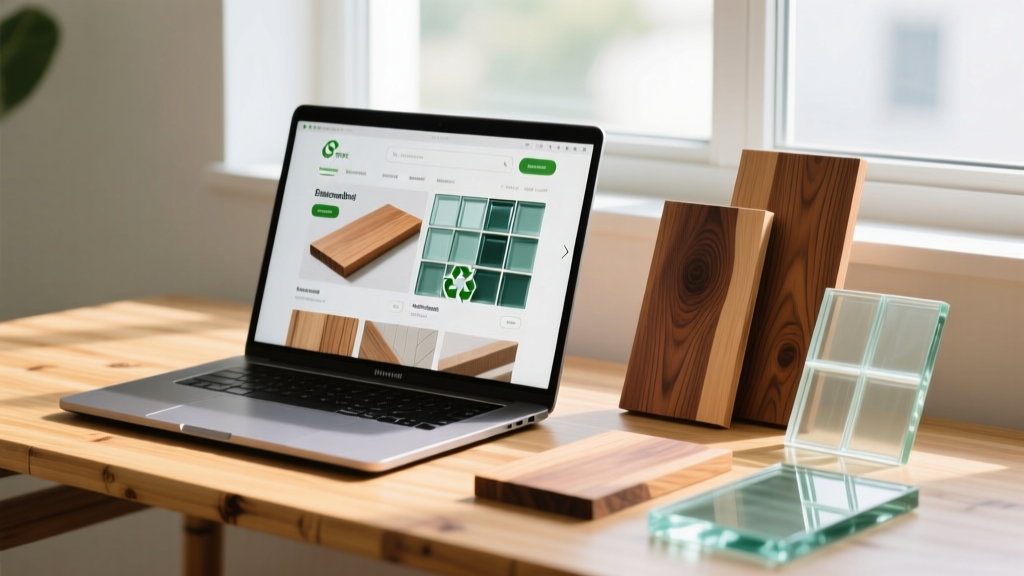
Mandatory Integrations for Construction Supply Ecommerce
A standard ecommerce checkout fails immediately when a customer attempts to order 4,000 lbs of recycled glass countertops. Sustainable building materials require specialized backend integrations that significantly impact your initial development budget.
1. LTL Freight and Hazmat Routing APIs
Unlike parcel shipping, heavy green materials require LTL freight. Integrating an API like Freightos or Echo Global Logistics to calculate real-time pallet rates, liftgate requirements, and construction site delivery restrictions costs between $3,500 and $6,000 in custom development. Furthermore, certain eco-resins or bio-based adhesives may trigger hazmat shipping protocols, requiring specialized routing logic.
2. EPD and LEED Document Hosting (PIM Integration)
Architects and LEED-certified contractors will not purchase materials without verified Environmental Product Declarations (EPDs) and Health Product Declarations (HPDs). You must integrate a Product Information Management (PIM) system like Akeneo or Salsify to automatically attach these heavy PDFs and BIM (Building Information Modeling) files to product pages. Budget $8,000 to $12,000 for PIM setup and synchronization.
3. Carbon Offset Checkout APIs
To maintain brand alignment, many green suppliers offer buyers the option to offset the freight emissions of their order at checkout. Integrating APIs from providers like Patch or Cloverly adds roughly $1,500 to $2,500 to your development costs, allowing real-time API calls to calculate the exact tonnage of CO2 emitted based on the freight route and pallet weight.
Green Blueprint Tip: The 'Local Radius' Discount
Program your cart logic to automatically apply a 'Low-Carbon Freight Discount' for buyers located within a 250-mile radius of your distribution center. This incentivizes local sourcing, reduces Scope 3 emissions, and offsets the cost of your custom freight API development through higher local conversion rates.
The Hidden Environmental Cost: Digital Carbon Footprints
A truly sustainable building materials company must audit its digital supply chain. Data centers currently consume an estimated 1% to 1.5% of global electricity use, a figure that is climbing as ecommerce platforms utilize heavier media (like 3D material renders and high-res installation videos). According to the U.S. EPA Green Power Partnership, transitioning to verified renewable energy sources is critical for Scope 2 emission reductions.
If you opt for an open-source or headless build, you must select a verified green hosting provider. The The Green Web Foundation maintains a public directory of hosting providers that run on 100% renewable energy or purchase verified Renewable Energy Certificates (RECs).
- Standard Cloud Hosting (AWS/GCP default): ~$150/month. High carbon intensity depending on the specific data center region selected.
- Verified Green Managed Hosting (e.g., Kinsta's green tiers, GreenGeeks): ~$200 - $400/month. Ensures your storefront's server requests are matched with wind or solar energy generation.
- Edge Caching Networks (Cloudflare): ~$200/month. Drastically reduces the distance data travels, lowering the energy consumed per page load by serving cached product images from local micro-data centers.
Phased Budgeting Strategy for 2026
To manage cash flow while launching a specialized green materials store, adopt a two-phase deployment strategy.
Phase 1: Core Commerce & Compliance (Months 1-3)
Estimated Cost: $28,000
Focus strictly on the catalog, LTL freight calculation, and EPD document hosting. Use a robust SaaS platform (like BigCommerce B2B) to minimize upfront server management. Prioritize mobile responsiveness for contractors ordering from job sites.
Phase 2: Visualization & Automation (Months 4-8)
Estimated Cost: $22,000
Invest in 3D material visualizers (allowing architects to see how reclaimed wood grains look under different lighting conditions) and automated ERP inventory syncing. Implement the carbon-offset checkout API and transition marketing efforts toward your verified digital sustainability metrics.
Frequently Asked Questions
Can I use basic Shopify to sell heavy building materials?
Basic Shopify ($39/month) is not recommended for heavy sustainable materials. It lacks native B2B pricing tiers, advanced LTL freight quoting, and the robust API limits required to sync with industrial ERP systems like SAP or NetSuite. You will quickly outgrow it and face costly migration fees.
How do digital carbon footprints affect LEED certification?
While a company's website carbon footprint does not directly impact the LEED certification of the physical building materials being sold, it heavily influences B-Corp certification and corporate ESG (Environmental, Social, and Governance) reporting. Architectural firms increasingly require suppliers to provide full Scope 1, 2, and 3 emissions data, which includes digital infrastructure.
What is the most expensive integration for green material suppliers?
Real-time BIM (Building Information Modeling) file generation and integration. Allowing architects to download customized, dimension-accurate 3D models of your sustainable materials directly from the product page requires specialized plugins and heavy server processing, often adding $10,000+ to the initial build cost.
Written by
David NakamuraDavid Nakamura is a licensed architect (AIA) and construction technology writer focused on sustainable building methods, mass timber engineering, and high-performance building envelopes. He holds a Master of Architecture from the University of Washington and is a certified Passive House Consultant (CPHC). David spent eight years at the Seattle firm Mithun, where he led the design of three LEED Platinum projects, before founding his own practice specializing in net-zero residential design. He serves on the editorial advisory board of GreenBuilder Magazine and has authored peer-reviewed papers on cross-laminated timber (CLT) connections for the Journal of Structural Engineering. In his spare time, David teaches woodworking at Pratt Fine Arts Center and kayaks the Puget Sound.
More from David Nakamura
View all
Construction Cost
Labor Cost to Build a Deck Per Sq Ft: 2026 Installation Guide
Discover the exact labor cost to build a deck per sq ft in 2026. This installation guide breaks down contractor rates, complexity factors, and hidden fees.
Aug 4, 2026

Construction Cost
How Much Does It Cost to Build a 3 Bedroom House? Financing Guide
Learn exactly how much it costs to build a 3 bedroom house and explore 2026 financing options, construction loan types, and budget frameworks for your build.
Aug 4, 2026

Construction Cost
Cost to Build a Tennis Court: 2026 Guide
How much does it cost to build a tennis court in 2026? Breakdowns for asphalt, concrete, and synthetic surfaces plus fencing and lighting.
Jul 30, 2026