Most Eco-Friendly Decking Materials: 2025-2026 Certification Guide
Verify the most eco-friendly decking materials with our 2025-2026 certification guide. Compare FSC, LEED MR credits, EPDs, and top sustainable brands.
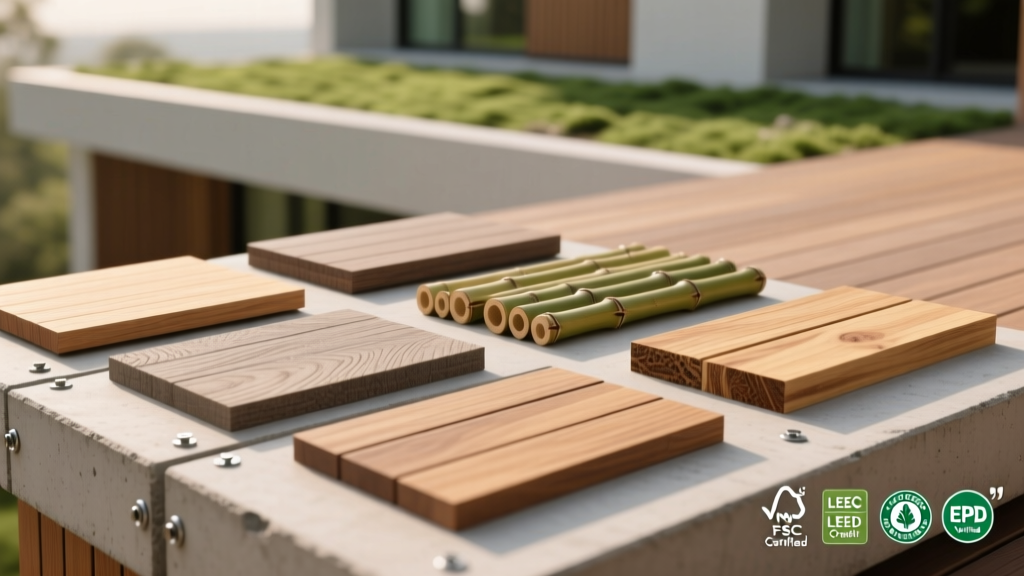
Decoding Decking Certifications: Beyond Greenwashing
The outdoor decking market is saturated with "green" claims, but without third-party verification, terms like "sustainable" and "eco-friendly" are largely unregulated marketing jargon. For architects, builders, and homeowners targeting LEED v4.1 certification or adhering to stringent 2026 municipal building codes, identifying the most eco-friendly decking materials requires a strict reliance on established certification frameworks. This guide bypasses surface-level marketing to evaluate decking materials through the lens of verifiable environmental product declarations (EPDs), chain-of-custody certifications, and lifecycle assessments (LCAs).
The Core Certification Matrix for Sustainable Decking
Before selecting a specific brand or material line, understand the governing bodies that validate environmental claims. The matrix below outlines the primary certifications relevant to exterior decking in the current market.
| Certification / Standard | Primary Focus Area | LEED v4.1 BPDO Impact | Verification Method |
|---|---|---|---|
| FSC 100% / FSC Mix | Forest management, biodiversity, indigenous rights | Sourcing of Raw Materials (1-2 pts) | FSC CoC Certificate Number |
| Cradle to Cradle (C2C) | Material health, circularity, water stewardship | Material Ingredients (1 pt) | C2C Product Registry |
| ISO 14025 EPD | Quantified lifecycle environmental impact (GWP, AP) | Environmental Product Declarations (1 pt) | Third-party verified EPD document |
| SCS Recycled Content | Pre-consumer and post-consumer recycled material % | Sourcing of Raw Materials (1 pt) | SCS Certificate of Recycled Content |
Top Certified Material Categories & Specific Product Lines
Applying the certification matrix above, three material categories currently dominate the high-performance, low-impact decking sector. Below is a technical breakdown of specific, verifiable product lines available for 2025 and 2026 projects.
1. Thermally Modified Wood (FSC-Certified)
Thermal modification alters the cellular structure of wood by heating it to 212°C–230°C in a low-oxygen environment. This process caramelizes the wood sugars, rendering it immune to rot and insect damage without toxic chemical preservatives like copper azole or ACQ.
- Top Product Line: Thermory Benchmark Ash
- Certifications: FSC 100% Certified, LEED contributing.
- Technical Specs: Janka hardness of 4,200 lbf; dimensional stability improved by 50% compared to untreated ash; Class 1 durability rating (EN 350).
- Cost Estimate: $11.50 – $14.00 per linear foot (5/4x6 profile).
- Lifecycle Edge: Because it uses no chemical preservatives, thermally modified wood can be safely repurposed, chipped for mulch, or burned for bioenergy at end-of-life, unlike pressure-treated lumber.
2. High-Density Recycled HDPE Composites
While early-generation composites suffered from moisture absorption and mold, modern capped composites utilizing high-density polyethylene (HDPE) from post-consumer waste offer exceptional longevity and verified recycled content.
- Top Product Line: Trex Transcend Lineage
- Certifications: Cradle to Cradle Certified Bronze; SCS Certified 95% Recycled Content (polyethylene film and reclaimed wood fibers).
- Technical Specs: Fire rating Class A (ASTM E84); UV-resistant polymer cap; 50-year limited residential warranty.
- Cost Estimate: $9.50 – $12.50 per square foot (material only).
- Lifecycle Edge: Trex diverts over 400 million pounds of plastic film from landfills annually. However, end-of-life recycling remains challenging due to the wood-plastic hybrid matrix, making it a "downcycling" candidate rather than a fully circular material.
3. Strand-Woven Bamboo Decking
Bamboo is a rapidly renewable grass that reaches maturity in 4-5 years. When crushed, treated with borates, and compressed under extreme heat and pressure, it becomes strand-woven bamboo, which outperforms most tropical hardwoods in density.
- Top Product Line: MOSO Bamboo X-treme
- Certifications: FSC Certified, verified Carbon Negative via EPD (ISO 14025).
- Technical Specs: Density of 1,050 kg/m³; Janka hardness > 4,000 lbf; Use Class 4 (EN 335) for ground contact.
- Cost Estimate: $8.50 – $11.00 per square foot.
- Lifecycle Edge: MOSO provides a verified EPD proving that the carbon sequestered during the bamboo's rapid growth phase exceeds the carbon emitted during harvesting, manufacturing, and global transport.
LEED v4.1 Material & Resource (MR) Credits: Decking Integration
For commercial projects or high-end residential builds pursuing LEED v4.1 certification, exterior decking directly impacts the Building Product Disclosure and Optimization (BPDO) credit category. Here is how to strategically specify decking to capture points:
- Environmental Product Declarations (EPD) - 1 Point: Specify at least 20 different permanently installed products from at least 5 different manufacturers that have published EPDs. Bamboo decking (like MOSO) and specific composite lines often carry industry-wide or product-specific EPDs that satisfy this requirement.
- Sourcing of Raw Materials - 1 to 2 Points: Use products with verified environmental, social, and economic impacts. FSC-certified thermally modified wood counts toward the "Leadership Extraction Practices" criteria. To achieve the point, FSC products must constitute at least 25% (by cost) of the total value of permanently installed building products.
- Material Ingredients - 1 Point: Specify decking with Cradle to Cradle certification (e.g., Trex Transcend Lineage at the Bronze level or higher) or products with a GreenScreen v1.2 Benchmark or Health Product Declaration (HPD).
The Purchasing Framework: Verifying Claims at the Lumberyard
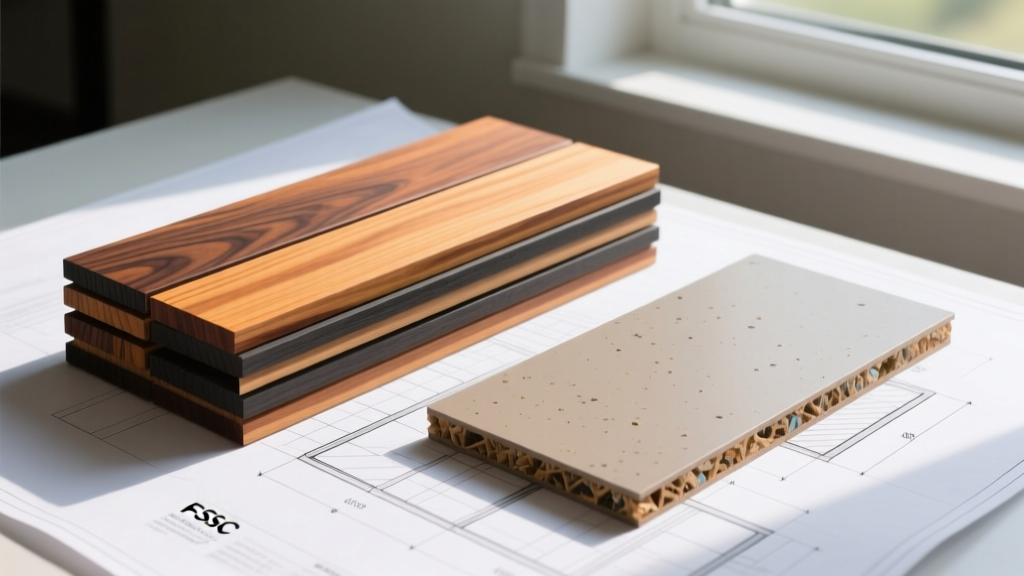
Certifications are only valid if the chain of custody is maintained from the forest or recycling facility to your job site. Follow this strict procurement protocol to ensure the materials you receive match the certifications you specified.
Step 1: Demand the Chain of Custody (CoC) Number
When ordering FSC-certified wood (thermally modified or otherwise), the supplier's invoice and the physical stamp on the lumber must display their unique FSC CoC code (e.g., FSC-C012345). If the wood is delivered without the stamp, or the invoice lacks the code, it cannot be used for LEED documentation, regardless of the supplier's verbal assurances.
Step 2: Request the EPD and HPD Documentation
Before signing the purchase order, request the PDF copies of the product's EPD and Health Product Declaration. Verify that the EPD is less than five years old (the standard validity period) and that it covers the specific product profile and finish you are ordering.
Step 3: Audit the Recycled Content Breakdown
For composite decking, review the SCS or C2C certificate to distinguish between pre-consumer (industrial scrap) and post-consumer (curbside recycling) content. LEED v4.1 applies a multiplier to post-consumer content (valuing it at 100% of its cost) while pre-consumer content is valued at only 50%. Knowing this ratio is critical for calculating your MR credit thresholds accurately.
By anchoring your material selection in verifiable data, ISO standards, and strict chain-of-custody protocols, you eliminate greenwashing from your project and ensure your outdoor spaces meet the highest environmental benchmarks of the modern construction industry. For further verification of forest management standards, consult the Forest Stewardship Council global database, and for material health metrics, review the Cradle to Cradle Products Innovation Institute registry.
Written by
Sarah WhitfieldSarah Whitfield is a chartered quantity surveyor (MRICS) and construction cost analyst with 15 years of experience in material pricing, procurement strategy, and project budgeting. She earned her degree in Construction Management from the University of Reading (UK) and has worked on projects ranging from $2M custom homes to $180M mixed-use developments across North America and Europe. Sarah currently leads cost estimating for BuildMat Insight, maintaining a proprietary database of 4,000+ material price points updated quarterly. She is a frequent contributor to RSMeans cost data panels and has presented at the International Cost Engineering Council (ICEC) congress. Based in Denver, CO, Sarah is an avid trail runner and volunteer mentor for Women in Construction.
More from Sarah Whitfield
View all
Wood & Lumber
What Are the Different Types of Wood? A Builder's Guide
Compare structural softwoods, finish hardwoods, and engineered lumber. Analyze Janka ratings, MOE values, and 2026 pricing for construction.
Aug 4, 2026

Walls & Panels
Steel Framing vs Wood Framing: Corrosion and Moisture Defense
Compare steel framing vs wood framing for moisture resistance. Learn about galvanized coatings, condensation risks, and corrosion protection strategies.
Jul 21, 2026

Stone & Masonry
How to Cut Stone Veneer: Wet Saw vs Grinder Comparison
Compare the best tools for cutting stone veneer. We review wet saws, angle grinders, and chop saws to help you achieve clean, chip-free cuts.
Jul 21, 2026