Sustainable Building Materials: The Complete Green Guide
Discover top sustainable building materials for eco-homes. Compare costs, LEED impacts, and performance in this complete green guide.
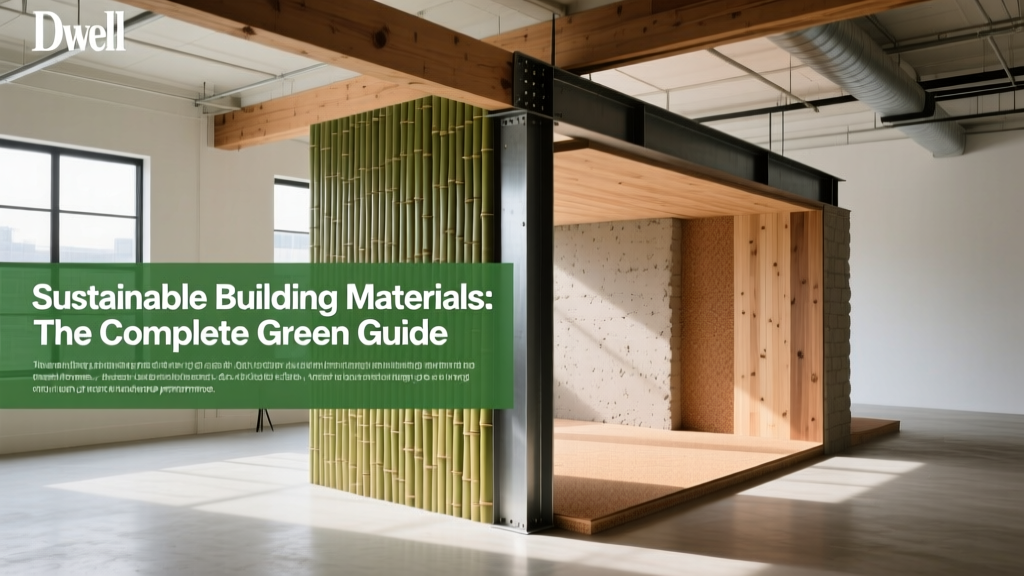
The Embodied Carbon Imperative
Specifying sustainable building materials is no longer just a strategy for securing LEED points; it is a structural, financial, and regulatory necessity. According to the Carbon Leadership Forum, embodied carbon—the emissions associated with material extraction, manufacturing, and transportation—accounts for 11% of global greenhouse gas emissions. As operational efficiency improves through better HVAC and solar integration, embodied carbon will represent nearly half of all new construction emissions by 2050.
Tier 1: Low-Carbon Structural Systems
The structural frame accounts for the highest volume of embodied carbon in any building. Transitioning from traditional steel and standard concrete to engineered timber and blended cements offers the most significant environmental return on investment.
Cross-Laminated Timber (CLT)
CLT panels act as a carbon sink, sequestering approximately 1.4 tons of CO2 per cubic meter of wood. For residential and mid-rise commercial projects, specify 5-ply CLT panels (minimum 6.75 inches thick) rated under ANSI/APA PRG 320 for load-bearing exterior walls. These panels can span up to 30 feet, reducing the need for intermediate steel beams.
- Upfront Cost: $9.00 to $14.00 per square foot (panel only).
- Installation Speed: Reduces framing time by 25-30% compared to stick framing due to prefabricated CNC precision.
- Fire Performance: Meets ASTM E119 1-hour and 2-hour fire resistance ratings through predictable charring rates (1.5 inches per hour).
Type IL Portland-Limestone Cement
Standard Portland cement (Type I/II) is highly carbon-intensive due to clinker production. Type IL (Portland-limestone) cement, conforming to ASTM C595, replaces 5% to 15% of the clinker with ground limestone. This reduces embodied carbon by 10% to 15% while maintaining identical workability and compressive strength.
Actionable Spec: Request a mix design with 15% limestone replacement, a water-to-cement ratio of 0.42, and supplementary cementitious materials (SCMs) like Class F fly ash (15-20%) to achieve 4,000 psi at 28 days while cutting total embodied carbon by over 25%.
Tier 2: High-Performance Bio-Based Envelopes
The building envelope dictates both operational energy loads and material toxicity. Bio-based insulations offer competitive R-values while eliminating the petrochemical off-gassing associated with closed-cell spray foams and XPS boards.
| Material | R-Value / Inch | Installed Cost (sq ft) | Moisture Permeability | Best Application |
|---|---|---|---|---|
| Dense-Pack Cellulose | R-3.5 | $1.20 - $1.80 | Vapor Semi-Permeable | Retrofits & enclosed wall cavities |
| Hempcrete | R-3.5 | $3.50 - $5.00 | Highly Breathable | Monolithic non-load-bearing walls |
| Expanded Cork Board | R-3.8 - R-4.0 | $4.50 - $6.50 | Vapor Semi-Impermeable | Continuous exterior insulation (CI) |
| Mycelium Batts | R-3.8 | $5.00 - $7.00 | Vapor Permeable | Interior acoustic & thermal framing |
Hempcrete Mix Proportions and Curing
Hempcrete is a biocomposite of hemp hurd, a lime-based binder, and water. It is not structural and must be used in conjunction with a timber or steel frame. For optimal thermal mass and vapor permeability, use a volumetric mix ratio of 1 part binder to 1.5 or 2 parts hemp hurd. Curing takes 4 to 8 weeks depending on ambient humidity; builders must install temporary ventilation to prevent mold growth during the drying phase.
Tier 3: Non-Toxic Interior Finishes
Interior materials directly impact indoor air quality (IAQ) and occupant health. The focus here is on eliminating volatile organic compounds (VOCs) and formaldehyde resins.
Clay Plasters vs. Gypsum Drywall
While standard gypsum board (drywall) is recyclable, its manufacturing process requires calcination, which releases CO2. Unfired clay plasters offer a zero-carbon alternative that actively regulates indoor humidity. Clay has a high moisture buffering capacity (MBC), absorbing excess ambient humidity and releasing it when the air dries, which reduces the load on mechanical dehumidifiers and prevents condensation within wall assemblies.
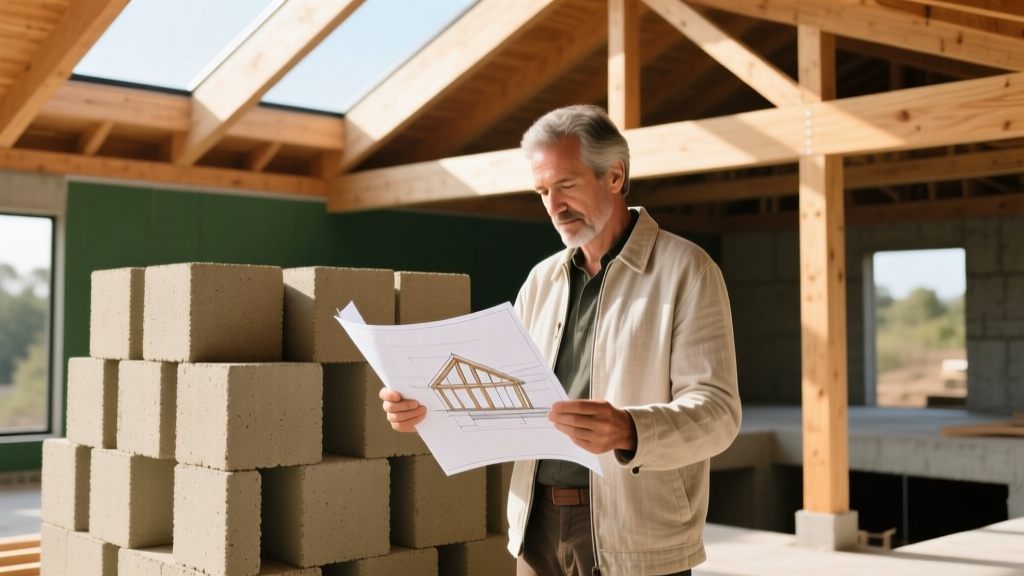
LEED v4.1 Compliance and EPD Sourcing
To maximize points under the USGBC LEED v4.1 Material and Resources (MR) credits, specifically the Building Product Disclosure and Optimization (BPDO) credit, procurement teams must shift from generic material specs to verified Environmental Product Declarations (EPDs).
- Demand Type III EPDs: Require ISO 14025 compliant, third-party verified EPDs for all structural steel, concrete, and mass timber suppliers. These documents detail the exact Global Warming Potential (GWP) per functional unit.
- Utilize Material Inventories: Use databases like the EC3 (Embodied Carbon in Construction Calculator) to compare supplier-specific EPDs during the bidding phase, rather than accepting industry-average baselines.
- Specify Regional Sourcing: Prioritize materials extracted and manufactured within a 100-mile radius of the project site to minimize transportation-related emissions, which are explicitly tracked in LEED v4.1 lifecycle assessments.
For complex timber structures, leverage free technical support from organizations like WoodWorks to ensure your CLT and glulam specifications meet both local building codes and carbon reduction targets.
Lifecycle Cost vs. Upfront Premium Analysis
A common barrier to adopting sustainable building materials is the perceived upfront cost premium. However, evaluating the lifecycle cost reveals a different financial reality.
- Mass Timber Premium: While CLT panels cost 5% to 10% more than traditional concrete decks, the 25% reduction in erection time and the elimination of interior framing and drywall (due to exposed timber aesthetics) often results in a net savings of 2% to 4% on total project costs.
- Insulation ROI: Expanded cork continuous insulation carries a 30% premium over XPS foam. However, cork does not degrade or lose R-value over time, and its vapor-open nature eliminates the need for expensive interior vapor retarders in mixed-humid climates, offsetting the initial material cost.
By treating sustainable building materials as an integrated system rather than isolated line items, builders can deliver high-performance, low-carbon structures that meet stringent 2026 energy codes while maintaining strict budget controls.
Written by
David NakamuraDavid Nakamura is a licensed architect (AIA) and construction technology writer focused on sustainable building methods, mass timber engineering, and high-performance building envelopes. He holds a Master of Architecture from the University of Washington and is a certified Passive House Consultant (CPHC). David spent eight years at the Seattle firm Mithun, where he led the design of three LEED Platinum projects, before founding his own practice specializing in net-zero residential design. He serves on the editorial advisory board of GreenBuilder Magazine and has authored peer-reviewed papers on cross-laminated timber (CLT) connections for the Journal of Structural Engineering. In his spare time, David teaches woodworking at Pratt Fine Arts Center and kayaks the Puget Sound.
More from David Nakamura
View all
Construction Cost
Labor Cost to Build a Deck Per Sq Ft: 2026 Installation Guide
Discover the exact labor cost to build a deck per sq ft in 2026. This installation guide breaks down contractor rates, complexity factors, and hidden fees.
Aug 4, 2026

Construction Cost
How Much Does It Cost to Build a 3 Bedroom House? Financing Guide
Learn exactly how much it costs to build a 3 bedroom house and explore 2026 financing options, construction loan types, and budget frameworks for your build.
Aug 4, 2026

Construction Cost
Cost to Build a Tennis Court: 2026 Guide
How much does it cost to build a tennis court in 2026? Breakdowns for asphalt, concrete, and synthetic surfaces plus fencing and lighting.
Jul 30, 2026