Top Outdoor Siding Materials for Extreme Weather Resistance
Compare the top outdoor siding materials for extreme weather resistance. Analyze impact ratings, moisture barriers, and wind load limits.
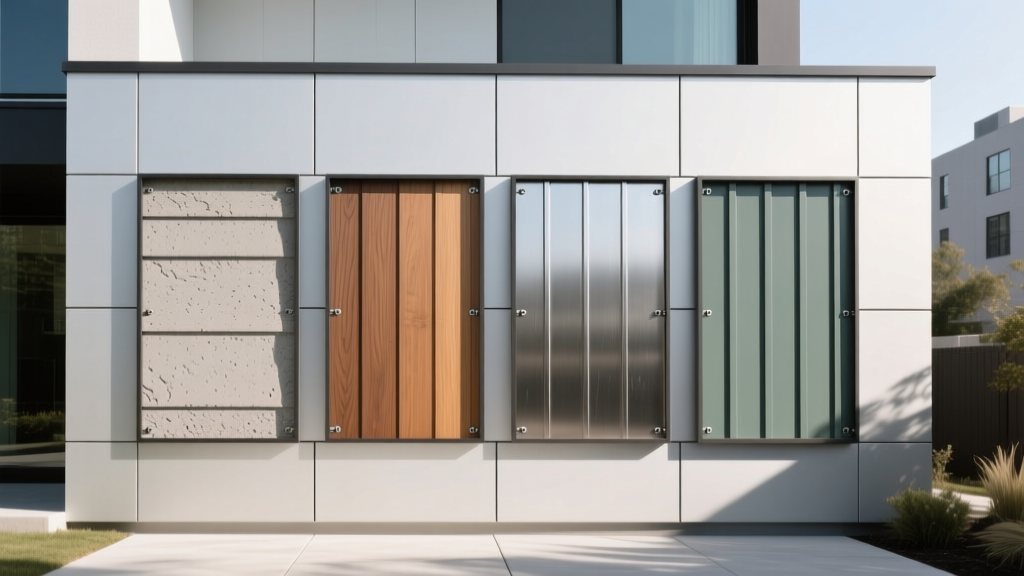
The Physics of Cladding Failure: Wind, Moisture, and Thermal Shock
When evaluating outdoor siding materials for extreme weather, surface aesthetics are irrelevant compared to structural fatigue. Cladding failure rarely occurs from a single catastrophic event; instead, it results from the compounding stress of thermal cycling, hydrostatic pressure, and wind-driven rain (WDR). According to the PNNL Building America Solution Center, up to 90% of exterior wall moisture issues stem from poor water management detailing rather than the siding material itself. However, the material's inherent porosity, coefficient of thermal expansion, and fastening geometry dictate how well it survives these secondary stresses.
In high-wind zones, uplift forces create negative pressure on the leeward side of a structure, pulling siding away from the sheathing. In coastal regions, salt spray accelerates the oxidation of standard electro-galvanized fasteners, leading to catastrophic panel detachment during subsequent storm events. Selecting the right outdoor siding materials requires matching the material's physical properties to the specific microclimate's dominant failure vectors.
Material Matrix: Impact, Wind, and Moisture Tolerances
Wind ratings are derived from ASTM E1592 and E330 testing, which simulate positive and negative pressure differentials. Impact classes follow UL 2218 (for metal) and ASTM D7254 (for polypropylene and vinyl). It is crucial to understand that a material's baseline rating is often voided if the contractor deviates from the manufacturer's prescribed nailing pattern or spacing. The following matrix breaks down the top-performing outdoor siding materials based on 2026 industry testing standards, including ASTM C1186 (fiber cement) and ASTM D3679 (rigid PVC). Pricing reflects Q1 2026 national averages for professional installation.
| Material Type | Product Benchmark | Max Wind Rating | Impact / Hail Class | Installed Cost (per sq. ft.) |
|---|---|---|---|---|
| Fiber Cement (Lap) | James Hardie Artisan 7/16" | 130 mph (HVRZ) | Class 1 (Friable) | $8.50 - $12.00 |
| Engineered Wood | LP SmartSide ExpertFinish | 180 mph (Specific nailing) | Class 3 (Hail) | $6.50 - $9.50 |
| Insulated Vinyl | CertainTeed CedarBoards D6S | 160 mph | Class 2 (Standard) | $7.00 - $10.50 |
| Steel (Corrugated) | Bridger Steel 29-Gauge R-Panel | 150+ mph | Class 4 (Severe Hail) | $9.00 - $14.00 |
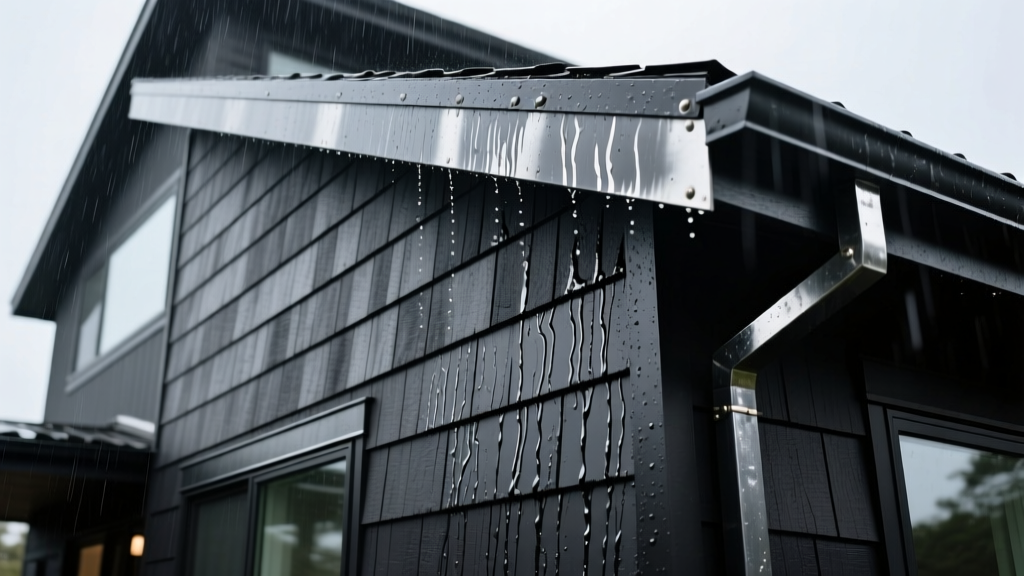
Deep Dive: Fiber Cement vs. Engineered Wood in High-Moisture Zones
In regions with persistent high humidity and frequent wind-driven rain (e.g., the US Gulf Coast or the Pacific Northwest), capillary action is the primary enemy. Water wicks upward through microscopic channels in porous materials, leading to edge swelling, delamination, and interior mold growth.
Fiber Cement: The Inorganic Advantage
Fiber cement, composed of Portland cement, silica sand, and cellulose fibers, is entirely inorganic and impervious to rot and termite degradation. James Hardie's Artisan Collection achieves a 7/16-inch thickness, providing substantial mass against wind-driven debris. Fiber cement has a remarkably low coefficient of thermal expansion (approx. 0.0000078 in/in°F), meaning it remains dimensionally stable whether it is 10°F or 110°F outside. However, fiber cement is highly porous. If installed without a proper rainscreen gap (minimum 3/8-inch using furring strips or a drainable housewrap like HydroGap), hydrostatic pressure will force moisture through the panel joints into the sheathing. Furthermore, cut edges must be sealed with 100% acrylic exterior caulk; unsealed cuts will wick moisture and spall during freeze-thaw cycles.
Engineered Wood: The Zinc Borate Defense
Engineered wood siding, such as LP SmartSide, utilizes strands of wood bound with resins and treated with Zinc Borate to resist fungal decay and termites. While it offers higher impact resistance than fiber cement (surviving 2-inch hail strikes that would shatter cement boards), it remains susceptible to edge swelling. The critical failure point occurs on-site when contractors cut panels to fit around windows and outlets. If these exposed cross-sections are not immediately primed with an oil-based or 100% acrylic sealer, moisture intrusion will cause the edges to swell up to 15% in volume, compromising the weather seal and voiding the manufacturer's warranty.
Coastal and Hurricane-Prone Regions: Metal and Insulated Vinyl
For structures in High-Velocity Hurricane Zones (HVHZ), the IBHS FORTIFIED Home Standard mandates strict wind-uplift resistance and impact protection. In these scenarios, the structural rigidity of the cladding and the pull-through resistance of the fasteners are paramount.
Insulated Vinyl: Beyond the "Cheap" Stereotype
Standard hollow-back vinyl siding is prone to cracking under hail impact and buckling under extreme thermal expansion. Vinyl can expand and contract up to 5/8-inch over a 12-foot span during seasonal temperature swings. However, modern insulated vinyl siding, like CertainTeed CedarBoards, features a custom-contoured EPS foam backing. This foam serves two critical weather-resistance functions: it acts as a shock absorber that distributes impact forces (achieving ASTM D4226 impact compliance), and it locks the panel tightly to the wall, eliminating the hollow cavities where wind can create destructive harmonic vibrations. When installed with 1.5-inch aluminum nails driven into the studs (not just the OSB sheathing), insulated vinyl can withstand 160 mph winds.
Architectural Steel: The Ultimate Impact Shield
For areas prone to severe hail (Class 4) and flying debris, 29-gauge or 26-gauge architectural steel panels offer unmatched durability. Steel does not absorb water, crack under UV degradation, or shatter under impact. Architectural steel must meet ASTM B117 salt spray testing standards to ensure the galvalume substrate (AZ50 or higher) resists red rust. In coastal builds, specifying a 26-gauge panel over a 29-gauge panel increases the structural rigidity and prevents 'oil-canning' (visible rippling) when the metal expands under direct solar radiation. To maintain weather resistance, steel siding must be installed using self-drilling screws with EPDM (ethylene propylene diene monomer) neoprene washers. Standard PVC washers will dry-rot and crack within five years of UV exposure, leading to micro-leaks at every screw head.
Decision Framework: Matching Material to Microclimate
Use this framework to specify the correct outdoor siding materials based on your project's dominant environmental stressors.
- Pacific Northwest (High Rain, Moderate Temps): Prioritize drainage over impact. Use fiber cement over a 3/8-inch ventilated rainscreen. Ensure all horizontal flashings have a minimum 2-inch outward slope.
- US Gulf Coast (Hurricanes, Salt Spray, High UV): Prioritize wind uplift and corrosion resistance. Specify insulated vinyl or architectural steel. Mandate Type 316 stainless steel fasteners and EPDM-washed screws.
- Midwest / Tornado Alley (Severe Hail, Extreme Thermal Cycling): Prioritize impact resistance and thermal movement. Engineered wood (LP SmartSide) or Class 4 metal panels. Avoid standard fiber cement, which is brittle and prone to shattering from large hail strikes.
- Sonoran Desert (Intense UV, Dry Heat): Prioritize UV stability and thermal expansion. Metal siding with Kynar 500 (PVDF) paint coatings to prevent chalking and fading. Avoid dark-colored vinyl, which can warp when surface temperatures exceed 165°F.
- Mountain / Alpine (Heavy Snow, Freeze-Thaw Cycles): Prioritize moisture shedding and freeze-thaw durability. Engineered wood or thick-profile fiber cement. Avoid stucco and standard wood clapboard, as trapped snowmelt will repeatedly freeze and thaw, causing rapid spalling and wood rot at the bottom courses.
Specifying outdoor siding materials requires looking past the showroom sample and analyzing the mechanical and chemical properties of the cladding system. By aligning the material's inherent strengths with the specific weather vectors of your build site, you ensure a facade that performs structurally and aesthetically for decades.
Written by
Priya KapoorPriya Kapoor is a real estate market analyst and construction economics researcher with expertise in housing affordability, development feasibility, and infrastructure investment. She holds a Master of Regional Planning from Cornell University and previously worked as a senior analyst at CBRE's Investment Properties group, where she modeled returns for $4B in mixed-use development pipelines. Priya now runs an independent research practice advising developers, municipalities, and REITs on construction cost forecasting and market timing. She publishes the quarterly "BuildMat Market Pulse" report tracking material price indices across 12 commodity categories. Based in Austin, TX, Priya serves on the board of Habitat for Humanity Austin and is a marathon runner.
More from Priya Kapoor
View all
Construction Cost
Cost to Build a 1600 Sq Ft Home in 2026: Full Breakdown
Accurate 2026 cost to build a 1600 sq ft home—material, labor, and regional pricing breakdowns included. Plan your budget with real-time estimates.
Aug 11, 2026

Wood & Lumber
Name the Types of Wood for Pressure Treatment and Preservation
Learn how to name the types of wood best suited for pressure treatment. Compare species treatability, chemical retention levels, and 2026 preservation costs.
Aug 4, 2026

Stone & Masonry
Stone Veneer Suppliers Lindenhurst: 2026 Cost Analysis
Analyze 2026 stone veneer costs in Lindenhurst, NY. Compare local supplier pricing, delivery fees, and Suffolk County installation labor rates.
Aug 4, 2026