Plastic Siding Colors: Climate & Scenario Matching Guide
Match plastic siding colors to your climate, sun exposure, and HOA rules. Explore UV-resistant pigments, heat warping risks, and architectural pairing.
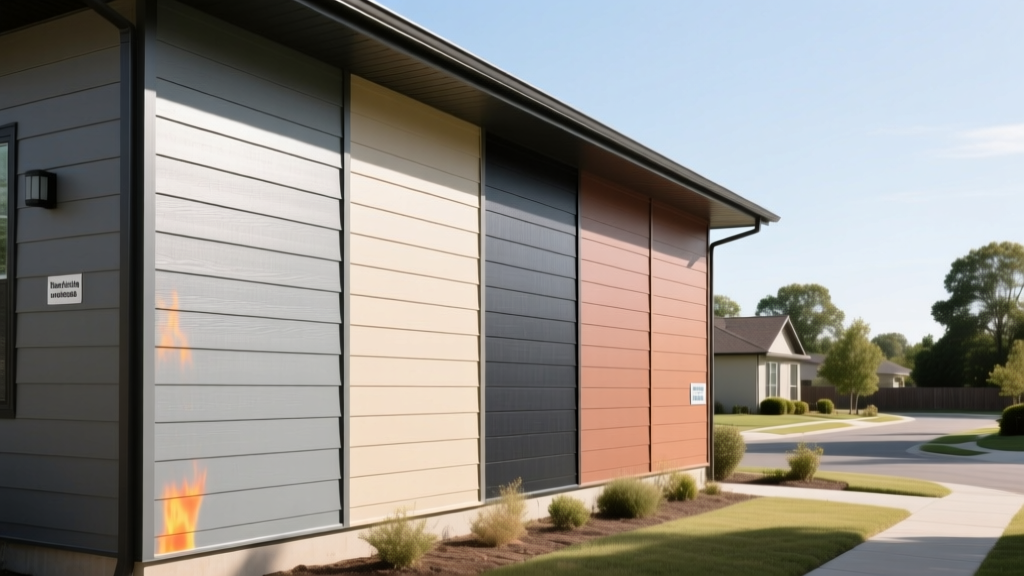
The Material Reality: PVC, Polymers, and Color Technology
When homeowners and contractors discuss 'plastic siding,' they are primarily referring to polyvinyl chloride (PVC) vinyl siding, alongside polypropylene and polymer shake systems. Historically, plastic siding was limited to pastel and white hues because early PVC formulations degraded, chalked, and warped when exposed to the ultraviolet (UV) radiation required to sustain darker pigments. Modern manufacturing has entirely rewritten these limitations through co-extrusion technology.
Today’s premium plastic siding features a substrate layer for structural rigidity and a top 'capstock' layer formulated with Acrylonitrile Styrene Acrylate (ASA) or advanced acrylics. This capstock is infused with inorganic pigments and titanium dioxide (TiO2) to reflect UV rays. For darker plastic siding colors, manufacturers now integrate infrared (IR) reflective pigments. These specialized compounds bounce back the sun's heat rather than absorbing it, allowing PVC to achieve deep charcoals, navy blues, and forest greens without exceeding the material's thermal softening point.
Scenario Matching: Aligning Color with Climate and Exposure
Selecting plastic siding colors is not merely an aesthetic exercise; it is a structural decision dictated by your local climate, solar exposure, and architectural constraints. Below is a breakdown of how to match color profiles to specific environmental scenarios.
High-UV and Desert Climates (Southwest, Florida, Southern California)
In regions where the UV index regularly exceeds 9 and summer ambient temperatures surpass 95°F, thermal expansion and UV degradation are the primary threats. Dark, non-reflective colors can easily push PVC surface temperatures past 165°F, nearing the material's distortion threshold.
- Recommended Colors: Light to medium tones with high Solar Reflectance Index (SRI) values. Opt for desert sand, light sage, coastal gray, or classic white.
- Technology Requirement: If a darker color is desired for contrast, you must specify siding engineered with IR-reflective capstocks (e.g., CertainTeed’s PermaColor or Alside’s Chromatix technology).
- Finish: Choose a low-gloss or matte finish. High-gloss finishes in high-UV zones will show chalking and fading inconsistencies much faster as the micro-texture of the plastic degrades over decades.
Coastal and High-Moisture Zones (Pacific Northwest, Mid-Atlantic, Gulf Coast)
Coastal environments introduce salt spray, high humidity, and frequent precipitation. While plastic siding is inherently immune to the rot and corrosion that destroys wood and metal, the color you choose dictates how well the facade hides environmental buildup.
- The Mildew Factor: Pure white and very light pastel siding will rapidly show algae, mildew, and dirt splatter in damp, shaded coastal environments.
- Recommended Colors: Medium, earth-toned colors like weathered wood, slate, and olive green naturally camouflage organic growth and water spots between washings.
- Accent Strategy: Use polypropylene cedar shake panels in a contrasting lighter color on the gables to maintain architectural interest without committing the entire moisture-prone lower facade to high-maintenance light colors.
Strict HOAs and Historic Districts
Many Homeowner Associations and historic preservation boards outright ban bright white or artificial-looking vinyl siding. They require facades that mimic natural materials like painted cedar, stained wood, or masonry.
- Recommended Colors: Historic brick, clapboard, dark bronze, and muted charcoal. Avoid primary colors or high-saturation hues (e.g., bright red or royal blue), which immediately signal 'plastic' to architectural review boards.
- Texture over Color: In strict districts, color alone is insufficient. Pair your approved color palette with deep-profile embossed vinyl or polymer shakes that replicate the shadow lines and grain of real wood. The Vinyl Siding Institute certifies products that meet stringent aesthetic and performance criteria, which can help expedite HOA approvals.
⚠️ Critical Warning: The 160°F Warping Threshold
Standard PVC begins to soften and lose structural rigidity at approximately 160°F (71°C). If you install dark brown or black plastic siding on a south-facing or west-facing wall in a hot climate without ensuring the substrate thickness is at least 0.046 inches and without leaving the code-mandated 1/4-inch expansion gaps at all joints, the siding will buckle, warp, and permanently deform during the first summer heatwave.
Heat Absorption & Warping Thresholds by Color Family
Understanding the thermal dynamics of your chosen color is critical for specifying the correct panel thickness and installation tolerances. The following matrix outlines how different plastic siding color families perform under direct solar load, based on data principles outlined by the Building America Solution Center and ASTM D3679 standards.
| Color Family | Approx. SRI Value | Peak Surface Temp (90°F Day) | Warping Risk | Min. Panel Thickness |
|---|---|---|---|---|
| White / Pastel | 50 - 70 | 110°F - 125°F | Very Low | 0.040 inches |
| Medium Tones (Sage, Tan) | 25 - 45 | 135°F - 150°F | Moderate | 0.042 inches |
| Dark Tones (Navy, Bronze) | 10 - 20 | 155°F - 165°F | High | 0.044 inches |
| Charcoal / Black (IR-Reflective) | 20 - 35* | 140°F - 155°F* | Moderate | 0.046+ inches |
*Note: IR-reflective dark colors artificially boost the SRI and lower surface temperatures compared to standard dark pigments, but they still require thicker substrates to manage residual thermal expansion.
Cost Implications of Premium Color Palettes
The color of your plastic siding directly impacts the project budget. Manufacturing dark or highly saturated colors requires more expensive inorganic pigments, thicker PVC extrusions to prevent warping, and advanced acrylic capstocks. Expect the following installed cost variations (materials and labor) for a standard 2,000 sq. ft. exterior in 2026:
- Standard Whites & Pastels: $4.50 – $6.50 per sq. ft. (Uses standard TiO2 pigments and thinner 0.040" substrates).
- Medium Earth Tones: $6.00 – $8.00 per sq. ft. (Requires slightly thicker substrates and UV-stabilized mid-tone pigments).
- Premium Dark & Architectural Colors: $8.50 – $12.00+ per sq. ft. (Mandates heavy-duty 0.046"+ substrates, IR-reflective ASA capstocks, and often features deeper wood-grain embossing profiles).
Step-by-Step Color Selection Framework
Follow this decision tree to finalize your plastic siding color specification:
- Audit Regulatory Constraints: Pull your HOA covenants or historic district guidelines first. Eliminate all non-compliant color families immediately to avoid redesign costs.
- Map Solar Exposure: Identify which walls face South and West. If these walls will receive more than 6 hours of direct, unshaded afternoon sun, restrict these specific elevations to medium or light tones, or mandate IR-reflective premium lines.
- Specify Substrate Thickness: Match your color choice to the panel thickness. If you select a dark bronze, write the minimum thickness (e.g., 0.046") directly into the contractor's scope of work to prevent them from substituting cheaper, thinner panels.
- Validate with Physical Samples: Never choose a plastic siding color from a digital brochure or a small 2x2 inch swatch. Order full 12-inch horizontal sample panels. Tape them to the exterior of the home and observe them at high noon (to check glare and true hue) and at dusk (to see how the color reads in ambient, low-angle light).
- Verify Warranty Limitations: Read the manufacturer's warranty specifically regarding 'fade' and 'warp'. Many standard warranties pro-rate heavily after 10 years for dark colors, whereas premium architectural lines may offer lifetime fade protection.
Frequently Asked Questions
Can I paint my dark plastic siding a lighter color later?
Yes, but it requires specialized coatings. You cannot use standard exterior latex house paint on PVC; it will peel and trap heat. You must use vinyl-safe paints (often formulated with specific reflective pigments) or urethane-acrylic blends designed for plastics. Furthermore, painting dark siding a light color is generally safe thermally, but painting light siding a dark color post-installation will almost certainly cause the PVC to warp, as the paint will absorb heat that the original factory capstock was not engineered to handle.
Do dark plastic siding colors void the manufacturer warranty?
Not inherently, provided you purchase a product line specifically engineered for dark colors. However, if you buy a budget-tier vinyl siding that only offers a 'limited lifetime' warranty on whites and pastels, and you attempt to source a third-party dark capstock or paint it, the warranty is voided. Always ensure the specific dark SKU you are purchasing carries its own explicit fade and warp warranty from the manufacturer.