2026 RV Siding Material Cost Breakdown & Installation Guide
Compare 2026 RV siding material costs per square foot. Detailed pricing for aluminum, fiberglass Filon, and vinyl, plus installation and hidden fees.
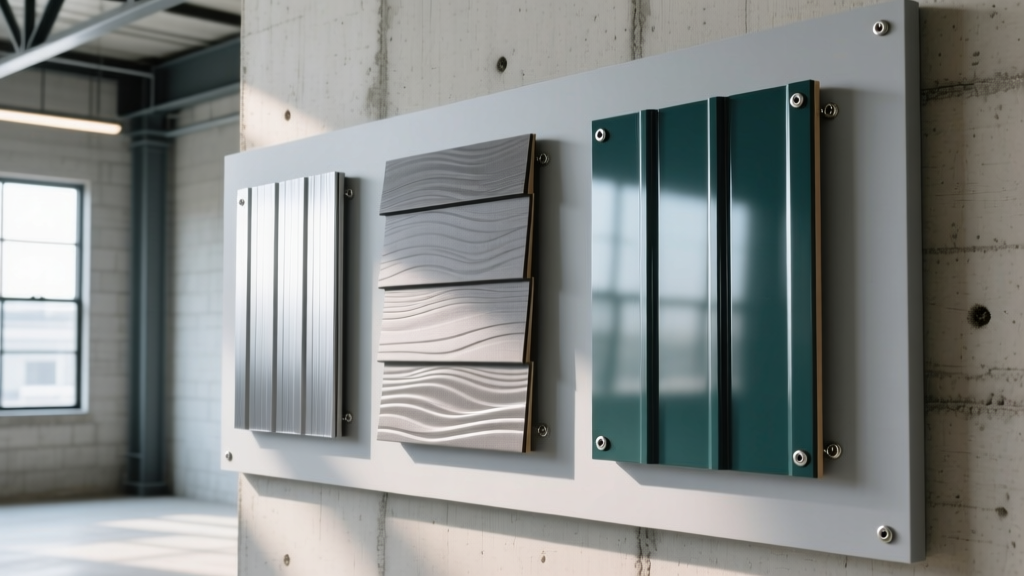
The True Cost of Replacing RV Siding in 2026
Replacing the exterior skin of a travel trailer, fifth wheel, or motorhome is one of the most capital-intensive maintenance projects an owner can undertake. Unlike residential cladding, RV siding material must withstand highway vibration at 70 mph, extreme thermal expansion from desert heat to freezing alpine nights, and constant UV degradation. When a panel fails, delaminates, or suffers hail damage, the repair is rarely a simple patch job; it often requires full-wall replacement to maintain the structural shear integrity of the aluminum cage.
As of 2026, the national average for a full-side replacement on a standard 30-foot travel trailer ranges from $6,500 to $12,800. This variance is driven by the specific RV siding material chosen, the condition of the underlying substrate, and regional RV service center labor rates, which currently average between $135 and $175 per hour according to industry tracking by the RV Industry Association.
Material Cost Matrix: Aluminum vs. Fiberglass vs. Vinyl
The three dominant materials used in recreational vehicle manufacturing each carry distinct material costs, labor multipliers, and longevity profiles. The table below outlines the baseline pricing for 2026.
| RV Siding Material | Material Cost (Per Sq. Ft.) | Labor Multiplier | Total Installed Cost (Per Sq. Ft.) | Expected Lifespan |
|---|---|---|---|---|
| Fiberglass (Filon / Gelcoat) | $2.20 - $3.80 | 1.5x (High) | $18.00 - $28.00 | 20 - 30+ Years |
| Aluminum (Corrugated / .024") | $1.40 - $2.50 | 1.2x (Medium) | $12.00 - $19.00 | 15 - 25 Years |
| Vinyl / PVC (Park Models) | $1.10 - $2.00 | 1.0x (Low) | $8.50 - $14.00 | 10 - 15 Years |
Deep Dive: Fiberglass (Filon) Siding Costs
Fiberglass reinforced plastic (FRP), commonly referred to in the industry by the legacy brand name Filon, is the premium standard for modern travel trailers and fifth wheels. It is typically manufactured in large, continuous rolls or rigid 4x10-foot sheets.
Product Specifics and Pricing Tiers
Not all fiberglass siding is created equal. When sourcing material, you must specify the finish and thickness:
- Standard FRP (Non-Gelcoat): Costs around $2.20 per square foot. This is strictly for interior use or protected exterior areas. If used on the exterior, it will chalk, fade, and degrade within three years.
- Gelcoat Fiberglass: Costs $3.10 to $3.80 per square foot. The gelcoat layer provides essential UV resistance and a high-gloss finish that matches factory automotive-style clear coats.
- Textured / Pebbled Finish: Adds roughly $0.40 per square foot but is highly recommended for lower body panels to hide rock chips and road debris scuffs.
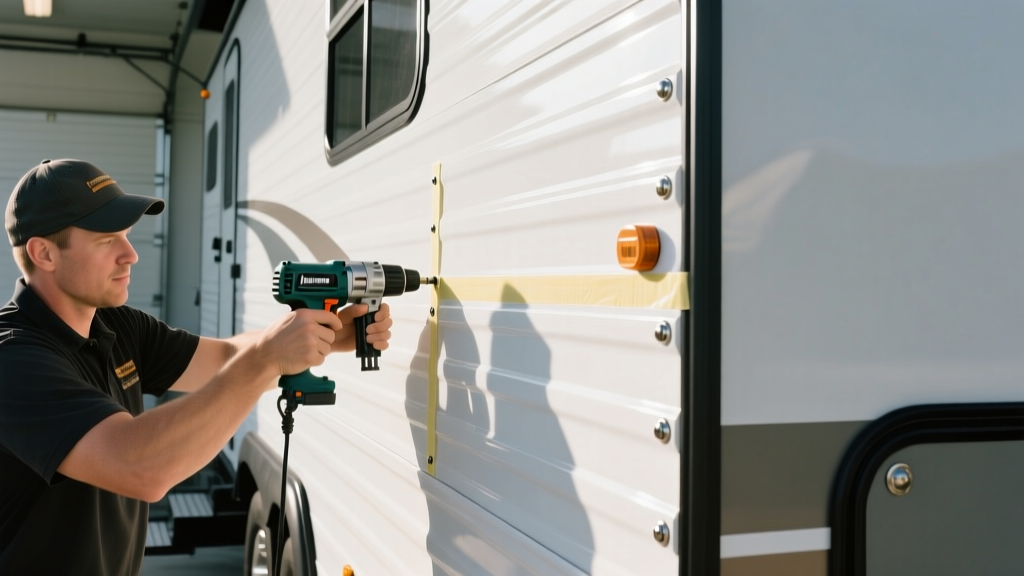
Deep Dive: Aluminum Siding Costs
Aluminum remains the standard for utility trailers, budget-friendly travel trailers, and vintage-style builds (like Airstream, though Airstream uses specialized Alclad aerospace-grade aluminum which costs upwards of $6.00/sq ft). Standard RV aluminum siding is typically purchased in coils.
Corrugated vs. Smooth Finish
Corrugated aluminum (often featuring a 1-inch or 1.5-inch rib profile) is cheaper to manufacture and install because it hides minor substrate imperfections and requires less adhesive. Smooth aluminum, however, requires a perfectly flat substrate (usually Azdel composite rather than traditional Luan plywood) and continuous contact cement application, driving labor costs up by 20% to 30%.
Insurance claim data from Foremost consistently highlights aluminum-sided RVs as high-risk for total loss declarations following severe hail storms. While .024-inch gauge aluminum resists minor impacts, standard .019-inch corrugated panels will dent easily. If you store your rig outdoors in Tornado Alley or Hail Alley, factor in the cost of upgrading to .032-inch gauge or switching to fiberglass.
Hidden Costs and Edge Cases in RV Siding Projects
A common mistake among first-time RV renovators is budgeting only for the visible siding material. The actual project cost is heavily influenced by the following hidden variables:
1. Substrate Delamination and Rot Repair
If your RV was built before 2020, it likely uses Luan plywood as the substrate behind the siding. If water has breached the window seals or roof caps, the Luan will rot and delaminate from the aluminum framing. Stripping the old siding and replacing rotted Luan with modern Azdel composite thermoplastic adds $450 to $900 per side in material and prep labor.
2. Decal and Graphics Removal
Factory-applied vinyl decals are baked onto the siding. Removing them without damaging the underlying gelcoat or aluminum requires hours of meticulous heat-gun work and adhesive solvent application. Expect shops to bill 4 to 8 hours of pure prep labor ($540 to $1,360) just to strip the old graphics before installation begins.
3. Custom Extrusions and Trim Molding
RV siding does not terminate like house siding; it is captured in custom aluminum extrusions. You must budget for:
- Top Drip Rail / Awning Rail: $4.50 per linear foot.
- Bottom J-Channel / Drip Edge: $3.20 per linear foot.
- Corner Radius Molds: Front and rear radius caps are highly specific to the manufacturer and model year. Sourcing a discontinued front cap mold can cost $300+ or require custom fabrication.
4. Adhesives and Fasteners
Continuous bonding requires specialized chemical adhesives. A single side of a 30-foot trailer requires approximately 4 to 6 gallons of liquid contact cement (like Weldwood) or dozens of rolls of 3M VHB 4941 double-sided acrylic foam tape. Budget $250 to $400 strictly for adhesives, butyl tape (Dicor), and blind rivets.
Step-by-Step Budgeting Framework for Your RV
To generate an accurate estimate for your specific rig, follow this calculation framework:
- Calculate Gross Wall Area: Multiply the length of the trailer by the height of the sidewall (e.g., 30 ft x 8.5 ft = 255 sq. ft.).
- Subtract Openings: Deduct the square footage of windows, doors, and slide-outs (typically 15% to 25% of the gross area). Net area: ~200 sq. ft.
- Add Waste Factor: Fiberglass sheets and aluminum coils must be cut, and pattern matching or seam placement requires a 15% waste factor. Total purchase area: 230 sq. ft.
- Apply Material Rate: 230 sq. ft. x $3.40 (Gelcoat Fiberglass) = $782 for primary siding.
- Estimate Consumables: Add $400 for adhesives, butyl tape, sealants, and replacement trim.
- Calculate Shop Labor: A full side replacement (tear-off, prep, substrate repair, install, and seal) averages 50 to 70 shop hours. At $150/hour, labor equals $7,500 to $10,500.
- Total Projected Cost: $8,682 to $11,682.
"Always request a 'tear-down and evaluate' quote from your RV service center. A shop cannot provide a binding final price on siding replacement until the old skin is removed and the aluminum cage and substrate are inspected for structural corrosion or rot."
DIY vs. Professional Installation: Is the Savings Worth It?
Replacing corrugated aluminum siding on a utility trailer or a small teardrop camper is a viable DIY project. The material is forgiving, and the corrugated profile hides uneven adhesive application. Total DIY cost for a small trailer can be kept under $800.
However, installing smooth gelcoat fiberglass on a large travel trailer is exceptionally unforgiving. The panels must be applied using a continuous, bubble-free contact cement bond. Once the gelcoat panel touches the adhesive-coated substrate, it cannot be repositioned without snapping the fiberglass or creating a visible delamination blister. Furthermore, cutting large 4x10 sheets of FRP without chipping the gelcoat requires specialized diamond-tipped blades and extensive support rigging. For any motorized RV or trailer over 20 feet in length, professional installation is strongly advised to prevent catastrophic adhesive failure at highway speeds.
Written by
Priya KapoorPriya Kapoor is a real estate market analyst and construction economics researcher with expertise in housing affordability, development feasibility, and infrastructure investment. She holds a Master of Regional Planning from Cornell University and previously worked as a senior analyst at CBRE's Investment Properties group, where she modeled returns for $4B in mixed-use development pipelines. Priya now runs an independent research practice advising developers, municipalities, and REITs on construction cost forecasting and market timing. She publishes the quarterly "BuildMat Market Pulse" report tracking material price indices across 12 commodity categories. Based in Austin, TX, Priya serves on the board of Habitat for Humanity Austin and is a marathon runner.
More from Priya Kapoor
View all
Construction Cost
Cost to Build a 1600 Sq Ft Home in 2026: Full Breakdown
Accurate 2026 cost to build a 1600 sq ft home—material, labor, and regional pricing breakdowns included. Plan your budget with real-time estimates.
Aug 11, 2026

Wood & Lumber
Name the Types of Wood for Pressure Treatment and Preservation
Learn how to name the types of wood best suited for pressure treatment. Compare species treatability, chemical retention levels, and 2026 preservation costs.
Aug 4, 2026

Stone & Masonry
Stone Veneer Suppliers Lindenhurst: 2026 Cost Analysis
Analyze 2026 stone veneer costs in Lindenhurst, NY. Compare local supplier pricing, delivery fees, and Suffolk County installation labor rates.
Aug 4, 2026