Best Types of House Siding Materials: 2026 Cost Guide
Explore the top types of house siding materials. Compare 2026 costs, lifespans, and durability for fiber cement, vinyl, wood, and metal cladding.
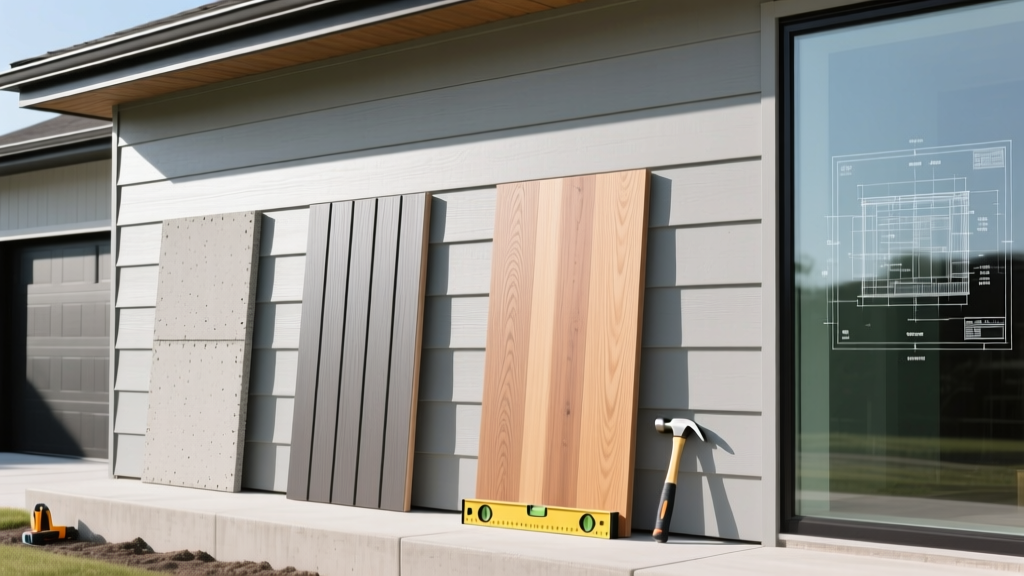
The Siding Selection Matrix: Quick Comparison
Choosing from the various types of house siding materials requires balancing upfront installation costs against long-term maintenance and climate resilience. The matrix below outlines the 2026 national average pricing and performance metrics for the four dominant exterior cladding systems.
| Material Type | Installed Cost (per sq. ft.) | Expected Lifespan | Maintenance Level | Wind Resistance |
|---|---|---|---|---|
| Fiber Cement (Lap) | $7.50 - $13.00 | 50+ Years | Low (Paint every 15 yrs) | Up to 130 mph |
| Insulated Vinyl | $6.00 - $10.50 | 30 - 40 Years | Very Low (Wash annually) | Up to 110 mph |
| Engineered Wood | $8.50 - $14.00 | 30 - 50 Years | Medium (Paint every 10 yrs) | Up to 130 mph |
| Metal (Steel Panels) | $10.00 - $18.00 | 40 - 60 Years | Very Low | Up to 150 mph |
Deep Dive: Fiber Cement Siding (The Industry Standard)
Fiber cement remains the benchmark for premium residential exteriors, combining the aesthetic depth of wood with the rot and fire resistance of masonry. Products like James Hardie's HardiePlank and Allura's fiber cement lap are composed of Portland cement, sand, and cellulose fibers. Standard lap siding is typically 5/16-inch thick, while vertical panels range up to 1/2-inch.
Installation Gotchas and Silica Safety
The primary failure mode for fiber cement is improper fastening and joint management. Installers must blind-nail lap siding 3/4-inch from the top edge, ensuring the nail penetrates the sheathing and studs by at least 1 inch. Face-nailing should be strictly avoided unless specified for specific architectural profiles, as it creates moisture intrusion points.
Furthermore, factory-applied finishes like James Hardie's ColorPlus Technology offer superior UV resistance compared to field-painted boards. However, field-cut edges must be sealed with a 100% silicone or polyurethane caulk, while board-to-board butt joints should remain uncaulked with a 1/8-inch gap to allow for minor hydro-expansion.
Vinyl Siding: Beyond the Budget Option
Traditional hollow-back vinyl siding is often dismissed as a cheap builder-grade material, but modern insulated vinyl siding has drastically altered its performance profile. By fusing a contoured expanded polystyrene (EPS) foam backing to the vinyl profile, manufacturers create a rigid panel that resists impact and increases the wall assembly's thermal performance.
Thermal Dynamics and Insulation
The U.S. Department of Energy recognizes insulated siding as a continuous insulation (ci) material. While standard vinyl offers virtually zero R-value, insulated profiles can add an R-2 to R-5 to the exterior envelope. This continuous insulation reduces thermal bridging through the wood studs, significantly lowering heating and cooling loads in extreme climates.
When evaluating vinyl, look for products certified under ASTM D3679, which dictates minimum impact resistance and wind load ratings. Premium lines from CertainTeed and Alside feature thicker face profiles (0.048 to 0.055 inches) and deeper shadow lines that mimic traditional wood clapboard.
Engineered Wood: The Evolution of Natural Timber
While natural cedar and redwood offer unmatched authenticity, they require relentless maintenance and are highly susceptible to woodpecker damage and moisture rot. Engineered wood siding, such as LP SmartSide, bridges the gap by utilizing wood strands bound with exterior-grade resins and treated with zinc borate for termite and fungal resistance.
Moisture Management and APA Standards
Engineered wood must comply with the APA PRP-106 standard for structural performance. The most critical vulnerability of engineered wood is the bottom edge of the panels or lap boards. If these edges wick ground moisture, the strands can delaminate. Installers must maintain a strict 6-inch clearance between the bottom of the siding and the final grade, and a 2-inch clearance above roof intersections.
Unlike natural wood, engineered wood accepts paint exceptionally well. The factory-applied primer is optimized for acrylic latex topcoats, often allowing homeowners to go 10 to 12 years before a repaint is necessary, compared to the 3 to 5-year cycle required for raw cedar shingles.
Metal Cladding: Steel and Aluminum Profiles
Metal siding has transitioned from agricultural outbuildings to high-end modern residential architecture. The two primary metals used are aluminum and galvanized steel. For residential applications, 24-gauge and 26-gauge steel panels with concealed fastener systems are the standard.
The longevity of metal siding relies entirely on the coating system. Specify panels coated with a Kynar 500 or Hylar 5000 polyvinylidene fluoride (PVDF) resin. PVDF coatings are highly resistant to chalkiness and UV fading, ensuring that dark colors like charcoal or matte black do not degrade into washed-out grays over a 40-year lifespan. Aluminum, while softer and more prone to denting from hail, is the mandatory choice for coastal properties due to its inherent resistance to salt-spray corrosion.
Decision Framework: Matching Siding to Climate Zones
Selecting the right material requires aligning the cladding's physical properties with your specific regional weather patterns.
- Coastal & Hurricane Zones (High Wind/Salt): Aluminum panels or thick-gauge fiber cement. Avoid vinyl, which becomes brittle in high-impact debris scenarios, and steel, which risks edge rusting in salt air.
- Pacific Northwest & High Moisture: Fiber cement or metal. Engineered wood and natural wood require too much maintenance to combat constant moss, algae, and rot pressures.
- Extreme Temperature Swings (Midwest/Mountain): Insulated vinyl or engineered wood. The EPS backing on insulated vinyl prevents the cracking associated with extreme freeze-thaw cycles, while engineered wood handles impact from hail better than brittle fiber cement.
- Wildfire Prone Areas (California/West): Fiber cement or metal. Both carry a Class A fire rating and will not ignite from wind-blown embers, a critical factor for insurance premiums in WUI (Wildland-Urban Interface) zones.
'The cheapest siding to install is rarely the cheapest to own. When calculating lifecycle costs, factor in the 15-year paint cycle for wood and fiber cement, versus the zero-maintenance reality of PVDF-coated metal or premium vinyl.' — Exterior Building Envelope Consultant
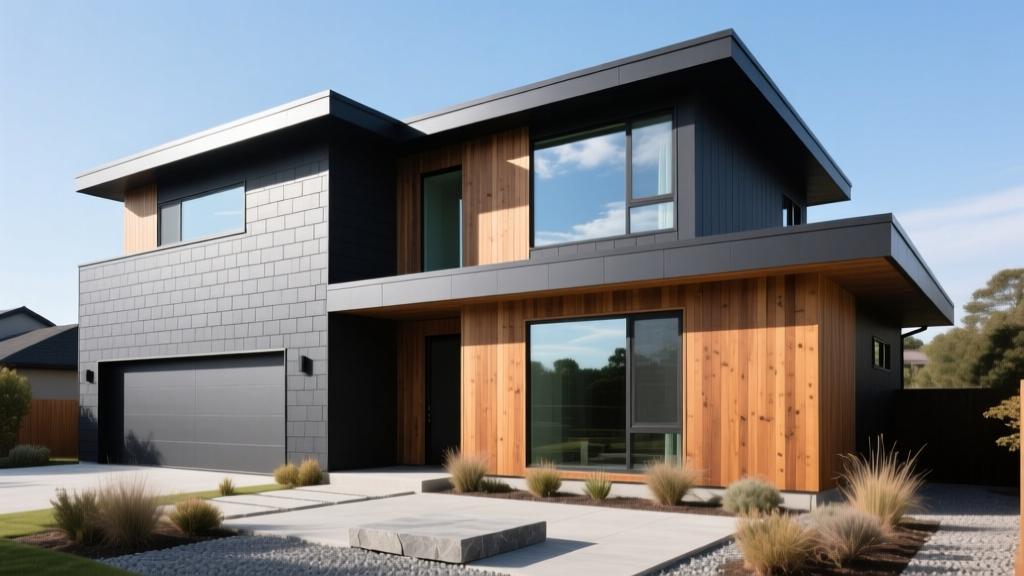
Frequently Asked Questions
Does replacing siding yield a high return on investment?
According to Remodeling Magazine's Cost vs. Value data, fiber cement siding replacement consistently ranks among the top home improvement projects for ROI, typically recouping 75% to 88% of the project cost at resale, largely due to its strong curb appeal and reputation for durability among homebuyers.
Can I install new siding directly over old wood siding?
While technically possible, it is highly discouraged. Installing over existing siding traps moisture against the original sheathing, hides existing rot or insect damage, and creates uneven nailing surfaces that compromise the wind-load rating of the new material. Always strip to the wall sheathing, inspect the weather-resistive barrier (WRB), and install new flashing before applying new cladding.
Written by
Marcus ChenMarcus Chen is a licensed structural engineer (PE) and building materials analyst with over 12 years of experience across residential, commercial, and industrial construction. He holds a Master of Science in Civil Engineering from UC Berkeley and spent six years at Thornton Tomasetti before transitioning to independent consulting and technical writing. Marcus specializes in material selection for seismic-prone regions, concrete reinforcement strategies, and lifecycle cost analysis. His work has been cited by the American Concrete Institute (ACI) and the Structural Engineers Association of California (SEAOC). When he is not on a job site or at his desk, you will find him hiking the Sierra Nevada or restoring a 1920s craftsman bungalow in Oakland, CA.
More from Marcus Chen
View all
Construction Cost
How Much Did the Eiffel Tower Cost to Build?
How much did the Eiffel Tower cost to build in 1889? We adjust for inflation and compare its budget to modern skyscraper construction.
Aug 4, 2026

Fire Resistance
What Is a Fire Resistant Material? Testing & Certification Guide
Discover what is a fire resistant material through ASTM and UL testing. Learn how fire ratings, certifications, and assemblies work in construction.
Aug 4, 2026

Construction Cost
How Much Did the Burj Khalifa Cost to Build?
How much did the Burj Khalifa cost to build? We break down the $1.5B project and extract 5 money-saving strategies for your next build.
Jul 30, 2026