Vinyl Siding Calculator for Material and Energy Efficiency
Learn how to use a vinyl siding calculator for material to factor in insulated profiles, R-values, and deep trims for maximum home energy efficiency.
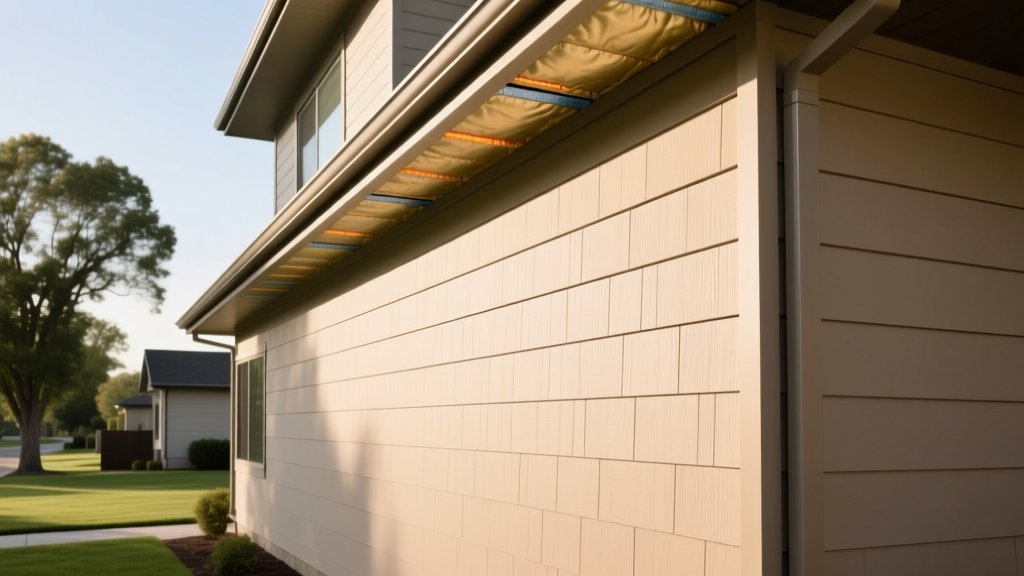
The Hidden Energy Variables in Your Vinyl Siding Calculator for Material
Most online siding calculators are designed for basic geometry: they multiply wall length by height and add a generic 10% waste factor. However, when you are upgrading to insulated vinyl siding to improve your home's thermal envelope, a standard vinyl siding calculator for material will severely under-order your accessories and misrepresent your energy performance. Insulated vinyl panels feature a contoured Expanded Polystyrene (EPS) foam backing that fundamentally changes the physical dimensions of the cladding system. If your material takeoff does not account for the increased thickness of these panels, you will end up with standard trim pieces that physically cannot fit over the siding, forcing costly mid-project reorders and compromising the continuous insulation layer.
Step-by-Step: Adjusting Your Calculator for Insulated Profiles
To accurately estimate material for an energy-efficient exterior, you must override the default inputs in your siding calculator. Follow this three-step adjustment process to ensure your material list supports the thermal goals of the project.
1. Base Square Footage and the 12% Waste Factor
Standard hollow-back vinyl is flexible, allowing installers to bend and snap pieces into tight spaces with minimal cutting waste. Insulated vinyl siding is highly rigid due to the laminated EPS backing. It cannot be bent around tight radius curves or forced into uneven corners. When inputting your total square footage into the calculator, increase the waste factor from the standard 10% to 12% or 14% for complex elevations with multiple windows, dormers, and gables. Rigid panels yield more offcuts that cannot be reused.
2. Recalculating Trim Depth (The Most Common Failure Point)
This is where standard calculators fail entirely. A standard vinyl J-channel is designed to receive a panel thickness of roughly 0.046 inches. Insulated siding panels are often 1.25 to 1.5 inches thick at the hem. If your calculator outputs standard J-channel, window casings, and corner posts, the insulated panels will not lock into the trim. You must manually override the calculator's accessory outputs to specify Deep-Profile J-Channel and Insulated Corner Posts.
3. Factoring in the Insulated Starter Strip
Standard starter strips will not engage the bottom lock of an insulated panel because the EPS foam physically blocks the locking mechanism. Your material calculator must include a specialized Insulated Starter Strip or account for the linear footage of 1-inch furring strips applied to the sheathing to elevate the standard starter strip to the correct depth.
2026 Material and Energy Performance Matrix
Pricing and product availability for insulated profiles have shifted in 2026 due to updated EPS blowing agent regulations and increased demand for continuous insulation (ci) in residential building codes. Use the table below to benchmark your calculator's output against current market rates and energy metrics.
| Profile Type | Effective R-Value | 2026 Material Cost / Sq Ft | Required Trim Depth | Best Climate Zone |
|---|---|---|---|---|
| Standard Hollow-Back Vinyl | R-0.61 | $3.50 - $5.00 | 0.5" (Standard) | Zones 1-3 (Mild) |
| Drop-Contour Insulated (e.g., CedarBoards) | R-2.0 - R-3.0 | $6.00 - $7.50 | 1.25" (Deep Profile) | Zones 4-5 (Mixed) |
| Full-Back EPS Insulated (e.g., Prodigy) | R-4.0 - R-5.3 | $8.00 - $9.50 | 1.5" - 2.0" (Extra Deep) | Zones 6-8 (Cold/Severe) |
Thermal Bridging and the Continuous Insulation Multiplier
When utilizing a vinyl siding calculator for material, you must understand the concept of continuous insulation (ci). According to the Department of Energy's guidelines on insulation, standard wood-framed walls suffer from thermal bridging—heat loss that occurs directly through the highly conductive wood studs, which make up about 25% of the wall area.
"Continuous insulation is defined as insulation that is continuous across all structural members, without thermal bridges other than fasteners and service openings. Insulated vinyl siding serves as an exterior ci layer, effectively wrapping the structural framing and reducing whole-wall heat loss by up to 14%."
To maximize this multiplier, your material calculator must also include a high-quality, taped weather-resistive barrier (WRB) like Tyvek HomeWrap. The EPS foam backing on insulated siding creates a capillary break, but the WRB remains the primary moisture management layer. Do not let your calculator default to cheap, untaped builder's felt; the energy savings of insulated siding will be negated by air infiltration if the WRB seams are not sealed with specialized tape.
Material Selection Matrix: Matching Climates to Insulated Profiles
Not all insulated siding is created equal. The density and contour of the EPS foam dictate both the impact resistance and the thermal performance. Use this framework to select the right material line before finalizing your calculator inputs:
- Alside Prodigy: Features a high-density, 1.5-inch thick EPS foam backing that locks tightly into the panel. Best for northern climates (Zones 6+) where maximizing the R-value per inch is critical to meeting strict local energy codes. Requires the deepest trim accessories.
- CertainTeed CedarBoards: Utilizes a drop-contour foam backing that only fills the recesses of the siding profile. This provides excellent impact resistance and an R-value of roughly 2.9, while allowing for slightly more forgiving trim depths. Ideal for mixed climates (Zones 4-5) where summer heat gain and winter heat loss are both concerns.
- Ply Gem Structure Home Insulated Siding: Offers a full-back foam system with integrated insect-repellent treatments in the EPS. Crucial for humid, southern climates (Zones 2-3) where the foam backing could otherwise attract pests seeking shelter behind the cladding.
When calculating materials for insulated siding, you must add 15% to your house wrap square footage. The rigid EPS foam requires the WRB to be meticulously taped at all seams and integrated with window flashing using compatible butyl tapes. Standard calculator outputs for house wrap assume basic stapling with 10% overlap, which is insufficient for the airtight drywall approach required to make insulated siding perform to its rated energy metrics.
Common Calculator Pitfalls That Destroy Energy Performance
Even with the right insulated panels, failing to adjust your material takeoff for the following edge cases will result in thermal leaks:
- Ignoring Soffit and Fascia Ventilation: Insulated siding makes the wall cavity tighter. If your calculator does not increase your soffit intake vent linear footage to compensate for the tighter envelope, you risk negative indoor air pressure and moisture trapping. Increase soffit vent calculations by 20% when upgrading to full-back insulated siding.
- Standard Utility Blocks: Exterior outlets, hose bibbs, and light fixtures require specialized "deep-mount" utility blocks. If your calculator outputs standard flush-mount blocks, the EPS foam will prevent the fixtures from sitting flush against the siding, creating massive air leaks and water intrusion points.
- Forgetting the Furring at the Bottom Course: As mentioned in the starter strip section, if you do not calculate the board-feet of 1x2 pressure-treated furring strips needed to level the bottom course of the house, your first row of insulated siding will tilt inward, breaking the locking mechanism and compromising the thermal seal of the entire wall.
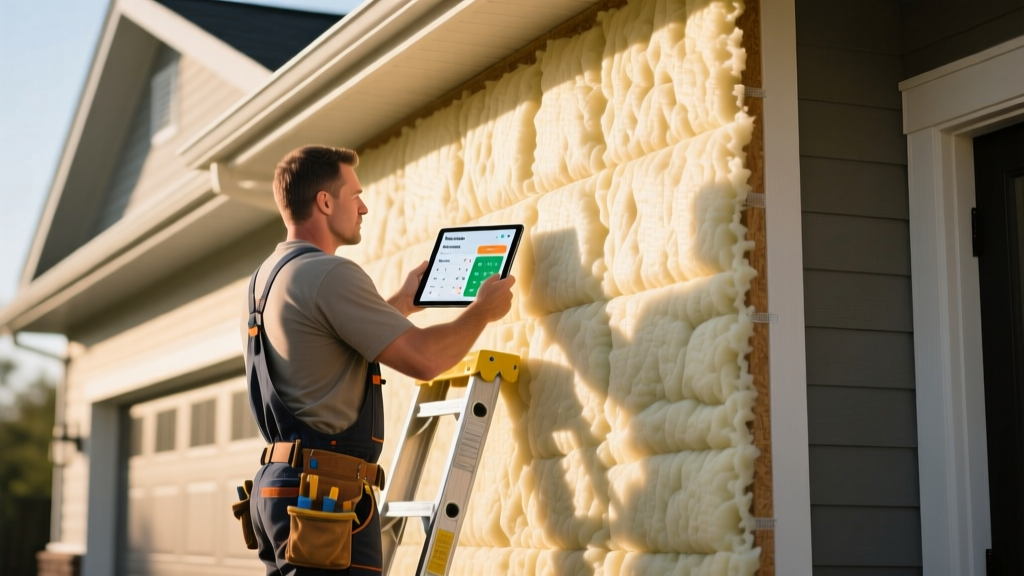
Finalizing Your Material Order for Maximum Efficiency
A vinyl siding calculator for material is only as accurate as the variables you input. By shifting your focus from simple square footage to the physical geometry of insulated profiles, you protect the integrity of the continuous insulation layer. Always cross-reference your calculator's trim and accessory outputs against the specific installation manual of your chosen insulated siding brand. The energy savings promised by the manufacturer—often a 10% to 15% reduction in annual HVAC loads—are entirely dependent on executing the deep-profile details that standard calculators conveniently ignore. Verify your deep J-channels, insulated starter strips, and airtight WRB tapes before submitting your final 2026 material order to the distributor.
Written by
Elena RodriguezElena Rodriguez is a civil engineer and technical writer specializing in concrete technology, masonry systems, and ASTM/ACI compliance. She earned her B.S. in Civil Engineering from Texas A&M University and spent a decade at a materials testing laboratory, performing over 2,000 concrete compressive strength tests and masonry prism evaluations. Elena is an ACI-certified Field Testing Technician (Grade I) and a member of ASTM Committee C12 on Natural Building Stone. She currently consults on forensic engineering cases involving concrete failures and moisture intrusion. Based in San Antonio, TX, Elena is a proud member of the Society of Women Engineers (SWE) and coaches her daughter's FIRST Robotics team.
More from Elena Rodriguez
View all
Walls & Panels
Cost Analysis: Light Gauge Steel Framing Advantages and Disadvantages
Evaluate light gauge steel framing advantages and disadvantages through a strict cost analysis lens, comparing material, labor, and lifecycle expenses.
Aug 4, 2026

Walls & Panels
Gypsum Board Types: Exact Specifications, Thickness & Dimensions
Compare standard, Type X, and moisture-resistant gypsum board types. Get exact specifications, thicknesses, dimensions, and ASTM standards for your project.
Aug 4, 2026

Fire Resistance
Best Fire-Resistant Outdoor Decking Materials: 2026 Buyer Guide
Discover the best fire-resistant outdoor decking materials for 2026. Compare Class A PVC, aluminum, and hardwood options for WUI compliance and safety.
Aug 4, 2026