True Cost of Vinyl Siding Material: Weather Resistance Analysis
Analyze the true cost of vinyl siding material across weather-resistance tiers. Discover how thickness, wind ratings, and UV inhibitors impact pricing.

The Direct Link Between Vinyl Thickness, Weather Survival, and Price
When evaluating the cost of vinyl siding material, buyers often focus solely on the upfront price per square foot. However, from a building science perspective, the material cost is intrinsically tied to its physical dimensions, chemical additives, and structural engineering—all of which dictate how the siding performs under severe weather stress. Polyvinyl chloride (PVC) is inherently sensitive to temperature fluctuations, UV radiation, and kinetic impacts. To mitigate these vulnerabilities, manufacturers alter the resin formulation and panel thickness, creating distinct pricing tiers that correlate directly with weather resistance.
A panel's thickness—measured in inches or mils—is the primary driver of both material cost and structural rigidity. While builder-grade vinyl may cost as little as $1.80 per square foot, it lacks the mass to resist high-wind uplift or the chemical modifiers to survive sub-freezing hail impacts. Conversely, premium insulated vinyl siding, which can cost between $5.00 and $8.50 per square foot for the material alone, integrates rigid EPS (expanded polystyrene) foam backers and reinforced nail hems that fundamentally change the panel's aerodynamic and impact-resistant properties.
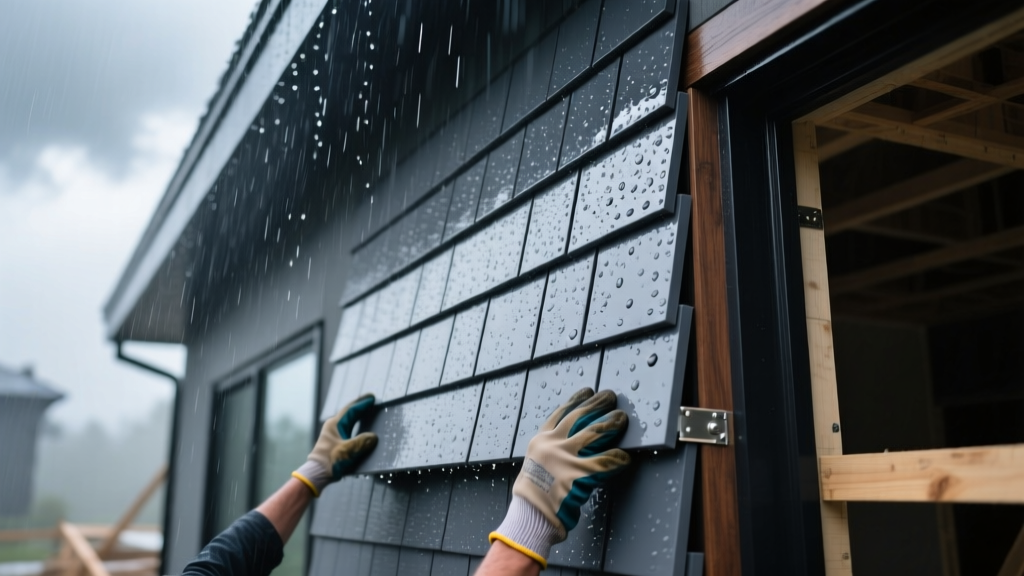
2026 Material Cost Breakdown by Weather-Resistance Tier
The following matrix breaks down the current material costs (excluding labor, trim, and house wrap) and maps them to their verified weather performance metrics based on industry testing standards.
| Material Tier | Panel Thickness | Material Cost (per sq. ft.) | Wind Uplift Rating | Primary Weather Vulnerability |
|---|---|---|---|---|
| Builder-Grade | .035" - .038" | $1.80 - $2.50 | Up to 90 mph | Tearing at nail hem; severe oil-canning |
| Mid-Grade Residential | .040" - .042" | $2.80 - $4.20 | 110 - 130 mph | Brittle fracture in sub-40°F hail events |
| Premium / Architectural | .044" - .046" | $4.50 - $6.50 | 140 - 160 mph | Thermal warping in dark color profiles |
| Insulated / Heavy-Duty | .048" + EPS Backer | $6.00 - $8.50+ | 160+ mph (HVHZ) | Higher upfront capital expenditure |
Tier 1: Builder-Grade (.035" - .038") - The High-Wind Liability
Often utilized in new construction developments where minimizing the cost of vinyl siding material is the primary objective, builder-grade panels are the thinnest on the market. Because they lack a substantial locking mechanism and feature single-thickness nail hems, these panels are highly susceptible to wind uplift. When wind gets behind the panel, the sheer force concentrates on the nail slot. In .035" material, the nail hem will frequently tear, allowing the panel to detach and zip down the wall. Furthermore, thin vinyl expands and contracts at a rate of up to 5/8 inch per 10-foot panel; without the rigidity of a thicker profile, this thermal movement results in visible rippling, known in the industry as 'oil-canning,' when exposed to direct, high-heat sunlight.
Tier 2: Mid-Grade (.040" - .042") - The Standard Suburban Choice
This tier represents the baseline for acceptable weather resistance in most North American climates. Products like Mastic Quest or Alside Mezzo fall into this category. The .040" thickness provides enough structural memory to lay flat against minor sheathing imperfections and resist moderate wind loads (typically certified up to 130 mph when properly fastened). However, mid-grade vinyl still relies on standard PVC formulations that become increasingly brittle as temperatures drop below 40°F (4°C), making them vulnerable to cracking during late-autumn or early-spring hail storms.
Tier 3: Premium & Insulated (.044" - .048") - Extreme Weather Armor
At the top of the market, the cost of vinyl siding material increases significantly due to the integration of impact modifiers and specialized backing. Insulated siding, such as CertainTeed CedarBoards or Prodigy by Alside, features a contoured EPS foam backing that is laminated to the vinyl panel. This foam acts as a shock absorber. According to the Vinyl Siding Institute (VSI), insulated siding demonstrates superior impact resistance in cold-weather testing because the foam disperses the kinetic energy of a hailstone across a wider surface area, preventing the localized stress fracture that shatters standard vinyl.
Hidden Weather Costs: UV Degradation and Thermal Expansion
The physical thickness of the siding is only half of the weather resistance equation; the chemical composition of the PVC resin dictates how the material handles solar radiation.
Expert Insight: The Titanium Dioxide Factor
High-quality vinyl siding incorporates titanium dioxide (TiO2) as a UV inhibitor. TiO2 prevents the molecular breakdown of the PVC polymer chains caused by ultraviolet light. Budget manufacturers reduce TiO2 concentrations to lower the cost of vinyl siding material, which accelerates 'chalking' (a powdery residue on the surface) and causes the panels to become brittle and lose their color retention warranty within 5 to 7 years.
The Dark Color Heat Penalty
Homeowners increasingly desire dark exterior palettes, such as charcoal, navy, and forest green. However, dark PVC absorbs significantly more solar heat than light colors, with surface temperatures easily exceeding 160°F (71°C) on a sunny summer day. Standard PVC begins to soften and distort at these temperatures. To counteract this, premium manufacturers utilize heat-reflective pigment technologies (e.g., Chromatix or PermaColor). These specialized acrylic capstocks reflect infrared radiation, keeping the panel substrate cooler. Expect to pay a 15% to 20% premium on the material cost for dark, heat-reflective profiles compared to standard white or beige.
Wind Uplift Ratings: What the ASTM D3679 Standard Actually Means
When reviewing product spec sheets, you will see references to ASTM D3679, the standard specification for rigid PVC siding. This standard dictates the minimum physical requirements for the material, including dimensional stability and impact resistance. However, for wind resistance, the critical metric is the panel's tested wind load rating, which is verified through independent laboratory testing simulating negative pressure (suction) on a building envelope.
For homes located in coastal regions or Tornado Alley, standard wind ratings are insufficient. The Whole Building Design Guide (WBDG) emphasizes that exterior wall cladding in High-Velocity Hurricane Zones (HVHZ) must withstand extreme pressure differentials. To achieve a 160+ mph wind rating, premium vinyl siding utilizes a double-thick, reinforced nail hem and a deeper interlocking hook mechanism. This engineering prevents the panel from unzipping under cyclic wind loading, a common failure mode in cheaper materials during hurricane events.
Hail Impact Resistance: The ASTM D4226 Reality Check
ASTM D4226 is the standard test method for the impact resistance of rigid PVC building products. The test involves dropping a specified weight from a set height onto the siding sample. The critical variable that separates mid-grade from premium vinyl is the use of acrylic impact modifiers.
- Unmodified PVC (Budget): High tensile strength but low ductility. Shatters upon high-velocity impact, especially in cold weather.
- Acrylic-Modified PVC (Premium): The introduction of a rubbery acrylic phase into the PVC matrix creates microscopic energy-absorbing zones. When a hailstone strikes, the material yields and rebounds rather than fracturing.
If you live in a region prone to severe convective storms (such as the Great Plains or Midwest), opting for a product certified under Class 1 or Class 2 impact resistance is non-negotiable. The increased cost of vinyl siding material in this tier is frequently offset by lower homeowners insurance premiums and the avoidance of catastrophic wall envelope breaches.
Decision Framework: Matching Your Climate Zone to Material Costs
To optimize your budget without compromising the building envelope, use this climate-driven decision matrix to determine the appropriate material tier:
Zone A: Mild Coastal & Southern Climates (Low Freeze/Thaw, High UV)
Recommended Tier: Mid-Grade (.040" - .042") with high TiO2 concentration.
Focus: UV stability and color retention. Wind resistance should be rated for local hurricane codes. Insulated backing is optional but beneficial for thermal bridging reduction.
Zone B: Midwest & Great Plains (High Wind, Severe Hail, Extreme Temp Swings)
Recommended Tier: Premium / Insulated (.046"+ with EPS backing).
Focus: Cold-weather impact resistance (acrylic modifiers) and reinforced nail hems for 130+ mph wind uplift. The EPS backing prevents the panel from rattling and provides critical shock absorption against hail.
Zone C: Pacific Northwest & Northeast (High Moisture, Freeze/Thaw Cycles)
Recommended Tier: Premium Architectural (.044"+).
Focus: Water management profiles and deep shadow lines. Ensure the siding features integrated weep holes and a robust bottom lock to prevent capillary water draw during wind-driven rain events.
Ultimately, analyzing the cost of vinyl siding material requires looking past the initial invoice. A $2.00 per square foot savings on builder-grade material will rapidly evaporate if the panels tear during a squall line, warp under July sun, or shatter during an October hailstorm. By aligning your material investment with the specific meteorological threats of your geographic zone, you secure a resilient, low-maintenance building envelope that performs reliably for decades.
Written by
Elena RodriguezElena Rodriguez is a civil engineer and technical writer specializing in concrete technology, masonry systems, and ASTM/ACI compliance. She earned her B.S. in Civil Engineering from Texas A&M University and spent a decade at a materials testing laboratory, performing over 2,000 concrete compressive strength tests and masonry prism evaluations. Elena is an ACI-certified Field Testing Technician (Grade I) and a member of ASTM Committee C12 on Natural Building Stone. She currently consults on forensic engineering cases involving concrete failures and moisture intrusion. Based in San Antonio, TX, Elena is a proud member of the Society of Women Engineers (SWE) and coaches her daughter's FIRST Robotics team.
More from Elena Rodriguez
View all
Walls & Panels
Cost Analysis: Light Gauge Steel Framing Advantages and Disadvantages
Evaluate light gauge steel framing advantages and disadvantages through a strict cost analysis lens, comparing material, labor, and lifecycle expenses.
Aug 4, 2026

Walls & Panels
Gypsum Board Types: Exact Specifications, Thickness & Dimensions
Compare standard, Type X, and moisture-resistant gypsum board types. Get exact specifications, thicknesses, dimensions, and ASTM standards for your project.
Aug 4, 2026

Fire Resistance
Best Fire-Resistant Outdoor Decking Materials: 2026 Buyer Guide
Discover the best fire-resistant outdoor decking materials for 2026. Compare Class A PVC, aluminum, and hardwood options for WUI compliance and safety.
Aug 4, 2026