Drywall Texture Cleaning Playbook: Knockdown, Orange Peel & Popcorn
Master maintenance and cleaning of knockdown, orange peel, and popcorn drywall textures with our expert playbook, featuring safe solutions and tools.
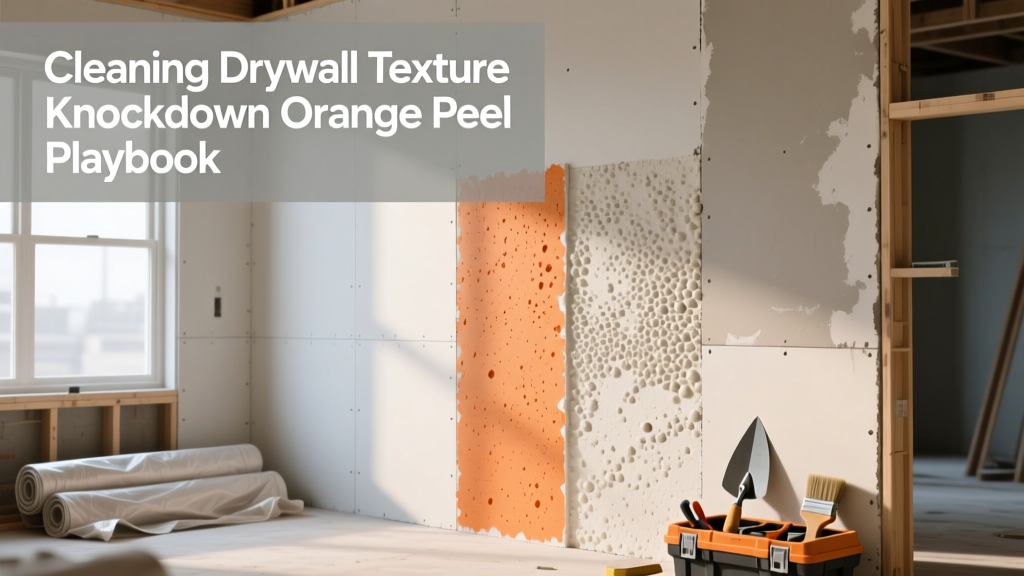
The Physics of Textured Gypsum: Why Standard Cleaning Fails
Standard flat drywall can withstand aggressive wiping, but textured gypsum board presents a unique maintenance challenge. The increased surface area of textures like orange peel and knockdown traps airborne particulates, cooking oils, and nicotine in microscopic valleys. When homeowners attempt to clean these surfaces with standard all-purpose cleaners and flat sponges, the moisture penetrates the porous joint compound, reactivating the gypsum core and causing the texture to soften, sag, or flake off entirely.
According to the Gypsum Association, the paper facing of gypsum board is highly susceptible to moisture degradation. Maintaining textured walls requires a strict protocol that prioritizes dry extraction first, followed by highly controlled, low-moisture chemical application. This playbook details the exact tools, chemical ratios, and techniques required to maintain every major drywall texture without compromising the substrate.
The Drywall Texture Maintenance Matrix
Before applying any cleaning solution, identify your specific texture profile. Each application method dictates the peak height, dust-trap risk, and moisture tolerance of the finish.
| Texture Type | Peak Height | Dust Trap Risk | Moisture Tolerance | Primary Extraction Tool |
|---|---|---|---|---|
| Orange Peel | 1/16' - 1/8' | Moderate | Low-Moderate | Microfiber flat mop |
| Knockdown | 1/8' - 3/16' | High (Valleys) | Moderate | Soft-bristle vacuum brush |
| Skip Trowel | 1/8' - 1/4' | High (Broad arcs) | Low | Feather duster / Dry sponge |
| Popcorn / Acoustic | 1/4' - 1/2' | Extreme | None (Water destroys it) | Lint roller / Static wand |
Playbook 1: Orange Peel and Knockdown Walls
Phase 1: Dry Extraction
Never apply liquid to orange peel or knockdown textures without removing surface dust first; otherwise, you will create a mud slurry that stains the paint. Use a shop vacuum equipped with a 1-1/4-inch soft dusting brush attachment. Set the vacuum to the lowest suction setting to prevent pulling the texture off the wall. Work in 4x4 foot sections, moving in overlapping 'W' patterns to dislodge dust from the texture valleys.
Phase 2: Low-Moisture Washing
For grease, scuffs, or nicotine buildup, avoid ammonia-based cleaners which can dull the paint sheen. Instead, use a TSP-PF (Trisodium Phosphate, Phosphate-Free) substitute.
- Mixing Ratio: 1/4 cup TSP-PF concentrate per 1 gallon of warm (not hot) water.
- Application: Dip a high-density cellulose sponge into the solution and wring it out until it is barely damp. It should not drip when squeezed.
- Technique: Wipe the wall using light, circular motions. Do not apply heavy pressure, which will shear the peaks off the knockdown texture.
- Rinsing: Immediately follow with a second sponge dampened only with clean water to remove chemical residue.
Playbook 2: Skip Trowel and Santa Fe Ceilings
Skip trowel and Santa Fe textures feature broad, sweeping arcs with deep, irregular gouges. These are typically applied to ceilings and high walls, making them difficult to reach. The primary failure mode here is water spotting from over-saturation.
Playbook 3: Popcorn and Acoustic Textures
Popcorn texture (often made from styrofoam, vermiculite, or polystyrene beads mixed with joint compound) is notoriously fragile. Water is the enemy of acoustic ceilings; even a light misting can cause the material to dissolve and fall in chunks.
The Asbestos Prerequisite
If your building was constructed before 1980, you must assume the popcorn texture contains asbestos. The Environmental Protection Agency (EPA) strictly advises against disturbing suspected asbestos-containing materials. Do not vacuum, scrub, or scrape the ceiling. Hire a certified asbestos inspector to take a core sample. If negative, proceed with dry cleaning only.
Dry Cleaning Protocol
- Static Duster: Use an electrostatic duster (like a Swiffer 360) on an extension pole. The static charge lifts dust without the friction that breaks off popcorn nubs.
- Lint Roller: For localized cobwebs or heavy dust buildup in corners, use a standard 10-inch sticky lint roller. Roll in one direction only to prevent peeling the texture.
- Stain Treatment: You cannot wash a water stain off a popcorn ceiling. You must seal it. Apply two coats of a shellac-based primer, such as Zinsser B-I-N, using a thick-nap roller (3/4-inch). Water-based primers will reactivate the texture and cause it to sag.
Troubleshooting Texture Cleaning Failures
Symptom: Texture Flaking During Wash
Cause: The wall was painted with flat or matte builder-grade paint, which is highly porous and offers no moisture barrier. The water penetrated the paint and dissolved the joint compound beneath.
Fix: Stop washing immediately. Let the area dry completely for 48 hours. Lightly sand the flaked edges with 120-grit sandpaper, apply a skim coat of USG Sheetrock Brand All Purpose Joint Compound, and repaint the entire wall with an eggshell or satin acrylic latex paint to create a washable seal.
Symptom: Yellow/Brown Bleed-Through After Cleaning
Cause: Moisture from the cleaning process reactivated old water stains, tannins from wood framing, or nicotine residue trapped in the texture valleys, pulling them to the surface.
Fix: Do not apply more water-based paint. Coat the affected area with an oil-based or shellac-based stain-blocking primer (e.g., Kilz Original or Zinsser B-I-N) before applying your topcoat.
Professional vs. DIY Cost Breakdown (2026 Estimates)
While DIY maintenance is highly effective for walls, heavily soiled textured ceilings (especially in commercial kitchens or post-smoking environments) often require professional equipment. Here is what you can expect to budget for professional texture cleaning versus a DIY approach.
| Service Level | Cost per Sq. Ft. | Equipment Used | Best Application |
|---|---|---|---|
| DIY Dry Dusting | $0.01 - $0.03 | Microfiber mops, shop-vacs, TSP-PF | Annual residential maintenance |
| DIY Deep Wash | $0.05 - $0.08 | Cellulose sponges, chemical concentrates | Kitchen walls, nicotine removal |
| Professional Wall Wash | $0.15 - $0.25 | Commercial steam extractors, HEPA vacuums | Move-out cleans, heavy grease |
| Professional Ceiling Wash | $0.25 - $0.40 | Scaffolding, low-moisture encapsulation | Commercial spaces, high atriums |
By adhering to these specific extraction methods and chemical ratios, you can extend the lifespan of your textured gypsum finishes by decades, avoiding the costly and messy process of scraping, re-mudding, and re-texturing.