Difference Between Gypsum Board and Sheetrock: 2026 Cost Analysis
Discover the true difference between gypsum board and Sheetrock. We break down 2026 material costs, labor savings, and brand premiums for your project.

The Core Distinction: Material Category vs. Trademarked Brand
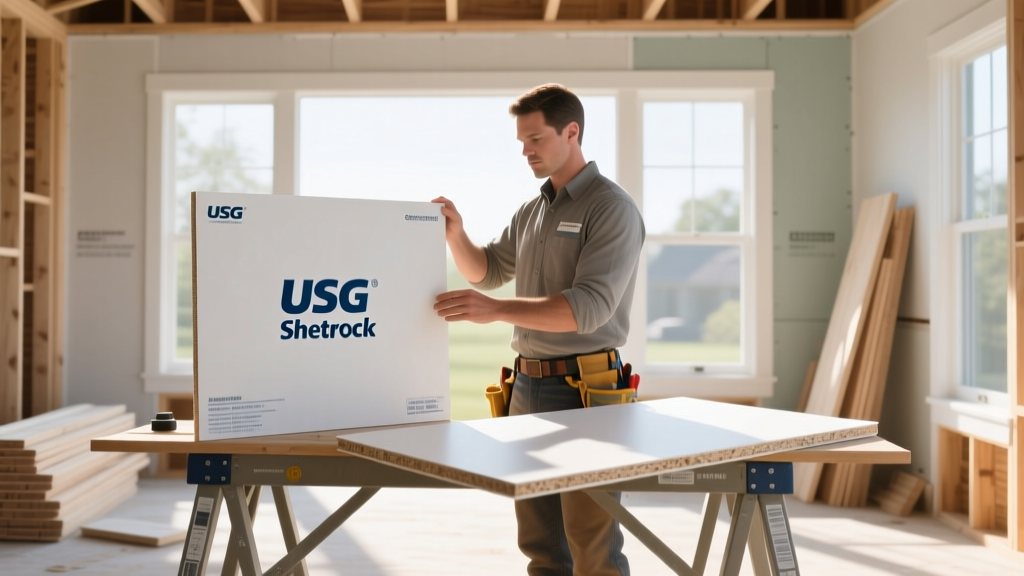
When builders and homeowners search for the difference between gypsum board and Sheetrock, they are often operating under a fundamental misconception. Gypsum board is the generic, industry-wide term for the building material composed of a non-combustible gypsum core encased in paper facers, governed by the Gypsum Association and ASTM C1396 standards. Sheetrock, conversely, is a registered trademark of USG Corporation. Asking for the difference between the two is akin to asking for the difference between a facial tissue and Kleenex.
From a purely chemical and structural standpoint, a standard 1/2-inch generic gypsum board and a standard 1/2-inch USG Sheetrock panel perform the same basic function. However, from a 2026 construction cost analysis perspective, the distinction shifts from semantics to supply chain economics, proprietary manufacturing additives, quality control tolerances, and installed labor costs. This guide dissects the real-world financial implications of choosing premium branded Sheetrock versus generic or competitor-brand gypsum board (such as those produced by National Gypsum or Georgia-Pacific) for your current projects.
2026 Material Price Breakdown: Branded vs. Generic
The most immediate difference contractors notice is the unit price at the lumberyard. Branded Sheetrock commands a premium due to USG's extensive distribution network, brand equity, and proprietary core formulations. Below is a comparative analysis of average 2026 wholesale pricing for standard 4x8-foot panels across three primary application categories.
| Panel Type (4x8 ft) | Generic / Competitor Brand | USG Sheetrock Brand | Price Delta (Premium) |
|---|---|---|---|
| 1/2' Standard Interior | $14.20 - $15.80 | $17.50 - $19.20 | +18% to +22% |
| 5/8' Type X (Fire-Rated) | $21.50 - $24.00 | $26.80 - $29.50 | +20% to +25% |
| 1/2' Moisture/Mold Resistant | $19.00 - $21.50 | $23.50 - $26.00 | +21% to +24% |
| 1/2' UltraLight / Lightweight | $18.50 - $20.50 | $21.00 - $23.50 | +13% to +15% |
On a standard 2,500-square-foot residential build requiring approximately 220 sheets of 1/2-inch standard board, opting for generic gypsum board over branded Sheetrock yields a material savings of roughly $700 to $850. While this appears significant on a line-item basis, material cost represents only 35% to 40% of the total installed drywall budget. To understand the true financial difference, we must analyze the hidden variables of labor, waste, and finishing.
Hidden Cost Variables: Weight, Labor, and Ergonomics
The most significant financial divergence between generic standard boards and premium branded options lies in the physical weight of the panels and its cascading effect on labor costs. USG pioneered the lightweight drywall category with its Sheetrock UltraLight panels, and while competitors have introduced their own lightweight variants, USG's proprietary foaming agents and glass-fiber reinforcement remain the industry benchmark for weight-to-strength ratios.
The UltraLight Factor and Labor Savings
A standard 1/2-inch generic gypsum board weighs approximately 55 to 58 pounds per 4x8 sheet. In contrast, USG Sheetrock UltraLight weighs roughly 41 pounds. This 25% to 30% reduction in weight drastically alters the installed cost equation:
- Hanging Speed: Two-person hanging crews can move and secure lightweight boards 15% to 20% faster than standard 55-pound boards, reducing fatigue-related slowdowns in the afternoon shifts.
- Ceiling Applications: For ceiling installations, the reduced weight decreases the required number of temporary T-braces and reduces the physical strain on lift operators, cutting ceiling hanging labor time by up to 25%.
- Worker Compensation and Injury Risk: Ergonomic strain is a leading cause of drywall hanger injuries. The lighter weight of premium branded lightweight boards reduces long-term liability and insurance premiums for large commercial subcontractors.
Quality Control, Edge Crush, and the Waste Factor
Not all gypsum cores are milled and cured equally. The difference between gypsum board and Sheetrock becomes highly visible at the loading dock and the cutting table. Premium branded Sheetrock undergoes rigorous, automated quality control processes that ensure uniform core density and strict adherence to paper-to-core adhesion standards.
Cheaper, unbranded, or imported generic gypsum boards frequently suffer from two costly defects:
- Edge Crush and Spalling: Generic boards often exhibit softer edges due to inconsistent kiln drying. When forklifts move pallets, or when panels are leaned against framing, the edges crush. A crushed edge requires the taper to apply an extra coat of joint compound and heavy tape reinforcement, adding $0.15 to $0.25 per linear foot in finishing labor.
- Paper Delamination: If the paper facer delaminates during scoring and snapping, the entire sheet must be discarded or heavily reinforced with fiberglass mesh and setting-type compound (hot mud).
Industry estimators typically apply a 5% to 7% waste factor for generic gypsum board, compared to a 3% to 4% waste factor for premium branded Sheetrock. On large-scale commercial projects, this 2% to 3% delta in material waste can erase the initial unit-price savings of buying generic.
Specialty Boards: Where the Brand Premium Matters Most
The financial risk of substituting generic gypsum board for branded Sheetrock scales with the complexity of the environment. In standard, climate-controlled interior partitions, generic board performs adequately. However, in specialty applications, the proprietary chemistry of branded boards justifies the premium.
Moisture and Mold Resistance (Purple/Green Board)
USG's Sheetrock Mold Tough and UltraLight Mold Tough panels utilize specific chemical treatments in both the gypsum core and the heavy-duty face paper. While generic moisture-resistant boards meet the minimum ASTM D3273 standards for mold resistance, independent field reports frequently show that generic green board facers begin to degrade in high-humidity environments (like unventilated commercial bathrooms) faster than their branded counterparts. The cost to remediate and replace mold-compromised drywall in a commercial restroom exceeds $45 per square foot—making the $4.00 per sheet premium for branded mold-resistant Sheetrock a highly cost-effective insurance policy.
Type X Fire-Rated Assemblies
When building fire-rated shaft walls or stairwell enclosures, the assembly must be installed exactly as tested by Underwriters Laboratories (UL). USG publishes extensive, pre-tested UL designs utilizing specific Sheetrock Type X products. If you substitute a generic 5/8-inch Type X board, you must ensure the generic manufacturer has an exact, matching UL design for your specific framing and fastener pattern. If a fire inspector rejects a generic board assembly due to a mismatch in the UL directory, the cost of tearing down and replacing the non-compliant partitions will instantly obliterate any material savings.
Decision Matrix: When to Pay the Sheetrock Premium
Use the following framework to determine whether the 2026 cost difference between generic gypsum board and branded Sheetrock is justified for your specific project scope.
| Project Scenario | Recommended Material | Financial Justification |
|---|---|---|
| Standard interior walls in a budget-conscious residential flip | Generic 1/2' Standard | Low visibility, standard finishes (Level 3 or 4), and tight margins make the 18% material savings highly relevant. |
| High-end residential ceilings and Level 5 finish walls | USG Sheetrock UltraLight | Superior core consistency prevents joint ridging and nail pops, reducing expensive Level 5 skim-coat rework. |
| Commercial bathrooms, kitchens, and high-humidity zones | USG Sheetrock Mold Tough | Proprietary face paper and core treatments mitigate the massive financial risk of future mold remediation. |
| Fire-rated stairwells and elevator shafts | USG Sheetrock Type X | Guaranteed compatibility with published UL fire-assembly designs prevents costly inspection failures and tear-outs. |
| Temporary construction hoarding and dust barriers | Generic 1/2' Standard (or X-grade) | Material will be demolished post-construction; structural integrity and finish quality are irrelevant. |
Ultimately, the difference between gypsum board and Sheetrock is not a difference in basic material science, but a difference in manufacturing precision, proprietary additives, and risk mitigation. By analyzing the total installed cost—factoring in labor ergonomics, waste percentages, and warranty liabilities—builders can make precise, data-driven procurement decisions rather than defaulting to the lowest sticker price at the supply counter.
Written by
Marcus ChenMarcus Chen is a licensed structural engineer (PE) and building materials analyst with over 12 years of experience across residential, commercial, and industrial construction. He holds a Master of Science in Civil Engineering from UC Berkeley and spent six years at Thornton Tomasetti before transitioning to independent consulting and technical writing. Marcus specializes in material selection for seismic-prone regions, concrete reinforcement strategies, and lifecycle cost analysis. His work has been cited by the American Concrete Institute (ACI) and the Structural Engineers Association of California (SEAOC). When he is not on a job site or at his desk, you will find him hiking the Sierra Nevada or restoring a 1920s craftsman bungalow in Oakland, CA.
More from Marcus Chen
View all
Construction Cost
How Much Did the Eiffel Tower Cost to Build?
How much did the Eiffel Tower cost to build in 1889? We adjust for inflation and compare its budget to modern skyscraper construction.
Aug 4, 2026

Fire Resistance
What Is a Fire Resistant Material? Testing & Certification Guide
Discover what is a fire resistant material through ASTM and UL testing. Learn how fire ratings, certifications, and assemblies work in construction.
Aug 4, 2026

Construction Cost
How Much Did the Burj Khalifa Cost to Build?
How much did the Burj Khalifa cost to build? We break down the $1.5B project and extract 5 money-saving strategies for your next build.
Jul 30, 2026