Gypsum Board Description Guide: Specs and Cost Analysis
Decode any gypsum board description to understand material specs, thickness grades, and 2026 cost implications for your next construction project.

Decoding the Manufacturer's Gypsum Board Description
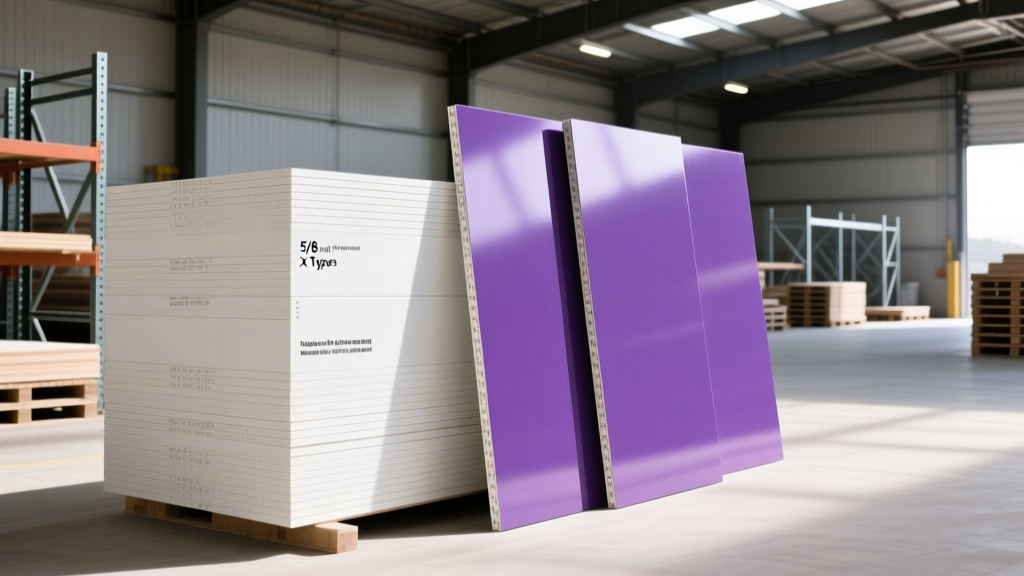
When procuring drywall for commercial or residential projects, the technical gypsum board description provided on the manufacturer's spec sheet is the primary tool for cost control. A comprehensive gypsum board description outlines the core composition, facing material, edge profile, thickness, and performance ratings (such as ASTM C1396 compliance). Misinterpreting these specifications frequently leads to budget overruns, either through over-specifying materials for non-critical areas or failing to account for the labor premiums associated with heavier, specialty boards.
As of 2026, supply chain stabilization has normalized baseline material costs, but the price delta between standard and specialty boards remains significant. Understanding the exact terminology used in a product description allows estimators and project managers to map specific board attributes directly to their bottom line.
2026 Cost Matrix: Pricing by Specification Grade
The following matrix breaks down the current market pricing for the most common gypsum board types. These costs reflect material-only pricing for standard 4x8-foot sheets (32 square feet) based on early 2026 national averages.
| Board Type | Thickness | Key Description Identifiers | Cost per Sheet (4x8) | Cost per Sq. Ft. |
|---|---|---|---|---|
| Regular (Standard) | 1/2" | Standard core, paper-faced, tapered edges | $13.50 - $15.00 | $0.42 - $0.47 |
| Type X (Fire-Rated) | 5/8" | Glass-fiber reinforced core, 1-hour UL rating | $18.50 - $21.00 | $0.58 - $0.66 |
| Moisture Resistant (MR) | 1/2" | Green/Purple paper, silicone-treated core | $16.00 - $18.50 | $0.50 - $0.58 |
| Glass Mat (Mold Resistant) | 1/2" | Fiberglass mat facing, no paper, ASTM D3273 | $32.00 - $38.00 | $1.00 - $1.19 |
| Abuse-Resistant | 5/8" | Dense core, embedded fiberglass mesh | $28.00 - $33.00 | $0.88 - $1.03 |
| Sound-Attenuating | 1/2" to 5/8" | Viscoelastic polymer core, constrained layer | $45.00 - $65.00 | $1.40 - $2.03 |
Hidden Cost Drivers Buried in the Fine Print
Beyond the base material type, specific modifiers in the gypsum board description can silently inflate your material budget. Estimators must scan the spec sheet for the following attributes:
Foil-Backed Vapor Retarders
If the description includes terms like "foil-backed" or "vapor retarder facing," expect a premium of $0.15 to $0.25 per square foot. While this eliminates the need for a separate polyethylene vapor barrier (saving roughly $0.10 per square foot in labor and material), the net cost is still higher. Foil-backed boards are strictly required in cold climates to prevent interstitial condensation, but using them in mixed or hot-humid climates violates building codes and traps moisture inside the wall cavity.
Edge Profiles: Tapered vs. Square
Standard wallboard features a tapered edge designed for hiding taped joints. However, if the gypsum board description specifies "square edge" or "blunt edge," this board is intended for multi-layer applications (base layers) or veneer plaster bases. Attempting to finish a square-edge board with standard joint compound will result in visible seams, requiring a Level 5 skim coat that adds $1.25 to $1.75 per square foot in finishing labor.
A standard 1/2-inch 4x8 sheet weighs approximately 52 pounds. A 5/8-inch Type X sheet weighs roughly 70 to 74 pounds. This 35% to 40% increase in weight directly impacts crew fatigue and hanging speed, a factor rarely captured in basic material takeoffs.
Labor Multipliers Tied to Board Specifications
Material costs represent only 30% to 40% of the total installed cost of a drywall system. The physical properties detailed in the gypsum board description dictate the labor requirements. According to HomeGuide drywall cost data, national average installation costs range from $1.50 to $2.50 per square foot for standard boards. However, specialty descriptions trigger specific labor multipliers:
- Type X (5/8-inch): The added weight requires two installers per sheet for ceiling applications, increasing hanging labor by 15% to 20%.
- Sound-Attenuating Boards: These require specialized acoustic sealant at all perimeters and strict staggered-stud or resilient channel framing. Installation labor jumps to $3.00 - $4.50 per square foot.
- Glass Mat Boards: Cutting fiberglass-faced gypsum generates hazardous airborne silica and glass fibers. Crews must use specialized scoring tools and wear enhanced PPE, reducing daily square-footage output by roughly 10%.
Core Density and Fastening Schedules
The Gypsum Association publishes strict fastening schedules based on board thickness and framing spacing. When a gypsum board description highlights "high-density core" or "Type C" (an enhanced fire rating with vermiculite additives), the fastening pattern often shifts. For example, while standard 1/2-inch board on 16-inch O.C. framing requires screws every 12 inches on ceilings, heavier or specialty boards may require adhesive supplementation or closer screw spacing to prevent sagging over time. Each additional screw and ounce of adhesive adds micro-costs that scale across tens of thousands of square feet in commercial builds.
Procurement Framework: Matching Specs to Budget
To optimize project costs, use this decision framework when evaluating the gypsum board description against your architectural plans:
- Verify the Fire Rating Requirement: Do not default to 5/8-inch Type X for all walls. Check the architectural life-safety plan. If a 1-hour rating is only required for the corridor demising walls, use standard 1/2-inch board for the interior tenant partition walls to save $0.16+ per square foot.
- Evaluate Moisture Exposure: For standard residential bathrooms, moisture-resistant (green board) is sufficient. For commercial showers or high-humidity pool enclosures, the description must specify "glass mat" or "cementitious backer." Upgrading to glass mat prematurely in low-risk areas wastes up to $0.60 per square foot.
- Assess Abuse Requirements: In hospital corridors or school hallways, the spec may call for abuse-resistant board. Instead of paying the premium for specialized abuse-resistant drywall, consider using standard 5/8-inch Type X backed by 3/4-inch plywood blocking. This hybrid approach often yields a more durable wall at a lower total installed cost.
- Check for Pre-Priming: Some premium product descriptions include "pre-primed" or "factory-applied primer." While the material costs 10% more, it eliminates one coat of on-site PVA primer, saving $0.20 to $0.30 per square foot in painting labor and accelerating the critical path schedule.
By treating the gypsum board description as a financial blueprint rather than just a technical formality, project teams can eliminate material waste, avoid code violations, and accurately forecast the true installed cost of their wall and ceiling assemblies. Always cross-reference the manufacturer's spec sheet—such as those provided by USG Corporation or National Gypsum—with the project's structural and life-safety requirements before finalizing the procurement order.
Written by
Priya KapoorPriya Kapoor is a real estate market analyst and construction economics researcher with expertise in housing affordability, development feasibility, and infrastructure investment. She holds a Master of Regional Planning from Cornell University and previously worked as a senior analyst at CBRE's Investment Properties group, where she modeled returns for $4B in mixed-use development pipelines. Priya now runs an independent research practice advising developers, municipalities, and REITs on construction cost forecasting and market timing. She publishes the quarterly "BuildMat Market Pulse" report tracking material price indices across 12 commodity categories. Based in Austin, TX, Priya serves on the board of Habitat for Humanity Austin and is a marathon runner.
More from Priya Kapoor
View all
Construction Cost
Cost to Build a 1600 Sq Ft Home in 2026: Full Breakdown
Accurate 2026 cost to build a 1600 sq ft home—material, labor, and regional pricing breakdowns included. Plan your budget with real-time estimates.
Aug 11, 2026

Wood & Lumber
Name the Types of Wood for Pressure Treatment and Preservation
Learn how to name the types of wood best suited for pressure treatment. Compare species treatability, chemical retention levels, and 2026 preservation costs.
Aug 4, 2026

Stone & Masonry
Stone Veneer Suppliers Lindenhurst: 2026 Cost Analysis
Analyze 2026 stone veneer costs in Lindenhurst, NY. Compare local supplier pricing, delivery fees, and Suffolk County installation labor rates.
Aug 4, 2026