Gypsum Board vs Drywall: The Ultimate Material Selection Guide
Settle the gypsum board vs drywall debate. Learn industry terminology, ASTM standards, and how to select the right panel type for your 2026 build.
The Great Terminology Myth: Gypsum Board vs. Drywall
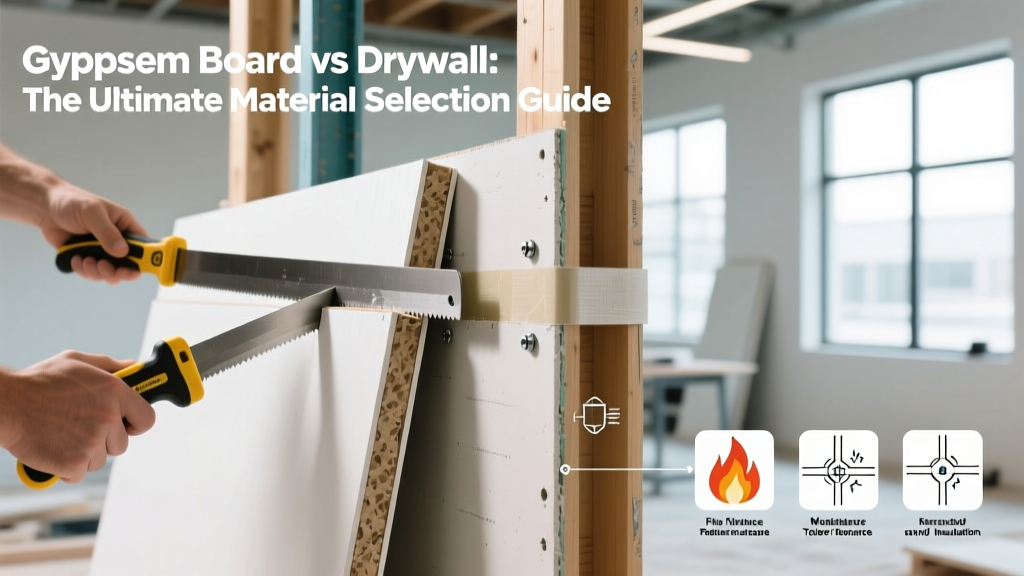
When reviewing construction specifications or walking the aisles of a building materials supplier, you will inevitably encounter the terms 'gypsum board' and 'drywall' used interchangeably. This creates a common point of confusion for property owners and junior estimators who assume they are evaluating two distinct materials. The fundamental truth is that gypsum board and drywall are the exact same product. Both consist of a non-combustible gypsum plaster core encased in heavy paper or fiberglass facers.
The distinction is purely semantic and rooted in industry history. 'Drywall' is the colloquial, consumer-facing term popularized in North America to distinguish the product from traditional wet-plaster application methods. 'Gypsum board' (often abbreviated as GWB in architectural blueprints) is the formal, technical nomenclature used by the ASTM International and the Gypsum Association in their testing and manufacturing standards.
Terminology Translation Matrix
To navigate supplier quotes and architectural plans effectively, use this translation matrix to decode the terminology you will encounter in the wild.
| Term | Origin / Context | What It Actually Means |
|---|---|---|
| Drywall | Consumer / Retail | Standard gypsum panel used in residential and light commercial framing. |
| Gypsum Board (GWB) | Architectural / ASTM | The formal specification term encompassing all types (Standard, Type X, MR). |
| Sheetrock | Brand Trademark | USG Corporation's proprietary brand name for gypsum board; often used generically. |
| Plasterboard | UK / Australia / Global | The standard international term for the exact same gypsum core product. |
| Wallboard | North American Trades | A generic trade term, usually implying standard 1/2-inch non-fire-rated panels. |
Decoding ASTM C1396: The Specs That Actually Matter
Since the name on the label doesn't dictate performance, you must evaluate the physical properties governed by ASTM C1396 (Standard Specification for Gypsum Board). Understanding these core variables is the key to making the right selection for your project.
Core Density and Weight
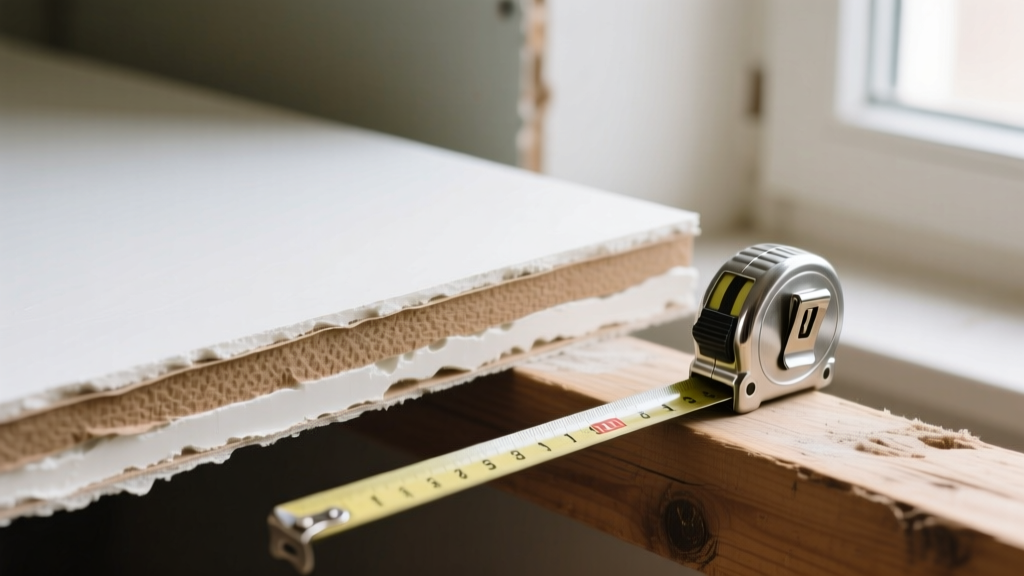
The gypsum core is not uniform across all products. Standard 1/2-inch panels weigh approximately 57 pounds per 4x8 sheet. However, the introduction of lightweight core technologies—such as USG's Sheetrock UltraLight Panels—utilizes expanded perlite and specialized starch binders to reduce the weight to roughly 41 pounds per sheet. This 25% weight reduction drastically lowers installer fatigue and reduces the risk of ceiling sagging, without compromising structural integrity or fire resistance.
Facing Materials
While traditional panels use 100% recycled paper facers, high-moisture and exterior-rated applications require alternative facings. Glass mat gypsum panels (often specified under ASTM C1658) replace the paper entirely with fiberglass mats, rendering the panel impervious to mold growth and capable of withstanding prolonged weather exposure during construction delays.
The 2026 Selection Matrix: Panel Types and Pricing
Selecting the correct panel type is where the real 'versus' battle takes place. Below is a comprehensive breakdown of the primary gypsum board categories, their core additives, and current 2026 market pricing for a standard 4x8 sheet.
| Panel Type | Standard Thickness | Core / Facing Additives | 2026 Cost (4x8 Sheet) | Primary Application |
|---|---|---|---|---|
| Standard (Regular) | 1/2 in. | None / Paper facing | $14.00 - $18.00 | Standard interior walls and ceilings in dry areas. |
| Type X (Fire-Rated) | 5/8 in. | Glass fibers in core / Paper | $22.00 - $28.00 | Garages, furnace rooms, multi-family separation walls (1-hour rating). |
| Moisture Resistant (MR) | 1/2 in. | Silicone core / Green or Purple paper | $24.00 - $30.00 | Bathroom walls, kitchen backsplashes (behind tile). |
| Glass Mat (Exterior) | 1/2 in. or 5/8 in. | Gypsum core / Fiberglass mat | $35.00 - $45.00 | Exterior soffits, tile backer boards, commercial shaft walls. |
| Abuse Resistant | 5/8 in. | Dense core / Heavy-duty face paper | $45.00 - $60.00 | Hospital corridors, school hallways, high-traffic commercial zones. |
| Sound Damping | 1/2 in. or 5/8 in. | Viscoelastic polymer layer in core | $50.00 - $75.00 | Home theaters, hotel rooms, multi-family bedroom partitions. |
Application-Specific Decision Framework
Do not default to standard drywall for every room. Use this framework to specify the correct gypsum board variant based on environmental stressors and building code requirements.
- Bathrooms and Wet Zones: Standard paper-faced drywall will wick moisture and harbor mold. Specify Moisture Resistant (MR) board, such as National Gypsum's Gold Bond XP. Critical Note: MR board is moisture-resistant, not waterproof. For shower enclosures, you must still use a dedicated cementitious backer board or a waterproof foam panel system behind the tile.
- Attached Garages and Utility Rooms: The International Residential Code (IRC) mandates a minimum 1-hour fire-resistance rating for walls separating a dwelling from an attached garage. You must specify 5/8-inch Type X gypsum board on the garage side of the partition. The glass fibers in the Type X core prevent the board from crumbling and falling off the studs during a fire, maintaining the structural barrier.
- Home Theaters and Bedrooms: To achieve an STC (Sound Transmission Class) rating of 50 or higher without building decoupled double-stud walls, specify sound-damping gypsum board like CertainTeed SilentFX. These panels feature a constrained-layer damping polymer sandwiched between two high-density gypsum cores that dissipate acoustic energy.
- Commercial Elevator Shafts: Shaft walls require specialized 1-inch thick gypsum liner panels installed in metal shaft wall studs. These are designed to be installed entirely from one side of the shaft before the elevator car is installed.
Installation Nuances: Framing and Fasteners
Even the most expensive, high-performance gypsum board will fail if the installation parameters are ignored. The Gypsum Association's GA-216 guidelines dictate strict framing and fastening protocols.
Screw Spacing and Edge Support
For standard 1/2-inch gypsum board applied to walls framed at 16 inches on center (OC), screws must be spaced a maximum of 16 inches apart in the field and along the edges. However, for ceiling applications, the screw spacing must be reduced to 12 inches OC to prevent fastener popping and sagging over time. Using coarse-thread drywall screws (typically #6 or #8 gauge, 1-1/4 inches long for 1/2-inch board) is mandatory; fine-thread screws are reserved for light-gauge steel framing.
Sourcing and Supply Chain Realities in 2026
The North American gypsum market is heavily consolidated, dominated by USG, National Gypsum, and CertainTeed (Saint-Gobain). While the core product specifications remain identical across these manufacturers due to ASTM compliance, regional freight costs heavily dictate your final material cost. Gypsum is an incredibly heavy, low-margin commodity. Sourcing panels manufactured within a 300-mile radius of your job site can reduce your delivered cost by 15% to 20% compared to cross-country freight. Always check the manufacturing plant location on the bundle wrapper before committing to a large commercial order.
Frequently Asked Questions
Is plasterboard the same thing as drywall?
Yes. Plasterboard is simply the preferred terminology in the UK, Australia, and many international markets. The core composition (calcium sulfate dihydrate) and paper facing are identical to North American drywall.
What is the difference between green board and purple board?
Both are moisture-resistant gypsum boards. 'Green board' is the traditional MR panel with a moisture-resistant paper facing and silicone-treated core. 'Purple board' (popularized by National Gypsum and USG) typically includes additional mold and mildew inhibitors embedded directly into the core and facing, offering superior protection in high-humidity environments like basement bathrooms.
Can I use standard drywall behind a wood stove?
No. Standard drywall and even Type X fire-rated drywall are not suitable as direct heat shields for wood-burning appliances. You must use non-combustible cement board, micore mineral fiber board, or a specialized UL-listed heat shield system with proper air clearance.
Written by
David NakamuraDavid Nakamura is a licensed architect (AIA) and construction technology writer focused on sustainable building methods, mass timber engineering, and high-performance building envelopes. He holds a Master of Architecture from the University of Washington and is a certified Passive House Consultant (CPHC). David spent eight years at the Seattle firm Mithun, where he led the design of three LEED Platinum projects, before founding his own practice specializing in net-zero residential design. He serves on the editorial advisory board of GreenBuilder Magazine and has authored peer-reviewed papers on cross-laminated timber (CLT) connections for the Journal of Structural Engineering. In his spare time, David teaches woodworking at Pratt Fine Arts Center and kayaks the Puget Sound.
More from David Nakamura
View all
Construction Cost
Labor Cost to Build a Deck Per Sq Ft: 2026 Installation Guide
Discover the exact labor cost to build a deck per sq ft in 2026. This installation guide breaks down contractor rates, complexity factors, and hidden fees.
Aug 4, 2026

Construction Cost
How Much Does It Cost to Build a 3 Bedroom House? Financing Guide
Learn exactly how much it costs to build a 3 bedroom house and explore 2026 financing options, construction loan types, and budget frameworks for your build.
Aug 4, 2026

Construction Cost
Cost to Build a Tennis Court: 2026 Guide
How much does it cost to build a tennis court in 2026? Breakdowns for asphalt, concrete, and synthetic surfaces plus fencing and lighting.
Jul 30, 2026