2026 1/2-Inch Gypsum Board Price Breakdown & Cost Analysis
Analyze the 2026 1/2-inch gypsum board price per sheet, including standard, Type X, and moisture-resistant options, plus hidden installation costs.

The True Cost of 1/2-Inch Gypsum Board in 2026
When estimating material costs for interior wall and ceiling assemblies, the 1/2-inch gypsum board price remains the foundational baseline for residential and light commercial construction. As of 2026, supply chain stabilizations have normalized the extreme price volatility seen in previous years, but raw material costs, energy surcharges in manufacturing, and regional freight rates continue to dictate localized pricing. Understanding the exact cost per sheet—and more importantly, the cost per square foot once fasteners, finishing compounds, and labor are factored in—is critical for accurate project bidding.
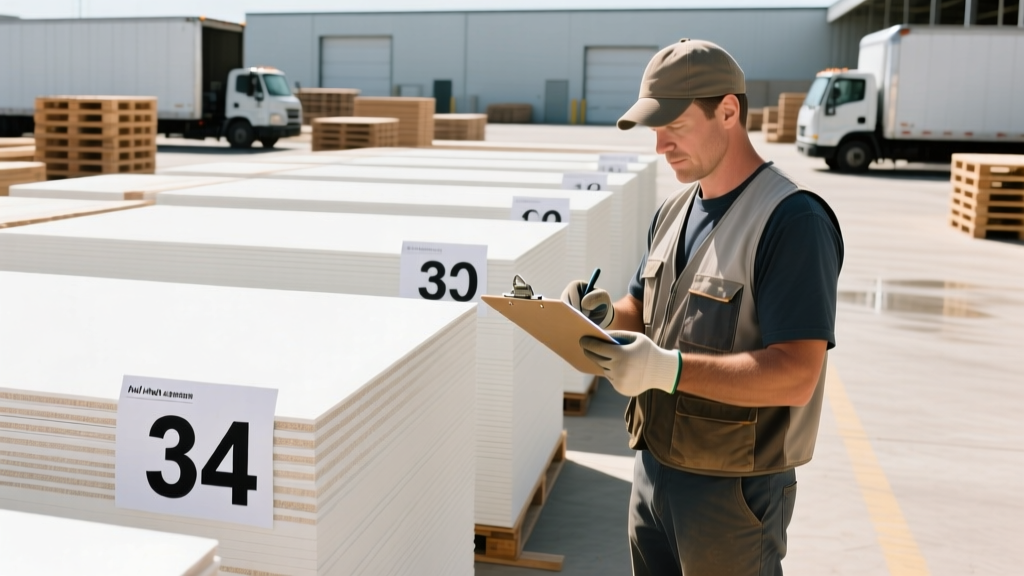
The standard 4-foot by 8-foot (32 sq. ft.) 1/2-inch panel is the industry workhorse, governed by ASTM C1396 specifications established by the Gypsum Association. However, pricing diverges significantly based on the core treatment and facing material. Below is a comprehensive cost analysis designed to help contractors and estimators forecast exact material expenditures without relying on outdated rule-of-thumb metrics.
2026 Quick Cost Snapshot
- Average Material Cost (Standard 4x8): $14.50 – $18.00 per sheet
- Average Installed Cost: $2.15 – $3.50 per square foot
- Finishing Consumables Adder: $0.35 – $0.55 per square foot
Material Pricing Matrix by Panel Type
Not all 1/2-inch panels are created equal. The core density, fiberglass facing, and chemical additives alter both the performance profile and the wholesale price. The table below breaks down the 2026 retail pricing for the most common 1/2-inch gypsum board variations, benchmarked against major manufacturers like USG (Sheetrock), National Gypsum (Gold Bond), and CertainTeed.
| Panel Type / Application | Standard Dimensions | Avg. Price Per Sheet | Price Per Sq. Ft. |
|---|---|---|---|
| Standard Regular (White Board) USG Sheetrock UltraLight |
4' x 8' (32 sq ft) | $14.50 - $16.50 | $0.45 - $0.51 |
| Fire-Rated (Type X) National Gypsum Fire-Shield |
4' x 8' (32 sq ft) | $19.00 - $23.00 | $0.59 - $0.72 |
| Moisture/Mold Resistant (Green/Purple) Gold Bond XP Hi-Impact |
4' x 8' (32 sq ft) | $21.50 - $26.00 | $0.67 - $0.81 |
| Extended Length (Standard) USG Sheetrock UltraLight |
4' x 12' (48 sq ft) | $24.00 - $29.00 | $0.50 - $0.60 |
| Sound-Dampening / Acoustic CertainTeed SilentFX QuickCut |
4' x 8' (32 sq ft) | $52.00 - $68.00 | $1.62 - $2.12 |
Estimator's Note: While 4x12 sheets offer a lower per-square-foot material cost and reduce the number of butt joints requiring taping, they require specialized lifting equipment or larger crews to install safely. The labor premium for handling 12-foot boards on residential sites often negates the material savings unless the space features open, unobstructed walls exceeding 100 linear feet.
The Hidden Costs: Fasteners, Tape, and Mud
Focusing solely on the 1/2-inch gypsum board price per sheet leads to severe budget underestimation. The finishing consumables—joint compound, tape, and screws—represent a mandatory secondary expense that scales directly with your square footage.
- Drywall Screws: For 1/2-inch panels on wood framing, 1-1/4-inch coarse-thread phosphate-coated screws are mandatory. A standard 4x8 sheet requires approximately 48 screws for walls (16-inch on-center framing) and 54 screws for ceilings (12-inch on-center). A 5-pound box (approx. 1,500 screws) costs $22.00 in 2026, translating to roughly $0.02 per square foot.
- Joint Tape: Standard paper tape remains the most cost-effective and structurally sound option for flat seams, costing about $6.00 per 250-foot roll. Self-adhesive fiberglass mesh tape (e.g., FibaTape) costs $9.00 per roll and speeds up installation but requires setting-type compound for the first coat to prevent cracking.
- Joint Compound (Mud): A 4.5-gallon bucket of USG Sheetrock Brand All-Purpose pre-mixed compound costs $14.50 and covers approximately 450 square feet of wall space (three coats). For the taping coat, setting-type compounds like Durabond 45 or 90 ($18.00 per 25lb bag) provide superior shrinkage resistance and bonding strength over paper tape.
- Corner Beads: Standard galvanized steel corner bead costs $3.50 per 8-foot stick, while paper-faced metal corner bead (which hides better and resists edge-chipping) costs $5.50 per stick.
According to Forbes Home Improvement's 2026 drywall cost guide, failing to allocate an additional $0.35 to $0.55 per square foot for these finishing materials is the most common error in preliminary contractor estimates.
Labor vs. DIY: Installation Cost Variables
Labor typically accounts for 50% to 65% of the total installed cost of a gypsum board system. Professional drywall hanging and finishing crews generally charge between $1.50 and $2.80 per square foot for labor alone, depending on the complexity of the architecture and the required finish level.
Understanding Finish Levels and Labor Premiums
The Gypsum Association defines six distinct levels of drywall finish (Level 0 through Level 5). The labor cost scales exponentially with the finish level:
- Level 3 (Standard Residential): Two coats of compound over tape. Ideal for walls receiving heavy texture or matte paint. Base labor rate.
- Level 4 (Premium Residential): Three coats of compound, sanded smooth. Required for flat, eggshell, or satin paints. Adds roughly $0.40 per sq. ft. to labor.
- Level 5 (Commercial / High-End): A skim coat of joint compound applied over the entire surface to eliminate joint banding and fastener photography under harsh lighting. Adds $1.20 to $1.80 per sq. ft. to labor costs.
Warning on Ceiling Installations: Hanging 1/2-inch gypsum board on ceilings requires significantly more physical exertion and specialized drywall lifts. Expect labor quotes for ceiling-only installations to be 30% to 40% higher per square foot than vertical wall installations due to the increased risk of panel sagging and the difficulty of overhead mudding and sanding.
Pro-Tips for Optimizing Your Drywall Budget
Controlling the 1/2-inch gypsum board price per project isn't just about finding the cheapest supplier; it's about strategic material management and waste reduction. Implement the following frameworks to protect your profit margins.
1. Calculate the Waste Factor Accurately
Never order exact square footage. Drywall generates unavoidable offcuts. Use this decision matrix to determine your overage percentage:
- Standard Rectangular Rooms: Add a 10% waste factor. (e.g., 1,000 sq ft of wall space requires 1,100 sq ft of material).
- Complex Layouts (Vaulted Ceilings, Dormers, Angled Walls): Add a 15% to 20% waste factor. The number of angled cuts drastically reduces the usability of offcuts.
- Garages and Unfinished Basements: Add a 7% to 10% waste factor. These spaces often allow for patching and visible seams, reducing the need for pristine, full-sheet continuity.
2. Leverage Extended Lengths Strategically
If you are framing a basement or a commercial corridor with long, unbroken walls, switch from 4x8 sheets to 4x12 or 4x16 sheets. While the per-sheet price is higher, you eliminate vertical butt joints entirely. Butt joints are notoriously difficult to hide, require a wider feathering edge (up to 24 inches wide), and consume 30% more joint compound and labor time than tapered factory edges.
3. Specify the Correct Thickness to Avoid Code Violations
While this guide focuses on the 1/2-inch gypsum board price, do not attempt to substitute 3/8-inch board to save $2.00 per sheet on ceiling applications. Modern building codes and manufacturer warranties strictly require 1/2-inch or 5/8-inch panels for ceilings with 24-inch on-center truss spacing to prevent structural sagging. The cost to tear down and replace sagging 3/8-inch ceilings will obliterate any initial material savings. Always verify local span tables, and consult resources like Angi's comprehensive drywall installation guidelines to ensure your material selection aligns with local structural requirements.
Written by
Priya KapoorPriya Kapoor is a real estate market analyst and construction economics researcher with expertise in housing affordability, development feasibility, and infrastructure investment. She holds a Master of Regional Planning from Cornell University and previously worked as a senior analyst at CBRE's Investment Properties group, where she modeled returns for $4B in mixed-use development pipelines. Priya now runs an independent research practice advising developers, municipalities, and REITs on construction cost forecasting and market timing. She publishes the quarterly "BuildMat Market Pulse" report tracking material price indices across 12 commodity categories. Based in Austin, TX, Priya serves on the board of Habitat for Humanity Austin and is a marathon runner.
More from Priya Kapoor
View all
Construction Cost
Cost to Build a 1600 Sq Ft Home in 2026: Full Breakdown
Accurate 2026 cost to build a 1600 sq ft home—material, labor, and regional pricing breakdowns included. Plan your budget with real-time estimates.
Aug 11, 2026

Wood & Lumber
Name the Types of Wood for Pressure Treatment and Preservation
Learn how to name the types of wood best suited for pressure treatment. Compare species treatability, chemical retention levels, and 2026 preservation costs.
Aug 4, 2026

Stone & Masonry
Stone Veneer Suppliers Lindenhurst: 2026 Cost Analysis
Analyze 2026 stone veneer costs in Lindenhurst, NY. Compare local supplier pricing, delivery fees, and Suffolk County installation labor rates.
Aug 4, 2026