Contractor Guide to Gypsum Board Disposal and Drywall Recycling
Learn the legal requirements, costs, and best practices for gypsum board disposal. Discover drywall recycling methods and landfill alternatives for contractors.

The Hidden Chemistry of Drywall Waste
Gypsum board accounts for approximately 12% to 15% of all new construction waste by weight, generating roughly 1.1 to 1.3 pounds of scrap per square foot of installed board. While standard construction and demolition (C&D) debris like wood and concrete can often be commingled, gypsum board disposal requires strict, isolated management. The core issue is chemical: when gypsum (calcium sulfate dihydrate) is buried in the anaerobic, moisture-rich environment of a standard municipal solid waste (MSW) landfill, sulfate-reducing bacteria metabolize the sulfate ions. This biological process generates hydrogen sulfide (H2S) gas.
Because of this chemical liability, the EPA C&D Debris Guidelines and numerous state environmental agencies have heavily restricted or outright banned untreated gypsum from MSW landfills. Contractors must now treat gypsum board disposal not as a simple waste removal task, but as a specialized material handling protocol.
Regulatory Landscape and State-Specific Bans
Before scheduling a dumpster pickup, general contractors must verify local C&D regulations. As of 2026, several states enforce strict landfill bans on gypsum board:
- Washington State: Banned from all MSW and C&D landfills; must be recycled or sent to specialized monofills.
- Massachusetts: Ban on all C&D gypsum; requires source separation and recycling.
- California: Strict CalGreen code requirements mandate diversion of 65% of C&D waste, with gypsum heavily targeted for recycling due to its volume.
- North Carolina: Bans gypsum board from MSW landfills, requiring disposal in specialized C&D or lined monofills.
Violating these bans results in rejected loads at the transfer station, forcing the hauling company to return the debris to the job site or divert it to a distant compliant facility—both of which incur severe financial penalties and project delays.
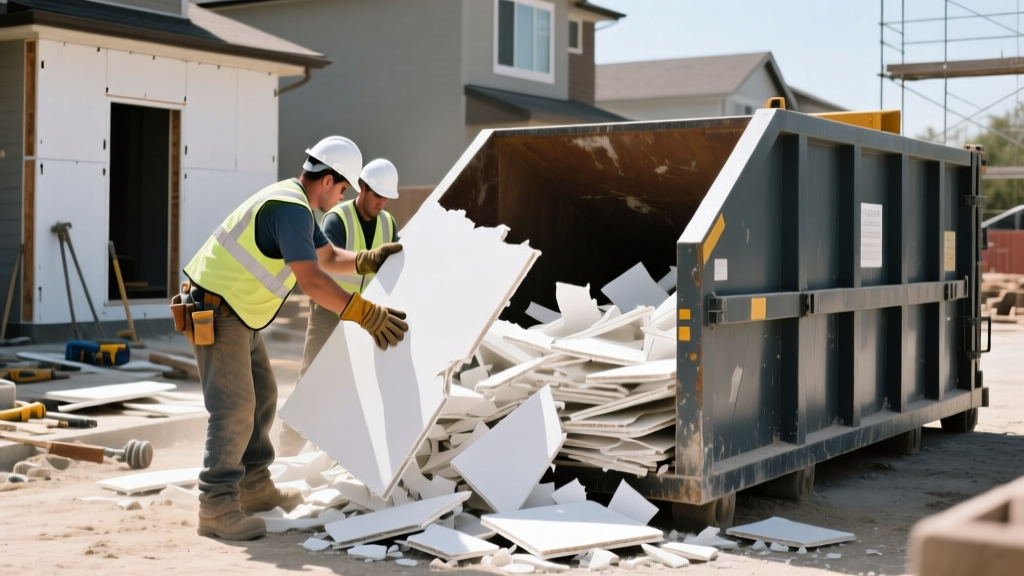
Disposal vs. Recycling: Job Site Cost Matrix
Many contractors assume recycling is more expensive than disposal due to the labor required for source separation. However, when factoring in modern tipping fees and LEED incentives, recycling often yields a net positive ROI. Below is a comparative cost matrix based on 2026 national averages for a mid-sized commercial project generating 10 tons of drywall scrap.
| Metric | MSW Landfill (Where Legal) | C&D Monofill Disposal | Source-Separated Recycling |
|---|---|---|---|
| Tipping Fee (per ton) | $85 - $130 | $65 - $95 | $15 - $45 |
| Labor for Separation | None (Commingled) | None (Commingled) | $120 - $250 (Total) |
| Contamination Risk Fees | N/A | $500+ per rejected load | $250+ if wood/metal mixed |
| LEED v4.1 MRc2 Impact | Negative (Low diversion) | Neutral | High (Counts toward 75% goal) |
| Est. Total Cost (10 Tons) | $850 - $1,300 | $650 - $950 | $270 - $700 |
For projects targeting LEED v4.1 Construction and Demolition Waste Management credits, source-separated gypsum is a high-yield material. Because drywall is heavy and constitutes a massive percentage of the total waste stream by weight, successfully diverting it almost guarantees hitting the 50% or 75% diversion thresholds required for LEED points.
Executing a Source-Separation Strategy
The Gypsum Association emphasizes that the viability of recycled drywall hinges entirely on job-site purity. Recycling facilities will reject loads contaminated with wood framing, metal corner beads, or joint compound buckets. Follow this protocol to ensure acceptance:
- Deploy Dedicated, Covered Receptacles: Gypsum is highly hydrophilic. If drywall scraps get wet from rain or ground moisture, they degrade into a sludge that recycling grinders cannot process. Use covered dumpsters or place roll-offs under temporary tarps.
- Isolate the Cutting Phase: The highest volume of clean scrap is generated during the initial hanging and cutting phase. Position 2-yard to 4-yard dumpsters directly adjacent to the cutting stations on each floor of a commercial build.
- Exclude Fasteners and Tape: Instruct hangers to knock out drywall screws and discard metal waste in separate magnetic bins. While modern grinders use rare-earth magnets to extract stray screws, excessive metal contamination slows processing and triggers penalty fees.
- Schedule Early Pickups: Do not let gypsum dumpsters sit idle for weeks. Schedule hauling immediately after the boarding phase concludes, before other trades begin using the area and accidentally tossing commingled trash into the clean gypsum bin.
Handling Specialty Boards: Type X, Moisture-Resistant, and Glass Mat
Not all gypsum board is treated equally by recyclers. The chemical additives and facers used in specialty boards dictate their end-of-life routing.
Fire-Rated Type X Board
Type X board contains fiberglass strands embedded in the core to delay structural failure during a fire. Most agricultural and cement-kiln recyclers can process Type X without issue, as the fiberglass melts safely at kiln temperatures or passes inertly through soil applications. However, some closed-loop manufacturers (recycling back into new drywall) limit Type X intake to 10% of the total batch to maintain the structural integrity of the new paper-faced gypsum.
Moisture-Resistant (Green/Purple) Board
Boards treated with siloxanes, borates, or wax emulsions to resist moisture (such as USG UltraLight Panels Mold Tough or CertainTeed M2Tech) are frequently rejected by agricultural recyclers. These chemical treatments can alter soil pH or harm crops. Moisture-resistant scraps must be routed exclusively to Portland cement manufacturing plants, where the gypsum acts as a set retarder and the chemical additives are neutralized in the clinker kiln.
Glass Mat Gypsum (e.g., Georgia-Pacific DensGlass)
Glass mat gypsum sheathing uses fiberglass mats instead of paper facers. While excellent for exterior and high-moisture applications, the heavy fiberglass matting complicates standard recycling. Facilities equipped with advanced air-classification and screening technology can separate the mat from the core, but many smaller regional C&D processors will not accept it. Always verify glass mat acceptance with your local hauler before disposal.
End Markets: Where Does Recycled Gypsum Go?
Understanding the downstream market helps contractors appreciate the necessity of source separation. Clean, recycled gypsum scrap is typically ground into a fine powder and sold into three primary markets:
- Agriculture (Soil Amendment): Raw gypsum improves soil structure, reduces compaction, and provides calcium and sulfur to crops like peanuts and tomatoes without altering soil pH.
- Portland Cement Manufacturing: Cement plants add 3% to 5% gypsum to clinker during the final grinding phase to control the setting time of concrete. Recycled gypsum is a direct, cost-effective substitute for mined natural gypsum.
- Closed-Loop Manufacturing: Major manufacturers like USG and National Gypsum operate take-back programs where clean, pre-consumer scrap is calcined and reformed into new drywall cores, significantly reducing the carbon footprint associated with mining virgin rock.
Frequently Asked Questions
Can you burn gypsum board in a wood stove or burn pile?
No. Burning gypsum board releases sulfur dioxide (SO2) and other toxic particulates into the air. Furthermore, the calcination process leaves behind a massive volume of non-combustible ash that will ruin the firebox and chimney flue. It is illegal in most jurisdictions to burn C&D materials containing gypsum.
How do I find a certified gypsum recycling facility near my job site?
Utilize the Construction Materials Recycling Association (CMRA) directory or the EPA’s C&D Material-Specific recovery tools. Additionally, major national waste haulers (like Waste Management or Republic Services) offer specialized 'clean wood and drywall' roll-off programs that automatically route loads to partner grinding facilities, bypassing the landfill entirely.
Written by
David NakamuraDavid Nakamura is a licensed architect (AIA) and construction technology writer focused on sustainable building methods, mass timber engineering, and high-performance building envelopes. He holds a Master of Architecture from the University of Washington and is a certified Passive House Consultant (CPHC). David spent eight years at the Seattle firm Mithun, where he led the design of three LEED Platinum projects, before founding his own practice specializing in net-zero residential design. He serves on the editorial advisory board of GreenBuilder Magazine and has authored peer-reviewed papers on cross-laminated timber (CLT) connections for the Journal of Structural Engineering. In his spare time, David teaches woodworking at Pratt Fine Arts Center and kayaks the Puget Sound.
More from David Nakamura
View all
Construction Cost
Labor Cost to Build a Deck Per Sq Ft: 2026 Installation Guide
Discover the exact labor cost to build a deck per sq ft in 2026. This installation guide breaks down contractor rates, complexity factors, and hidden fees.
Aug 4, 2026

Construction Cost
How Much Does It Cost to Build a 3 Bedroom House? Financing Guide
Learn exactly how much it costs to build a 3 bedroom house and explore 2026 financing options, construction loan types, and budget frameworks for your build.
Aug 4, 2026

Construction Cost
Cost to Build a Tennis Court: 2026 Guide
How much does it cost to build a tennis court in 2026? Breakdowns for asphalt, concrete, and synthetic surfaces plus fencing and lighting.
Jul 30, 2026