How to Repair a Hole in Drywall to Maintain Fire and Acoustic Ratings
Learn how to repair a hole in drywall while preserving Type X fire ratings and STC acoustic specs. Expert protocols for specialty gypsum board.
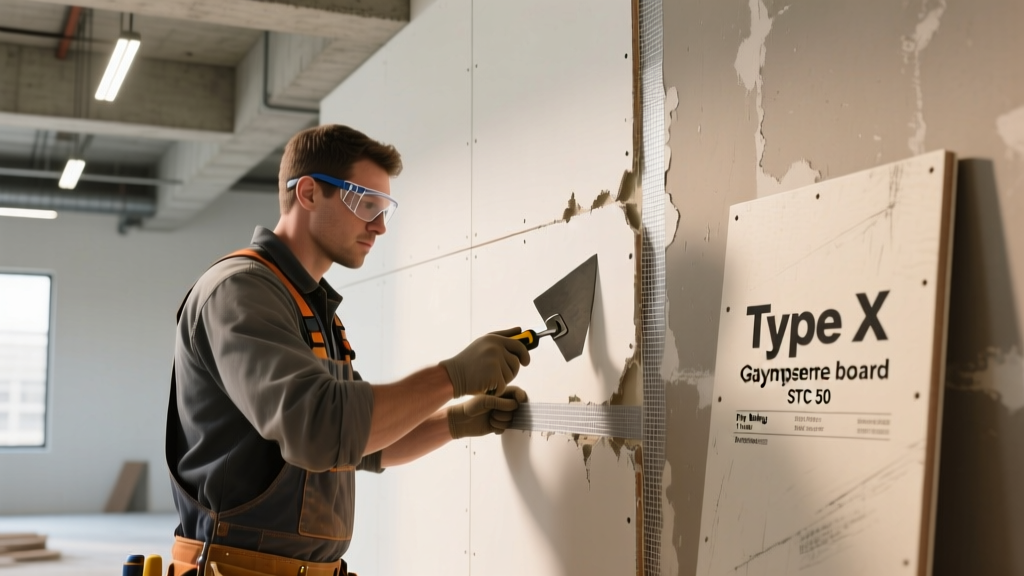
The Hidden Risk: Why Standard Drywall Patching Fails Performance Specs
Most online tutorials treat all gypsum board as identical, recommending generic mesh patches and lightweight spackle for any damage. In commercial construction, multi-family residential, and high-performance custom builds, this approach is a critical liability. When you need to know how to repair a hole in drywall that is part of a rated assembly, a standard patch can void a UL fire-rated wall, compromise moisture barriers, or drop a Sound Transmission Class (STC) rating by 10 or more points.
Gypsum board is not just a visual surface; it is a tested, engineered component of a building's life-safety and environmental control systems. According to the Gypsum Association's fire resistance guidelines, any penetration or repair in a fire-resistance-rated wall assembly must restore the assembly to its original tested condition. Failing to match the core density, thickness, and joint treatment specifications of the original board can result in failed building inspections and catastrophic performance failures during a fire or acoustic test.
Matching Gypsum Board Specifications for Seamless Repairs
Before cutting a patch, you must identify the existing board's performance grade. Check the back of the drywall (if accessible via plumbing cutouts or attic spaces) or review the building's architectural specifications. Below is the specification matrix for matching repair materials to existing performance-rated drywall.
| Drywall Type | Core Specification | Required Patch Material | Joint Compound & Tape |
|---|---|---|---|
| Standard (Regular) | ASTM C1396, 1/2" | Standard 1/2" Gypsum Board | All-purpose or lightweight, paper or mesh tape |
| Type X (Fire-Rated) | ASTM C1396 Type X, 5/8" | 5/8" Type X (e.g., USG Firecode C) | Setting-type (Durabond), paper tape only |
| Moisture-Resistant (MR) | ASTM C1396, Green/Purple face | 5/8" MR or Type X MR board | Setting-type, alkali-resistant fiberglass mesh |
| Glass-Mat Gypsum | ASTM C1177 / C1658 | Glass-mat (e.g., DensGlass, Securock) | Cementitious or specialized setting compound |
Step-by-Step: How to Repair a Hole in Drywall (Type X Fire-Rated)
Repairing a hole in a fire-rated partition requires strict adherence to tested assembly parameters. Floating patches (patches not anchored to framing) are strictly prohibited in fire-rated walls because the gypsum core must remain structurally intact to resist the hose-stream test criteria of ASTM E119.
1. Frame the Opening to the Studs
Do not use adhesive-backed mesh patches for Type X repairs. Cut the damaged drywall back to the center of the adjacent wood or metal studs. If the hole falls between studs, you must install horizontal backing. For metal studs, use 25-gauge steel backing channels; for wood studs, use 2x4 blocking secured with 2.5-inch structural screws.
2. Install the Type X Patch
Cut a 5/8-inch Type X gypsum board patch to fit the opening with a maximum gap of 1/8-inch. Secure the patch to the framing using 1-5/8-inch coarse-thread drywall screws for wood, or 1-1/4-inch fine-thread screws for metal. Space screws a maximum of 8 inches on center along the edges, driving them exactly 1/32-inch below the paper surface without breaking the paper face.
3. Tape and Apply Setting-Type Compound
Fire-rated joints require paper tape, which offers superior tensile strength compared to fiberglass mesh. Embed the paper tape using a setting-type joint compound (e.g., USG DuraBond 45 or Easy Sand 45). Setting compounds cure via a chemical reaction rather than evaporation, creating a denser, harder joint that mimics the structural integrity of the gypsum core. Apply three coats, feathering the final coat 12 inches outward from the joint.
Expert Insight: Never use pre-mixed, air-drying joint compound (like standard All-Purpose) for the taping coat on a fire-rated assembly. Air-drying compounds shrink significantly and lack the shear strength required to hold the joint together under thermal expansion during a fire event.
4. Firestop the Perimeter (If Penetrating)
If the hole was caused by a plumbing or electrical penetration, the repair is incomplete without UL-listed firestop systems. Apply an intumescent firestop sealant (such as 3M Fire Barrier Sealant FD 150+) around the penetrating item. This material expands when exposed to heat, choking off oxygen and preventing smoke migration.
Restoring Acoustic Performance in Sound-Rated Assemblies
When repairing holes in sound-rated walls (e.g., STC 50+ assemblies in multi-family dwellings or home theaters), the primary enemy is flanking noise. Even a 1/16-inch unsealed gap around a drywall patch can reduce the STC rating of the entire wall by up to 15 points.
Acoustic Patching Protocol
- Perimeter Seal: Before installing the patch, apply a heavy bead of acoustical sealant (e.g., OSI SC-175) along the back edge of the existing drywall where the patch will meet.
- Damping Compounds: If the original wall utilized a constrained-layer damping system (like Green Glue between two layers of 5/8" drywall), your patch must replicate this. Cut two pieces of 5/8" standard board, apply Green Glue between them, and secure the composite patch to the studs.
- Mass Loading: For high-STC repairs, finish the joint with acoustic-grade joint compound, which contains higher densities of calcium carbonate to block high-frequency sound transmission through the seam.
Moisture-Resistant (MR) and Glass-Mat Gypsum Repair Protocols
Wet areas and exterior soffits utilize specialized gypsum boards that resist moisture degradation. Standard paper-faced drywall will harbor mold and lose its structural cohesion when exposed to high humidity.
For Moisture-Resistant (MR) board (often green or purple paper), use fiberglass mesh tape and a setting-type compound. The fiberglass mesh will not rot if moisture penetrates the paint layer. For areas behind tile in shower surrounds, you must use glass-mat gypsum board (like Georgia-Pacific DensGlass or USG Securock). Glass-mat boards feature a fiberglass mat facer instead of paper. When patching glass-mat boards, you must use an alkali-resistant fiberglass mesh tape and a Portland cement-based or specialized polymer-modified setting compound to prevent chemical breakdown of the tape over time.
Common Specification Mismatches and How to Avoid Them
Even experienced contractors make specification errors when rushing drywall repairs. Review this troubleshooting matrix to avoid common failure modes:
| Failure Mode | Root Cause | Corrective Action |
|---|---|---|
| Visible seam ridging | Using lightweight compound over setting-type base; uneven drying. | Use setting-type for all coats in high-humidity areas; sand with 150-grit between coats. |
| Fire inspection failure | Patched 1/2" board into a 5/8" Type X assembly. | Remove patch; install 5/8" Type X board with proper screw spacing. |
| Acoustic flanking noise | Hard-coding the patch directly to adjacent drywall without sealant. | Cut out patch, apply acoustical sealant to edges, and reinstall. |
Frequently Asked Questions
Can I use a California patch (butterfly patch) on a fire-rated wall?
No. A California patch relies on the paper face of the drywall for structural support and leaves the core edges unsupported. Fire-rated assemblies require the gypsum core to be fully supported by framing or tested backing materials to resist the hose-stream test. Always cut back to the studs for Type X repairs.
Do I need to prime the drywall patch before painting?
Yes, but the primer specification matters. Joint compound is highly porous compared to the paper face of the drywall. If you apply paint directly, you will get "flashing" (uneven sheen). Use a PVA (Polyvinyl Acetate) drywall primer-sealer specifically designed to equalize the porosity between the gypsum paper and the joint compound before applying your topcoat.
What is the maximum hole size I can repair without replacing the entire sheet?
From a structural and code-compliance perspective, there is no maximum size limit as long as the patch is properly framed to the studs, the correct thickness and type of gypsum board are used, and the joints are taped and finished according to GA-216 (Application and Finishing of Gypsum Panel Products). However, for acoustic and high-end finish work, replacing the entire sheet from corner to corner eliminates the risk of visible seams under critical lighting conditions.