US Gypsum Board vs Alternatives: 2026 Material Guide
Compare US gypsum board against National Gypsum, Georgia-Pacific, and cement alternatives. Get 2026 specs, costs, and failure mode insights.
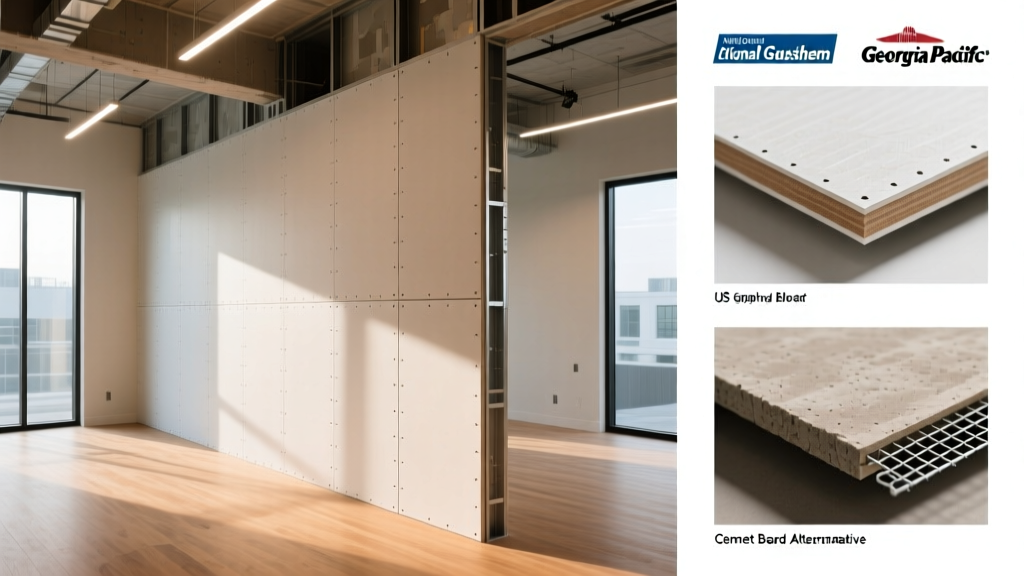
The USG Ecosystem: Beyond Standard Sheetrock
When architects and contractors specify a US gypsum board, they are usually referring to products manufactured by the United States Gypsum Company (USG), the originator of the Sheetrock brand. However, treating all USG products as monolithic is a critical estimating error. In 2026, USG’s portfolio is highly segmented by core density, facing material, and edge profile, each designed to solve specific structural or environmental challenges.
The most significant shift in the US gypsum board market over the last decade is the dominance of lightweight formulations. USG’s Sheetrock UltraLight Panels utilize a patented calcined gypsum core that reduces the weight of a standard 1/2-inch, 4x8-foot panel from roughly 58 pounds to 41 pounds. This 30% weight reduction decreases installer fatigue and lowers shipping fuel surcharges, but it also changes the acoustic mass of the partition. For high-STC (Sound Transmission Class) walls, the mass deficit of UltraLight must be compensated with additional mineral wool insulation or resilient channel decoupling.
Brand vs. Brand: USG vs. National Gypsum and Georgia-Pacific
Selecting between USG, National Gypsum (Gold Bond), and Georgia-Pacific (GP) requires looking past the marketing and examining the fiberglass mesh reinforcement and starch binders used in the cores. While all major manufacturers meet baseline ASTM standards, their edge-case performance varies significantly in high-humidity or high-vibration environments.
| Feature | USG (Sheetrock Mold Tough) | National Gypsum (Gold Bond XP) | Georgia-Pacific (DensArmor Plus) |
|---|---|---|---|
| Facing Material | Green-tinted recycled paper | Treated paper (purple tint) | Fiberglass mat (inorganic) |
| Mold Resistance | ASTM D3273 (Score 10) | ASTM D3273 (Score 10) | ASTM D3273 (Score 10) |
| Sag Resistance (Ceilings) | Excellent (UltraLight 1/2") | Superior (Hi-Abuse XP 5/8") | Excellent (Inorganic core) |
| Best Application | Standard residential damp areas | Commercial corridors & stairwells | Exterior soffits & pre-dry-in |
| 2026 Avg. Material Cost | $0.55 - $0.65 / sq. ft. | $0.58 - $0.68 / sq. ft. | $0.85 - $1.05 / sq. ft. |
The Edge Case: If your project involves exposing the ceiling to framing moisture before the HVAC system is fully commissioned (common in fast-track 2026 commercial builds), GP’s DensArmor Plus is the superior choice. Because it uses a fiberglass mat instead of paper facing, it will not support mold growth even if the core absorbs ambient moisture. USG’s paper-faced Mold Tough, while highly resistant, will still harbor surface mold if left in a 90% humidity environment for weeks without joint compound sealing.
Material vs. Material: When to Abandon Gypsum Altogether
While a standard US gypsum board is the undisputed king of interior partitions, it fails catastrophically in specific environments. Understanding when to pivot to glass-mat, cementitious, or magnesium oxide (MgO) alternatives is the hallmark of expert detailing.
USG Securock (Glass-Mat) vs. Cement Board
USG Securock and National Gypsum’s PermaBase are cementitious boards reinforced with polymer-modified cores and fiberglass mesh. They are mandatory for commercial tile surrounds and exterior sheathing. However, for interior residential showers, many contractors mistakenly use USG Durock (a traditional Portland cement board). Durock weighs nearly 2.5 lbs per square foot and requires heavy-duty framing. In 2026, the industry standard for residential wet areas has shifted toward foam-core waterproofing boards (like Schluter Kerdi-Board) or lightweight glass-mat gypsum (like USG Fiberock Aqua-Tough), which weigh 70% less and do not require a separate liquid waterproofing membrane if taped correctly.
Magnesium Oxide (MgO) boards are heavily marketed as fireproof and waterproof alternatives to US gypsum board. However, low-grade MgO boards imported from overseas often contain unreacted magnesium chloride salts. In high-humidity environments, these salts undergo deliquescence, weeping a corrosive brine that rusts drywall screws, destroys steel studs, and stains paint. Always demand third-party lab certification for chloride content if specifying MgO over traditional USG Firecode C.
2026 Installed Cost Breakdown: USG vs. The Field
Material costs only tell half the story. The true metric for general contractors is the installed cost, which factors in hanging, taping, mudding, and sanding labor. USG’s UltraLight panels have fundamentally altered the labor equation by allowing a single hanger to carry and position 12-foot sheets without mechanical lifts, reducing hanging labor by up to 15%.
| Material Type | Material Cost (per sq. ft.) | Installed Cost (Level 4 Finish) | Primary Cost Driver |
|---|---|---|---|
| USG Sheetrock UltraLight (1/2") | $0.45 - $0.52 | $2.10 - $2.65 | Standard labor rates |
| USG Firecode C (1/2") | $0.65 - $0.75 | $2.40 - $2.95 | Fire-stop caulking & inspections |
| GP DensArmor Plus (1/2") | $0.85 - $1.05 | $2.80 - $3.40 | Specialty fiberglass tape required |
| USG Durock Cement Board (1/2") | $1.10 - $1.30 | $4.50 - $5.50 | Thinset mortar & carbide scoring |
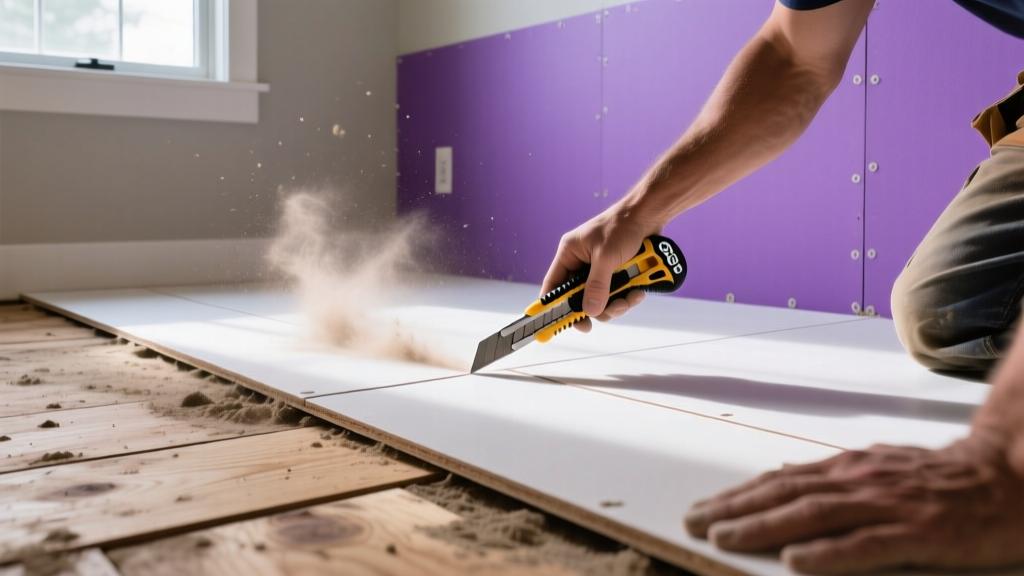
Decision Framework: Which Board Wins Your Project?
Stop defaulting to standard white board for every application. Use this field-tested decision matrix to specify the exact USG or alternative product required for your specific environmental and structural loads.
- Standard Residential Walls & Ceilings: Use USG Sheetrock UltraLight (1/2"). The weight savings reduce ceiling sag, and the tapered edges yield a flawless Level 4 finish with standard Sheetrock Brand Joint Compound.
- Commercial Corridor Fire Walls (1-Hour Rating): Use USG Firecode C (1/2"). You save 1/8-inch of thickness per side compared to 5/8-inch Type X, maximizing leasable square footage while passing ASTM E119 hose-stream tests.
- Pre-Dry-In Exterior Sheathing: Use Georgia-Pacific DensGlass or USG Securock. Standard paper-faced US gypsum board will delaminate if exposed to rain before the weather barrier is installed.
- High-Abuse Hospital & School Hallways: Use National Gypsum Gold Bond Hi-Abuse XP (5/8"). The denser core and heavy-duty face paper resist impact from gurneys and carts better than standard USG Sheetrock, reducing long-term maintenance patching.
Frequently Asked Technical Questions
Can I mix USG Sheetrock and GP ToughRock on the same job?
Yes, both meet ASTM C1396 and will accept standard joint compound. However, do not mix their specialized tapes. USG recommends their paper tape for paper-faced boards, while GP’s fiberglass-mat boards require alkali-resistant fiberglass mesh tape to prevent chemical degradation of the joint.
Why is my USG Green Board failing in a shower?
Written by
James ThorntonJames Thornton is a construction industry veteran with 25 years of hands-on experience in wood framing, lumber grading, and residential building codes. He started as a framing carpenter in rural Oregon, earned his ICC Residential Building Inspector certification, and eventually became a senior plan reviewer for the City of Portland Bureau of Development Services. James holds a B.S. in Wood Science & Technology from Oregon State University and is a certified lumber grader through the West Coast Lumber Inspection Bureau (WCLIB). He has inspected over 3,000 residential construction sites and authored the city's internal guide on advanced framing techniques (2x6 at 24" O.C.). James lives in Bend, OR, where he builds custom timber-frame cabins and competes in lumberjack sports.
More from James Thornton
View all
Insulation
Best Home Insulation Materials: Complete 2026 Guide
Compare top home insulation materials for 2026. Find R-values, installed costs per square foot, and best uses for fiberglass, spray foam, and mineral wool.
Aug 4, 2026

Sustainable Building
Certify Your Green Building Material for LEED and WELL
Step-by-step guide to certifying a green building material for LEED v5 and WELL v2. Master EPDs, HPDs, and VOC limits for 2026 project specifications.
Aug 4, 2026

Stone & Masonry
Veneer Stacked Stone Panels: Interior Design & Style Showcase
Discover how veneer stacked stone panels transform interiors. Explore modern design profiles, material pairings, and technical installation specs.
Aug 4, 2026