Venetian Plaster on Gypsum Board: Lifespan, Durability, and Failure Analysis
Analyze the lifespan and durability of venetian plaster applied over gypsum board. Discover failure modes, prep specs, and maintenance costs.
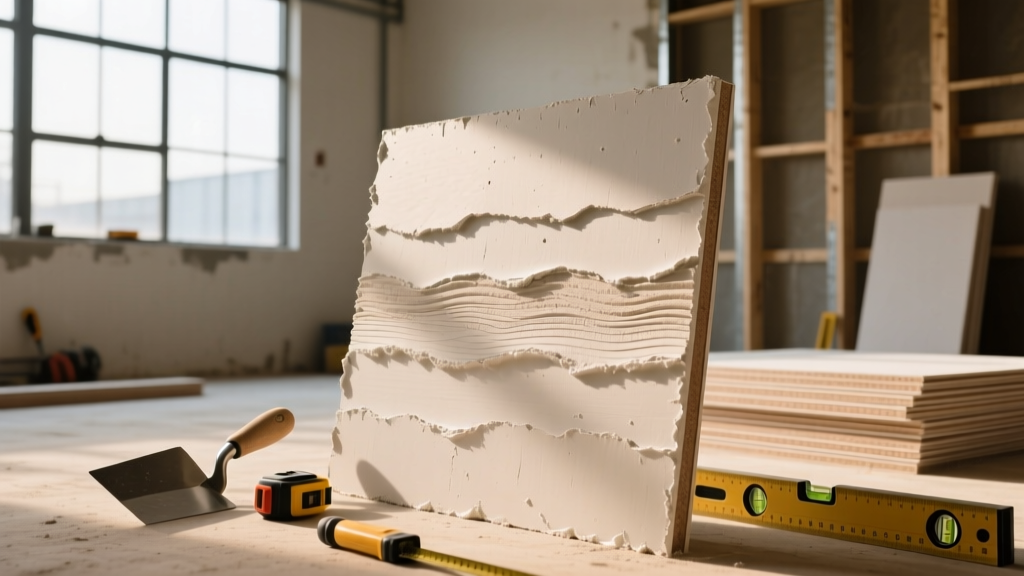
The Substrate Paradox: Lime Plaster vs. Paper-Faced Drywall
Venetian plaster—traditionally a mixture of slaked lime (calcium hydroxide) and marble dust—was engineered for rigid, mineral-based substrates like masonry, brick, or wood lath. Applying this ancient finish over modern paper-faced gypsum board introduces a complex chemical and structural paradox that directly dictates its lifespan. While a properly executed Venetian plaster application can easily last 50 to 100 years, applying it over drywall without rigorous, specialized preparation reduces that lifespan to less than a decade due to delamination, alkali degradation, and joint telegraphing.
The core challenge lies in the chemistry. Lime-based Venetian plaster is highly alkaline, with a pH ranging from 12 to 13. The facing paper on standard gypsum board and the organic binders in standard air-drying joint compounds are highly susceptible to alkali degradation. If the plaster is applied directly, or over an inadequate primer, the alkaline moisture breaks down the paper fibers, leading to catastrophic delamination. Furthermore, gypsum board is a dynamic substrate that expands and contracts with ambient humidity, while cured lime plaster is entirely rigid. Understanding how to bridge these material incompatibilities is the difference between a lifetime finish and a costly failure.
Expected Lifespan and Durability Matrix
The longevity of Venetian plaster on a gypsum substrate is not a single number; it is heavily dependent on the environmental conditions and the specific plaster formulation used. Below is a durability matrix based on current 2026 industry performance data for interior applications.
| Environment Type | Plaster Formulation | Expected Lifespan | Primary Degradation Threat |
|---|---|---|---|
| Climate-Controlled Residential | Traditional Lime (Marmorino) | 50+ Years | Impact damage; structural settling cracks |
| Commercial High-Traffic | Acrylic-Modified Venetian | 15 - 25 Years | Surface abrasion; scuffing; wax degradation |
| High-Humidity (Spas/Bathrooms) | Lime with Beeswax/Soap Seal | 10 - 20 Years | Moisture intrusion behind substrate; efflorescence |
| Unconditioned Spaces | Any Formulation | Under 5 Years | Gypsum board warping; paper delamination |
Critical Failure Modes on Gypsum Substrates
When Venetian plaster fails on drywall, it is almost never the plaster itself that degrades; it is the substrate or the bond line that fails. Recognizing these specific edge cases is critical for architects and contractors.
1. The Alkali-Paper Delamination Trap
As noted, the high pH of slaked lime attacks the cellulose in drywall facing paper. If a contractor uses a standard PVA drywall primer instead of a specialized, alkali-resistant quartz-acrylic primer, the moisture from the plaster will reactivate the PVA and the alkalinity will dissolve the paper bond. The result is a hollow-sounding wall that eventually peels away in large sheets. Solution: Always specify a quartz-filled, alkali-blocking primer (such as Marmorino Quartz Primer or an equivalent silicate-based sealer) that creates a mechanical, chemical barrier between the gypsum paper and the lime.
2. Joint Telegraphing and Micro-Cracking
Gypsum board joints are the weakest link in any plaster system. Standard air-drying joint compound shrinks as it cures and remains slightly flexible. When rigid Venetian plaster is applied over it, the differential movement causes 'telegraphing'—where the joint lines become visible through the polished finish—or micro-cracking. According to guidelines published by the Gypsum Association, achieving a true Level 5 finish is mandatory. However, for plaster, contractors must upgrade to setting-type compounds (e.g., USG Durabond 90) embedded with alkali-resistant fiberglass mesh tape to create a monolithic, non-shrinking substrate.
3. Moisture Warping and Fastener Popping
Venetian plaster application introduces a massive amount of moisture into the room. A standard 1/2-inch gypsum board can absorb this ambient humidity, causing the panels to bow or 'crown' between framing members. As the board dries and flattens, the plaster cracks. Furthermore, if the drywall was hung with standard screws rather than ring-shank nails or specialized plaster screws, the moisture can cause fastener popping, creating localized blowouts in the plaster finish.
Never apply Venetian plaster if the gypsum board substrate has a moisture content exceeding 1%. Use a pinless moisture meter to verify. Applying lime plaster over damp drywall traps moisture, leading to black mold proliferation behind the plaster and eventual structural degradation of the gypsum core.
Blueprint for a 50-Year Substrate Preparation
To maximize the lifespan of Venetian plaster on drywall, the substrate preparation must exceed standard commercial painting specifications. The Level 5 drywall finish standards provide a baseline, but plaster applications require the following enhanced protocol:
- Framing and Hanging: Frame walls at 16 inches on center (maximum) using 5/8-inch Type X gypsum board for superior rigidity and sag resistance. Secure panels with screws spaced no more than 8 inches apart on seams.
- Taping and Bedding: Use alkali-resistant fiberglass mesh tape. Embed the tape using a setting-type joint compound (e.g., 45 or 90-minute set). Do not use paper tape, which can rot under the alkaline moisture of the plaster.
- Skim Coating: Apply a full, unbroken skim coat of setting-type compound or a specialized veneer plaster base (like USG Tuff-Hide) over the entire surface. This eliminates the varying porosity between the drywall paper and the joint compound.
- Priming: Apply two coats of a high-solids, quartz-aggregate acrylic primer. The quartz sand provides the necessary mechanical 'tooth' for the first coat of Venetian plaster to grip, while the acrylic resin blocks alkali migration.
Acrylic vs. Lime-Based: A Durability Trade-off
Modern material science has introduced acrylic-modified Venetian plasters. While purists argue these are not true Venetian plasters, they offer distinct durability advantages when applied over gypsum board in challenging environments.
'Acrylic plasters cure through evaporation and coalescence, making them inherently flexible. When applied over drywall in a home with seasonal humidity swings, acrylic formulations will absorb the micro-movements of the gypsum joints without cracking, whereas pure lime will fracture.' — Architectural Finishes Technical Review
However, acrylics lack the depth of light refraction, the natural mold-resistance (due to high pH), and the carbonation hardness of true lime. For high-end residential living spaces where longevity and authenticity are paramount, lime is superior provided the substrate prep is flawless. For commercial lobbies or high-humidity zones where joint movement is guaranteed, acrylic-modified plasters offer a more forgiving, durable lifespan.
Lifecycle Maintenance and Repair Realities
Unlike paint, which requires a full recoat every 7 to 10 years, Venetian plaster is a lifecycle finish. However, it is not maintenance-free. The historical preservation guidelines for plaster emphasize that the finish is only as durable as its protective seal.
- Wax Reapplication: If the plaster is sealed with natural beeswax or carnauba wax to achieve a high polish, the wax will oxidize and wear away in high-touch areas within 3 to 5 years. Re-waxing requires specialized buffing and costs approximately $3.00 to $5.00 per square foot.
- Patching Limitations: The greatest durability flaw of Venetian plaster on drywall is repairability. If the gypsum board suffers impact damage, the plaster cannot be simply patched. The rigid, multi-layered finish requires a master plasterer to feather in new material, and achieving an invisible color and texture match on a polished lime wall is nearly impossible without re-burnishing the entire wall plane.
- Penetrating Sealers: For a lower-maintenance alternative to wax, modern silicate-based penetrating sealers (such as lithium silicate densifiers) can be used. These do not require reapplication and maintain the matte, natural stone look of the plaster, extending the maintenance-free lifespan to 20+ years.
Expert FAQ: Troubleshooting Plaster on Drywall
Can I apply Venetian plaster directly over existing painted drywall?
Technically yes, but it severely compromises the lifespan. Painted drywall lacks the mechanical tooth required for lime adhesion. You must heavily scuff-sand the paint, apply a quartz-bridge primer, and accept that any underlying drywall joint movement will likely crack the plaster. For a guaranteed lifespan, stripping to the bare paper or installing a new 1/4-inch plaster base board over the existing wall is highly recommended.
Does the cost of substrate prep outweigh the cost of the plaster?
In professional applications, yes. The material and labor cost to bring a standard Level 4 drywall finish up to a plaster-ready, reinforced Level 5 substrate typically ranges from $2.50 to $4.50 per square foot. Given that the Venetian plaster application itself costs $10.00 to $25.00+ per square foot, spending 20% of the total budget on substrate prep is the only way to protect the investment and ensure a multi-decade lifespan.