Standing Seam Metal Roofing: Top Brand Lines for 2026
Compare top standing seam metal roofing brands for 2026. Deep dive into MBCI, Petersen, and Berridge profiles, costs, and specs.
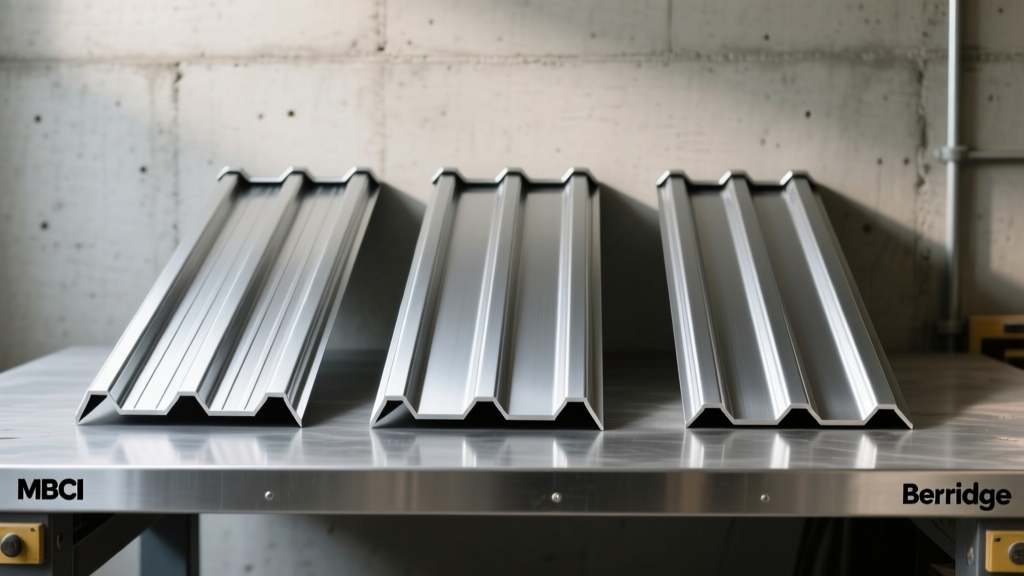
The Engineering Behind Standing Seam Metal Roofing
Standing seam metal roofing represents the pinnacle of steel envelope performance, utilizing concealed fastener systems and raised seams to eliminate the primary failure points of exposed-fastener corrugated panels. For architects and contractors specifying commercial, institutional, or high-end residential projects in 2026, the market is dominated by a few key manufacturers whose proprietary roll-forming dies and clip systems dictate long-term weathertightness. Selecting the right brand line requires understanding the critical distinction between architectural snap-lock profiles and structural mechanical-lock systems.
Mechanical Lock vs. Snap-Lock: Choosing the Right Profile
Before evaluating specific brands, it is imperative to match the seam profile to the roof's slope and structural demands. The Metal Construction Association (MCA) categorizes these systems into two distinct tiers:
- Architectural Snap-Lock: Panels feature interlocking male and female legs that snap together during installation. These are strictly for steep-slope applications (minimum 3:12 pitch) and rely on the substrate for structural support. They install faster but cannot withstand extreme negative wind uplift without specialized high clips.
- Structural Mechanical Lock: Panels are seamed together in the field using a robotic mechanical seamer that folds the metal 90 or 180 degrees. These systems can be installed on low-slope roofs (down to 1/4:12 pitch), span open framing without a solid deck, and offer superior resistance to hydrostatic pressure and wind uplift.
Brand Deep-Dive: The Industry Leaders
MBCI: The Commercial Workhorse
MBCI (Metal Building Components, Inc.) remains the volume leader in the North American market, prized for its vast network of regional manufacturing plants that reduce freight costs and lead times. Their flagship structural panel, Double-Lok, is a 2-inch mechanical lock system available in 24-gauge and 22-gauge Galvalume. For architectural applications, their Ultra-Dek snap-lock panel (1.75-inch seam height) is an industry standard. MBCI's proprietary sliding clip design accommodates up to 1.5 inches of thermal movement, making it highly reliable for long-run commercial roofs exceeding 60 feet in length.
Petersen Aluminum Corp: The Architectural Standard
Petersen is the go-to specification for high-end architectural projects where aesthetic perfection and finish longevity are paramount. While they offer steel, Petersen is most famous for its .032 and .040 aluminum Tite-Loc and High Tite-Loc mechanical seam panels. Their partnership with Valspar ensures access to premium Fluropon PVDF (polyvinylidene fluoride) coatings, which resist UV fading and chalk far better than standard SMP (silicone modified polyester) paints. Petersen's Tite-Loc profile features a continuous 180-degree mechanical seam that provides exceptional capillary break protection in wind-driven rain events.
Berridge: The Custom Fabrication Specialist
Berridge Manufacturing distinguishes itself through its mobile roll-forming capabilities and highly customizable panel widths. Their Tee Panel (mechanical lock) and Cee-Lock (snap-lock) systems are frequently specified for complex geometries, curved roofs, and historical restorations. Berridge allows contractors to specify custom panel widths (from 12 to 18 inches) to align perfectly with architectural mullions and façade elements, reducing material waste. Their panels are roll-formed from prime 24-gauge steel coil with a G-90 galvanized substrate option, which is critical for coastal environments where salt spray accelerates Galvalume degradation.
2026 Brand Comparison Matrix
| Brand | Flagship Mechanical Line | Flagship Snap-Lock Line | Min Slope (Mech) | Best Application |
|---|---|---|---|---|
| MBCI | Double-Lok (2") | Ultra-Dek (1.75") | 1/4:12 | Large commercial, pre-engineered metal buildings |
| Petersen | Tite-Loc (1.5") | PAC-150 (1.5") | 1/2:12 | High-end architectural, civic, educational |
| Berridge | Tee Panel (1.5" / 2") | Cee-Lock (1.75") | 1/2:12 | Complex geometries, curved roofs, custom widths |
Cost Analysis & Material Pricing for 2026
Steel coil stabilization over the past 18 months has brought standing seam metal roofing costs to a predictable baseline for 2026 budgeting. When specifying 24-gauge Galvalume with a standard 70% PVDF (Kynar 500) paint system, expect the following breakdown:
- Formed Panel Materials: $3.80 to $5.50 per square foot (depending on rib striations and custom colors).
- Trim, Flashings, and Clips: $1.50 to $2.50 per square foot.
- Labor and Equipment (including robotic seaming): $6.00 to $10.00 per square foot.
- Total Installed Cost: $12.50 to $19.50 per square foot for standard commercial applications.
Avoiding the Big Three Failure Modes
Even the highest-tier MBCI or Petersen panels will fail if installation physics are ignored. According to the Metal Roofing Alliance Resource Library, warranty claims predominantly stem from three installation errors:
1. Oil Canning (Visual Stress Ripples)
Oil canning is the visible waviness in the flat areas of the panel. It is not a structural defect, but it ruins architectural aesthetics. It is caused by residual coil memory, thermal expansion, or uneven substrates. The Fix: Always specify panels with minor ribs or striations rolled into the flat pan; this masks minor deviations. Ensure the roof deck or purlin tolerance does not exceed 1/8 inch deviation over a 10-foot span, and use a high-quality synthetic slip sheet between the metal and the underlayment to reduce friction-induced binding.
2. Thermal Binding and Clip Failure
Steel expands and contracts at a rate of approximately 1 inch per 100 feet of panel length for every 100°F temperature change. If an installer pins a panel at both the eave and the ridge using fixed fasteners, the panel will buckle or tear the fasteners out of the deck. The Fix: Mandate the use of factory-engineered sliding/sliding-expansion clips for any panel run exceeding 40 feet. The panel must be "pinned" at only one point (usually the eave), allowing the rest of the roof to float and slide over the clips during thermal cycling.
3. Capillary Action at Sidelaps
On low-slope roofs (below 2:12), water can be drawn upward between the panel seams via capillary action during wind-driven rain. The Fix: For slopes between 1/4:12 and 2:12, specify a 180-degree mechanical double-lock seam rather than a 90-degree single lock. Additionally, require the manufacturer to apply a continuous bead of factory-applied mastic sealant inside the female leg of the panel prior to shipping. Field-applied caulking is insufficient and often cures improperly in cold weather.
Substrate and Underlayment Specifications
The longevity of a standing seam roof is inextricably linked to what lies beneath it. For commercial applications over open steel framing, a 22-gauge or 20-gauge steel roof deck (Type B or F) is standard. For residential or architectural projects, 5/8-inch CDX plywood or OSB is preferred.
Never use traditional asphalt felt (tar paper) beneath standing seam metal. Asphalt felt traps moisture against the back of the Galvalume coating, accelerating zinc oxidation and voiding the manufacturer's substrate warranty. Instead, specify a high-temperature, self-adhering synthetic underlayment or a breathable, non-bitumen synthetic membrane rated for the high surface temperatures (which can exceed 160°F on dark-colored roofs in summer).
Final Specification Checklist
Before finalizing your 2026 project specifications, verify the following parameters with your chosen manufacturer:
- Substrate Compatibility: Confirm the clip fastener pull-out strength matches your specific deck thickness and material (steel vs. wood).
- Wind Uplift Rating: Ensure the specific panel-and-clip assembly holds a UL 580 Class 90 or ASTM E1592 rating required by local building codes.
- Coating Warranty: Demand a 30-year non-prorated warranty on the PVDF finish, specifically covering chalking (Hunter delta E < 5) and fading.
- Weathertightness Warranty: For commercial projects, secure a 20-year single-source weathertightness warranty that covers both materials and labor for leak repair.