Galvanized Steel Stud Framing: Grades, Gauges, and Coatings
Master galvanized steel stud framing with our guide to ASTM grades, G60 vs G90 zinc coatings, gauge thicknesses, and 2026 material pricing.
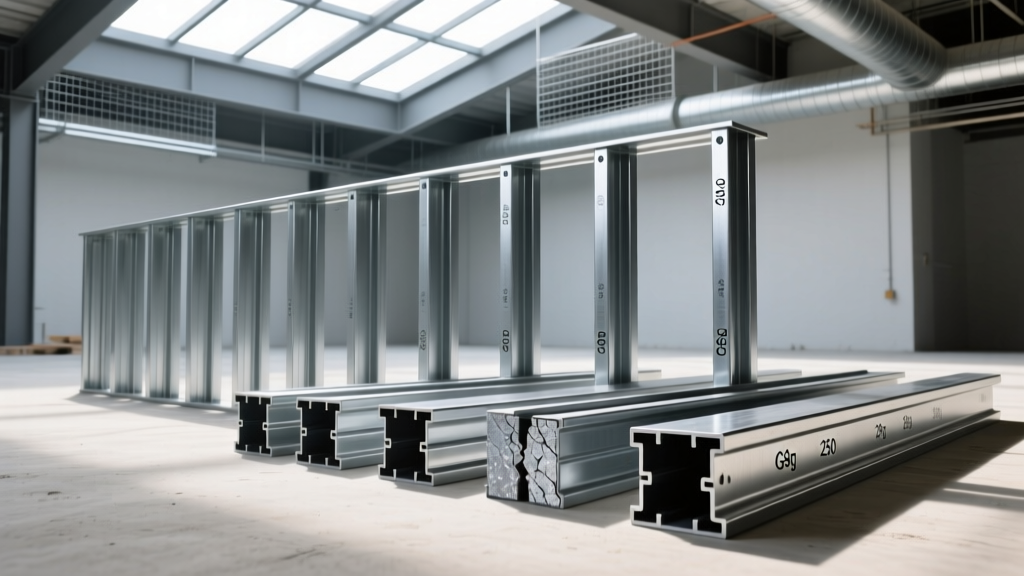
Decoding the Zinc Armor: Why Coating Class Matters
The longevity and structural integrity of galvanized steel stud framing rely entirely on the sacrificial zinc coating applied to the base cold-formed steel (CFS). Governed by the ASTM A653 standard, this hot-dip galvanization process is measured in ounces of zinc per square foot of total surface area (both sides combined). Selecting the correct coating class is not merely a code compliance exercise; it dictates the framing's lifespan in varying humidity and environmental conditions.
For standard interior, non-load-bearing partition walls in climate-controlled environments, a G60 coating (0.60 oz/sq ft total, or 0.30 oz per side) is the industry baseline. However, when framing exterior shear walls, elevator shafts, or plumbing chases where condensation is a persistent threat, specifying a G90 coating (0.90 oz/sq ft total) is mandatory. The additional zinc mass provides a thicker physical barrier and extends the sacrificial anode protection, preventing the underlying steel from oxidizing and compromising the structural connection points over time.
Structural vs. Non-Structural: Yield Strength and Steel Grades
Beneath the zinc layer lies the base steel, which is categorized by its minimum yield strength. The Steel Framing Industry Association (SFIA) strictly delineates between non-structural and load-bearing framing grades, governed by ASTM C645 and ASTM C955, respectively.
- Grade 33 (33 ksi Yield Strength): The standard for non-structural interior partitions, furring channels, and ceiling grids. This steel is highly ductile, making it easier to cut, dimple, and manipulate on-site without cracking the zinc coating.
- Grade 50 (50 ksi Yield Strength): Required for load-bearing walls, floor joists, and roof trusses. This higher-strength steel often incorporates micro-alloys like vanadium or niobium to achieve the increased yield point without adding excessive thickness.
- Grade 50 High-Strength (50 ksi with enhanced tensile properties): Used in specialized seismic or high-wind shear wall assemblies where the connection nodes experience extreme localized stress.
Using Grade 33 steel in a load-bearing application is a catastrophic code violation that can lead to progressive deflection and structural failure. Conversely, using Grade 50 for simple interior partitions is an unnecessary expense that makes the framing unnecessarily rigid and harder for drywall finishers to work with.
The 'Mil' Trap: Gauge Thickness vs. Design Thickness
One of the most common procurement errors in CFS framing is relying solely on the 'gauge' number. Historically, gauge referred to a standardized thickness, but modern manufacturing tolerances have rendered the term ambiguous. Today, structural engineers and the International Building Code (IBC) require specifications in mils (1/1000th of an inch) or design thickness.
| Nominal Gauge | Minimum Mil Thickness | Design Thickness (in) | Primary Application |
|---|---|---|---|
| 25 Gauge | 27 mil | 0.0269 | Non-structural partitions, furring |
| 20 Gauge | 33 mil | 0.0329 | Standard interior walls, light ceilings |
| 18 Gauge | 43 mil | 0.0428 | Load-bearing walls, exterior sheathing |
| 16 Gauge | 54 mil | 0.0538 | Heavy structural, shear walls, floor joists |
Always specify the minimum mil thickness on your purchase orders. A '20-gauge' stud from an uncertified importer might measure only 24 mil, which will fail structural pull-out tests for drywall screws and shear connections.
Real-World Failure Mode: The Screw Spin-Out
When installing 16-gauge (54 mil) structural framing, contractors frequently encounter 'spin-out.' This occurs when a standard #8 self-drilling screw's drill point dulls against the dense Grade 50 steel and thick G90 zinc layer before the threads can tap into the metal. The screw spins freely, stripping the hole and creating a zero-capacity connection.
The Fix: For 43-mil and 54-mil steel, abandon standard #8 bugle-head screws. Specify #10 or #12 self-drilling screws with a #3 or #4 drill point (such as the Buildex Tapcon or equivalent structural CFS fasteners). The larger drill point clears the zinc and base steel, allowing the deeper threads to engage fully without torque-out.

2026 Material Cost Breakdown
Pricing for galvanized steel stud framing fluctuates with global zinc and hot-rolled coil markets. As of early 2026, contractors should budget the following baseline material costs (excluding track, accessories, and labor):
- 25-Ga (27 mil) G60 Non-Structural: $1.15 - $1.35 / LF
- 20-Ga (33 mil) G60 Non-Structural: $1.45 - $1.70 / LF
- 18-Ga (43 mil) G90 Structural (Gr 50): $2.40 - $2.85 / LF
- 16-Ga (54 mil) G90 Structural (Gr 50): $3.10 - $3.65 / LF
Environmental and Code Considerations
The IBC mandates specific corrosion protection levels based on the building's environmental classification. In coastal zones (within 1,500 feet of the shoreline) or high-humidity environments like indoor aquatic centers, standard G90 galvanized framing may still degrade prematurely. In these scenarios, architects must specify G185 coatings or switch to specialized aluminum-zinc alloy coatings (like Galvalume) combined with a powder-coated finish.
Furthermore, cutting galvanized studs on-site with abrasive chop saws vaporizes the zinc and leaves a raw, unprotected steel edge that will immediately begin to rust. Always use cold-cutting methods like aviation snips, electric shears, or specialized carbide-tipped CFS blades. If thermal cutting or heavy grinding is unavoidable, the exposed edges must be immediately treated with a high-zinc-dust cold galvanizing compound (minimum 93% zinc dust by weight in the dry film) to restore the sacrificial anode protection.
Frequently Asked Questions
Can I mix G60 and G90 galvanized studs in the same wall assembly?
Technically, yes, but it is highly discouraged. If G60 and G90 studs are in direct physical contact in the presence of an electrolyte (like condensation), galvanic corrosion can occur where the lighter G60 coating sacrifices itself at an accelerated rate to protect the G90 steel. Keep coating classes uniform within any single structural or moisture-exposed assembly.
Does the zinc coating affect the fire rating of the wall assembly?
No. The fire rating of a CFS wall assembly is determined by the type, thickness, and number of gypsum board layers (e.g., Type X or Type C) and the insulation used, as tested under ASTM E119. The microscopic zinc coating vaporizes at high temperatures but does not contribute to flame spread or compromise the gypsum's calcination process.
What is the SFIA certification, and why should I require it?
The Steel Framing Industry Association (SFIA) runs a rigorous third-party certification program. SFIA-certified manufacturers are audited to ensure their CFS products meet the exact minimum mil thickness, yield strength, and zinc coating weights claimed on their labels. Specifying 'SFIA Certified' on your project documents eliminates the risk of receiving sub-standard, under-gauged imported steel that could fail structural inspections.
Written by
Elena RodriguezElena Rodriguez is a civil engineer and technical writer specializing in concrete technology, masonry systems, and ASTM/ACI compliance. She earned her B.S. in Civil Engineering from Texas A&M University and spent a decade at a materials testing laboratory, performing over 2,000 concrete compressive strength tests and masonry prism evaluations. Elena is an ACI-certified Field Testing Technician (Grade I) and a member of ASTM Committee C12 on Natural Building Stone. She currently consults on forensic engineering cases involving concrete failures and moisture intrusion. Based in San Antonio, TX, Elena is a proud member of the Society of Women Engineers (SWE) and coaches her daughter's FIRST Robotics team.
More from Elena Rodriguez
View all
Walls & Panels
Cost Analysis: Light Gauge Steel Framing Advantages and Disadvantages
Evaluate light gauge steel framing advantages and disadvantages through a strict cost analysis lens, comparing material, labor, and lifecycle expenses.
Aug 4, 2026

Walls & Panels
Gypsum Board Types: Exact Specifications, Thickness & Dimensions
Compare standard, Type X, and moisture-resistant gypsum board types. Get exact specifications, thicknesses, dimensions, and ASTM standards for your project.
Aug 4, 2026

Fire Resistance
Best Fire-Resistant Outdoor Decking Materials: 2026 Buyer Guide
Discover the best fire-resistant outdoor decking materials for 2026. Compare Class A PVC, aluminum, and hardwood options for WUI compliance and safety.
Aug 4, 2026