Galvalume Metal Roof Lifespan: Durability and Failure Analysis
Analyze the true lifespan of a galvalume metal roof. Explore AZ55 coating durability, edge creep, fastener corrosion, and environmental failure modes.
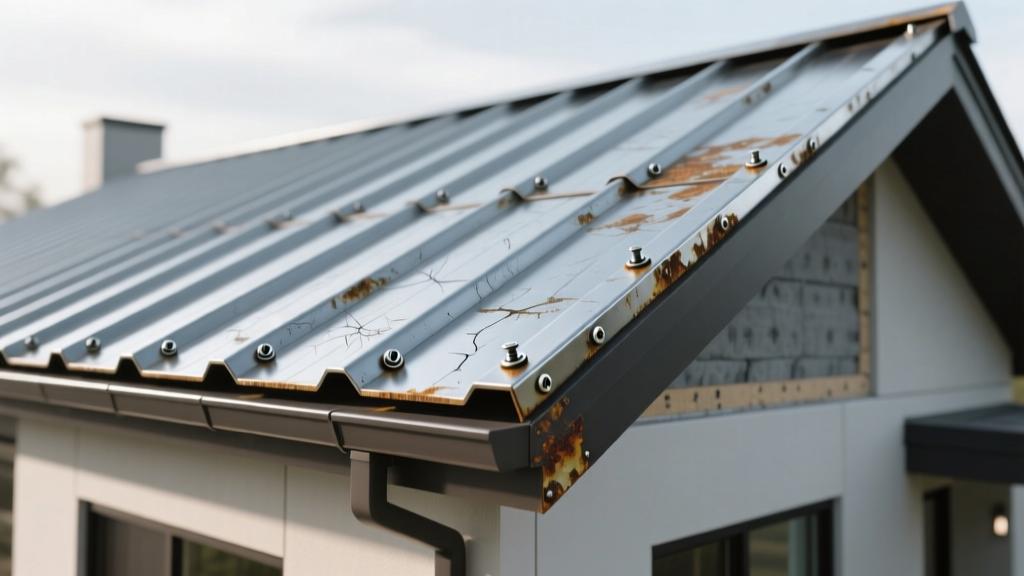
The Chemistry of Durability: AZ50 vs. AZ55 Coating Weights
A galvalume metal roof derives its exceptional longevity from a hot-dip metallic coating consisting of 55% aluminum, 43.4% zinc, and 1.6% silicon. The aluminum provides long-term barrier protection and UV reflectivity, while the zinc offers galvanic (sacrificial) protection at scratches and cut edges. The silicon is a critical addition; it controls the thickness of the brittle alloy layer that forms between the steel substrate and the coating during the 850°F hot-dip process, preventing coating flaking during panel roll-forming.
Coating Weight Specifications (ASTM A792)
- AZ50 (Class 1): 0.50 oz/ft² total coating weight (both sides). Primarily used for wall panels, agricultural buildings, and interior liner panels. Not recommended for premium roofing warranties.
- AZ55 (Class 2): 0.55 oz/ft² total coating weight. The mandatory baseline for architectural and structural roofing applications in 2026. Provides the necessary metallic mass to achieve 40- to 60-year perforation warranties.
Specifying AZ55 over AZ50 increases the initial material cost by approximately 4% to 7%, but it adds an estimated 15 to 20 years to the functional lifespan of the roof system before substrate perforation occurs. Always verify the mill certification to confirm the coating class, as visual inspection cannot differentiate between AZ50 and AZ55.
Environmental Lifespan Matrix: Where Galvalume Thrives and Fails
The service life of a galvalume metal roof is highly dependent on the atmospheric chemistry of its installation site. While the aluminum-zinc matrix resists standard atmospheric oxidation far better than pure galvanized (G90) steel, specific environmental vectors accelerate degradation.
| Environment Profile | Expected Lifespan | Primary Degradation Vector | Mitigation Strategy |
|---|---|---|---|
| Inland / Rural (>1500 ft from coast) | 50–60+ years | UV fading (if painted), fastener washer degradation | Standard AZ55 with PVDF (Kynar 500) paint system |
| Coastal / Marine (<1500 ft from saltwater) | 25–40 years | Chloride-induced pitting, salt spray accumulation | Frequent freshwater rinsing; use 316 stainless fasteners |
| Heavy Industrial (Sulfur dioxide / Acid rain) | 30–45 years | Acidic dissolution of the aluminum barrier layer | Apply heavy-duty SMP or PVDF coating; avoid bare Galvalume |
| Agricultural (Animal confinement / High ammonia) | 15–25 years | Ammonia gas aggressively attacks zinc and aluminum | Use interior liner panels; ensure massive ventilation; apply protective backer coatings |
Critical Failure Modes: Beyond Standard Rust
When a galvalume metal roof fails prematurely, it is rarely due to general field corrosion. Premature failure almost always stems from specific detailing errors, material incompatibilities, or mechanical stress during installation.
1. Edge Creep and Cut-Edge Corrosion
When a Galvalume panel is sheared or slit, the underlying steel substrate is exposed. The zinc in the coating is designed to sacrifice itself (galvanic action) to protect this exposed edge. However, as the zinc corrodes, it forms zinc oxide. Simultaneously, the aluminum forms a hard, impermeable aluminum oxide layer. If the aluminum oxide encapsulates the zinc before it can fully migrate to the cut edge, the sacrificial protection stops—a phenomenon known as "edge creep." To prevent structural edge failure, unsealed panel overlaps and eave overhangs should not exceed 3 inches in high-humidity environments. For critical cut edges, applying a clear acrylic edge-sealant or a zinc-rich primer (like ZRC) during fabrication halts creep entirely.
2. Dissimilar Metal (Galvanic) Catastrophes
Galvalume is highly anodic relative to copper and lead. If a copper flashing, copper snow guard, or even copper-laden pressure-treated lumber (like ACQ or MCQ) comes into direct contact with the roof, a severe galvanic cell is created. The galvalume coating will rapidly sacrifice itself, leading to deep pitting and perforation within 12 to 24 months.
Never install bare galvalume panels directly over ACQ (Alkaline Copper Quaternary) or copper-azole treated wood decking or battens. The copper preservatives will destroy the steel. Always use a 30lb felt underlayment, a synthetic slip sheet, or a self-adhering ice and water shield to create a physical barrier between the treated wood and the metal panels.
3. Micro-Cracking at Panel Ribs and Bends
The hot-dip coating is inherently harder and more brittle than the steel substrate beneath it. When panels are roll-formed into high-rib profiles (such as a 3-inch mechanical seam standing seam), the coating undergoes severe tensile stress at the outer radius of the bends. If the roll-forming dies are improperly calibrated or the steel is bent beyond a 180-degree threshold at a tight radius, micro-cracks form in the Al-Zn matrix. These microscopic fissures allow moisture to reach the steel substrate, initiating subsurface rust that eventually blisters and spalls the coating. Specify panels formed from Grade 50 (50 ksi yield) steel rather than Grade 80 to ensure adequate ductility during the forming process.
Fastener and Accessory Compatibility Rules
The fastener is the weakest link in any exposed-fastener metal roof system. A galvalume panel will easily outlast a standard zinc-plated screw. For a 50-year roof assembly, the fastener specification must match the panel's longevity.
- Shank Material: Use carbon steel fasteners coated with a zinc/aluminum alloy (e.g., Stalgard or Magni-coated) or 410 stainless steel for inland applications. For coastal zones within 1 mile of saltwater, 304 or 316 stainless steel is mandatory.
- Washer Material: Standard neoprene (EPDM) washers degrade under UV exposure and thermal cycling within 15 to 20 years. For maximum lifespan, specify fasteners with TPO (Thermoplastic Polyolefin) or high-grade EPDM washers capped with a metal shielding head to block UV radiation entirely.
- Drill Points: Use #3 or #4 drill points for structural steel purlins to prevent work-hardening the steel and snapping the fastener head during installation.
- Torque Control: Over-driving fasteners compresses the washer past its elastic limit, causing it to split or permanently deform. Under-driving leaves the panel loose, allowing wind uplift to cause "fastener back-out" due to thermal expansion (steel moves approximately 1/8 inch per 100 feet for every 100°F temperature change).
Maintenance Protocol for 60-Year Service Life
While often marketed as "maintenance-free," achieving the upper limits of a galvalume metal roof's lifespan requires a disciplined, low-impact maintenance protocol.
- Biannual Debris Clearing: Remove pine needles, leaves, and soil accumulation from valleys, gutters, and transitions. Organic matter holds moisture and creates a localized acidic environment that breaks down the aluminum barrier.
- Washdown (Coastal Only): Rinse the roof with fresh water every 6 months to remove chloride (salt) deposits. Do not use high-pressure washers (>1500 PSI), as they can force water past the seam seals and damage the PVDF paint finish.
- Fastener Audits (Exposed Fastener Roofs): Every 10 years, conduct a torque check on a statistically significant sample of exposed screws. Replace any fasteners where the washer shows signs of dry rot, cracking, or permanent compression set.
- Sacrificial Anode Inspection: If zinc sacrificial anodes are installed at the eaves or gutters (common in coastal retrofits), inspect them annually and replace them once they are 50% depleted.
Industry Standards and References
Proper specification and installation of galvalume systems must align with current industry standards. The baseline material specification for 55% aluminum-zinc alloy-coated steel sheet is governed by ASTM A792 / A792M, which dictates coating weights, bending properties, and adhesion requirements. For comprehensive installation guidelines, detailing best practices, and thermal movement calculations, contractors and architects should consult the technical resources provided by the Metal Roofing Alliance (MRA). Additionally, detailed metallurgical breakdowns of the Galvalume coating process and its performance in extreme environments are documented by major coil coaters and distributors, such as the technical learning center at Sheffield Metals, which provides critical data on roll-forming tolerances and edge-creep mitigation.