Metal Roof Sealant Lifespan: Durability Analysis & Failure Modes
Analyze metal roof sealant lifespan, comparing silicone, polyurethane, and butyl. Discover failure modes, UV resistance, and thermal movement limits.
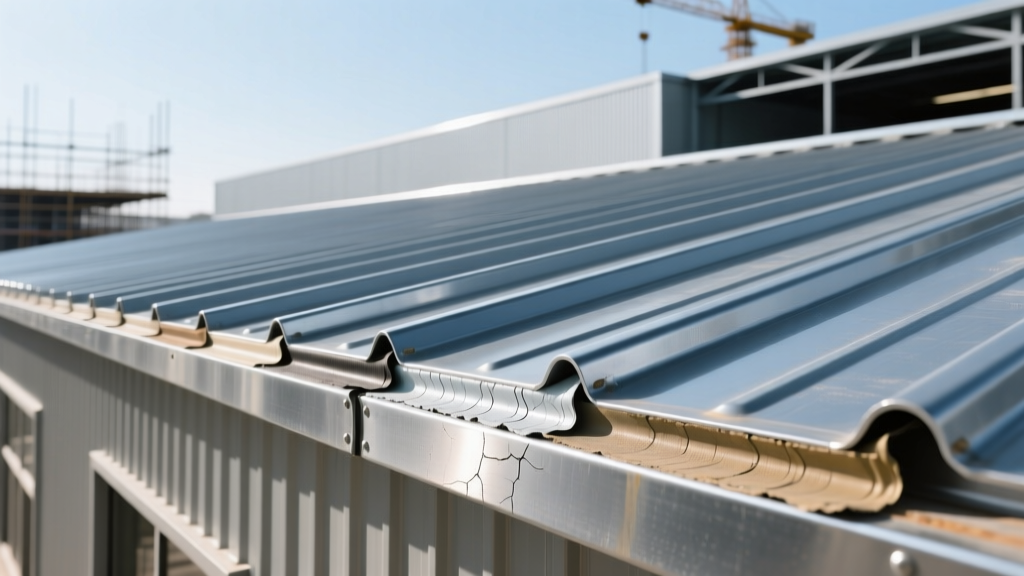
The Physics of Metal Roof Movement and Sealant Failure
The primary enemy of any metal roof sealant is not water, but thermal expansion and contraction. Steel roofing panels possess a coefficient of thermal expansion of approximately 6.5 x 10^-6 in/in/°F. While this sounds negligible, a 100-foot continuous steel roof panel experiencing a 100°F temperature swing between winter nights and summer afternoons will expand and contract by nearly 0.78 inches. If the sealant bridging the end laps, penetrations, or ridge caps cannot accommodate this continuous kinetic stress, it will tear away from the substrate.
According to the Whole Building Design Guide, elastomeric sealants used in exterior construction must be rated for movement accommodation. For metal roofing, you must specify sealants that meet ASTM C920 Class 25 or higher, meaning the material can withstand a minimum of ±25% extension and compression from its original cured dimensions without losing adhesion or tearing cohesively.
Sealant Chemistry: Lifespan Expectations by Type
Not all metal roof sealants are created equal. The chemical backbone of the sealant dictates its UV resistance, paintability, and ultimate lifespan. Choosing the wrong chemistry for a specific joint type guarantees premature failure.
Silicone (Neutral-Cure)
Silicone is the undisputed champion of UV resistance and thermal stability. For exposed metal roof joints, a high-modulus, neutral-cure silicone is mandatory. Never use acid-cure (acetoxy) silicone on metal roofs; the acetic acid released during curing will rapidly corrode bare Galvalume and degrade paint systems. Neutral-cure silicones (often alkoxy or oxime curing) do not off-gas corrosive byproducts. When applied correctly, structural silicone sealants on metal roofs routinely achieve 20 to 30-year lifespans, maintaining their elasticity even after decades of direct solar radiation.
Polyurethane
Polyurethane sealants offer excellent tensile strength and abrasion resistance, making them ideal for high-traffic areas or joints that may experience physical impact. However, polyurethane is highly susceptible to UV degradation. If used on an exposed metal roof, it will chalk, crack, and lose elasticity within 5 to 7 years unless it is completely coated with a compatible, UV-resistant elastomeric roof coating. Polyurethane is best reserved for concealed joints or areas scheduled for immediate overcoating.
Butyl Tape and Liquid Butyl
Butyl rubber is a non-curing, permanently tacky material that excels in water resistance and vapor impermeability. Because it never fully hardens, it can accommodate massive structural shifts. However, butyl has virtually zero UV resistance and will melt or degrade into a messy residue if exposed to direct sunlight. Butyl tape is strictly intended for concealed applications, such as lap seams between overlapping metal panels or beneath flashing where it is entirely shielded from the sun. Expected lifespan in concealed applications is 20+ years.
Acrylic and Tri-Polymer Blends
Often sold in cheap, off-the-shelf tubes at hardware stores, acrylic and solvent-based tri-polymer sealants are a trap for commercial metal roofing. While they offer the benefit of being applied to damp surfaces and freezing temperatures, they rely on solvent evaporation to cure. This causes significant shrinkage over time. Their lifespan on an exposed metal roof rarely exceeds 3 to 5 years before they dry out, crack, and detach.
| Sealant Type | Expected Lifespan | UV Resistance | Movement Capacity | Material Cost (per lin. ft.) | Best Application |
|---|---|---|---|---|---|
| Neutral-Cure Silicone | 20 - 30 Years | Excellent | ±25% to ±50% | $1.20 - $2.50 | Exposed end laps, penetrations, ridge caps |
| Polyurethane | 10 - 15 Years* | Poor (unless coated) | ±25% | $0.80 - $1.50 | Concealed joints, coated systems |
| Butyl Tape | 20+ Years | None (must conceal) | Infinite (non-curing) | $0.30 - $0.75 | Panel side-laps, concealed flashing |
| Acrylic / Tri-Polymer | 3 - 5 Years | Fair (chalks heavily) | ±12.5% | $0.40 - $0.90 | Temporary emergency patches only |
* Polyurethane lifespan assumes protection from direct UV via roof coatings or physical shielding.
Critical Failure Modes and Environmental Degradation
When a metal roof sealant fails, it typically does so in one of three distinct ways. Understanding these failure modes is critical for forensic analysis and preventing recurrence during maintenance.
- Adhesive Failure: The sealant peels cleanly away from the metal substrate, leaving the metal bare. This is almost always a surface preparation issue. Metal panels are often coated with rolling oils, mill scale, or release agents from the manufacturing process. If the metal is not wiped down with a solvent like xylene or denatured alcohol prior to application, the sealant bonds to the oil, not the steel.
- Cohesive Failure: The sealant tears down the middle, leaving a thin layer of material stuck to both sides of the joint. This indicates that the sealant's internal tensile strength was exceeded by the thermal movement of the panels, or the sealant has chemically degraded (often due to UV breakdown in polyurethanes or plasticizer migration in cheap PVC-based sealants).
- Substrate Failure: The sealant holds perfectly, but it rips the paint or protective coating right off the metal panel. This happens when using high-modulus sealants on panels with poorly adhered PVDF (Kynar) paint systems, or when applying sealant over rusted, flaking Galvalume.
Application Variables That Dictate Longevity
Even a premium 30-year silicone sealant will fail in 12 months if the joint geometry is incorrect. The durability of metal roof sealant relies heavily on the "2:1 Width-to-Depth Ratio" rule.
To achieve this ratio, you must use a closed-cell polyethylene backer rod. Jamming a thick bead of sealant into a deep, narrow joint creates a "three-sided adhesion" scenario. When the metal panels expand, the sealant is pulled from the left, the right, and the bottom substrate simultaneously, guaranteeing a cohesive tear. The backer rod breaks the bottom bond, allowing the sealant to stretch freely across the joint.
Primer Requirements on Coated Metals
Modern architectural metal roofs are frequently coated with PVDF (Kynar 500 or Hylar 5000) resin systems to prevent fading. These coatings are inherently "non-stick" surfaces designed to shed dirt and water. Many standard sealants will not permanently adhere to PVDF without a specialized primer. Always consult the sealant manufacturer's technical data sheet (TDS) for specific primer requirements on fluoropolymer-coated steel. Skipping the primer on a Kynar-coated roof is the leading cause of adhesive failure in high-end commercial installations.
Real-World Cost vs. Lifecycle Value
Facility managers and roofing contractors often fall into the trap of value-engineering sealants based on initial cartridge cost. A tube of premium structural silicone may cost $14 to $18, while a tube of standard acrylic roof cement costs $5. However, when factoring in the lifecycle cost, the math heavily favors premium materials.
Replacing failed sealant on a commercial metal roof requires mobilizing lifts or setting up fall protection, cleaning out the old degraded material (which is highly labor-intensive), prepping the substrate, and applying the new bead. The labor cost to replace a failed joint typically runs between $4.00 and $8.00 per linear foot. Therefore, saving $0.75 per linear foot on cheap sealant material will cost you $6.00 per linear foot in remediation labor just three years later. Specifying high-durability silicone or concealed butyl from day one minimizes total cost of ownership over a 20-year roof lifecycle.
Maintenance and Inspection Timelines
To maximize the lifespan of metal roof sealants, implement a bi-annual inspection protocol. Inspections should occur in late fall and early spring to assess the sealant's condition following the extreme thermal expansion of summer and the contraction of winter. Look specifically for micro-cracking in polyurethanes, dirt pickup and chalking in silicones, and any signs of edge-peeling at the flashing intersections. Promptly addressing minor adhesive release with a solvent wipe and a targeted re-bead prevents water infiltration that can compromise the underlying roof deck and insulation.