Metal Roofing Cost vs. Lifespan: 2026 Durability ROI Analysis
Analyze the true metal roofing cost against its 40 to 70-year lifespan. Compare Galvalume, galvanized, and stone-coated steel durability and 2026 ROI.
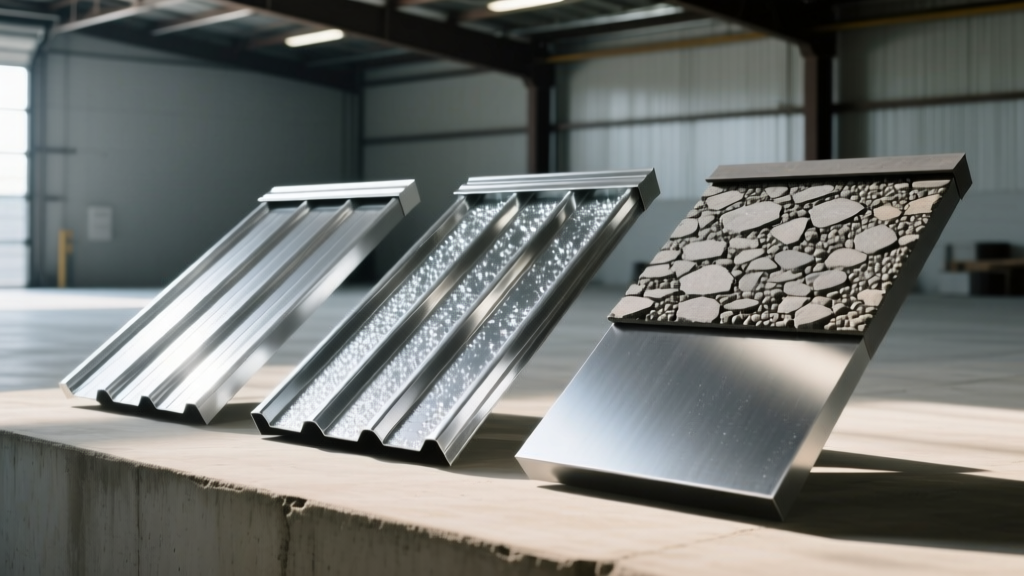
The True Economics of Steel Roofing: Upfront Cost vs. Lifecycle Value
When evaluating the metal roofing cost for a residential or commercial project, the initial sticker shock often deters budget-conscious builders. As of 2026, a premium standing seam steel roof typically ranges from $13.00 to $18.00 per square foot installed, compared to $4.50 to $7.00 for architectural asphalt shingles. However, analyzing metal roofing strictly through the lens of initial capital expenditure is a fundamental financial error. Steel roofing is a lifecycle asset, and its true value is unlocked when calculating the 50-year Cost of Ownership (COO), factoring in durability, maintenance, and replacement cycles.
The durability of a steel roof is not inherent to the word 'metal'; it is engineered through specific alloy coatings, paint systems, gauge thicknesses, and fastener technologies. A 29-gauge corrugated galvanized agricultural panel will fail in 25 years in a coastal environment, while a 24-gauge Galvalume standing seam system with a PVDF paint finish will easily outlast the 60-year mortgage on the building beneath it. This analysis breaks down the exact material specifications, environmental failure modes, and long-term ROI of modern steel roofing systems.
2026 Metal Roofing Cost & Durability Matrix
The table below maps the current installed metal roofing cost against expected lifespans and primary failure vectors. Pricing reflects Q1 2026 national averages for residential and light commercial applications, including tear-off of one existing layer, synthetic underlayment, and standard flashing.
| Material & Profile | Gauge | 2026 Installed Cost (Sq Ft) | Expected Lifespan | Primary Failure Mode |
|---|---|---|---|---|
| Galvalume Standing Seam | 24 | $14.50 - $18.00 | 50 - 70+ Years | Improper clip spacing / thermal binding |
| Stone-Coated Steel (Interlocking) | 26 | $16.00 - $22.00 | 50+ Years | Granule loss in extreme hail zones |
| Galvanized Corrugated (Exposed Fastener) | 29 | $7.50 - $10.50 | 25 - 40 Years | Fastener back-out & gasket degradation |
| Zincalume Plus (Concealed Fastener) | 24 | $13.00 - $16.50 | 60+ Years | Galvanic corrosion from dissimilar metals |
Durability Deep Dive: Coatings, Gauges, and Environments
To understand why the metal roofing cost varies so drastically between profiles, you must understand the metallurgy protecting the steel substrate. Bare steel will rust within months when exposed to the elements. The industry relies on two primary sacrificial coatings:
Galvalume (AZ55) vs. Galvanized (G90)
Galvalume is the undisputed standard for longevity. It consists of a 55% aluminum, 43.4% zinc, and 1.6% silicon coating by weight. The aluminum provides long-term barrier protection and heat reflectivity, while the zinc offers galvanic 'healing' protection at cut edges and scratches. According to technical bulletins from the Metal Construction Association (MCA), Galvalume panels can last two to four times longer than standard G90 galvanized panels in identical environments.
Environmental Rule of Thumb: If your project is within 1,500 feet of a saltwater coastline, or in an industrial zone with high sulfur emissions, standard Galvalume can degrade prematurely. In these micro-climates, specify an AZ55 coating with an additional heavy-duty primer and PVDF topcoat, or upgrade to a specialized marine-grade aluminum-zinc alloy.
The Paint System: PVDF vs. SMP
The steel coating stops rust; the paint system stops UV degradation and chalking. Cheap metal roofs use Silicone Modified Polyester (SMP) paints. SMP looks great on day one but will chalk, fade, and chalk significantly within 12 to 15 years in high-UV climates (like the US Southwest). For a roof intended to last 50 years, you must specify a PVDF (Polyvinylidene Fluoride) resin system, commonly known by the brand names Kynar 500 or Hylar 5000. PVDF resins are chemically inert to UV radiation, retaining over 90% of their original color and gloss after three decades.
The most common cause of premature failure in premium steel roofs is not the panel itself, but the flashing. Never allow copper, lead, or untreated aluminum flashing to come into direct contact with Galvalume steel. The steel will act as a sacrificial anode and corrode rapidly. Always use dielectric isolation—such as 30lb asphalt felt, EPDM rubber separators, or heavy butyl tape—between dissimilar metals, or specify factory-matched steel flashing coated in the same PVDF finish.
The Hidden Cost of Fasteners and Thermal Cycling
When analyzing the metal roofing cost, the profile type dictates the mechanical lifespan of the roof. Steel expands and contracts significantly with temperature fluctuations. A 30-foot panel can expand up to 1/4 inch between a freezing winter night and a 100°F summer afternoon.
Exposed Fastener Systems (Corrugated / R-Panel)
These roofs are screwed directly through the steel into the purlins or decking. Over 15 to 20 years of thermal cycling, the steel panel literally 'walks' against the rigid screw shafts. This elongates the screw holes, compresses the EPDM/neoprene washers, and eventually leads to fastener back-out and water infiltration. While the initial metal roofing cost is low, the maintenance cost of re-seating screws and replacing washers at year 20 is high.
Concealed Clip Systems (Standing Seam)
Standing seam roofs utilize sliding clips that attach to the deck, while the panel seams mechanically lock over the clips. This allows the steel to expand and contract freely without stressing the fastener holes. According to design guidelines published by the National Roofing Contractors Association (NRCA), concealed clip systems eliminate the primary failure point of metal roofs, effectively making the roof a monolithic, watertight membrane capable of shedding ice, snow, and driving rain for over half a century.
Calculating the 50-Year Cost of Ownership (COO)
To justify the premium metal roofing cost to a client or financial stakeholder, compare the 50-year COO against architectural asphalt shingles on a 2,000 sq. ft. roof area (20 squares).
- Architectural Asphalt Shingles:
- Initial Install (2026): $12,000
- Replacement 1 (Year 22): $18,000 (factoring in 2% annual inflation)
- Replacement 2 (Year 44): $27,500
- Maintenance & Repair over 50 years: $3,500
- Total 50-Year COO: ~$61,000
- 24-Gauge Galvalume Standing Seam:
- Initial Install (2026): $32,000
- Replacements: $0
- Maintenance (gutter cleaning, minor sealant at penetrations): $1,500
- Total 50-Year COO: ~$33,500
The steel roof effectively pays for itself by year 25, while simultaneously increasing the property appraisal value and lowering HVAC cooling loads due to the high solar reflectance index (SRI) of cool-roof PVDF pigments.
Actionable Specs: What to Demand in Your 2026 Contract
Do not sign a roofing contract that simply specifies 'metal roofing.' Demand these exact parameters in your scope of work to ensure the durability matches the investment:
- Substrate: Minimum 24-gauge steel for standing seam (26-gauge acceptable only for low-slope residential with 16-inch purlin spacing).
- Coating: AZ55 Galvalume minimum. G90 Galvanized only if painting over immediately with a specialized primer.
- Paint System: 70% PVDF (Kynar 500/Hylar 5000) with a minimum 1.0 mil topcoat thickness over a 0.2 mil epoxy primer.
- Underlayment: High-temperature, self-adhering synthetic or modified bitumen membrane (ice and water shield) at eaves, valleys, and penetrations; synthetic felt over the main deck. Never use standard #15 asphalt felt directly under metal, as it can stick and tear during thermal movement.
- Sealants: Specify factory-applied butyl tape sealant in the panel seams. Avoid gun-grade caulk (like polyurethane or silicone) for primary water barriers, as it degrades under UV exposure and lacks the elasticity for long-term thermal movement.
- Clips: Floating/sliding clips for any continuous panel run exceeding 20 feet to prevent oil-canning and thermal binding.
Expert FAQ on Steel Roof Longevity
Does a thicker gauge always mean a longer lifespan?
Not necessarily. A 22-gauge panel is thicker than a 24-gauge panel, but if the 22-gauge uses an inferior SMP paint system and exposed fasteners, it will fail aesthetically and mechanically long before a 24-gauge standing seam panel with PVDF paint and concealed clips. Gauge dictates structural load capacity (snow/wind uplift), while coatings and profile dictate weather-tight longevity.
How does hail affect the lifespan of a metal roof?
Standard Galvalume panels will dent in severe hail (golf-ball size or larger), but they will rarely puncture or compromise the watertight integrity of the roof. Stone-coated steel roofs, which feature a textured granule surface over a stamped steel core, hide dents exceptionally well and carry Class 4 impact resistance ratings. If you are in a high-hail zone (like Texas or Colorado), the slightly higher metal roofing cost of a stone-coated or heavily textured standing seam profile is highly recommended to maintain curb appeal.
Can I install solar panels on a standing seam metal roof?
Yes, and it is the ideal pairing. Standing seam roofs allow for clamp-on solar racking systems (like S-5! clamps) that attach directly to the seam without penetrating the steel membrane with screws. This preserves the 60-year watertight warranty of the roof while supporting the 30-year lifespan of the solar array, a synergy that asphalt shingles simply cannot offer without invasive lag-bolting.