Complete Maintenance Playbook for Wood Panels for Walls
Discover expert cleaning routines, stain removal frameworks, and seasonal maintenance playbooks to protect interior wood panels for walls.
The Science of Wood Wall Panel Maintenance
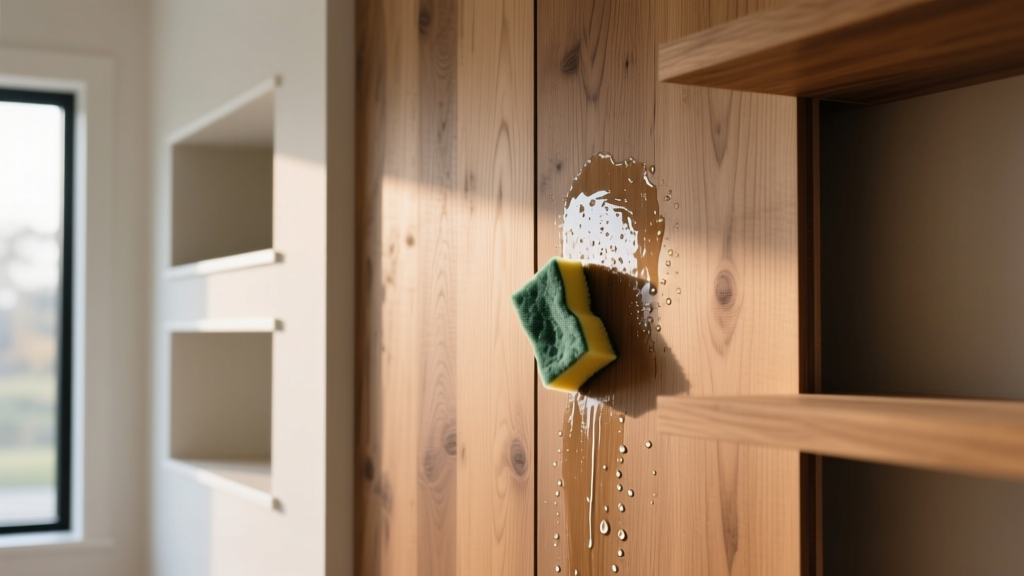
Wood panels for walls—ranging from traditional shiplap and beadboard to modern acoustic PET-backed slatted veneers—represent a significant architectural investment. Unlike flooring, wall panels are subjected to different environmental stressors: direct UV exposure, localized HVAC drafts, and varying degrees of physical contact. Maintaining these surfaces requires a departure from generic household cleaning routines. Using alkaline all-purpose cleaners or excessive moisture will permanently compromise the cellular structure of the wood and degrade the protective finish.
1. pH Neutrality: Only use cleaners with a pH between 6.5 and 7.5.
2. Moisture Limitation: Never allow liquid to pool in rabbet joints or slat gaps for more than 15 seconds.
3. Abrasion Control: Avoid melamine sponges (Magic Erasers), which act like 3000-grit sandpaper and strip polyurethane.
Identifying Your Panel Finish
Before applying any cleaning agent, you must identify the finish protecting your wood panels for walls. The cleaning protocol for a surface-sealed panel is fundamentally incompatible with a penetrating-oil finish.
| Finish Type | Visual Characteristics | Water Drop Test | Approved Cleaners |
|---|---|---|---|
| Polyurethane (Water/Oil) | Glossy, satin, or matte plastic-like film | Beads up indefinitely | Bona Hardwood Cleaner, Method Wood |
| Penetrating Oil / Hardwax | Natural grain texture, low sheen | Beads initially, absorbs slowly | Rubio Monocoat Surface Care, Woca |
| Paste Wax | Soft luster, slight drag to the touch | Beads but leaves white haze if left | Mineral spirits, Toluene-free wax |
| Lacquer / Shellac | High gloss, brittle, older installations | Beads, but alcohol/water damages it | Dry dusting only, specialized wax |
Routine Dusting and Debris Management
Dust accumulation on horizontal rails and inside the grooves of tongue-and-groove panels acts as an abrasive when wiped. Furthermore, dust holds ambient moisture, which can lead to localized finish degradation.
The Microfiber Protocol
Abandon feather dusters, which merely redistribute particulate matter. Instead, utilize a 300 to 400 GSM (grams per square meter) split-fiber microfiber cloth. The split fibers create a static charge that traps dust rather than pushing it into the wood grain. For textured or slatted acoustic wood panels for walls, attach a soft-bristle upholstery brush to your vacuum hose and use a low-suction setting to extract dust from the PET felt backing and slat crevices without scratching the veneer edges.
Deep Cleaning: Removing Grime and Grease
In kitchens or high-traffic corridors, airborne cooking oils and skin sebum create a microscopic film on wood panels for walls. This film attracts more dirt and dulls the finish.
The 3-Step Deep Clean Framework
- Dry Extraction: Vacuum the entire wall surface with a soft brush attachment to remove loose particulates.
- pH-Neutral Application: Spray a pH-neutral wood cleaner (like Murphy's Oil Soap diluted at 1/4 cup per gallon of warm water, or a commercial ready-to-use spray) directly onto the microfiber cloth, never directly onto the wall. Spraying the wall risks liquid running down into the bottom rail joints, causing localized swelling.
- Directional Wiping: Wipe in the direction of the wood grain. For shiplap, wipe horizontally along the board, then use a folded cloth edge to trace the rabbet joint. Immediately follow with a dry, lint-free cotton cloth to remove residual moisture.
Stain Remediation and Spot Treatment
When wood panels for walls suffer from water splashes, ink transfer, or chemical reactions, specific remediation steps are required based on the stain color.
- White Cloudy Rings (Moisture trapped in wax/poly): Apply a small amount of full-fat mayonnaise or petroleum jelly to the spot. Let it sit for 2 hours. The oils displace the trapped moisture. Wipe clean and buff.
- Black/Dark Stains (Tannin reaction with iron/water): This indicates water has penetrated the finish and reacted with the wood tannins. Mix 2 tablespoons of oxalic acid powder (available at hardware stores) into 1 quart of hot water. Apply with a cotton swab strictly to the stain. The black spot will bleach out within 10 minutes. Neutralize with a 50/50 water and white vinegar wipe, then dry. Note: This requires re-oiling or spot-finishing the area afterward.
- Grease/Oil Splatters: Use a D-limonene (citrus) based degreaser applied to a cloth. D-limonene cuts through lipid bonds without stripping water-based polyurethanes.
Climate Control and Dimensional Stability
Wood is hygroscopic; it absorbs and releases moisture based on the surrounding environment. According to the USDA Forest Products Laboratory, interior wood should maintain an equilibrium moisture content (EMC) of 6% to 9%. If your home's relative humidity drops below 30% in winter, panels will shrink, revealing unpainted tongue edges or causing acoustic slats to detach from their backing. If humidity exceeds 55%, panels will cup and warp.
To prevent structural failure, the Environmental Protection Agency (EPA) recommends maintaining indoor relative humidity between 35% and 45%. Install a smart hygrometer in rooms with extensive wood wall paneling and integrate it with a whole-home humidifier/dehumidifier system to automate climate stability.
Troubleshooting Common Wood Panel Failures
1. Acoustic Slat Delamination
Modern acoustic wood panels for walls often feature real wood veneers glued to a recycled PET felt backing. If you notice slats lifting at the edges, this is usually caused by UV-curing adhesive failure due to extreme heat from direct sunlight or localized HVAC vents. Fix: Inject a flexible, solvent-free polyurethane construction adhesive (like Loctite PL Premium) under the veneer, clamp with painter's tape and a flat wood block for 24 hours, and redirect the HVAC baffle.
2. Finish Flaking on Older Lacquer Panels
Panels installed prior to the 2000s often used nitrocellulose lacquer, which becomes brittle and flakes over time. Fix: You cannot spot-repair flaking lacquer. The wall must be lightly scuff-sanded with 220-grit aluminum oxide sandpaper, thoroughly vacuumed, and recoated with a modern water-based polyurethane (e.g., Bona Traffic HD) which offers superior UV resistance and flexibility.
Frequently Asked Questions
Can I use a steam mop or steam cleaner on wood wall panels?
No. Steam cleaners force superheated vapor (over 212°F) into the microscopic pores and joints of the wood. This rapidly breaks down polyurethane bonds and forces moisture deep into the cellular structure, leading to irreversible grain raising, white hazing, and eventual mold growth behind the panels.
How often should I re-oil penetrating oil finished wall panels?
Wall panels experience significantly less physical abrasion than floors. While a hardwax oil floor might need annual re-oiling, wood panels for walls typically only require a maintenance coat of hardwax oil (such as Osmo Polyx-Oil) every 3 to 5 years, provided they are kept out of direct, unfiltered sunlight and cleaned with pH-neutral solutions.
My white oak panels are turning yellow. Is this a cleaning issue?
This is not a cleaning issue; it is a photochemical reaction. Traditional oil-based polyurethanes contain linseed or tung oil derivatives that naturally amber and yellow when exposed to UV light. To halt this, you must strip the existing finish and refinish the panels with a non-yellowing, water-based aliphatic polyurethane or a UV-inhibitor clear coat.