Best Type of Wood for Hardwood Floors: Species Comparison
Compare the best type of wood for hardwood floors. We analyze Janka hardness, cost per sq ft, and durability of oak, maple, hickory, and walnut.
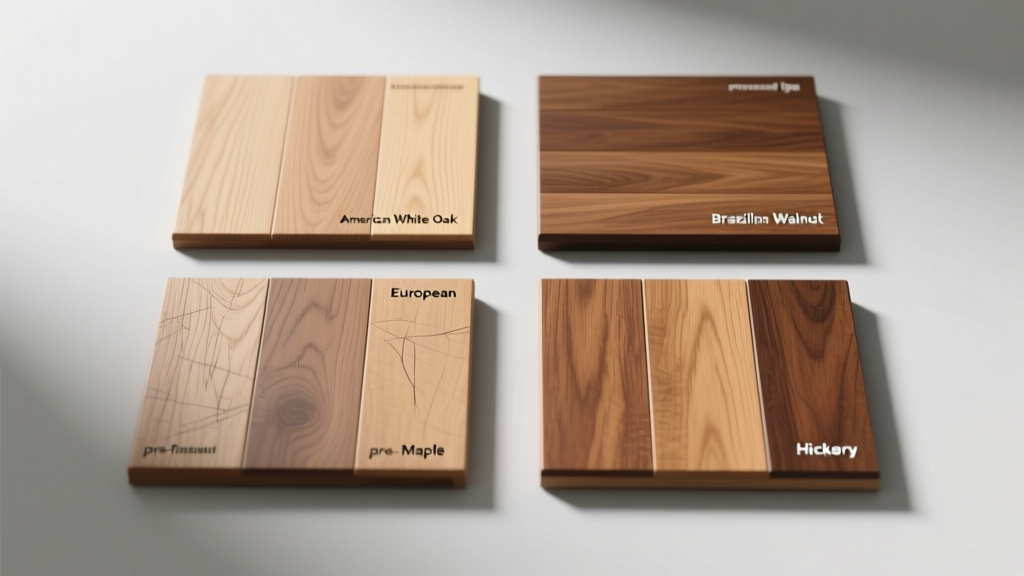
The Hard Truth About Hardwood: Beyond Aesthetics
Selecting the best type of wood for hardwood floors requires looking past showroom stains and focusing on cellular structure, dimensional stability, and mechanical hardness. While marketing materials emphasize grain patterns, flooring failures in the field—such as cupping, gapping, and finish delamination—are almost always traceable to a mismatch between the wood species' physical properties and the building's environmental conditions.
According to the National Wood Flooring Association (NWFA), over 70% of solid hardwood flooring claims are moisture-related. Understanding the tangential shrinkage rates and Janka hardness of specific species is the only way to engineer a floor that survives decades of seasonal humidity swings and mechanical wear.
The Janka test measures the force (in pounds-force, lbf) required to embed a 0.444-inch steel ball halfway into the wood. While higher numbers indicate better dent resistance, extreme hardness (above 1800 lbf) makes milling and sanding difficult, often leading to installation gaps if the milling tolerances are poor.
Head-to-Head Species Comparison Matrix
The following matrix evaluates the top domestic and imported species used in residential and light commercial flooring. Data is sourced from the USDA Forest Products Laboratory and The Wood Database.
| Wood Species | Janka Rating (lbf) | Tangential Shrinkage | Material Cost (per sq ft) | Best Application |
|---|---|---|---|---|
| White Oak | 1,360 | 10.5% | $7.50 - $12.00 | High-traffic, moisture-prone areas |
| Hickory | 1,820 | 12.6% | $6.00 - $9.50 | Homes with large dogs, active kids |
| Hard Maple | 1,450 | 9.9% | $6.50 - $10.00 | Modern aesthetics, basketball courts |
| Black Walnut | 1,010 | 10.2% | $11.00 - $18.00 | Low-traffic luxury, formal rooms |
Deep Dive: Evaluating the Top Contenders
White Oak: The Unbeatable All-Rounder
White oak (Quercus alba) remains the industry benchmark for the best type of wood for hardwood floors due to its unique cellular anatomy. Unlike red oak, white oak contains tyloses—membrane-like structures that plug the vascular pores, making the wood highly resistant to water penetration. This is why white oak is used for whiskey barrels and boat building.
Installation Nuance: When specifying white oak, request quartersawn or riftsawn milling for widths over 5 inches. Quartersawn white oak exhibits a medullary ray fleck pattern and has a radial shrinkage rate of only 5.6%, making it roughly 50% more dimensionally stable than plainsawn boards. This drastically reduces the risk of edge-cupping in wide-plank installations over radiant heating systems.
Hickory: The High-Traffic Fortress
With a Janka rating of 1,820 lbf, hickory (Carya ovata) is the hardest domestic species commonly used for flooring. It will not dent from dropped cast-iron pans or large dog claws. However, this mechanical strength comes with a severe trade-off: dimensional instability.
The Moisture Trap: Hickory's tangential shrinkage rate of 12.6% is exceptionally high. If installed in a home where winter indoor relative humidity drops below 30%, hickory will gap aggressively. It requires strict, year-round HVAC humidity control (maintained between 35% and 55%) and should never be installed over unconditioned crawl spaces without a high-permeance vapor retarder.
Hard Maple: The Clean-Line Specialist
Hard maple (Acer saccharum) offers a tight, uniform grain that appeals to contemporary designs. Its high density (1,450 lbf) makes it highly wear-resistant. However, maple is notoriously difficult to finish on-site.
Maple's dense, interlocked grain does not absorb penetrating oil stains evenly, resulting in severe blotching. If a dark color is required, specify factory-finished maple with a wire-brushed texture (which opens the grain) or use a dye-based stain rather than a pigment-based stain. For site-finished jobs, stick to natural, clear water-based polyurethane.
Black Walnut: The Luxury Showpiece
American black walnut (Juglans nigra) is prized for its rich, chocolate-brown heartwood. However, at 1,010 lbf, it is significantly softer than oak. It will accumulate dents and patina marks rapidly in high-traffic corridors. Furthermore, walnut is highly photosensitive; prolonged exposure to direct UV sunlight will cause the dark heartwood to lighten and amber over time. Use area rugs and UV-blocking window films to preserve the original color.
Critical Failure Modes & Edge Cases
- Radiant Heat Delamination: Solid hickory and solid maple should never be installed over hydronic radiant heat systems. The rapid temperature fluctuations cause differential shrinkage, leading to board checking (splitting down the center). Use engineered white oak with a plywood core for radiant applications.
- Subfloor Moisture Vapor Emission (MVE): Concrete slabs emit moisture vapor. If installing solid hardwood over a slab (using a sleeper system or plywood subfloor), the MVE must be tested via ASTM F2170. If relative humidity in the slab exceeds 75%, a penetrating epoxy moisture barrier is mandatory before laying the subfloor.
- Finish Adhesion on Exotics: If opting for exotic species like Ipe or Cumaru (often marketed for interiors), their natural oils will prevent standard polyurethane finishes from curing. You must wipe the raw boards with a solvent like naphtha immediately before applying a specialized oil-based sealer.
The 2026 Pricing Reality Check
Material costs for premium hardwood have stabilized following the supply chain disruptions of the early 2020s, but old-growth scarcity continues to drive up the price of clear-grade walnut and wide-plank white oak. The following estimates reflect material-only costs for 3/4-inch solid, unfinished flooring in select-and-better grades.
- White Oak (5-inch plainsawn): $7.50 - $9.50 / sq ft
- White Oak (7-inch quartersawn): $13.00 - $18.00 / sq ft
- Hickory (Mixed widths): $6.00 - $8.50 / sq ft
- Hard Maple (3.25-inch strip): $5.50 - $7.00 / sq ft
- Black Walnut (6-inch plank): $14.00 - $19.00 / sq ft
Note: Professional installation, including subfloor prep, nail-down, sanding, and three coats of commercial-grade waterborne finish (like Bona Traffic HD), adds $8.00 to $12.00 per square foot depending on regional labor rates.
Decision Framework: Which Species Fits Your Build?
Use this logic tree to finalize your specification:
- Do you have large dogs (>50 lbs) or heavy foot traffic?
YES: Specify Hickory or White Oak. Avoid Walnut and Pine.
NO: Proceed to step 2. - Is the floor going over a hydronic radiant heating system?
YES: You must use Engineered White Oak or Engineered Maple. Do not use solid hardwood.
NO: Proceed to step 3. - Do you want a dark, custom-stained floor?
YES: Specify White Oak or Red Oak. Avoid Maple (will blotch) and Walnut (already dark, staining is redundant).
NO: Proceed to step 4. - Is the design aesthetic strictly modern/minimalist?
YES: Specify Hard Maple or riftsawn White Oak with a clear, matte hardwax oil finish (e.g., Rubio Monocoat).
NO: Choose based on budget and preferred grain character.
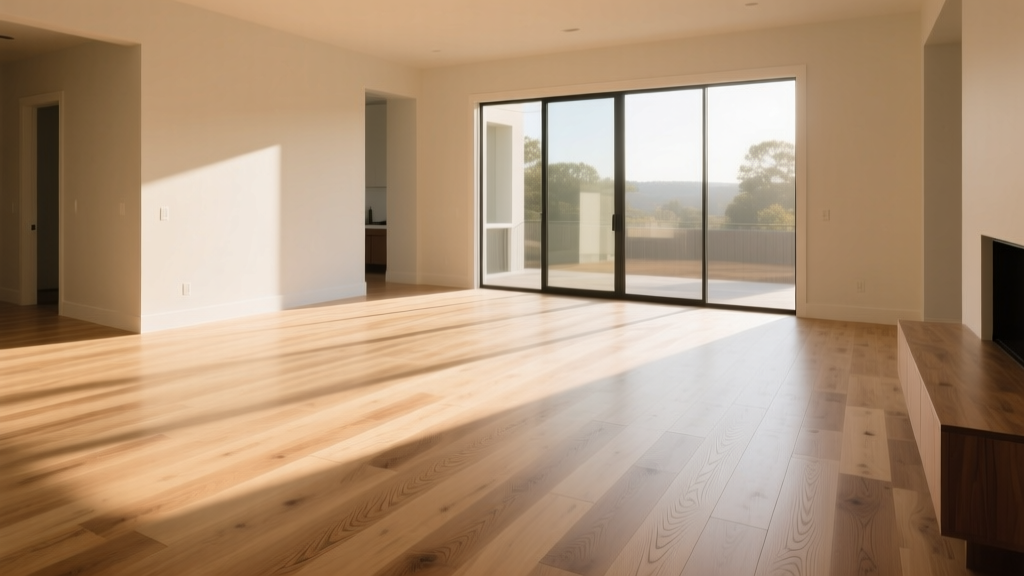
Final Specifications for Your Contractor
When writing the flooring schedule for your construction documents, do not just specify 'oak flooring'. Use exact terminology to prevent substitution:
Example Specification:
Provide and install 3/4" x 7" Quartersawn White Oak solid hardwood flooring, FAS grade, kiln-dried to 6-9% moisture content. Fasten using 2-inch L-cleats at 6-inch intervals. Sand to 100-grit, apply one coat of Bona Seal, and finish with two coats of Bona Traffic HD Anti-Slip commercial waterborne polyurethane. Maintain jobsite humidity at 45% (+/- 5%) for 14 days prior to, during, and after installation.
By dictating the exact species, cut, moisture content, and finish chemistry, you eliminate the variables that lead to premature flooring failure.
Written by
James ThorntonJames Thornton is a construction industry veteran with 25 years of hands-on experience in wood framing, lumber grading, and residential building codes. He started as a framing carpenter in rural Oregon, earned his ICC Residential Building Inspector certification, and eventually became a senior plan reviewer for the City of Portland Bureau of Development Services. James holds a B.S. in Wood Science & Technology from Oregon State University and is a certified lumber grader through the West Coast Lumber Inspection Bureau (WCLIB). He has inspected over 3,000 residential construction sites and authored the city's internal guide on advanced framing techniques (2x6 at 24" O.C.). James lives in Bend, OR, where he builds custom timber-frame cabins and competes in lumberjack sports.
More from James Thornton
View all
Insulation
Best Home Insulation Materials: Complete 2026 Guide
Compare top home insulation materials for 2026. Find R-values, installed costs per square foot, and best uses for fiberglass, spray foam, and mineral wool.
Aug 4, 2026

Sustainable Building
Certify Your Green Building Material for LEED and WELL
Step-by-step guide to certifying a green building material for LEED v5 and WELL v2. Master EPDs, HPDs, and VOC limits for 2026 project specifications.
Aug 4, 2026

Stone & Masonry
Veneer Stacked Stone Panels: Interior Design & Style Showcase
Discover how veneer stacked stone panels transform interiors. Explore modern design profiles, material pairings, and technical installation specs.
Aug 4, 2026