What Are Stain Options for Brazilian Cherry Wood Floors?
Discover the best stain options for Brazilian cherry wood floors. Learn about color choices, prep techniques, and top products for Jatoba hardwood.

The Jatoba Dilemma: Understanding Brazilian Cherry
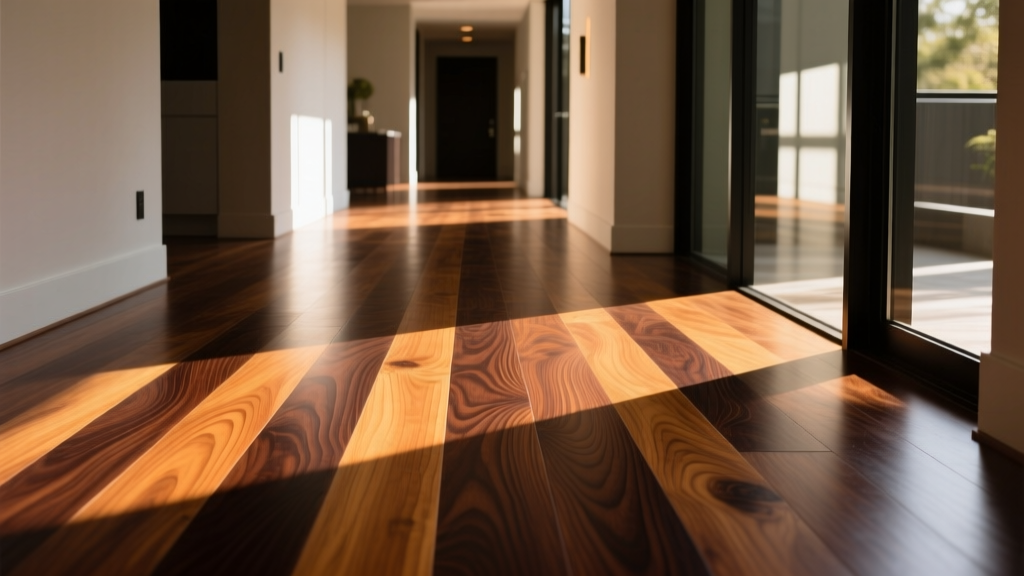
Brazilian cherry, scientifically known as Hymenaea courbaril and commonly called Jatoba, is one of the most sought-after exotic hardwoods in the flooring industry. With a Janka hardness rating of 2,350 lbf, it is nearly twice as hard as red oak. However, this extreme density and its unique cellular structure present specific challenges when it comes to staining. According to The Wood Database, Jatoba features a striking contrast between its pale yellowish-white sapwood and its deep reddish-brown heartwood, which naturally darkens to a rich patina when exposed to UV light.
Because the wood is so dense, its pores are tightly packed, making it highly resistant to liquid penetration. Furthermore, the high tannin content in the heartwood can react unpredictably with water-based finishes and certain chemical stain components. When contractors or homeowners ask what stain options are viable for Brazilian cherry, the answer requires moving beyond standard oak protocols and adopting specialized preparation and product selection.
Primary Stain Categories for Brazilian Cherry
1. Clear and Natural Finishes (The Purist Approach)
The most popular 'stain' for Brazilian cherry is no stain at all. Because Jatoba undergoes significant photo-oxidation, applying a clear, UV-stable penetrating oil or a high-quality water-based polyurethane allows the wood's natural color evolution to take center stage.
- Best Products: Rubio Monocoat Oil Plus 2C (Pure or Charcoal for slight tint), Bona Traffic HD (clear).
- Visual Result: Starts as a medium salmon-pink/brown and matures into a deep, luxurious burgundy-red over 6 to 12 months.
- Challenge: The pale sapwood will remain noticeably lighter than the heartwood, creating a striped or 'calico' appearance that some homeowners dislike.
2. Dark and Neutralizing Stains (The Unifier)
To eliminate the stark contrast between sapwood and heartwood, dark, opaque stains are highly effective. Pigment-heavy stains mask the natural red undertones and unify the floor's appearance. Dark browns, espressos, and near-blacks are the most reliable choices for dense exotics.
- Best Products: Bona DriFast Stain in Espresso or Ebony, Duraseal in Coffee Brown or Jacobean.
- Visual Result: A rich, dark, sophisticated floor where the wood grain provides texture rather than color variation.
- Challenge: Achieving even penetration on 2,350 lbf wood requires 'water popping' the grain before application.
3. Red-Enhancing Stains (The Amplifier)
Stains like Sedona Red, Colonial Maple, or Cherry amplify the natural red tones of the heartwood. While this was highly popular in the early 2000s, current 2026 design trends favor more neutral, earthy tones. If a client insists on a red-enhancing stain, it must be applied carefully to avoid a 'painted' or artificial look.
When using red-enhancing stains, the porous sapwood will absorb significantly more red pigment than the dense heartwood, resulting in bright, unnatural neon-pink streaks. Always use a pre-stain wood conditioner or a dark base coat to neutralize the sapwood before applying red tones.
4. The Whitewash and Bleach Challenge (The Risk-Taker)
Achieving a blonde, whitewashed, or Scandinavian look on Brazilian cherry is notoriously difficult. The high tannin content reacts with the hydrogen peroxide found in two-part wood bleaches, often turning the wood a muddy gray or greenish-yellow rather than a clean blonde. If a light floor is the goal, it is generally advised to choose a different species, such as white oak or maple.
Stain Compatibility and Product Matrix
Selecting the right chemical formulation is critical. Oil-based stains penetrate better but require longer dry times and emit higher VOCs. Water-based stains dry fast but can raise the grain and cause tannin bleed if not sealed properly. Below is a compatibility matrix for top-tier professional products.
| Brand & Product Line | Type | Best Colors for Jatoba | Pre-Treatment Required? |
|---|---|---|---|
| Bona DriFast Stain | Oil-Modified | Espresso, Ebony, Driftwood | Water popping recommended |
| Duraseal Quick Coat | Oil-Based | Jacobean, Dark Walnut, Coffee Brown | Water popping recommended |
| Rubio Monocoat Pre-Color | Hardwax Oil | Charcoal, Black, Chocolate | Sand to 120 grit, apply Pre-Color |
| Minwax Wood Finish | Oil-Based | True Black, Classic Gray | Pre-stain conditioner mandatory |
Step-by-Step Preparation for Dense Exotic Woods
The failure rate for staining Brazilian cherry spikes when contractors treat it like domestic oak. Follow this exact preparation protocol to ensure proper pigment adhesion.
- Precision Sanding Sequence: Do not skip grits. Start at 36-grit to level the floor, move to 60-grit, then 80-grit, and finish at 100-grit. Stopping at 80-grit will leave deep scratches that dark stains will highlight. Sanding past 120-grit will burnish the dense Jatoba, closing the pores entirely and preventing stain penetration.
- Chemical Wiping: Wipe the floor with mineral spirits or a dedicated hardwood cleaner to remove fine sanding dust and natural surface oils that repel stain.
- Water Popping (Crucial for Dark Stains): Mix 50% distilled water and 50% denatured alcohol. Mist the floor evenly using a garden sprayer. The alcohol helps the water penetrate the dense grain without causing excessive swelling. Wait 2 to 4 hours for the wood to dry completely. This process opens the cellular structure, allowing dark pigments to lodge deeply into the wood.
- Application: Apply the stain using a lambswool applicator or a specialized stain buffer pad. Wipe off excess stain within 5 to 10 minutes. Leaving oil-based stain on Jatoba too long will result in a sticky, uncured film because the dense wood cannot absorb the excess linseed oil base.
Common Failure Modes and Troubleshooting
Symptom: Dark, cloudy blotches appear after applying the first coat of water-based polyurethane over a stained Jatoba floor.
Cause: Water-based finishes can reactivate water-soluble tannins in the Brazilian cherry, pulling them up through the stain layer.
Fix: Always use a dedicated tannin-blocking sealer, such as Bona AmberSeal or a dewaxed shellac like Zinsser SealCoat, between the stain and the water-based topcoat. Never apply water-based poly directly over bare or freshly stained Jatoba.
Symptom: The stain looks streaky, with some areas significantly darker than others.
Cause: Inconsistent sanding or failing to water-pop the grain evenly. Jatoba's interlocked grain absorbs stain at different rates depending on the cut angle.
Fix: Screen the floor with a 120-grit buffer screen to remove the blotchy stain, re-clean, and perform a meticulous water-pop using a damp microfiber mop to ensure uniform moisture distribution before restaining.
Cost Breakdown: Staining vs. Clear Finishing (2026 Estimates)
Staining an exotic hardwood floor adds significant labor and material costs compared to a clear finish. The table below outlines average professional pricing per square foot in the US market for 2026.
| Service | Materials Cost (per sq ft) | Labor Cost (per sq ft) | Total Estimated Cost |
|---|---|---|---|
| Sand & Clear Finish (3 coats poly) | $0.85 - $1.20 | $3.50 - $4.50 | $4.35 - $5.70 |
| Sand, Stain & Finish (Oil-based) | $1.50 - $2.10 | $5.00 - $6.50 | $6.50 - $8.60 |
| Sand, Stain & Hardwax Oil (Rubio) | $2.50 - $3.20 | $4.50 - $5.50 | $7.00 - $8.70 |
Final Recommendations for Homeowners and Contractors
When deciding what stain options to pursue for a Brazilian cherry wood floor, the most successful outcomes come from working with the wood's natural properties rather than fighting them. If the goal is a dark, uniform floor, invest in professional water-popping and high-pigment oil stains like Bona Espresso. If the goal is a natural, glowing interior, skip the stain entirely, embrace the sapwood/heartwood contrast, and use a premium hardwax oil that will beautifully capture the wood's natural UV-induced darkening over time. Always demand physical stain samples on actual Jatoba offcuts from your installer before committing to a full-floor application.
Written by
Priya KapoorPriya Kapoor is a real estate market analyst and construction economics researcher with expertise in housing affordability, development feasibility, and infrastructure investment. She holds a Master of Regional Planning from Cornell University and previously worked as a senior analyst at CBRE's Investment Properties group, where she modeled returns for $4B in mixed-use development pipelines. Priya now runs an independent research practice advising developers, municipalities, and REITs on construction cost forecasting and market timing. She publishes the quarterly "BuildMat Market Pulse" report tracking material price indices across 12 commodity categories. Based in Austin, TX, Priya serves on the board of Habitat for Humanity Austin and is a marathon runner.
More from Priya Kapoor
View all
Construction Cost
Cost to Build a 1600 Sq Ft Home in 2026: Full Breakdown
Accurate 2026 cost to build a 1600 sq ft home—material, labor, and regional pricing breakdowns included. Plan your budget with real-time estimates.
Aug 11, 2026

Wood & Lumber
Name the Types of Wood for Pressure Treatment and Preservation
Learn how to name the types of wood best suited for pressure treatment. Compare species treatability, chemical retention levels, and 2026 preservation costs.
Aug 4, 2026

Stone & Masonry
Stone Veneer Suppliers Lindenhurst: 2026 Cost Analysis
Analyze 2026 stone veneer costs in Lindenhurst, NY. Compare local supplier pricing, delivery fees, and Suffolk County installation labor rates.
Aug 4, 2026