What Type of Wood for Raised Garden Beds: Selection and Installation Best Practices
Discover what type of wood for raised garden beds ensures longevity. Learn installation best practices, fastener specs, and structural bracing for 2026.

The Core Dilemma: Balancing Rot Resistance and Structural Integrity
Deciding what type of wood for raised garden beds is only half the battle; the other half is executing an installation that prevents premature structural failure. Wet soil exerts immense lateral hydrostatic pressure on retaining walls, and constant moisture exposure accelerates biological decay. A successful raised bed installation requires pairing the correct timber species with specialized marine-grade or exterior structural hardware. This guide details the exact material specifications, fastener science, and assembly protocols required to build raised beds that survive 15+ years in harsh soil conditions.
Wood Species Selection Matrix
Not all rot-resistant woods behave the same way during installation. Hardwoods require pre-drilling, while softwoods demand specific fastener coatings to prevent tannin reactions. Below is a comparative breakdown of the most viable lumber options for 2026 garden construction.
| Wood Species | Janka Hardness (lbf) | Est. Ground-Contact Lifespan | Avg. Cost per Linear Foot (2x8) | Installation Quirks |
|---|---|---|---|---|
| Western Red Cedar (STK Grade) | 350 | 10–15 years | $3.80 - $4.50 | High tannin content; requires stainless or polymer-coated fasteners to prevent black streaking. |
| Coastal Redwood (Construction Heart) | 450 | 15–20 years | $5.50 - $7.00 | Prone to splitting near board ends; mandatory 1/8-inch pre-drilling for all edge fasteners. |
| Black Locust | 1,700 | 50+ years | $8.50 - $11.00 | Extremely dense; requires carbide-tipped drill bits and full-length pre-drilling to avoid shearing screws. |
| Bald Cypress (Heartwood) | 510 | 15–25 years | $4.20 - $5.80 | Oily texture can interfere with some exterior wood glues; mechanical fastening is mandatory. |
| Untreated SPF Pine | 380 | 3–5 years | $1.50 - $2.20 | Requires a physical moisture barrier (EPDM liner) between wood and soil to achieve a 10-year lifespan. |
Fastener Science: Preventing Tannin Corrosion and Shear Failure
The most common point of failure in raised garden beds is not the wood rotting, but the fasteners corroding or snapping under the lateral load of saturated soil. Standard zinc-plated drywall screws or common galvanized nails will fail within three seasons.
The Tannin Reaction Problem
Woods like cedar and redwood contain high levels of water-soluble tannins. When these tannins leach into standard galvanized steel (zinc-coated) fasteners, a chemical reaction occurs that rapidly accelerates corrosion and leaves permanent black streaks down the face of your bed. To bypass this, you must use one of two fastener types:
- Type 305 or 316 Stainless Steel: Completely immune to tannin reactions and soil acidity. Ideal for coastal environments or highly acidic soil mixes.
- Polymer-Coated Structural Screws: Screws like the GRK RSS or Simpson Strong-Tie SDWS feature proprietary exterior coatings (e.g., Climatek) that isolate the steel core from tannins and moisture while providing superior shear strength.
Sizing and Spacing Specifications
For joining standard 2-inch nominal lumber (actual 1.5" thick) to 4x4 corner posts, use #9 x 3-1/2-inch structural screws. Drive two screws per board end, staggered vertically by 1.5 inches to prevent the timber from splitting. For beds longer than 6 feet, install a mid-span cross-brace using 2x4 lumber secured with 3-inch exterior screws every 4 feet to resist outward bowing.
Warning: Pressure-Treated Lumber and Soil Safety
Modern pressure-treated lumber uses Micronized Copper Azole (MCA) or Alkaline Copper Quaternary (ACQ), which are classified by the American Wood Protection Association (AWPA) as safe for ground contact (UC4A standard). However, the high copper content in ACQ is highly corrosive to standard aluminum and galvanized steel, requiring expensive hot-dipped galvanized or stainless steel fasteners. Furthermore, organic certification bodies strictly prohibit synthetic copper treatments in commercial organic farming.
Step-by-Step Structural Assembly Protocol
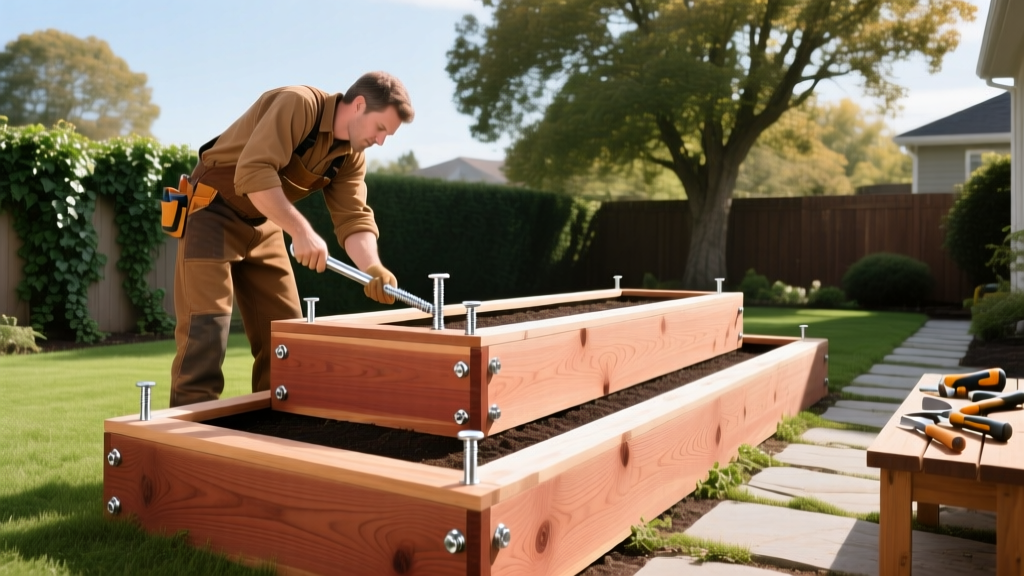
Proper corner bracing is what separates a professional installation from a DIY project that leans outward after one spring thaw. Do not rely on end-grain to edge-grain screw connections alone.
- Set the Corner Blocks: Cut 4x4 posts to the exact depth of your bed. Place them plumb at the interior corners. Pre-drill and secure the first long-side board to the 4x4 using 3-1/2" structural screws.
- Secure the Short Sides: Apply a bead of exterior-grade polyurethane construction adhesive (e.g., Loctite PL Premium) to the end-grain of the short board before pressing it against the 4x4. This seals the end-grain against moisture intrusion. Fasten with structural screws.
- Install Steel Brackets (Optional but Recommended):strong> For tiered beds exceeding 16 inches in height, reinforce interior corners with structural steel brackets like the Simpson Strong-Tie RTC rigid tie connectors to eliminate lateral deflection.
- Cross-Bracing: For any bed wider than 4 feet, install a 1x4 or 2x4 "deadman" tie across the center width, screwing it into the top inside edges of the long boards to prevent the walls from spreading.
Moisture Barriers: EPDM vs. Landscape Fabric
According to research published by Oregon State University Extension, protecting the interior wood wall from constant soil contact dramatically extends the bed's lifespan. However, material selection is critical.
- Avoid Woven Landscape Fabric: It degrades under UV exposure and soil microbes within 2 to 3 years, rendering it useless as a long-term moisture barrier.
- Avoid Polyethylene Sheeting (Visqueen): Traps moisture against the wood, creating a microclimate that accelerates fungal rot, and can leach plasticizers into the soil.
- Use 45-Mil EPDM Pond Liner: Ethylene Propylene Diene Monomer (EPDM) rubber is UV-stable, food-safe, and puncture-resistant. Staple it to the interior walls using stainless steel wide-crown staples, ensuring it drapes slightly under the bottom soil layer to anchor it in place.
Longevity Hacks: Charring Budget Lumber
If budget constraints dictate the use of untreated SPF Pine, you can artificially replicate the rot-resistance of cedar using the Japanese Shou Sugi Ban (Yakisugi) technique. Using a propane weed torch, heavily char the exterior and interior faces of the pine boards until they achieve an alligator-skin texture (alligatoring). Wire-brush the loose soot away, then seal the wood with two coats of pure tung oil or raw linseed oil. This carbonized layer becomes impervious to wood-boring insects and fungal decay, effectively doubling the lifespan of cheap pine from 4 years to 8+ years, as noted in timber preservation studies referenced by Penn State Extension.
Frequently Asked Questions
Can I use composite decking boards for raised garden beds?
Yes, but composite boards (like Trex or TimberTech) lack the structural rigidity of solid wood and will bow outward under the weight of wet soil if not supported. If using composite, you must install vertical 4x4 wood or steel stakes on the exterior every 3 feet and secure the composite boards to these stakes using manufacturer-approved hidden fasteners or color-matched composite screws.
Should I line the bottom of the raised bed?
Only if you are placing the bed over an impermeable surface like concrete or over aggressive invasive weeds like Bermuda grass. For standard soil installations, leave the bottom open to allow earthworms access and ensure proper drainage. If a bottom barrier is required, use heavy-duty hardware cloth (1/2-inch galvanized steel mesh) overlapped with a layer of cardboard to deter burrowing pests while maintaining drainage.
What is the ideal height for a raised garden bed?
Structurally and ergonomically, 16 to 18 inches (two tiers of 2x8 lumber) is the sweet spot. It provides sufficient root depth for deep-rooted crops like tomatoes and carrots, while keeping the lateral soil pressure manageable for standard 2-inch lumber without requiring heavy steel cross-bracing.
Written by
Sarah WhitfieldSarah Whitfield is a chartered quantity surveyor (MRICS) and construction cost analyst with 15 years of experience in material pricing, procurement strategy, and project budgeting. She earned her degree in Construction Management from the University of Reading (UK) and has worked on projects ranging from $2M custom homes to $180M mixed-use developments across North America and Europe. Sarah currently leads cost estimating for BuildMat Insight, maintaining a proprietary database of 4,000+ material price points updated quarterly. She is a frequent contributor to RSMeans cost data panels and has presented at the International Cost Engineering Council (ICEC) congress. Based in Denver, CO, Sarah is an avid trail runner and volunteer mentor for Women in Construction.
More from Sarah Whitfield
View all
Wood & Lumber
What Are the Different Types of Wood? A Builder's Guide
Compare structural softwoods, finish hardwoods, and engineered lumber. Analyze Janka ratings, MOE values, and 2026 pricing for construction.
Aug 4, 2026

Walls & Panels
Steel Framing vs Wood Framing: Corrosion and Moisture Defense
Compare steel framing vs wood framing for moisture resistance. Learn about galvanized coatings, condensation risks, and corrosion protection strategies.
Jul 21, 2026

Stone & Masonry
How to Cut Stone Veneer: Wet Saw vs Grinder Comparison
Compare the best tools for cutting stone veneer. We review wet saws, angle grinders, and chop saws to help you achieve clean, chip-free cuts.
Jul 21, 2026