Selection Framework: Best Types of Wood for Firewood by Heat Output
Master the firewood selection framework. Compare BTU ratings, density, seasoning times, and moisture metrics to choose the right wood species.
The Thermodynamics of Firewood Selection
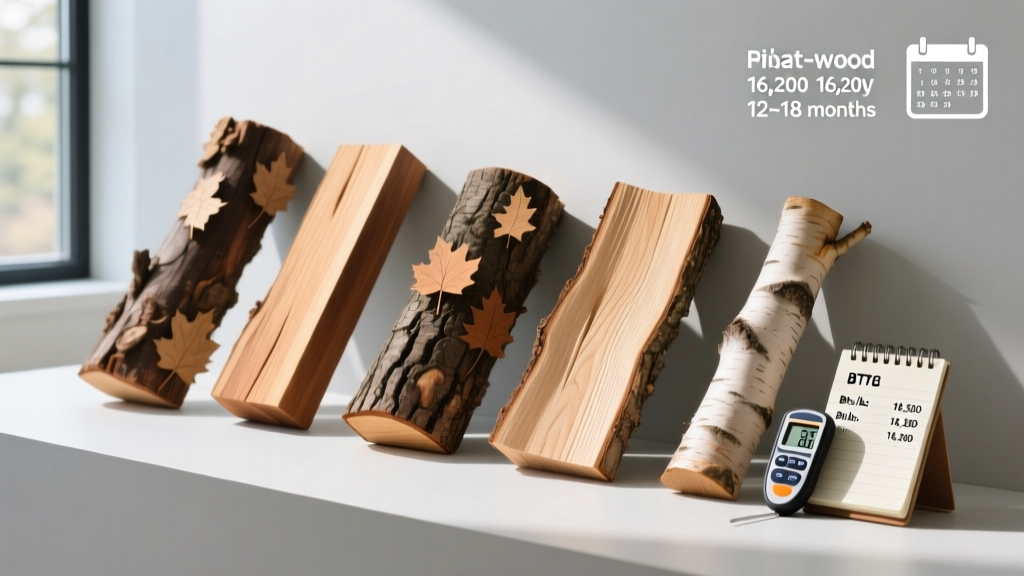
Choosing the right firewood is not merely a matter of picking a tree species; it is an exercise in applied thermodynamics. The heat output of any wood species is fundamentally dictated by two variables: the density of the wood's cellular structure and its moisture content at the time of combustion. While all dry wood contains roughly the same amount of energy per pound (approximately 8,600 BTUs), denser woods pack significantly more pounds into a standard 128-cubic-foot cord. Therefore, selecting the optimal fuel requires matching the thermal demand of your specific heating scenario to the physical properties of the available timber.
This selection framework categorizes the most common types of wood for firewood based on density, coaling characteristics, and ignition profiles, allowing you to build a strategic, season-long wood inventory rather than relying on random scavenging.
The Thermal Demand Matrix
Modern EPA-certified wood stoves and inserts operate most efficiently when the fuel matches the burn cycle. Use this decision matrix to allocate your firewood inventory based on real-time heating requirements.
Scenario A: Deep Winter and Overnight Burns
When outdoor temperatures drop below 20°F (-6°C), the primary objective is sustained thermal output and long-lasting coal beds. You need high-density hardwoods with slow combustion rates. These species have tightly packed cellulose and lignin structures that resist rapid oxidation, allowing you to load the firebox, reduce the primary air intake, and achieve a steady 8-to-12-hour burn cycle.
- Top Species: White Oak, Hickory, Honey Locust, Ironwood (Hophornbeam), and Beech.
- Key Characteristic: Excellent coaling. These woods leave behind dense, long-lasting embers that make reloading the stove highly efficient without needing to restart the fire from kindling.
Scenario B: Shoulder Season (Fall and Spring)
During transitional months, deep winter hardwoods will overheat the living space and cause the stove to smolder, leading to creosote accumulation. The goal here is rapid heat delivery and quick burnout. Medium-density hardwoods provide a fast, hot fire that warms the house quickly and burns down to fine ash, preventing overheating.
- Top Species: Sugar Maple, White Ash, Yellow Birch, Red Oak, and Cherry.
- Key Characteristic: Moderate coaling and faster ignition. These species allow for precise temperature control during mild weather.
Scenario C: Kindling, Cold Starts, and Cooking
Softwoods and highly resinous species are often dismissed as poor firewood, but they are critical for the ignition phase. Their high sap content and lower density allow them to vaporize and ignite at lower temperatures, establishing the strong draft necessary to ignite dense hardwoods.
- Top Species: Eastern Red Cedar, White Pine, Spruce, and Fatwood (resin-saturated pine heartwood).
- Key Characteristic: Rapid flame spread and high initial BTU release, but poor coaling and short burn times.
Hard Data: BTU Output and Density by Species
The following data table provides the exact thermal metrics for standard North American firewood species. All BTU ratings assume the wood is seasoned to a 20% moisture content, which is the maximum threshold for efficient combustion in modern catalytic and non-catalytic stoves.
| Wood Species | Million BTUs / Cord | Dry Weight (lbs/cord) | Coaling Quality | Sparking / Popping |
|---|---|---|---|---|
| Osage Orange | 32.9 | 4,728 | Excellent | High |
| Shagbark Hickory | 27.7 | 3,960 | Excellent | Low |
| White Oak | 24.0 | 3,440 | Excellent | Low |
| Sugar Maple | 24.0 | 3,440 | Good | Low |
| White Ash | 22.5 | 3,232 | Good | Low |
| Red Oak | 22.1 | 3,176 | Good | Low |
| Yellow Birch | 21.8 | 3,128 | Good | Low |
| White Pine | 14.3 | 2,048 | Poor | Moderate |
The Moisture Multiplier: Testing and Thermodynamics
The most critical failure point in firewood selection is ignoring moisture content. According to the EPA's Burn Wise program, burning wood with a moisture content above 20% drastically reduces usable heat. When you burn wet wood, a significant portion of the fire's thermal energy is consumed by the latent heat of vaporization—boiling off the trapped water—rather than heating your home. Furthermore, the resulting steam cools the flue gases, causing unburned wood volatiles to condense on the chimney liner as highly flammable creosote.
Proper Moisture Meter Protocol
Many homeowners incorrectly measure firewood moisture by pressing a pin-type meter against the outside bark or the exterior face of a split log. This yields false-low readings because the exterior dries rapidly in the wind and sun. To get an accurate reading:
- Take a log from the middle of your stack.
- Split the log open with a maul or splitting wedge.
- Immediately drive the pins of your moisture meter into the freshly exposed center grain.
- Target a reading between 15% and 19% for optimal secondary combustion in modern stoves.
Seasoning Timelines and Cellular Breakdown
Different tree species have distinct cellular structures that dictate how quickly they release internal moisture. The Penn State Extension notes that initial moisture content at the time of felling, combined with wood porosity, determines the seasoning timeline. Cutting and splitting wood to expose the end-grain is mandatory, as moisture escapes primarily through the xylem and phloem tubes running longitudinally through the trunk.
Rapid Seasoning Species (6 to 9 Months)
- White Ash: Ash is unique among hardwoods because it has a low initial moisture content when alive (often around 30-35%). If split and stacked in a sunny, breezy location in early spring, ash can be ready to burn by late fall.
- Cherry and Birch: These medium-density woods dry relatively quickly, provided the bark is scored or removed, as their tight bark can trap moisture inside the log.
Extended Seasoning Species (18 to 24 Months)
- White Oak and Red Oak: Oak trees possess tyloses—balloon-like cellular outgrowths that block the porous vessels in the heartwood. This evolutionary trait makes oak highly rot-resistant but also traps water inside the log. Oak split to 4-inch diameters typically requires a full two summers of drying to drop below 20% moisture content.
- Hickory and Beech: Similar to oak, these ultra-dense woods require extended exposure to wind and solar radiation to achieve optimal combustion metrics.
Creosote Mechanics and Species to Avoid
A persistent myth in wood heating is that burning softwoods like pine inherently causes dangerous creosote buildup. According to the Wood Heat Organization, creosote is caused by incomplete combustion and cool flue temperatures, not the species of the wood itself. If pine is fully seasoned to 15% moisture and burned hot with adequate draft, it burns cleanly. However, if pine is burned wet, or if the air supply is choked down to smolder, it will produce massive amounts of creosote.
Species with High Sparking Risk
Woods that pop and throw sparks do so because of localized pockets of trapped moisture or high resin content that rapidly turn to steam, expanding and fracturing the wood fibers. Avoid using the following species in open-hearth fireplaces without a heavy mesh screen:
- Eastern Hemlock: Known for violent sparking due to uneven moisture distribution and resin pockets.
- Sycamore: While it burns hot, sycamore has a tendency to pop aggressively, especially if not seasoned well past the 20-month mark.
- Elm (American and Slippery): Elm's interlocking grain structure traps steam during combustion, leading to frequent micro-explosions that eject embers from the firebox.
Strategic Inventory Management
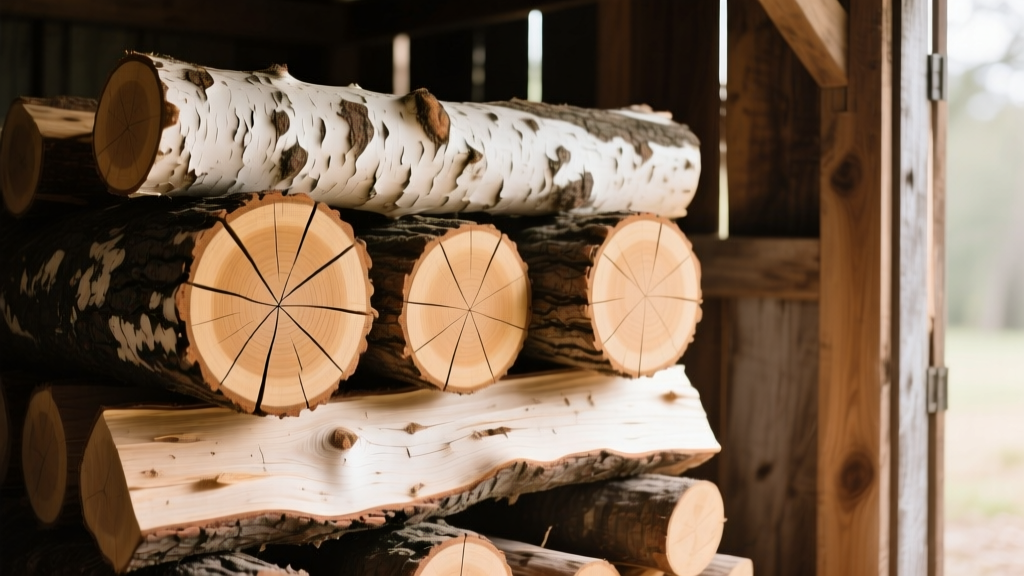
The most efficient wood-burning households do not rely on a single species. By procuring a mixed inventory, you can optimize your burn cycles throughout the year. Secure a cord of white pine or cedar for kindling and cold-weather starts, two cords of ash or maple for the mild shoulder months of October and April, and three cords of dense white oak or hickory for the deep freezes of December through February. By aligning the physical properties of your firewood with your thermal demands, you maximize heat extraction, minimize chimney maintenance, and extend the lifespan of your wood-burning appliance.
Written by
Priya KapoorPriya Kapoor is a real estate market analyst and construction economics researcher with expertise in housing affordability, development feasibility, and infrastructure investment. She holds a Master of Regional Planning from Cornell University and previously worked as a senior analyst at CBRE's Investment Properties group, where she modeled returns for $4B in mixed-use development pipelines. Priya now runs an independent research practice advising developers, municipalities, and REITs on construction cost forecasting and market timing. She publishes the quarterly "BuildMat Market Pulse" report tracking material price indices across 12 commodity categories. Based in Austin, TX, Priya serves on the board of Habitat for Humanity Austin and is a marathon runner.
More from Priya Kapoor
View all
Construction Cost
Cost to Build a 1600 Sq Ft Home in 2026: Full Breakdown
Accurate 2026 cost to build a 1600 sq ft home—material, labor, and regional pricing breakdowns included. Plan your budget with real-time estimates.
Aug 11, 2026

Wood & Lumber
Name the Types of Wood for Pressure Treatment and Preservation
Learn how to name the types of wood best suited for pressure treatment. Compare species treatability, chemical retention levels, and 2026 preservation costs.
Aug 4, 2026

Stone & Masonry
Stone Veneer Suppliers Lindenhurst: 2026 Cost Analysis
Analyze 2026 stone veneer costs in Lindenhurst, NY. Compare local supplier pricing, delivery fees, and Suffolk County installation labor rates.
Aug 4, 2026